
March is a confusing month here in Calgary. Three weeks of it belongs to winter. Snow sits around in gray crusty patches that melt, refreeze, and melt again. Nights are cold enough to freeze the ground solid.
But when I stand beside a beehive at noon, you can feel that the sun is stronger. That tiny bit of warmth is enough to trigger one of the most important events in the honey bee calendar.
The bathroom break.
Honey bees spend the winter clustered inside their hive, eating honey and keeping the colony warm. But unlike humans, cattle, dogs, or politicians, they absolutely refuse to relieve themselves in their own home.
Bees treat the inside of their hive like a sterile nursery. It contains brood, honey, pollen, and the queen. Defecating inside would invite mold, disease and parasites into the colony.
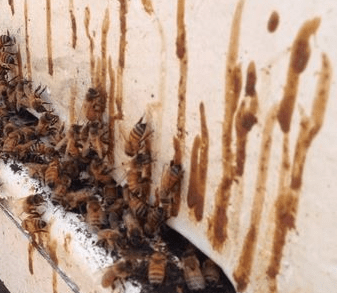
So they hold it.
For weeks. Sometimes months.
A winter bee can store waste in her hindgut until it reaches nearly a third of her body weight. Imagine carrying around a heavy backpack full of all of the winter’s lunches.
Eventually, the colony waits for a suitable day: sunshine, calm winds, and temperatures warm enough for flight muscles to operate.
The sky fills with bees. And then—well—relief happens. Tiny yellow, brown, and black droplets scatter across the snow.
To a beekeeper, those dots can be comforting. They mean the colony survived winter. Of course, bee droppings occasionally become someone else’s problem.
Years ago, I kept a bee yard behind a very expensive house in Florida. One day the neighbor, a lawyer, stopped me and asked if I knew where I could buy a million tiny diapers.
He pointed at his car.
Yellow spots everywhere. I moved the bees that night.
But stories about bee droppings gets even stranger.
During the Cold War, mysterious yellow droplets reportedly fell from the sky in Southeast Asia. People believed aircraft were spraying chemical weapons. The phenomenon became known as “Yellow Rain.”
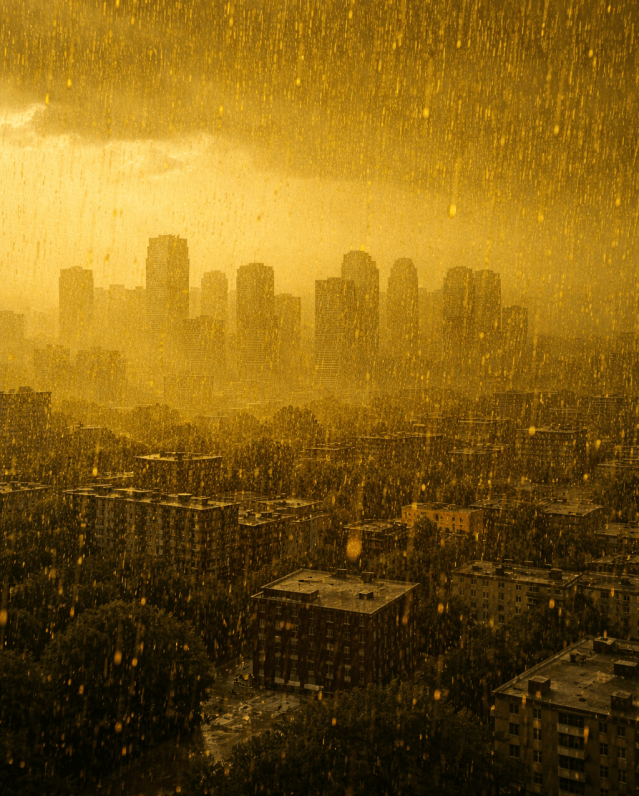
Analysis of the samples revealed something strange. Partially digested pollen grains. Scientists eventually concluded the “rain” may have come from mass defecation flights of giant Asian honey bees. When thousands of bees take flight and lighten their digestive load at the same time, the results can look surprisingly like a yellow shower. Sounds weird that they would mimic a traditional Roman public bath, but you can never tell about bees.
If you are curious about this complete story, and the bees’ digestion system, and how bees can fly on cool winter days, jump over to my podcast for the rest of the story.
You can enjoy this podcast episode wherever you listen to podcasts.
Check out the About Bees, Culture, and Curiosity podcast.

 Bad Beekeeping Blog