
A few days ago, I sat down with the folks at Beekeeping Today Podcast to talk about how our non-native honey bees may affect native bees. Jeff Ott and Becky Masterman were informed, sympathetic interviewers. I had a great time talking to them. Their notes for the episode are below. These notes capture our discussion really well. I hope you have a chance to listen to the podcast. We cover a lot of information, especially regarding my research at the University of Calgary.
In this episode, we talk with Ron Miksha, a former commercial beekeeper now living in Calgary, Alberta. Ron was on the podcast back in August of this year talking about the Western Apiculture Society conference with Étienne Tardiff. At the time, he mentioned his research on the impact of the non-native honey bee on native bees and floral sources. This topic deserved its own space so we invited him back today.
The debate over the impact of honey bees on native bees, pollinators, and floral sources is a complex and multifaceted issue, touching upon ecology, conservation, and agriculture. At the heart of this debate lies the honey bee, a non-native species in many parts of the world.
One major concern is the competition honey bees may pose to native bee populations. By sheer numbers, honey bees can dominate floral resources in an area, potentially outcompeting native bees for nectar and pollen. This competition can be particularly significant in areas with limited floral abundance. Some studies suggest that the presence of honey bees in resource-constrained areas can lead to a decrease in the diversity and abundance of native bees.
Honey bees are renowned for their pollination services, crucial for many agricultural crops. However, their dominance in certain ecosystems may alter pollination dynamics. While they contribute significantly to the pollination of a wide range of crops, their presence may affect the pollination efficiency of native plants, which have evolved alongside native pollinators.
Honey bees not only compete with native bees for existing resources but can also influence the abundance and distribution of floral resources themselves. Their foraging patterns can affect the flowering plants’ reproductive success, potentially leading to changes in plant community composition over time.
The debate extends to conservation and beekeeping practices. There is a growing call for responsible beekeeping that minimizes the impact on native bee populations and ecosystems. This includes managing hive numbers, especially in ecologically sensitive areas, and supporting habitat restoration and conservation efforts to bolster both native and non-native pollinator populations.
The challenge lies in balancing the agricultural benefits of honey bees with the ecological needs of native pollinators and plants. This involves a nuanced understanding of local ecosystems, the role of different pollinators, and the impact of human activities.
The debate over the impact of honey bees on native bees and ecosystems is an ongoing one, requiring continued research, informed policy-making, and collaborative conservation efforts. Thoughtful consideration and continued research are needed. Listen to our conversation with Ron as he shares his research and observations on this topic.
You can find Beekeeping Today Podcast on Apple Podcasts, Spotify, or any favourite RSS feed where all the best podcasts are found. You can also listen to this Native/Non-native bee discussion at this link. If none of these options appeal to you, download the file to your computer.
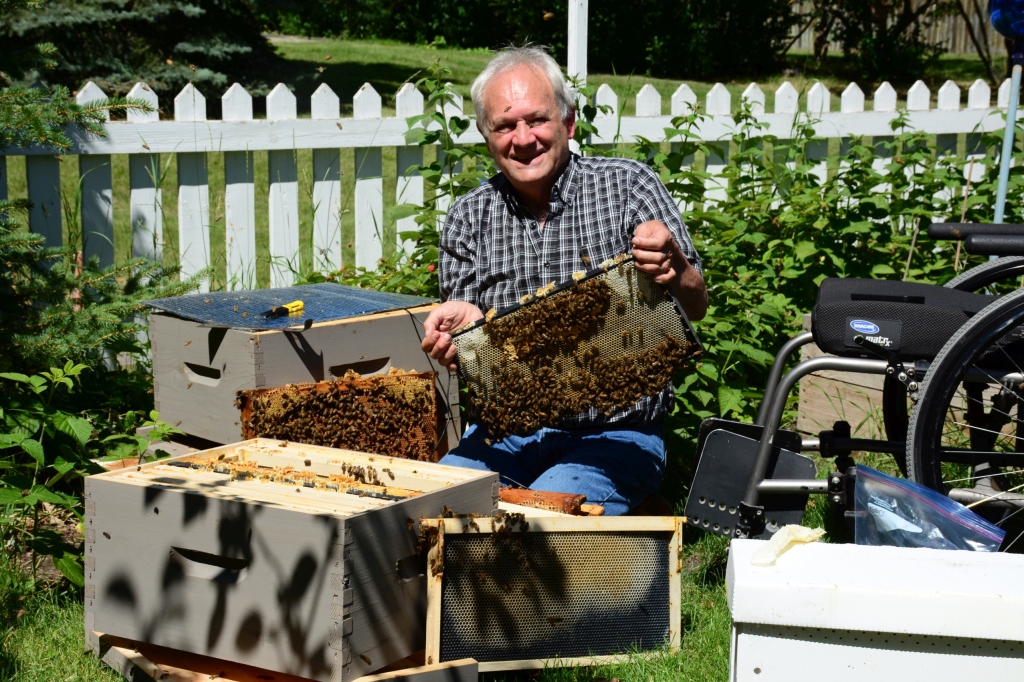
Bee vs bee research hive

 Bad Beekeeping Blog
It is right for beekeepers to be aware of the increasingly desperate plights of both native pollinators and honey bees. But this debate frequently ignores the fact that for 500 years, honey bees and wild bees and wild pollinators lived together in abundance with no issue whatsoever. What changed?? Well, as those of us old enough to remember bug-splattered car grilles and windshields might tell you: habitat loss, forage loss, and ubiquitous agri-sprays. All insect populations have as a result of these three “Horsemen of the Bee Apocalypse” (credit to Randy Oliver for that one) been in steep decline since the mid 1900’s. The drivers behind wild/native pollinator decline will not be stopped by limiting or extirminating honey bees in the landscape. A rising tide of habitat restoration, forage restoration, and limiting agrisprays (especially those that are enduring in the landscape) would lift all pollinator boats.
LikeLike
Xerces Society estimates there are more honeybees worldwide than at any time. They are not threatened at all. The collapses that make the news are due to almond producers bringing them out of hibernation a month early and because of pesticides. They are livestock in North America. They certainly serve a purpose. But using european honeybees local colony collapse as a reason to be concerned about bee populations would be like using Tyson Chickens as an indicator of songbird populations.
LikeLike
The Native and Non-Native Bee Debate centers on the ecological impact of introducing non-native bee species to new environments. While non-natives may enhance pollination, concerns arise about potential competition with native species, disease transmission, and disruption of ecosystems. Striking a balance between agricultural needs and conservation is crucial for sustainable bee management.
LikeLiked by 1 person