
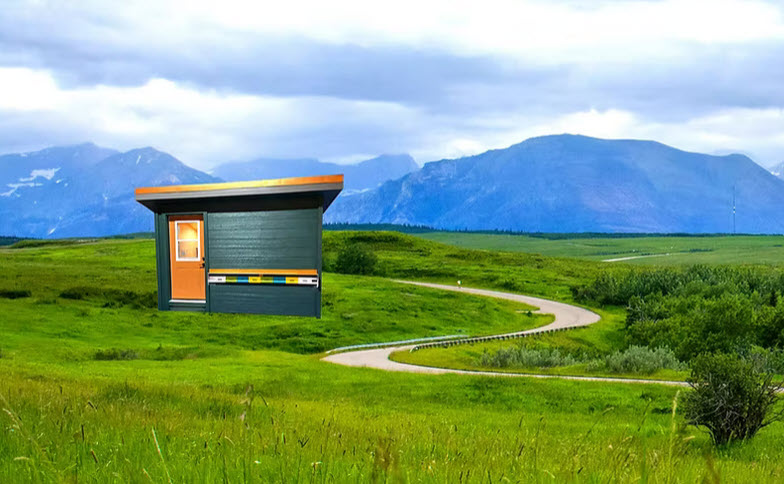
The image above is from the BeeCube website. Inside that box is an entire apiary. It can be loaded on the back of a truck and hauled off to a new location – wintering spot, spring build-up, pollination, summer honey production. Open the door, and you are immersed in the bees’ world. The colonies each have a separate exit to the flowers beyond their hives, which are clustered inside. The beekeeper enters the BeeCube to do inspections, super the colonies, feed or simply encourage them. Colonies are fully accessible inside, fully free to fly outside. This is a new innovation here in Calgary. I have never seen anything quite like it here.
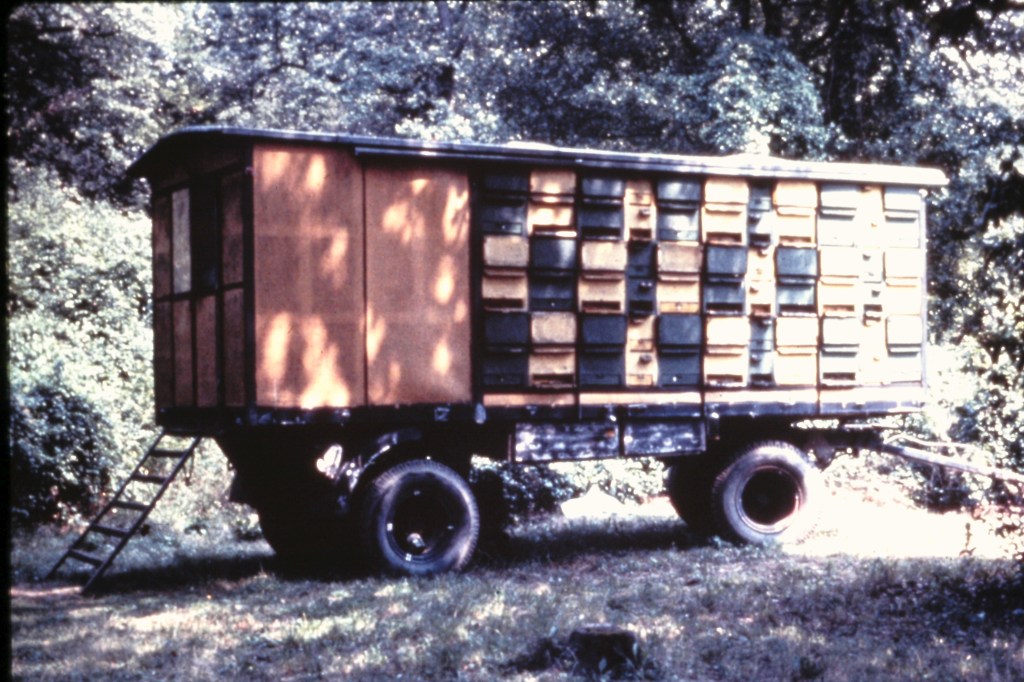
This photo, taken in northern Croatia by my family in 1983 shows the same basic principles of the BeeCube – a doorway (behind the wagon), a hallway for the beekeeper to open the backs of hives, bee exits facing out, and a way to move the entire apiary to new pasture.
The BeeCube is much more advanced, with insulation and sensors, but the basic idea has proven itself over generations.
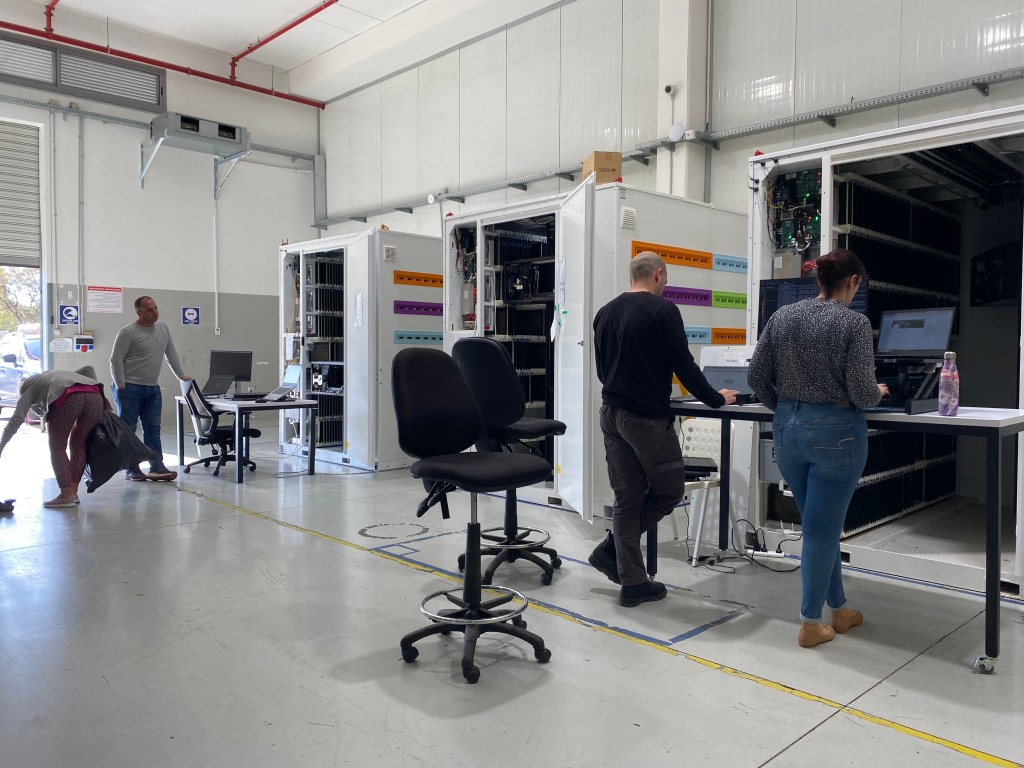
I saw another version of the BeeCube a couple of years ago, in Israel. It’s manufactured by a company called BeeWise. I visited their corporate headquarters where 70 employees worked in the development of an apiary-in-a-box that included cameras, sensors, robotic frame manipulation, and even an extractor inside each unit.
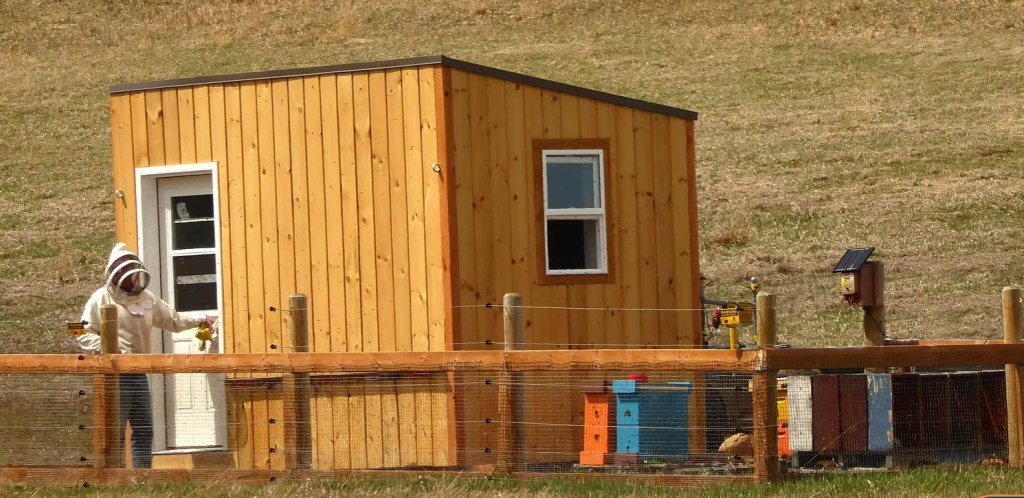
I recently chatted with Herman van Reekum, founder and chief innovator of BeeCube in Calgary, Alberta. We talked a bit about the development of the BeeCube as well as other projects he is designing at Beekeeping Innovations. You can enjoy this podcast wherever you listen to podcasts.
We discuss the advantages of the BeeCube and other new developments that Herman creating – a beekeeper’s app (Be the Bee) for recording and analyzing bee colony health and management; and, Global Bee Digest, a Substack newsletter that aggrandizes current news and research in bees and beekeeping. Listen to the podcast to learn the whole story.
Beekeeping Innovations: https://www.beekeepinginnovations.ca/
BeeCube: https://www.beecube.io/
The Global Beekeeping Digest: https://globalmobility.substack.com/
Check out the About Bees, Culture, and Curiosity podcast.

 Bad Beekeeping Blog
Hello Ron
I kept bees in sheds for years when we needed to be able to open hives whatever the weather (for research purposes). It’s practical, but cramped. You never have enough room. Colonies do well, probably because of the better insulation or reduced temperature fluctuation. In good years you need ample ‘headspace’ for the supers. However, my sheds were static (but could therefore be larger). In Europe there used to be railway carriages adapted for migratory beekeeping; I don’t know if they still exist.
How many bees get crushed in those BeeWise boxes during ‘inspections’? I’ve not seen that discussed anywhere, but worry about automating a process with so many moving parts 😄.
Cheers
David
LikeLike