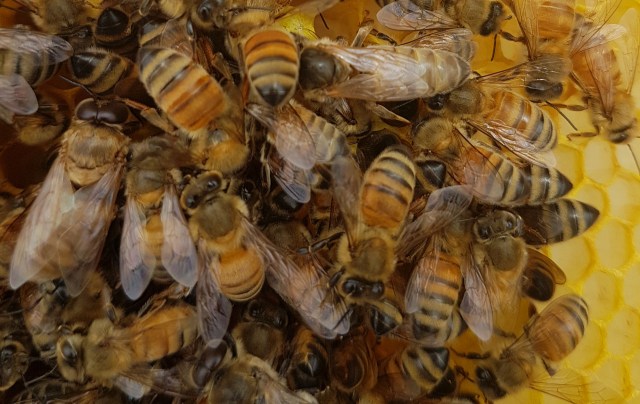
National Honey Bee Day

I haven’t quite recovered from World Bee Day (May 20th) and here it is, World Honey Bee Day, which coincides with National Honey Bee Day, as it’s practiced in the USA. Clever that they both fall on the same third Saturday of August. But both of the August honey bee days compete with the bigger, far more important May 20th world bee day. (And mid-way between these celebrations is Don’t Step on a Bee Day.)

I’ll not complain that bees are celebrated twice each year with special holidays – schools closed, solemn parades, TV specials. At dinners across the land, Einstein will be invited to stand up and say a few words about the plight of mankind if the bees all die. Meanwhile, the little pollinators go about their tireless sacrifices, pollinating with careless abandon, assuring that the apples and cherries are there for all those pies baked on Bee Day. The whole world celebrates.

Or am I the only one who has heard of this holiday?

I asked colleagues if they will party for the bees, but they looked at me as if I’m weird, maybe a beekeeper or something.  They seem oblivious and are a bit surprised to learn that there is such a holiday. Same with my calendar, which doesn’t recognize Bee Day – it’s not pre-printed on any of my calendars, in fact. Maybe the publishers haven’t recognized the importance of the day. (Halloween is on the calendar. And Christmas. Why not Bee Day?)

In the USA, the holiday started out as National Honey Bee Awareness Day about ten years ago. That worked out so well that they had to drop ‘Awareness’ from the name. (How can you build awareness for an insect that everyone is already aware of?)

If you are wondering how one celebrates August 19th’s Honey Bee Day, I found a website that offers some suggestions. Here a couple of their ideas and my reasons why these are bad ideas:

1) Collect local wildflower seeds and spread them to where nothing is growing.  Me: It sounds like a good idea – in mid-August, you sow your wild seed ‘where nothing is growing’ – like on a highway or in a lake. But seriously, planting seeds in August?

2) If you can’t raise bees, talk to your friends who have space and get them interested in raising bees.  Me: If you can’t talk yourself into raising bees, do you really have the skill to talk someone else into raising bees?

3) Encourage beekeepers to open their apiary to friends.  Me: Yes! Bring your own jar and pick your own honey. Doubt you’ll see those friends again.

4) Buy some mead and learn about this amazing drink!  Me: OK. This one’s a winner. Celebrate Bee Day with some authentic fermented nectar of the gods.

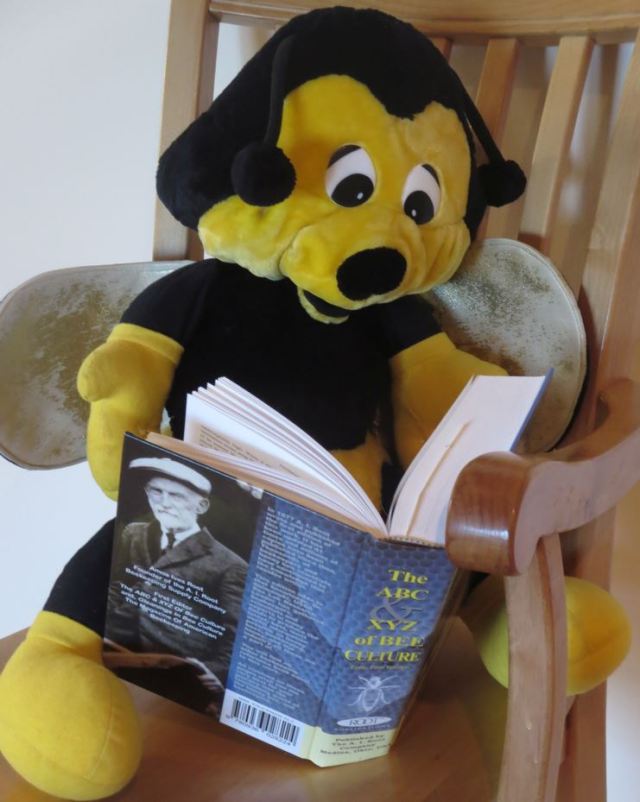
Out of celebration ideas? On these lazy summer days (unless you’re a hard-working beekeeper), you might lie in the shade with a good bee book.

Posted in Culture, or lack thereof, Humour, Save the Bees, Strange, Odd Stuff | Tagged , | 5 Comments

Ulee Jackson has died

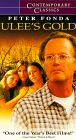
Peter Fonda died today. Most accolades will mention his starring role in 1969’s Easy Rider. I won’t. Instead, I’ll talk about his performance in Ulee’s Gold. That movie gave Fonda his only Oscar nomination (he lost to his friend Jack Nicholson, in As Good as it Gets).

In addition to being a powerful drama about the sort of situations too many families fall into, Ulee’s Gold portrays the beekeeping lifestyle with clarity, accuracy, and compassion. From a beekeeper’s perspective, movies just don’t get any better. If you want to peek inside a beekeeper’s life a little, or introduce the beekeeping world to friends or relatives who don’t seem to quite understand it, this movie is the perfect vehicle to make that connection happen. Peter Fonda, in the role of Ulysses Jackson, acts as if he had kept bees for thirty years. This strong, inward-looking character is so completely believable that the Florida Beekeeper’s Association gave Peter Fonda their highest recognition – he was named Beekeeper of the Year when the movie came out.

The plot is entirely plausible, at times a bit measured, but the slow pace is necessary to build the drama and to keep the tale believable. A wayward son, an addicted daughter-in-law, a wild teen-aged granddaughter, an introverted younger granddaughter, a divorced (twice) neighbour, and more bee work than he can manage, make up Ulee’s immediate world. His internal world is haunted by friends he lost in Viet Nam and a wife who died six years earlier. The story becomes rough, with some crude language, as Ulee faces his son’s accomplices in crime. Parents may feel the language and some of the scenes – especially of the drug withdrawal – are too graphic for younger audiences. Despite these minor caveats (by today’s standards, the movie is tame and there are no gratuitous scenes of violence or sex) it is an excellent, powerful drama.

Ulee’s Gold opened among the top ten films in North America on its release week, with gross weekend ticket sales of almost one million dollars. The movie was not heavily advertised, so we might assume that many of the audience attended because of the absolutely stellar praise the media lavished on this work. IN Jersey called the movie “Pure Gold”. Variety described this movie as “A gem of rare emotional depth and integrity… graced by a completely unexpected performance from Peter Fonda that is by far the best of his career.” The New York Times Review called Fonda’s performance the best in his entire career.  Entertainment Weekly agreed, saying, “Peter Fonda gives the performance of his life… playing with almost biblical rectitude…with a hint of tenderness that can wrench your heart out.” Among Entertainment Weekly’s praises were a nod to Van Morrison’s closing credits tune Tupelo Honey, which the reviewer describes as “a gift to the audience”.

As a beekeeper (who kept bees in Florida), I was especially enamoured by the dialog:

When describing his work to his neighbour lady-friend, Ulee says, “What with moving bees, pulling honey. chasing bears… it’s pretty hard work. Most young folks wouldn’t be bothered. But don’t get me going talking about bees…”

In a scene where you would expect Ulee to crack someone’s skull, Ulee’s nemesis, Eddie Flowers, says, “I always thought it was a stupid business, messin’ with bees.”  Well, Eddie, you’re not far off the mark.

When his imprisoned son asks how the bees are doing, Ulee says, “Mites are choking them, pesticides are killing them, the drought’s starving them… they’re fine.”

The movie was written and directed by Victor Nunez, who says that he got the idea from a chance glance at a newspaper with a photo of a beekeeping family on the front page. Ulee’s Gold was featured as the Centerpiece Premiere at the Sundance Film Festival when it came out in 1997. Peter Fonda won a Golden Globe Award for his performance.

I’ll close this post with a gift to my audience: Here’s Van Morrison with the movie’s theme song:

PS: A second gift: I recommend that you see this movie. My family will be watching it again tonight.

Posted in Commercial Beekeeping, Culture, or lack thereof, History, Movies, People | Tagged , , | 8 Comments

Coconut Monkeys

Some years ago, I had a job that I didn’t like. The money was good, but the work was bad. I was stuck in “Coconut Monkey” syndrome.

Farmers in south India are sometimes plagued by monkeys stealing their crops. The bright little thieves raid fields en masse, grabbing anything edible. The peasants chase the animals, but the monkeys always come back.

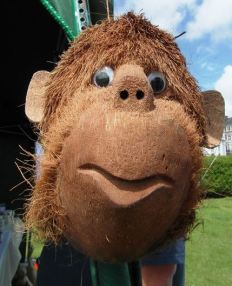
According to a tale I read in Robert Pirsig’s Motorcycle Maintenance book, one farmer had an idea. [Trigger warning: Monkeys die just ahead.] The farmer hollowed out a coconut, leaving a small hole, just big enough for a monkey to stick a hand in. A bit of rice was dumped inside it and the coconut was chained to a stake.  Here’s the trick. A monkey will reach in, collect rice in its fist, but not be able to pull its clenched fist out of the small hole without releasing the rice inside the coconut. A monkey won’t drop free food, even if a farmer is running at him with a club.

I’ll admit that I’ve been a coconut monkey more than once in my life. I just can’t let go of a ‘good thing’, even if I know it could kill me. I’m trying to learn that lesson, but sometimes I forget. I was reminded of the tale a couple days ago when I heard about those marauding monkeys again. This time, they were environmental refugees.

A troop of monkeys, climate-change refugees fleeing an intense monsoon, were stealing coconuts and breaking into homes for food. They had figured out that they could by-pass locked doors by climbing up on the roof, peeling off a few roof tiles, then dropping into the pantry. And what a mess. Even worse, the desperate little hooligans ripped up 55 beehives in a nearby apiary.

Those monkeys were hungry, having been displaced by the vagaries of climate. Monsoons have happened for generations, but they are becoming worse – except in the years that they don’t show up. This leads me back to human coconut monkeys. If climate is running at us with a club, but we are busy clinging to our allegorical rice, do we let go or do we stay the course and suffer the consequences?

Posted in Culture, or lack thereof, Ecology, Strange, Odd Stuff | Tagged | 4 Comments

Bees in Space

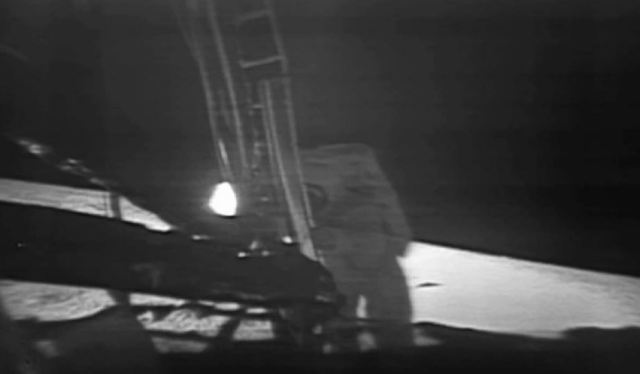
Fifty years ago, I was a kid, glued to the TV, fascinated by man’s first frolic on the moon. Grainy black and white images from the moon filled our grainy black and white television. It was a signal from the space, beamed to NASA’s earth-bound receivers, relayed to KDKA in Pittsburgh, then sent as an analog wave of organized static to the antennae on a 15-foot post clamped to the side of our rural farmhouse on the edge of the Appalachians. As a geeky youngster with thick glasses, I misunderstood the moon mission’s purpose.  I thought it was all about science and exploration. Soon, a moon  base would be built, then the flight to Mars, then Alpha Centauri, where I’d meet English-speaking aliens with huge heads and tiny bodies. That’s the way it was supposed to go.

But three years later, the moon flights ended. We haven’t ventured back. What went wrong? Nothing. Now I realize that my expectations were mistaken. The American space effort, “landing a man on the Moon and returning him safely to the Earth,” as President Kennedy said, was the real goal. Not science. The moon mission proved to the world (and Russia), that no one messes with the USA. Americans could set a goal, commit billions of dollars, muster huge technological expertise, and see an enormous task through to completion. Mission accomplished. A few more rock-picking excursions followed, but there was no political reason to return.

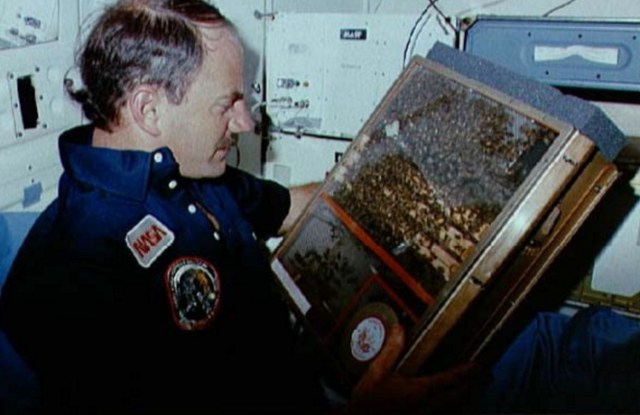
Bees in space, examined by James van Hoften, crewman on the Challenger. 1984: NASA.

Scientists at NASA always understood that science was a lunar tag-along. To foster public interest in space exploration (and to help their plea for future flight funding),  several down-to-earth experiments were widely publicized. High schools were invited to propose science investigations. One proposal led to bees in space.

In 1984, over ten years after the last moon walk, an experiment suggested by Waverly, Tennessee, high school student Daniel Poskevich, was carried aboard the Challenger Space Shuttle. His experiment included 3,400 honey bees in a glass-windowed aluminum observation hive. A similar hive was kept on Earth as a control. What would space bees do?

In their log book, the crew recorded: “Day 7, comb well-developed, bees seemed to adapt to 0-g pretty well. No longer trying to fly against top of box. Many actually fly from place to place” within their observation hive.  During the mission, worker bees produced a mere 30-square-inch comb (in the same hex-pattern as ordinary Earth-comb) and the queen laid just 35 eggs in the new comb.  None of those eggs hatched.

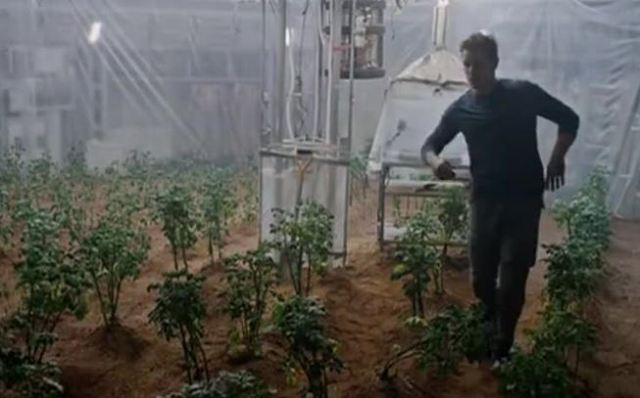
And? Well, if a space-queen’s eggs don’t hatch, this doesn’t bode well for the future of weightless honey production. I guess this is good to know before some California beekeeper ships a semi-load of bees upwards. Flowers might be an issue, too, though I’ll bet real crypto-currency that someday, in a greenhouse on Mars, tomatoes will be pollinated by bumble bees. And they will flourish.

I know. These are Martian potatoes. They don’t need bees. But the concept is the same.

.

Posted in History, Queens, Science, Strange, Odd Stuff | Tagged , , | 2 Comments

Saturday at the Hive

Mark, host for a bee gathering in his back yard.

A new beekeeper learns best by clinging to the leg of an experienced beekeeper. That’s how I learned, but I was four years old at the time. For you older folks, you need a mentor, someone who’s actually a better beekeeper than they claim to be, and is familiar with your geography, climate, and flowers. Good mentors are in short supply.

An alternative to a mentor might be a gathering of neo-keepers converging on a friendly, experienced paleo-keeper’s back yard. Hopefully by invitation. Our Calgary bee club offers a Saturday at the Hive event – something your local club might consider. You just need a lovely back yard and a willing host.

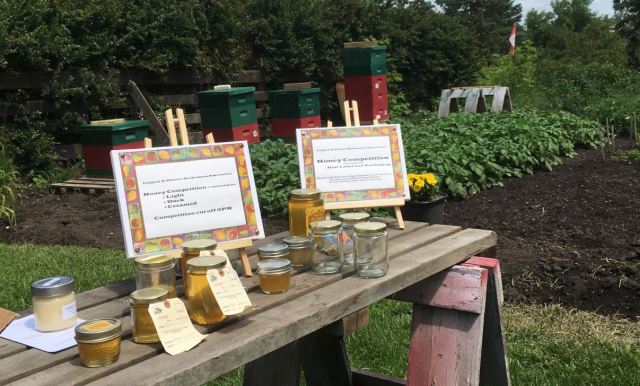
Mark’s four hives by the hedge in the back. In the front are honey samples,
including Mark’s prize winning entries from honey shows.

Here in Calgary, members of the bee club let an organizer know that they are able and interested in opening up their home, gardens, and bees to beekeeping visitors. The intention is announced and potential visitors – first come, first served – sign up. These Saturday at the Hive bashes fill up quickly. That was the case when my friend Mark hosted such a party in his yard.

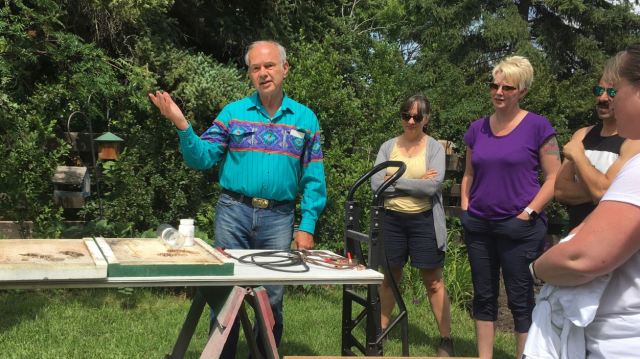
Mark describing the oxalic-acid method of mite control.

Mark invited me to ‘co-host’ but the planning, work, setup, and bees were his. As were the wholesome summertime BBQ and fixin’s.  I was mostly furniture, except in the role of talking about bees and answering bee questions.  The party also gave me an audience of over 20 people to update about my University of Calgary bee ecology project. One of my undergrad research assistants presented a nice overview of our work.  (I’ll have more about that in a future blog post.)

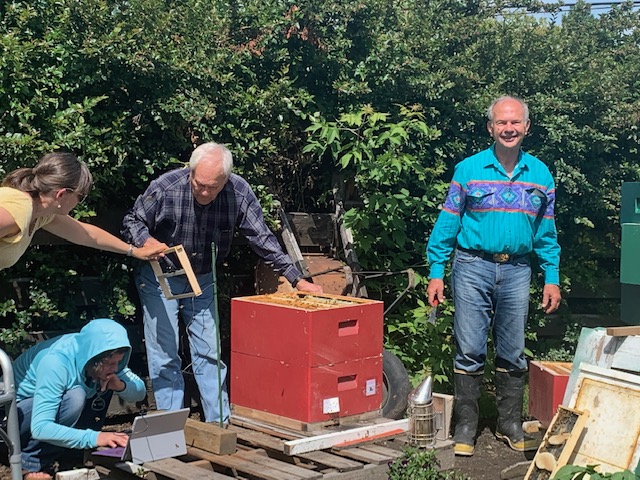
I am near the centre of this scene, examining a piece of experimental bee equipment, which I will place in the hive. To the right is Mark, the host at this party.

Guests  gathered in a big semi-circle around Mark’s neatly arranged apiary of four hives. We worked our way through the colonies, making some timely adjustments. One colony needed a brood boost, another took an extra honey super. As we did this work, the visitors took a few pictures and many took notes. For the newest beekeepers, it can be daunting trying to understand the mechanics of the equipment and the dynamics of the living hive.

It was a great experience, lovely to have so many people gathered around, exhibiting keen interest in flowers, landscapes, and bees. I leave with this very short clip of the visitors to this week’s Saturday at the Hive.

Posted in Bee Yards, Beekeeping, Friends | Tagged , | 2 Comments

Apimondia: Will you be there?

This year’s 46th Apimondia International Apicultural CongressAPIMONDIA 2019 MONTRÉAL – begins September 8 in Montréal, Canada. This is the big bi-annual beekeepers’ and bee researchers’ bash. I’m hoping that many of the readers of this blog will be able to make it. Since most of you are in Canada and the USA, airfare should be less than most Apimondia events, yet the French- (and English-) speaking city of Montréal is exotic enough to make you feel like you’ve left Kansas.

People attend Apimondia to check out new beekeeping tools and toys and to catch up on research. You’ll hear a range of presentations – genomics, pesticides, pollinator news, honey fraud, bee breeding, and stuff you can’t even imagine.  The Apicultural Congress is also a great opportunity to meet old friends and make some new ones.

I’ll be there. I’m doing research work at the University of Calgary in bee ecology. I submitted two abstracts and both were accepted. My oral presentation considers the difficulty in determining the foraging distances of honey bees, bumble bees, and leafcutter bees. My paper, Foraging distances of commercially deployed bees: a meta-analysis, draws on hundreds of studies and examines the typical range that these bees fly while gathering resources, with the intent of helping land managers determine optimal pollination while avoiding commercial pollinator spillover into natural areas where other bee species might be impacted.

I’ll also have a poster on quite a different topic, Demographic and socio-economic influences of urban beekeeping. This is a study of the types of urban people who become beekeepers. Are they typically wealthy or poor? Family guys or bachelorettes? Do they usually hold doctorates in metaphysics or (like my father, who was a beekeeper) a Grade-Eight primary-school certificate? As you know, it takes a diverse village to raise a hive of bees, but some groups are more likely to be beekeepers, at least in a big city. You’ll see what I mean if you drop by and see my poster. By the way, I’ll be assigned a time that I’m supposed to stay close to my poster and that will be a good opportunity to catch me and say hello. I’ll post the schedule and poster location when I’m given the information.

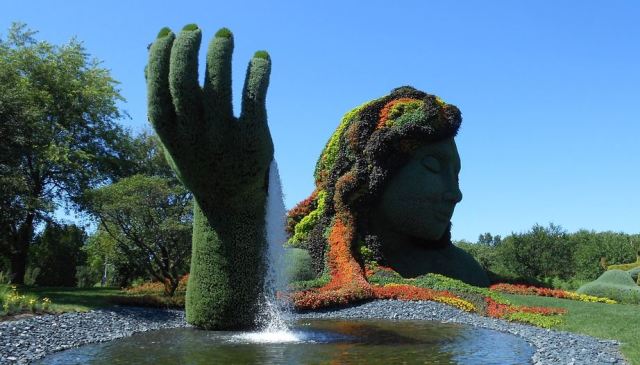
Jardin Botanique Montréal – Montréal’s Botanical Gardens

Posted in Culture, or lack thereof, Outreach, Travels | Tagged , | 6 Comments

It’s Canada Day

It’s Canada Day. I moved to Canada in the 70s to keep bees. It was a good move for me. Yesterday, I noticed that the conservative news magazine, US News and World Report, has placed Canada as number one (for the fourth year in a row) out of 80 countries they studied for Quality of Life. They calculated nine measures – safety, health care, job availability, environment, political stability, income equality, affordability, quality public education, family friendly – to determine national ranking.  Canada is far from perfect. But apparently it is closer than any other country, in terms of overall quality of life.

I’m also pleased that my home city, Calgary, has regularly placed first in the world among all cities for ‘environment’ – a quality you don’t think about much unless you travel and see the world’s other options. Environment is measured by the Mercer Group as clean air and water, public parks and greenspaces, and so on.  I’ll probably stay.

Finally, a treat, the late Stompin’ Tom Connors with his rousing Canada Day song:

Posted in Culture, or lack thereof | Tagged , , | 2 Comments

A good day in the bees

Friends at Tsuut’ina Nation Apiaries, just outside Calgary, invited me to visit their main apiary today. The indigenous bee project was started by Chief Lee Crowchild two years ago. While I visited, the Tsuut’ina beekeepers worked 35 hives at this bee yard. These hives all started as packages in late April. The honey bees, housed in new equipment, have been drawing a lot of comb, but are growing rapidly. Second brood chambers were added about ten days ago. Those chambers were all foundation, though a drawn comb was brought up from the lower chamber for each. I was impressed with how uniform and generally strong the colonies are and how much new wax they have created.

The bees were pleasant. I had just one sting (on my hand) and it happened on the last hive. You can see, in the video above, that the bees were as gentle as kittens while I sat among them. The apiary is in a wooded area on Tsuut’ina Nation, not far from the Rocky Mountains. Bears abound, hence the tall fence that surrounds the bee yard.

The colonies are booming, filling their boxes with honey, pollen, and brood. The first honey supers were put on today, so I was happy to be able to participate in this exciting event.  The main flow is just starting and, weather permitting, will last about six weeks. With good conditions and just a touch of luck, the Tsuut’ina colonies should each make over 100 pounds of honey.

Sharon, one of the Tsuut’ina beekeepers, is checking for queen quality, hive strength, and adding honey supers. The bees are still drawing foundation in the second broods, but it was still time to put on the first honey supers.

Posted in Beekeeping, Friends | Tagged , , | 3 Comments

Have you ever seen a queen like this?

A friend of mine, Jessie, who works the bees at Chinook Honey near Calgary, spotted this unusual queen. Jessie took the pictures on this page. As you can see, the queen has very little colour.

What might cause this apparent lack of pigment? This is not a fuzzy new bee/queen but rather a queen which seems to have been around the block a few times. Yet, I don’t thing she’s hairless in the way a robbing worker or a very old bee might be. Besides, there are some similar drones. Something else is happening here.

A drone, also pictured, would seem to be her brother or son. I think that either is possible, though he’s more likely an offspring. Her male progeny would be a haploid and have genes only from the white queen in the picture.

Has anyone else seen a queen or drone with such lack of colour? Is there a racial subgroup which consistently produces this pale complexion? I have seen perfectly golden ultra-yellow Cordovan queens. Very dark (almost black) Caucasian queens also abound here in western Canada as they tend to winter well. But this is the first whitish queen I’ve seen.

That’s all I know for now.  Your thoughts, added below, are welcome.

.

Posted in Genetics, Queens, Strange, Odd Stuff | Tagged , | 14 Comments

Goodbye, Susan

Susan Rudnicki with her beloved Africanized bees drawing foundationless comb in a Langstroth frame, 2018, Manhattan Beach, California.

A friend whom I never met has passed away. Her memorial service was on the weekend. Susan Rudnicki was a regular reader and commented here frequently. If you’ve been following this blog over the past year or two, you have seen her insightful notes.

The things she cared passionately about, I think, were  her family, the environment, and her bees.  Maybe not in that order!  She was also a vocal advocate for the welfare and education of girls and young women in developing countries.

We had good-natured sparring matches over her advocacy of foundationless frames and the utility of Africanized stock.  I quickly learned to appreciate many of Susan’s perspectives. When I was writing a piece last year about Warwick Kerr for American Bee Journal about the arrival of Africanized bees, I called Susan. We had a wonderful hour of bee chat and she made her case for her beloved AHB cutouts. She saved bees that others would have killed and she brought them home to her backyard. She especially liked the fact that her AHB stock is varroa-resistant, so she was a chemical-free beekeeper. We talked about  lot of things in that hour and I learned from her. That interview, three months before she received a devastating diagnosis, was the only time I’d spoken to her. I fully expected to share a few laughs and maybe a beer with Susan at Apimondia this September. It won’t happen.

In January, Susan sent me a private note. The subject line was I am sick. I was crushed as I read her email. She wrote that she’d been diagnosed with pancreatic cancer. I answered immediately. First, maybe the doctors were wrong. That certainly happens. Second, she’s thin, female, avoided carcinogenics, ate organic, exercised among the bees – if anyone was a candidate to beat the odds, it was her. We stayed in touch. But pancreatic cancer takes 95% of people diagnosed within five years. In Susan’s case, it was five months.

Susan Rudnicki was the most prolific comment-poster on the Bad Beekeeping Blog. I feel honoured that she would have chosen this forum to express her thoughts and opinions so openly and freely. I’ll end this post today with a few random excerpts from her many, many comments. If you didn’t get a chance to read these notes from Susan in the past, you will quickly see why her friends, her bees, and the whole world will miss her.

December 30, 2018, responding to a post about Beekeeper Barbie:

…my dad brought home some ponies from the auction when I was 6 and that was it for my “indoor life” anyway. Completely horse crazy for the next 15 years. Still don’t have TV either.

November 14, 2018 responding to a post about Prince Charles:

I must say, that is the first time I have ever seen a dress shirt and tie under a veil! I like Prince Charles and think he has a good heart, even with inheriting a lot of tricky history and loads of burdensome etiquette.

November 5, 2018, responding to a post about philosopher/beekeeper Richard Taylor:

Well, thank you for this!! I think Taylor would be extremely concerned with the current state of wealth consolidation in the US and the world generally. The wealthy of our administration seem hell-bent on mining and extracting for profit at a ever increasing rate, while the climate science directly instructs us to be going in the opposite direction.

September 12, 2018, responding to comments in a post about lithium varroa treatments:

In the nine years I have been keeping locally adapted, feral survivor stock honey bees, gathered from swarms and structural cutouts, I have never treated for any parasites or diseases. I use foundationless, Langstroth frames and boxes, no queen excluders for an unlimited brood nest. I do not lose ANY every winter. The only time I have lost colonies was failure to supercede their queen, and those have been very few. I do not buy queens. There ARE mites in my colonies, but the number is well managed by the bees themselves and the loss to DWV and other viruses is minimal. In order for the immune and behavioral challenge response to remain well honed, the pathogen must be present at a minimal level. This is fundamental to survival fitness. This concept was at the center of the studies of the Arnot Forest Bees done by Thomas Seeley of Cornell and which he has published about in books. Modern targeted breeding and heavy management of pathogens has removed the evolutionary adaptive process that ALL organisms employ and certainly applies to honey bees. As in the rapid resistance developing to antibiotics used for controlling human and animal bacterial diseases, Vd is rapidly becoming resistant to our devised management via treatments.

August 10, 2018, responding to a post about record heat in Calgary:

I live in Los Angeles—Manhattan Beach, exactly, but the summers are getting hotter and the heat is more prolonged. Today, there are 22 major wild fires burning in our state, and so-called “fire season” which used to be Sept to Dec is now ALL year. We got a total of 4.79 inches of rain last year, all of it in Jan and March. My bees are struggling in a new apiary … in a rugged So Calif peninsula location surrounded by wild plants dessicated from prolonged drought. The heat is now so intense in summer that I have not only SBBs but fully ventilated screened tops under the top boards. My screened inner covers are the design found on HoneyBeeSuite here— https://honeybeesuite.com/how-to-make-a-screened-inner-cover/ Since my colonies are all foundationless (natural comb, no wires or foundation or plastics) they can melt under intense heat and crumple over. Once, I found honey running out the entrance onto the ground from some collapsed combs in my hives—I have mostly deep boxes. So, that is how I mitigate what is sure to be a ever more severe weather pattern of intense temperatures.

December 27, 2017, responding to the man who discovered that bees can think:

Thank you so much for this! von Frisch gets all the attention. This reminds me of the study of the double helix, in which Watson and Crick get the accolades by their research, but much has been made of how Rosalind Franklin’s images and research were fundamental to the W and C outcome

Finally, a month before her death, in Susan’s last contribution to this site:

I keep wild (feral sourced) Apis mellifera, and assert there are thousands of wild colonies of honey bees in the Los Angeles basin. They are far from going extinct. Also, there is no connection between “honey bee farming” and the prosperity of wild honey bees.

🐝 🐝 🐝 🐝 🐝 🐝 🐝

From her published obituary: 

Susan Theresa Rudnicki passed away on May 23, 2019 at the age of 63. Susan was born on February 10, 1956 in Burwell, Nebraska. She attended San Diego State University for her undergraduate years, followed by graduate work in dental hygiene at the University of Southern California.

Susan dedicated her life to the protection and proliferation of the natural world. Besides her monthly donations to financially support up to 90 different associations focused on the preservation of the environment, Susan is widely respected across the South Bay and greater Los Angeles area for a lifetime of volunteer work in botanical gardens, animal rescue, animal advocacy, petitioning progressive environmental policy, and beekeeping/bee rescuing… Susan’s home garden is widely recognized as a native wildlife habitat, pollinator proliferator, and animal sanctuary. Her garden was certified 15 years ago by the Native Wildlife Federation as a Wildlife Sanctuary and became a notable landmark for native garden tours in Los Angeles…

Susan’s fierce, unwavering activism was matched by her drive to educate herself and others. She utilized the power of our interconnected world to collect sound and respected peer-reviewed research that backed up her concerns about the drastic changes occurring on our planet. She took every chance to teach others about the anthroposcene’s greatest threats to the environment and its inhabitants. Every conversation on human-orchestrated atrocities was a time where she could help others recognize how they can directly impact the conservation of the natural world. Susan did all of this because of the deep love she held for our planet. Every moment in life was a chance for her to give back, to show gratitude for nature’s bountiful glory by making others aware of our need to consistently protect it.

Susan committed the final decade of her life to rescuing, rehoming, and rejuvenating beehives across the Los Angeles area. She was consistently relied upon by LAX for rescuing swarms on airport property and countless local residents of Los Angeles who discovered hives in their walls or around their property. She spent years volunteering as the sole bee rescuer for Manhattan Beach Public Works, rescuing and rehoming beehives across Manhattan Beach in humane, chemical-free processes. She continued to mentor beekeeping apprentices all the way into the final days of her life.


Posted in Beekeeping, Ecology, Friends | Tagged , , | 8 Comments