The Royal Bee?

Buzzy Bee Toy

Buzzy Bee: Age 70, but still fit for a prince

English royalty dropped by for tea in New Zealand. You know how hard it is to find that special gift for out-of-town visitors? Well, try entertaining a prince and his family. The Royals probably have everything they need. Probably. So their Kiwi hosts were in a bit of a pickle. A toy maker came forward with an idea. Why not give little George the same thing given to his father, thirty years earlier?

In 1983, Charles, Di, and baby Wills visited NZ. While there, the Governor-General’s wife, Lady Norma Beattie, presented a Buzzy Bee Pull-along toy to the family. According to the New Zealand Herald, Lady Beattie’s six children had had a wonderful time with their pull-along Buzzy, but had outgrown it, so why not pass the old wooden toy along to the heir to the British Empire? Why not, indeed? Buzzy Bee has been around for 70 years, and undergone only a few minor safety tweaks (no lead paint and smoother corners, for example). William pulled his first Buzzy Bee as a 10-month old. He was photographed from every conceivable angle with his new toy and, according to royal-watcher Miss Amanda Townsend-Blye, “Buzzy became as famous as Prince William – it rose to national icon level and stayed there for years. One couldn’t look at a bee without thinking of Prince William. And you know, even at ten months, we all realized handsome Willie would make a great beekeeper some day, just like his dad.”

Posted in Culture, or lack thereof, Strange, Odd Stuff | Tagged , , | Leave a comment

World Apitherapy Day

Filip Terc apitherapy

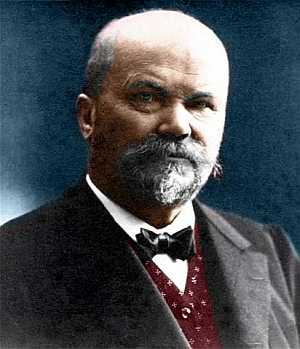
Filip Terč, Father of Apitherapy 1844-1917

March 30 is World Apitherapy Day. It is celebrated on this day because it’s the birthdate of one of the most important early promoters of happy bee stings – a chap named Filip Terč, whom you see glaring at you adjacent to this sentence. Terč was born in a remote village in western Bohemia but ended up in Maribor, Slovenia, where he worked as a physician. As a young man, he suffered badly from rheumatoid pain until, at age 22, he was accidentally stung by an aggressive pack of irritated honey bees. It changed his life. The pain was gone.

Terč, a diligent young doctor, began a serious study of the effects of BVT (bee venom therapy) and published the first clinical trials of the therapeutic effects of bee stings. His work led to the 1888 publication of “Report on the Peculiar Connection between Bee Stings and Rheumatism” in which he presented the results of his treatment of 680 patients with the collective application of 39,000 stings. 82% showed a complete cure, 15% had a partial recovery, while 3% had no relief from their rheumatoid condition. Although his work was published over a hundred years ago and his results have not been disputed, the medical profession has only recently begun to see the link between rheumatism, auto-immune dysfunctions, and some of the elements of bee venom. With immune disorders ranging from multiple sclerosis to allergies on the rise, the use of apitherapy treatments are finally becoming more accepted and generally more widely available. If you’d like to learn more, there is a great collection of materials at the Bees for Life: World Apitherapy Network website.


Posted in Apitherapy, Culture, or lack thereof, History, Stings | Tagged , , | 1 Comment

Ecological Boldness

“Corporate profits trumping ecological needs,” according to the National Farmers Union’s own website. That rather provocative statement is from the NFU’s Vice President of Policy, Ann Slater. Remembering the days when much of the NFU’s musings were simply echoes of agribusiness demands, I find such boldness rather refreshing. And surprising. Ms Slater is responding to the results of the Ontario Bee Health Working Group, which she says is “weighted with representatives of chemical companies and field crop growers” and, she continues, “essentially recommends that the use of neonicotinoid treated seed continue as usual.” This, according to the NFU vice president, is a missed opportunity to promote the “use of more ecological farm practices such as complex crop rotations, as well as to show a real commitment to Integrated Pest Management (IPM) practices, which recommends that pesticides be used only when there is a demonstrated pest problem instead of as routine practice.”

Personally, I don’t know if neonicotinoids are responsible for massive bee deaths. Probably not, as our area (southern Alberta) uses them extensively and has not suffered troubling colony collapses while other areas (west coast BC, for just one example) have far less neonic usage, but had the deaths some people associate with this pesticide. Nor has any independent researcher proven an unequivocal link. There have been far worse chemicals used by farmers in the past and I don’t want to see a return to those if neonictinoids are banned. However, farm practices need to shift towards IPM systems which can help the farmer (by cutting costs and improving product quality) while reducing agricultural stress on the environment at the same time. And I like the boldness of Ann Slater and the NFU’s stand – it is rare to see any farm representative willing to bite the hand that often pays for the donuts at farmers’ meetings.

Posted in Culture, or lack thereof, Pesticides, Save the Bees | Tagged , , , , | Leave a comment

What we don’t know

da vinci

Something Salty

Sometimes I am surprised by what we don’t know about bees. You would think we’d have it all figured out by now. I’m not talking about knowing when to wrap or unwrap hives; start grafting queen cells; split hives; or stack supers. These are largely weather-related and we can’t predict next week’s deep freeze or windy storm. Basic management remains in the realm of art, not science. With years of experience, the beekeeper usually becomes better and better at practicing the art of beekeeping and picking a good time to split, stack, or syrup the bees. Instead, I am talking about basic bee biology – I really thought we already knew bees taste salt with their toes. But that tidbit of knowledge has just now been added to the world’s encyclopedias.

Researchers at the University of Toulouse, writing in the journal Frontiers in Behavioral Neuroscience, have studied the honey bees’ tarsal taste system “through a series of behavioral and electrophysiological” methods. The scientists (mostly from Toulouse, France, but including a team in China) looked at the way bees respond when they step into sweet, salty, or bitter stuff. For bees, the feet can sense salt very, very easily – much more readily than they can taste sweet flavours. There seems to be no ability to taste bitterness through the feet (Hence, they never ‘taste the bitterness of de feet’).

This is new information. According to lead author Maria Gabriela de Brito Sanchez, “these results provide the first integrative study on tarsal taste detection in the honey bee.” So, just like most other insects, bees have flavour buds in their mouth, antennae, and feet. Must be handy, stepping in gooey stuff and knowing whether it’s edible. The only tastes I get from my own toes are sort of like old moldy cheese.

Posted in Bee Biology | Tagged | Leave a comment

About time

Ever wonder why it’s called Savings Time? Ben Franklin, America’s first  inventor/publisher/scientist/states-man/postmaster proposed the idea back in 1760 as a way to save money. You see, his father had been a candle maker so little Ben realized from an early age how expensive it is to light a house at night. Instead of “early to bed and early to rise” making a man wealthy, Ben Franklin figured pushing the clocks ahead could do the same trick without requiring new sleeping habits. So, he invented Savings Time.

It should be easy to remember – “Spring Forward; Fall Back.” Easy, unless you are Toronto’s part-time mayor and full-time clown. Rob Ford’s Twitter-feed mistakenly advised Torontonians last night to set their clocks back instead of ahead. This might be a good plan if you want to fall into Ford’s tactless, homophobic, drug and booze-crazed world. The rest of us will spring forward, if you don’t mind.

Hutterite girls three monkeys

Saskatchewan Hutterites – photo by Miksha

Maybe you are not moving your clocks at all? When I was a beekeeper in southwestern Saskatchewan, I was proudly sticking to Standard Time year-round, just like the rest of the province. Saskatchewan is one of the few northerly places that doesn’t bother with Savings Time. It’s a cow thing – the cows don’t wear wrist watches (or any jewelry or Rob Ford-ish bling) so the cows of Saskatchewan vetoed the idea when it was proposed in legislature back in the old days. Saskatchewan does have a sub-population of timely dissenters: The Hutterites. These good people were among my friends when I was their Honig Mensch, many years ago. But I was cautious not to show up at their huge communal farm during daily prayers, which were offered at 5 – slow time. This Mennonite-type group set their clocks back an hour from the rest of Saskatchewan, so they could coordinate church times with other Hutterite colonies across North America. This also put their clocks at the same time as the Eastern Time Zone, i.e. Toronto Time. (So perhaps Rob Ford was trying to put Toronto on Hutterite time. I think that city’s mayor would benefit greatly if he were to spend a year or two on a Hutterite colony – farming, learning to do real work, learning to share, maybe authentically having the “Jesus Moment” he claimed to have had six months ago.)

Saskatchewan is not the only place that keeps its clock fixed.  There are numerous enclaves of other-time peoples. Arizona does not change to Savings Time when the rest of the United States does. However, within Arizona, the Navajo Nation does move clocks ahead to Savings. However, within the Navajo borders, the Hopi Reservation does not change its clocks. However, living on a ranch in Hopi country is a family where the mother works on the Navajo Reserve, so that house moves its clock. Resulting in a complicated situation where a family’s clock is ahead of the neighbours’ clocks which are behind a surrounding community which is ahead of a state that is behind a country that moves ahead.

If you are among the shifters, rather than the shiftless, enjoy your extra hour of evening sunlight. It is a gift that will dramatically cut your candle-consumption. If you live near the western edge of your time zone, the savings will really pile up. However, considering Saskatchewan bees have the highest annual per colony honey production in North America (about 180 pounds per hive) we need to consider that keeping the bees on a stable clock has its advantages, too. So maybe let them keep track of their own time.

Posted in Friends, History | Tagged , | Leave a comment

Cold, eh?

March 1st. Saskatchewan, Canada.

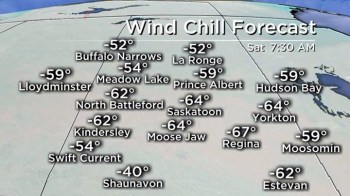
Well this is a bit unfortunate. It was minus 31 in Calgary this morning, the wind picked up and it felt like minus 50. That’s about the same weather whether Fahrenheit or Celsius – the scales meet at -40. So, minus 40 Fahrenheit is also minus 40 Centigrade. Cold in any system. Finger-shattering, lip-splitting cold. Even inside our house – it was 12 degrees in one of our bedrooms this morning. Of course it would have been more uncomfortable had we been camping out this weekend.

Global warming? Just like politics, all weather is local. Yes, we are getting a cold start to March. But it’s not even a record for us – it was once -36 C on March 1st. Meanwhile, the southern hemisphere is finishing off one of their hottest summers. The severe droughts, grass fires, and dust-bowl conditions are being exasperated by extreme heat. An article titled “Australian Summer Melts Records,” published yesterday by the Australian Associated Press and featured in The Guardian, says records for sustained heat have been brutally burnt. Adelaide, for example, had 5 days in a row of over 42C. They haven’t had that before.

Today in Calgary, people didn’t stray far from home. Nor did the bees. March is usually the worst month for winter losses in this area. Bees might survive (even queenlessly) for the span from November through late February, possibly eating as little as forty pounds of honey, but then with longer days they become restless. Queenless and weak hives lose population through drifting on mild days while robust survivors suddenly consume vast amounts of winter stores by rearing brood. At about the same time, honey bees which became adults in September or October are approaching their ‘Best-Before’ date and are expiring. Sometimes dropping like flies. Not sure what this last blast of arctic chill will do to the bees, but it would have been better for everyone if it had turned mild instead of bitterly cold.

Posted in Climate | Tagged , | Leave a comment

Sochi Beekeepers

Circassian Honey Shop

As I was watching the CBC evening national news, I was startled to see a piece on beekeeping near Sochi, Russia. The reporter talked about a group of folks called the Adyghe (Ah-dee-gee), or Circassian, people who have lived in the Caucasus Mountains just north of Sochi for thousands of years. They were among the indigenous people pushed further into hiding when the Russians expanded their empire in the eighteenth and nineteenth centuries. The news piece reported how the natives were left out of the opening ceremonies and left out of the billions spent on infrastructure in Sochi. Instead, the mountain people were given no new roads, no train station, no attention – even though they are just 50 kilometres from the Olympic venue.

Nevertheless, the Circassians hoped the games would draw some tourists up the mountains. With that in mind, they built a beautiful honey museum and shop – bees, honey, and wax have long been part of the culture and trade of these people. The CBC reporter and camera crew drove up to the villages of Bolshoy (Big) Kishmai and Mali (Little) Kishmai and found they were the only visitors. There were no tourists. As safety is a valid concern throughout Russia, and because there are no decent roads and no promotion of the Circassian area inside the Sochi Games site, visitors simply did not head up into the hills to learn about the indigenous culture. Or to buy honey. It was pretty depressing to see.

Posted in Culture, or lack thereof | Tagged , , , | 1 Comment

Madonna and Bee?

Madonna and honey beeAndy Warhol proved that the mundane soup can qualifies as art. In some people’s eyes. A friend sent to me a link to an E-Bay art sale: Madonna and Bee. I suspect the less I say about this, the more respectful I will be. But what the heck. I’ve seen a lot of Marys in my travels. They tend to look like the girl in this image. Young, very pale-skinned – just like the European artists who create her. So, this E-Bay special is not atypical. Except perhaps for the bee she is cuddling. And the rather mischievous look on her face. And the halo – certainly not your typical 16th century Madonna halo. Other than that, it’s not so different from anything else you’ve seen.

I don’t know anything about the artist of Madonna and Bee. But if he/she is reading this blog entry, please send me a note – and explain yourself! Did you create this lovely print just for the money and fame, or is there a deep philosophical message? Or is this simply a celebration of two of the most beloved characters in western civilization? For the rest of you reading this, I’m sure you want a copy. It’s just $5. Plus $2.50 shipping. Mounted in a $60 frame (which you need to supply yourself) you will have an heirloom which future generations will fondly remember you by. Get out your credit card and follow this link!

There are only 10 prints left, so hurry. Unless you’d prefer the Laughing Jesus print, also available on E-Bay.

Posted in Culture, or lack thereof | Tagged , | Leave a comment

Great Reception

honey bee monitor device

How many channels does it get?

Tasmania, respected as the last strong-hold for the Devil and as Australia’s main apple-picking state, has something new to boast about. Scientists are outfitting 5,000 bees with electronic tracking devices. The glued-on sensors are RFIDs (Radio Frequency Identification Devices) which activate monitor stations whenever the bees buzz by. This makes them similar to the vehicle passes you may have hung on your car’s mirror for tollway access, especially in Europe. (I’m not sure if the technology has arrived in North America yet.) But it is nothing like the GPS tracker inside Fido’s collar or my slippers. Those actively broadcast location information. That level of technology is still a bit too cumbersome and too expensive to burden either a bee or a beekeeper’s budget. So instead, this is a simpler passive program.

The system is a swarm-sensor array, although this doesn’t mean the researchers are expecting to track swarms. Rather, it means vast amounts (swarms) of data are amassed at a large number of points the bees might frequent – such as apple orchards, watering holes, sugar refineries. It’s a brilliant project. Not much of a fashion statement for the hapless honey bees involved, but a brilliant research project, nevertheless. During the past century, we used to sit by the beehive and grab a bee by the wings, affix a dab of colour on her thorax, make a few notes in the journal, then run around to the orchards and watering holes with butterfly nets, trying to retrieve a few samples. It worked, but the sample set was certainly not a swarm of 5,000. This new technique, developed by Dr Paulo de Souza of Australia’s CSIRO Commonwealth Scientific and Industrial Research Organization, is expected to provide useful data suggesting the way bees interact with the environment, encounter pesticides, and spend free afternoons. The system may even anticipate strategies to combat Colony Collapse Disorder.

According to research leader de Souza, “This is a non-destructive process and the sensors appear to have no impact on the bee’s ability to fly and carry out its normal duties.” This obviously reduces the perception that some bees are being hurt to help other bees. (Although that last sentence sums up the essence of the bees’ communal society.) It is also essential that the monitor not encumber the forager at her chores, else the data might be meaningless. De Souza is probably right thinking the sensors don’t interfere with the bees’ work. Honey bees are amazing animals. Carrying a backpack would not send the worker off to school nor is she likely to sit at home trying to incorporate the device into her hive’s satellite television receiver.

Posted in Bee Biology, Science, Strange, Odd Stuff, Tools and Gadgets | Tagged , , | Leave a comment

Ground Hog Day

Calgary’s Groundhog Doppelgänger

Pork burgers, anyone? Today is Groundhog Day, which makes me think of ground beef, hamburger helper, and ground hog. And the weather. We, of course, are far too sophisticated to depend on a rodent for our long-range forecast, even if the animal’s prediction is roughly as accurate as a room filled with big blue computers crunching the weather service’s latest data through their most promising algorithms.

Can bees predict weather? There are plenty of stories of beekeepers in the apiary noticing that all the bees are suddenly heading home, none going out to forage. The beekeepers look up and a cyclone or hail storm or lightning ball or wall of water is rushing towards them. That’s likely true. The bees probably respond to rapidly dropping barometric pressure by heading for shelter. They don’t like being caught in the rain any more than a beekeeper does.

But what about competing with Punxsutawney Phil by making a long-range forecast? Again, I have heard beekeepers claim a tighter broodnest and extra bee glue (propolis) filling cracks between the boxes means a rough winter is ahead. I don’t know. A congested broodnest is likely because of a late-season nectar flow while excess propolis means the gummy parts of pines and poplars that secrete resin have been extra active – and the bees have been extra busy hauling the stuff home. Do they sense a tough winter? I’m not sure what clues bees see that we don’t. But my mind is open on this one.

There is also the legend that honey bees nest higher up in trees when they anticipate a winter with lots of snow. This one is extremely unlikely because wild bees swarm in the spring, many months before winter snows are expected. And here in western Canada, hives buried under a meter of snow actually survive better with the extra insulation than hives sitting out bare and exposed on the windy prairie.

By the way, the Calgary groundhog (or Richardson’s Ground Squirrel, in our case) faced a dark shadow all day. According to the myth, we will have only six more weeks of winter. That places spring near March 20th. No big surprise. That’s what the calendar says, too.

Posted in Bee Biology, Climate, Culture, or lack thereof | Tagged , | Leave a comment