Running for Betty

Ron on wheels

Ron on wheels

Professor Hawking

This weekend is Calgary’s ALS benefit. Calgary-area readers of this blog are invited (urged!) to head over to North Glenmore Park and “Run for Betty.” 20 years ago, Betty died from ALS, aka Lou Gehrig’s Disease. She was an avid runner before her illness. Like most victims of the disease, she passed away within months of her diagnosis. Her friends wanted to honour her memory, raise awareness of the disease, assist other people who become afflicted, and help search for a cure – so they started the annual fundraising-run/walk. Our mayor, Naheed Nenshi, has proclaimed June “ALS Awareness Month” here in Calgary.

You can do your part by coming out to cheer and support the runners. ALS is an incurable illness of unknown cause, always fatal, and it manifests itself with the complete loss of motor neurons. Within months, most people with ALS cannot walk, talk, use their hands, and eventually cannot breathe. Some of us have been able to hang on for years and years with slowly progressive variants – but that’s very rare. At least 90% of people with ALS do not survive past 3 years after their diagnosis. It can affect even the most active people (even beekeepers!) and even the smartest people (famously, Stephen Hawking). Do your part, if you can – hope to see you Sunday at 10 for the big event! I’ll post pictures afterwards… Meanwhile, if you’d like to support a great cause, here is a link to make it happen. I can tell you from my own experience, the ALS Society brought all sorts of equipment to my house to help me. This is a good organization.

Posted in Culture, or lack thereof, Friends | Tagged , | 1 Comment

Did I goof up, or what?

I did it again!

Last week’s blog post drew a few interesting responses. Not from Monsanto, whom I expected would be outraged because I wrote that it is perhaps justifiable to vilify “the huge multinational for all manner of environmental ills.” Instead, incredibly, the nasty letters I got were from people who seem to be environmentalists and my sin was pointing out the horrible truth that Monsanto does not manufacture neonicotinoids!

Here is what one of the letters sent to me said: “I read your misinformed post … and would appreciate if you did some fact checking prior to your future posts… Sorry your life seems to revolves [sic] around baseless bullying behind a keyboard, and refusal to correct your errors. Perhaps a post about your own bad journalism attempt is in order.” I googled the author. Turns out the note was sent to me by a school teacher! That’s why you see the picture of me, or someone who looks like I did when I was ten years old, wearing the dunce hat. I have no patience for people who resort to name-calling in any discourse – whether on the internet or in the school yard.

The same person told me to check my facts, adding that Monsanto owns Dekalb and Dekalb manufactures neonicotinoids. Dekalb is a seed company. It buys neonics and treats some (but not all) the 48 varieties of corn seed which farmers may buy from Dekalb. . . So, let us try, once more, to set the facts straight – Bayer makes neonics. Why is that so painful to hear? And why is that a reason to send rude e-mail to a real beekeeper, someone who has produced millions of pounds of honey, grafted thousands of queen cells, provided bees to pollinate billions of flowers, and has actually depended on beekeeping for a living?

But wait a minute. There is more. Another note from someone else. This time respectful, except for a little snipe at the end that said, “An honourable man would append a correction to the original blog post.” If I don’t then I am (at least in one person’s opinion) dishonourable. The correction being sought is that I should write what the correspondent would like me to write. As it turns out, the correspondent has some valid points.

In my original blog (which you can see just below), I state that Monsanto does not make neonicotinoids, Bayer does. Beyond that, I offer almost no actual facts that could be retracted. I wrote: “The March Against Monsanto trekked through the streets of Toronto hoisting the bees’ coffin.” It was Toronto, I fact-checked. I wrote that the protest “was intended as a statement against neonicotinoids, which most of the participants blame for the bee deaths.” Admittedly, I don’t know this, but the news reporter covering the story wrote “The beekeepers called for Monsanto and its subsidiaries and allied companies to stop producing GMOs and neonicotinoids.”

I do ask the question, “Why is the protest being directed against Monsanto?” when Monsanto does not make neonicotinoids. So, really, it seems that since I dare ask a question, I receive interesting fan mail. Regular readers of this post know that I take an off-the-wall approach to almost every subject. I make light of the European fad of the honey massage, I humour Prince Charles’s beekeeping (though I like the man), I question whether beekeepers are environmentalists when we propagate our invasive honey bee which displaces native local bees. To ask me to retract facts is like sending indignant letters to the Onion. As I write in my permanent side-notes on this same blog page, “Opinions expressed herein do not necessarily express anyone’s opinions – not even the author’s” and “If you strongly disagree with things you find here, send Ron a note – or keep reading as you are likely to find he also advocates an opposite point of view elsewhere on the website.” Hate mail is uncalled for.

Why was the Toronto bee protest directed against Monsanto instead of Bayer or against the poor farmers trying to keep their family businesses alive? Another writer (who I think was at the protest) patiently explained to me that Monsanto sells corn seed treated with neonics and the bees sometimes gather pollen from corn (this is rare – corn does not have nectary flowers to attract bees, but if bees are desperate they may collect corn pollen from the dangling tassels).

It should be noted that not all corn seed is treated with neonicotinoids – Dekalb, which is owned by Monsanto, offers 48 varieties of corn seed, about two-thirds have been treated by some form of neonics, the others have not. It is up to the farmer to select the variety they want to grow. Two-thirds is a similar ratio among the 300 growers of Ontario corn seed in the Chatham-Kent area. But I am off on a fact-chase here, I’ll try to control myself and continue with the idea that some of Monsanto’s corn seeds that farmers are planting in southwest Ontario (most of it over 200 kilometres from Toronto) have been treated with neonicotinoids and this insecticide kills honey bees.

But the bigger question remains – is Monsanto the cause of the horrific bee losses in Ontario? Or are these sorts of protests deflecting attention away from the real cause of the total and sudden collapse of bee colonies? Ultimately, the protests may do more damage to the bee industry than good. Now that it is assumed the bee slayer has been found, other research projects will not receive the significant attention they perhaps should.

I expect that neonicotinoids will be banned. Among the dozen e-mails sent to me on this subject, one stated that an Ontario county has already agreed to the ban. That person also told me that 99% of corn grown there has been treated by neonicotinoids. With the ban, I am wondering what those farmers will do. One alternative, of course, is they could quit farming. Or maybe they could grow tobacco, which Stompin’ Tom once told me used to be a big deal around Tillsonburg. Most likely, they will continue growing corn, then they will spray their fields with massive insecticide aerial assaults that drift across hedgerow and bee yard alike, killing everything. That’s the way it was before the neonicotinoids, and that’s the way it will be again. I had seen hundreds of colonies killed at the peak of production in a single afternoon. Unfortunately, those non-beekeepers and those name-calling school teachers with two hives of bees and no long history with beekeeping can’t imagine what this was like. But it won’t matter, they will have already moved along to the next trendy-thingy.

I want to end this blog entry with one of the e-mails I received. Fran Freeman was also at the protest. She presents a well-reasoned argument about why Monsanto was an appropriate target so, having received her permission, I am ending with her thoughts on the matter:

On 03/06/2014 9:44 AM, Fran Freeman wrote:
Hi Ron
Saw your May 25/14 Bad Beekeeping blog and was more than a little surprised that you mocked the Monsanto March/Requiem for Bees. The march is an annual event and the decision was made to make mass bee die-offs the particular focus this year. No one that day was claiming, as you allege in your blog, that Monsanto makes these systemic pesticides, rather they use them. Neonics are applied as a seed coating on approximately 90% of corn seed available in Ontario and it is Monsanto that produces this seed. By buying out other seed suppliers, Monsanto has sown up the market very tightly so that it is extremely difficult to obtain corn seed that has not been treated with clothianadin or other neonics. PMRA analysis of poisoned bee samples provide a clear causal link to both seeding in the spring and tasseling in later summer of the treated corn. Research on sublethal effects of neonicotinoids is amassing and includes impaired fertility, failure to thrive, increased susceptibility to pathogens, and increased winter mortality. Our commercial beekeeping industry in Ontario (honey production, pollination services and bee breeding particularly of hygienic bees) is being decimated. Many third- and fourth- generation beekeepers have reached the point where they feel they cannot continue beyond another year. Consequently the call May 24 was for an immediate ban on the use of neonicotinoids.
– Fran Freeman

Posted in Culture, or lack thereof, Ecology, Pesticides, Save the Bees | Tagged , , , | 1 Comment

The bees’ funeral

bees funeral

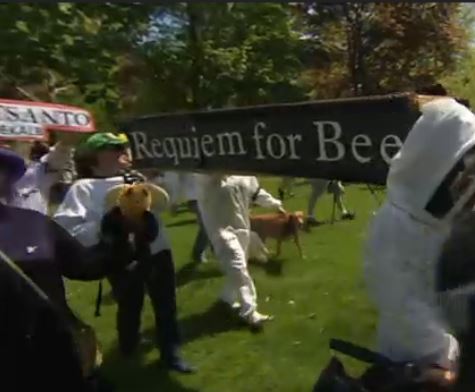
Requiem for the bees

Dead bees are back on the evening news. Last night our national news broadcaster, the CBC, had relatively extensive coverage of a honey bee funeral in Toronto. These Canadian heroes, encountering death in the line of duty, were celebrated with a fitting send-off to wherever bees go when they shuffle off their mortal coils. In a headline that reads “Anti-GMO protesters rally against Monsanto – Beekeepers fill coffin full of thousands of dead bees” the CBC tells us how the third March Against Monsanto featured a “Requiem for the Bees.” Ontario beekeepers collected several million dead honey bees and dumped their bodies into a casket of sorts. The March Against Monsanto trekked through the streets of Toronto hoisting the bees’ coffin. It was intended as a statement against neonicotinoids, which most of the participants blame for the bee deaths.

But wait a minute. If the bee deaths are caused by neonicotinoids, why is the protest directed against Monsanto? Here is a little known piece of trivial, a fun fact that People Who Hate Monsanto almost invariably ignore: Monsanto does NOT make neonics. I know it is quite trendy to despise Monsanto and to accuse the huge multinational for all manner of environmental ills. Perhaps justifiably. But it makes the protest look pretty silly when the wrong monster is blamed. Bayer (the Aspirin company) manufactures neonicotinoids. If you are going to fight evil, at least know your opposing team’s dark-side forces. This is important. It is too easy for the dark side to dismiss people who care about the environment if ignorance and rage take the place of an educated and informed response. Attack the guilty parties, do it thoughtfully, with proof and fact. Know which company manufactures neonicotinoids and know how the poison is killing bees. It makes for a much stronger protest.


Posted in Culture, or lack thereof, Pesticides, Save the Bees, Strange, Odd Stuff | Tagged , , , | Leave a comment

Bee Spill

bee truck accident

Another bad spill.

Glad I’ve never had one of these. This looks bad. The 460 double-story colonies being carried from south Florida to Maine’s blueberries for pollination were spewed after the driver rolled over on an I-95 exit ramp in Delaware. The 55-year-old driver, Adolfo Guerra of Miami, was fined for carrying an “insecure” load. His cargo stung him several dozen times and was hospitalized. Police responded with traffic control, firemen hosed everything (probably drowning bees in the process) and local beekeepers arrived to rehive bees and reassemble bee boxes. The exit ramp was open 12 hours later.

Posted in Beekeeping | Tagged , | Leave a comment

Bee Meetings

bee club

A great bee club.

Best Bee Club in the World? Attended the Calgary & District Beekeepers Association monthly meeting last night, and as I drove home in the ten o’clock twilight, my mind recycled some of what I had learned. There was an absolutely stellar presentation on spring management – focused mostly on ways to make splits, or increases. The two gentlemen knew what they were talking about and their enthusiasm was infectious. Part of the discussion was around the 2-queen systems which were praised in every way except one – here in southern Alberta, 2-queen management leads to hives making four or five hundred pounds of honey – hives get stacked so high with supers that they are hard to manage. Other than that, it was pointed out that for the price of an extra queen, the producer may double their crop, reduce swarming, and with the variation of genetic make-up in the hive, improve the hive’s wintering and its house-cleaning habits. There was plenty of talk around the mechanics of making nucs, too. In a sentence: pull two or three frames of brood (without taking the queen) from the best hives (which reduces swarming) and add two or three frames of young bees from brood combs, drive off to a new location a few miles away, and put a caged queen into the newly created split. The result, at this time of year, is a producing colony.

So, there was good, practical advice for Calgary-area beekeepers. But I was equally impressed with the huge number of committees and activities sponsored by the bee club. This is the time of year for swarms, so there is a swarm committee. School bee presentations were addressed by the relevant folks. Beekeeping displays were at the annual science fair, several regional country fairs, Aggie Days, and will be at the Calgary Stampede. Honey judging at the Millarville Fair in August and the Chestermere Fair in September require honey judges and their training and recruitment are club responsibilities. There are committees that liaison with the city. The bee club is involved with a research project at a local college (South Alberta Institute of Technology) and is designing a steam-wax press for rendering old combs for the club’s members. Informally, some members loan extractors to other members. A group in the bee club sent delegates to pick up packages and queens from importers and there is a group that sends equipment for irradiation treatment. Classes in queen rearing and disease inspection are regular events as is the annual summer BBQ. There are monthly formal meetings for the 100 members (65 were at last night’s meeting) and there are casual get-togethers for beer and pizza at the veteran’s hall in Kensington. There is much to admire about this group.

Posted in Beekeeping, Friends | Tagged | Leave a comment

A Web Site Question

I have a question for my geeky friends. I have been approached by the Chinese government regarding this website – http://www.badbeekeeping.com. A company inside China wants to register the domain name http://www.badbeekeeping.com.cn – I asked the Chinese government (actually, a director at their internet regulatory board) to deny the request, and told them I’ve had this domain name for 15 years and it is named after my book, Bad Beekeeping. But then I received an e-mail directly from the company. The Chinese spokesman wrote:

Our company based in chinese office, our company has submitted the “badbeekeeping ” as CN(.cn/.com.cn/.net.cn/.org.cn) domain name and Internet Keyword, we are waiting for Mr. Jim’s approval. We think this name is very important for our products in Chinese market. Even though Mr. Jim advises us to change another name, we will persist in this name.

Well, this sounds ominous. I can not stop anyone from using a domain name identical to mine if it has the ‘.cn’ extension. Does it matter? Except for the obvious fact that I myself will not be able to later register the same name in China, does it matter in terms of how internet users will access my current site? If you know the answer, please send a note to me at (miksha@shaw.ca). Thanks!

Posted in Strange, Odd Stuff | Tagged | Leave a comment

Same Planet?

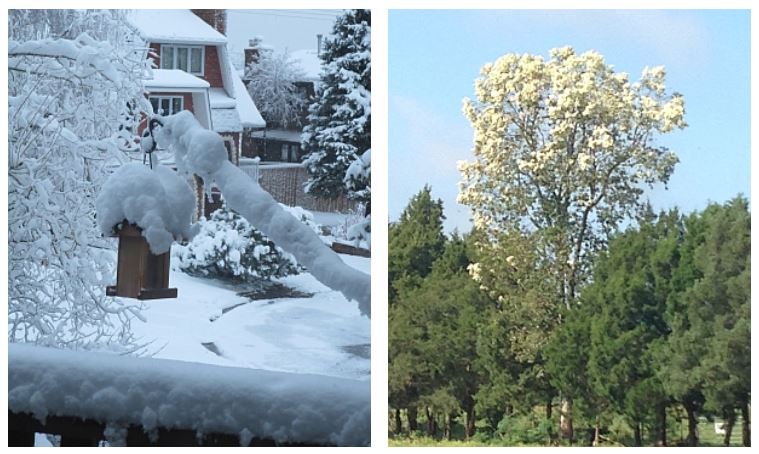
May 4th in Canada; May 4th in Florida Notice a difference?

May 4th in Canada; May 4th in Florida Notice a difference?

Living in cold Canada, it’s easy to forget some people have it hot. Especially right after we’ve had a big snowstorm – half a metre (over a foot) of white wet stuff in the past couple of days. So I thought I’d share the view from our back door. Meanwhile, my brother David has sent a reminder that not all trees covered in white are covered in snow. You can see his proof – he planted this eucalyptus on his Florida farm 15 years ago as a nectar source for his bees. The tree is flowering (and buzzing) brilliantly partly because central Florida had 15 cm (6 inches) of rain in the past week. And partly because that’s the way it is in the Sunshine State.

Posted in Climate | Tagged , , | Leave a comment

Rise of the Bee Thieves

Cupid honey thief Durer

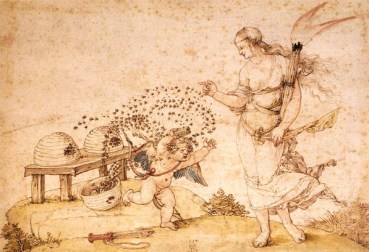
Dürer’s Honey Thief

Hive theft has been around ever since there were beehives and beekeepers. For example, the classic watercolour of Cupid, the Honey Thief, by Dürer was painted in 1514. Jumping ahead just a little, during the early 1980s, when I bee-kept in Saskatchewan (summers) and Florida (winters), an inordinate number of hives began disappearing in south Florida. Turned out that a beekeeper with a serious drug problem was stealing hives at night, taking them to his farm, shaking the bees into his own boxes, extracting the honey, melting the wax, then burning all the stolen branded equipment. By morning, there was nothing to show of the stolen bees except a drum or two of honey, some blocks of wax, and a pile of ashes in his burning pit.

With honey bees dropping like flies from CCD, pesticides, malnutrition, or poor beekeeping, bee thefts are back in the news again. Some beekeepers can’t resist repopulating their hives with other people’s bees. Bee rustling is about the same as cattle rustling. Darkness, daring, and the right equipment are all the thief needs. Experience is useful – the bee robbers are always beekeepers. They know the value of what they are taking, know how to load the illicit cargo, and know what to do with the bees once they have them.

Someone ran off with 30 hives on the outskirts of Calgary this spring, but this is not just a local problem. A news report from France tells of 61 colonies (worth 60,000 Euros) stolen in Loire and recovered hundreds of kilometres away in Brittany. In Australia, The Guardian tells about a dozen hives stolen near Ipswich while the BBC mentions “45,000 bees, 3 queens, along with 3 honeycomb frames” stolen in Craichie, Scotland and a separate theft of “6 queens and 18 honeycomb frames” from a farm in Coupar Angus last week. Similar robberies have been reported in California and near Houston, Texas, in the USA. Bee theft is tough to stop – most beekeepers keep their bees in fields and orchards far from their own homes. Landowners might not be concerned about a late evening bee truck visiting the property somewhere in the woods behind their home, thinking it is the owner/beekeeper moving some hives, not suspecting it is a bee thief. Usually the legitimate owner can prevent theft if the hives are behind locked fences. Branding the wooden parts helps, but as I mentioned earlier, a really desperate thief may simply remove the good parts and burn the wood.

Posted in Beekeeping | Tagged , | Leave a comment

The Empty Beekeeper

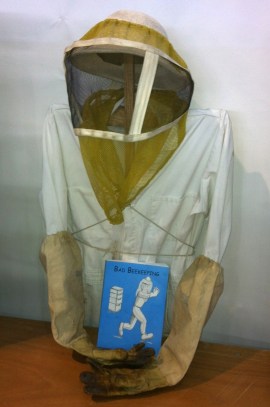
bad beekeeping bookAt first it felt a bit creepy when my wife texted this picture of an empty beekeeper holding my book. Then I was flattered. My wife was attending the Calgary Science Fair where our son’s entry (a behavioural-science study) was being judged. There were over a thousand entries, the science fair filled the Olympics Oval (built for the 1988 Winter Olympics, the big venue is used for a lot of conferences and programs). In addition to the children’s science project entries, there were several displays set up by Calgary clubs and organizations to show various ways science is used in the community. For example, the university’s health sciences department displayed some software used by doctors and a geology group demonstrated something about GPS. But the best-attended booth was the beekeepers’ exhibit – they had an extractor, posters, free comb honey samples for the kids, demonstration hives (without bees), eager beekeepers who talked bees with the youngsters, and of course, the empty beesuit holding the Bad Beekeeping book. Why not?

The Calgary Bee Club is a fantastically active group of amateur beekeepers who love their hobby and share their enthusiasm with everyone within earshot. Years ago, I was active in the group, even served as president for a number of years, but I lacked the energy and organizational skills of the new group of club enthusiasts. These beekeepers arrange programs all over southern Alberta – elementary schools, the Aggie Days at the Calgary Stampede grounds, local fairs and farmers’ markets, honey-judging contests. I should be more active with the group, they are an exuberant group of people, but I haven’t attended their meetings in months. I had no idea they were setting up at the science fair. (And no idea they sent an empty beesuit to hold the bad beekeeping book.) Planning, staging, and staffing an event like this is a lot of hard work. Kudos to the club for promoting honey bees to the kids at the science fair!

Posted in Culture, or lack thereof, Strange, Odd Stuff | Tagged | Leave a comment

Dead and Dying

almond tree in blossom

California’s State Tree?

California almond pollination season is finished. And so are many of the bees which made the trip to the west coast to participate in the largest honey bee mosh pit ever in the history of beekeeping. (For those of you over 30, I’ll define mosh pit: “The controlled violence of a mindless jumble of enthralled dancers and screamers (usually experiencing a buzz) participating in a large mutually attractive event.”

Mosh pits typically occur at concerts, but California’s honey bee mosh pit includes a beehive staging area where hundreds of thousands of colonies are off-loaded from semi-trucks arriving from New York, North Carolina, the Dakotas, and perhaps every state except Alaska and Hawaii.

The beekeepers, enticed by pollination fees now approaching $200 per hive, send the little buzzers via big trucks in December or January, parking them in huge apiaries (some ‘beeyards’ contain ten thousand hives on a few acres) where the bees are fed sugar syrup and pollen substitutes to keep them alive until the almonds blossom. The flowers usually open in February and the beekeepers again load the bees and move them into the groves. Since most of the pollinator bees are arriving from colder climates, the California sunshine excites them, the queen lays lots of eggs, the workers head out looking for flowers (they don’t find man), and the beekeeper feeds the colonies to encourage the insects’ population growth. The unnatural diet and close proximity to millions of neighbour bees is a bit rough on them. So are the insecticides sprayed around California’s countryside.

This year, beekeepers claim a quarter of all their honey bees died during almond pollination season. The direct cause seems to be insecticides, not malnourishment or overcrowded conditions. Increasingly, something called a “toxic tank” of poisons have been blamed. Most almond groves are controlled by enormous agribusinesses, not ma-and-pa growers. These farm corporations have been accused of mixing multiple toxins in a delicious cocktail that includes neonictinoids, fungicides, and various pesticides. Mixing such a toxic blend, instead of targeting specific problems with single passes, saves time and money. But it also escalates honey bee deaths. During the 2014 pollination season, an estimated 17,000,000,000 (17 billion) bees died from the sprays.

Sticking with the grim economics, that would be about 400,000 colonies at a cost of $200 each, an eighty-million dollar value. OK, in today’s economy, that is admittedly pocket change. But 400,000 hives have quite a multiplier effect: they add one billion dollars to the almond producer’s crop, then the same bees (if they hadn’t been killed) would travel to pollinate blueberries, cherries, apples, cukes, melons, and squash, where, if they were undead, they would have given consumers another four billion dollars worth of food. Many of the beekeepers who lost bees in California will not return to pollinate almonds next year – they have had enough death and destruction to last their lifetimes.

Lawsuits have been launched. Not so much against farm corporations, though that has been happening, but, significantly, the Environmental Protection Agency has had a legal notice of complaint filed against it. Beekeepers and environmentalists allege the watchdog has not done enough to test and regulate poisons, educate farmers, or protect bees. Specifically, the lawsuit claims that in “a vast and extremely risky experiment, EPA has allowed over two million pounds of clothianidin and thiamethoxam to be used annually on more than 100 million acres and on dozens of different plant crops without adhering to existing procedural frameworks and with no adequate risk assessments in place.” The plaintiffs also allege that the EPA approved the chemicals “without affording notice in the Federal Register and the opportunity for public comment, in violation of the FIFRA and the APA.”

Perhaps you are thinking the people who are suing the government for their lack of protection are a bunch of bleeding-heart liberals and wild-eyed environmentalists. Think again. The key plaintiffs include beekeeper Bill Rhodes, a former professional football player from central Florida, a gentleman I knew when I kept bees there some years ago. In those days, I saw Bill retire after two seasons with the Canadian Football League (which followed some outstanding years as a lineman at Florida State) and then Bill bought 50 hives, which he expanded to 400. Thirty years later, Bill Rhodes owns and operates 8,000 colonies. With his family, he also farms in Florida and Georgia. Bill is not a wild-eyed anything. He is practical, realistic, and he works very, very hard.

Many of us libertarian types are beginning to rethink our politics. We generally favor being left alone. We don’t think any government should control how we live, the people we live with, or what we do at home. We don’t want to pay high taxes so corporate welfare porkies can take salaries of ten million dollars funnelled to them through government subsidies. We have insisted on a lean mean government, but our carefully purchased politicians have cut only those things least likely to bite their fingers – the EPA, created by Nixon in 1970, has especially taken a hit. We have encouraged everyone – including agribusiness – to do whatever they want. Meanwhile, by insisting on trimming government spending, we have snipped the courage and funding from the Environmental Protection Agency, resulting in a toothless tiger that barely purrs. It now has neither the manpower nor the regulations to stop the incessant pollution and the persistent destruction defacing the landscape and slaughtering the bees.


Posted in Beekeeping, Ecology, Pesticides, Pollination | Tagged , , , , | Leave a comment