
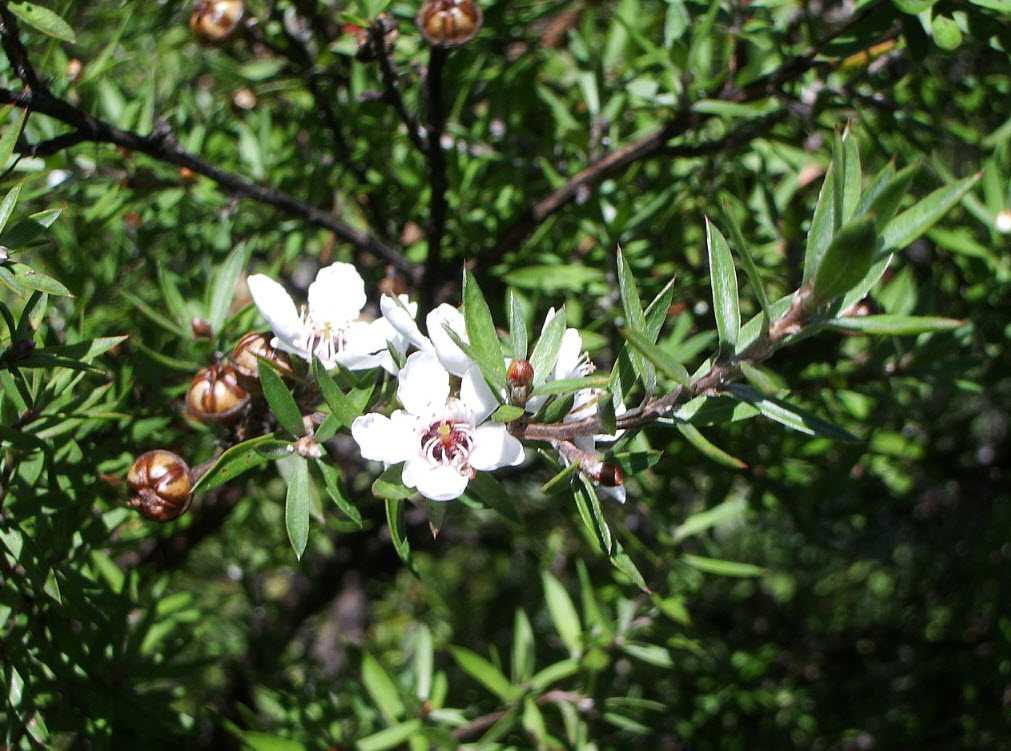
In this podcast episode, I explore whether all mānuka honey is “fake,” tracing its unusual rise from an obscure (and unpopular) New Zealand honey to a globally coveted, heavily counterfeited product. The story begins with a look at the antibacterial properties of honey, which is largely explained by natural hydrogen peroxide produced through glucose oxidase. Mānuka, however, contains an additional antimicrobial factor: methylglyoxal (MGO), derived from dihydroxyacetone (DHA) in the nectar of the mānuka tree, Leptospermum scoparium.
We follow how a New Zealand science teacher, Kerry Simpson, and a researcher, Peter Molan, first demonstrated mānuka’s unique non-peroxide antibacterial activity in the 1980s. Their findings initiated decades of research showing mānuka’s clinical usefulness, especially in wound care. As demand exploded, fraud followed. At one point, far more “mānuka” honey was sold globally than New Zealand could produce, leading to recalls and prosecutions for adulteration with synthetic MGO and DHA.
In response, New Zealand’s Ministry for Primary Industries (I love that name!) created the world’s strictest honey authentication system: four chemical tests and one DNA test are required for any exported mānuka honey, distinguishing monofloral from multifloral batches. Additional grading systems, like UMF™, incorporate MGO levels, DHA, DNA, and heat-damage markers such as HMF, ensuring quality and traceability.
The episode closes with thoughts on mānuka’s thixotropic texture, distinctive flavor, and my own experiences using it on minor wounds. While not a cure-all, mānuka honey emerges as a scientifically-supported specialty honey with genuine antimicrobial properties and a product that requires rigorous science and regulation to protect its authenticity.
This episode was recorded in November 2025.
There are already over 60 episodes of About Bees, Culture, and Curiosity. And you can listen to all of them completely free. I’m amazed that I have so many already. Sort of like when you are extracting honey. At first, just a few drops piddle out of the extractor, then a few hours later, you have some containers filled. Soon, a big truck arrives to haul off a semi load of 65 big steel drums of honey. It’s been like this with the podcast.
By now, almost everyone knows how to access a podcast. Mine – About Bees, Culture, and Curiosity – can be found on Apple Podcasts, Spotify, Podbean, iHeart Radio, Player FM, Deezer, and a dozen other places – including this special website for my podcast. Go to your favourite app on your phone or computer and enjoy.


I worked on the South Island years back, Ron…..no Manuka, but Kanuka. Stories were thick about guys scrapping over Manuka sites on the North Island. The guy I worked for produced lots of aphid poo “honey”…..I refused to eat it.
LikeLiked by 1 person
The South Island must have been quite an adventure!
I’m not fond of honeydew (aphid honey), either. But I was surprised that I liked manuka.
LikeLike
I have tried Manuka and I do not like the toast at all. Reminds me of propolis, pollen and beer. I prefer Local from hobbyist or smaller outfits rather than ginormous corporate entities. I guess that crap is an acquired taste, let them spend their money on cochinada. As for the beer, never like any alcohol. I rather have Pico de Gallo Muy picoso.
LikeLike
If everyone had the same preferences, it would be a very dull world!
Thanks for writing!
Continue enjoying your local honey.
LikeLike