Polar Vortex Insurance: Extended to Beekeepers!

Our local Auto Club (Alberta Motor Association) is offering Polar Vortex Insurance. This is a great new feature (for members only) – if the temperature stays at -25C, or colder, for any 14 consecutive days, each paid-up member gets to file a claim with the insurance company and collect a 14-day tropical holiday.

I have heard that they are considering a special insurance clause to also replace any dead overwintered honey bee colonies at the same time (for members only). They will replace them with tropical bees, as long as a ‘clean health’ certificate shows that there was never any nosema, dysentery, starvation, viruses, varroa mites, chalk, European, or American foul brood present at any time in the past.

This special offer from AMA Insurance was announced today, April first. Once again, our motor club is a trend-setting organization. Nice work, folks!  Read the details here – it’s worth your time.

Posted in Climate, Humour, Save the Bees, Strange, Odd Stuff | Tagged , , , | 3 Comments

March 30: World Apitherapy Day

Today is World Apitherapy Day. And it’s my birthday.  Coincidence? Maybe.

Apitherapy, which means using bee stuff for health, can include eating pollen, propolis, wax, royal jelly, bee larvae, and honey – or rubbing them on your face. But for many, apitherapy is bee sting therapy. Stings are sometimes promoted as a treatment for autoimmune disorders, like MS and rheumatism. Less frequently (but with more notice), bee venom is an ingredient in skin creams  – as you can read here. (And here, here, and here.) However, a recent death due to a bee sting administered as apitherapy is newsworthy.

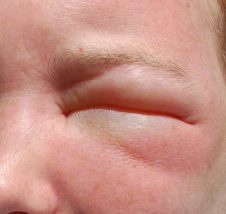
Just winking?

I don’t want to deflate the World Apitherapy Day balloon, but if you’re not careful, bee sting therapy can be fatal therapy. Most long-time beekeepers have been stung thousands of times. (That’s not an exaggeration.) We may forget that, for some people, a bee sting can be much worse than a bit of swelling, redness, and pain. A single bee sting can kill. Although bee sting therapy may work wonders on some auto-immune syndromes, stings might send a patient into systemic shock. That’s what reportedly happened in Spain.

A 55-year-old woman was undergoing bee sting therapy to treat stress and muscle fatigue. Her fatal sting was not her first bee sting – she had reportedly been getting sting therapy monthly for two years. Her fate is really unusual. If a severe reaction occurs, it is usually within the first few treatments. Sadly, although she had at least 20 previous sting sessions over many months without incident, the woman suddenly developed a “loss of consciousness immediately after a live bee sting,” according to the Journal of Investigational Allergology and Clinical Immunology:

During an apitherapy session, she developed wheezing, dyspnea, and sudden loss of consciousness immediately after a live bee sting. An ambulance was called, although it took 30 minutes to arrive. The apitherapy clinic personnel administered methylprednisolone. No adrenaline was available. When the ambulance arrived, the patient’s systolic pressure had dropped to 42 mmHg and her heart rate had increased to 110 bpm.

The woman never regained consciousness and later died from organ failure at hospital. Such bee-therapy fatalities are rare. Only one other treatment is known to have ended a life. However, a meta-analysis of several hundred studies showed that a significant number of therapies have caused serious reactions. The figure given in the analysis (Risk Associated with Bee Venom Therapy: A Systematic Review and Meta-Analysis) indicated that 12% of people undergoing bee venom therapy from live stings (as opposed to physician-administered controlled injections of bee venom) experience serious reactions.

In two of the courses which I help teach – Making Money from Honey and Beginner’s Beekeeping, We always show a slide about bee sting therapy. For the beginners’ group, I mention it because many new beekeepers know the health benefits of a jab of bee venom, as seen on YouTube. We try to be sure that they understand the risks involved. For more advanced beekeepers, I mention bee sting therapy as something they may have considered as a source of income (and a way to help people). In both courses, I strongly advise against stinging anyone. Intentionally inflicting bee venom so that a client may gain health benefits might be considered “practising medicine without a license.” And you could kill someone.

I don’t want this blog posting to be an anti-apitherapy diatribe. I think that there is a lot of evidence that bee sting therapy can help some people some of the time. I’ve met people who claim that they are alive and active today because of bee stings. But I still refuse to get involved in administering the treatments myself – I’m not a trained first-responder. If something goes very badly wrong, the patient needs to be in the hands of someone with proper emergency experience.

Filip Terc apitherapy

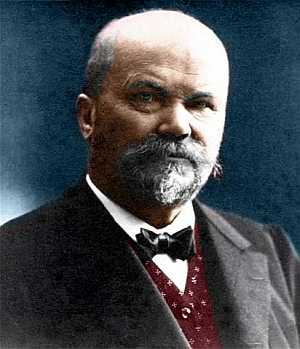
Filip Terč, Father of Apitherapy 1844-1917

That’s my soap box speech for apitherapy caveats. You may wonder why March 30 is World Apitherapy Day. Today is not only my birthday, but it’s also the birthdate of the most important early promoter of healthy bee stings, Filip Terč, whom you see glaring at you adjacent to this sentence. Terč practiced medicine in Maribor, Slovenia, over a hundred years ago. As a young man, he suffered badly from rheumatoid pain until, at age 22, he was accidentally stung by an defensive mob of irritated honey bees. It changed his life. His pain was gone.

Terč began a serious study of the effects of bee venom therapy. He published the first clinical trials of the therapeutic effects of bee stings in the 1888 publication “Report on the Peculiar Connection between Bee Stings and Rheumatism”. He presented the results of treating 680 patients with the collective application of 39,000 stings. (An average of 60 stings/patient, administered over several months.)  He claimed that 82% experienced a complete cure, 15% had partial recovery, and just 3% had no relief from their rheumatoid condition. Although his work was published over a hundred years ago and his results have not been disputed, the medical profession is still cautious about the link between rheumatism, auto-immune dysfunctions, and some of the elements of bee venom. With immune disorders ranging from multiple sclerosis to allergies on the rise, the use of apitherapy treatments are finally becoming more accepted and generally more widely available. So, with cautious caveats, celebrate World Apitherapy Day. (And send regards to all those beekeepers with birthdays today).

Posted in Apitherapy, Culture, or lack thereof, Outreach, People, Stings, Uncategorized | Tagged , , , , , | 9 Comments

Our backyard bees get a make-over

Morning, March 21: Snow and ice on the ground. Wintered hives are in two deeps.

First the good news:  They survived.  Then, the reality: Kinda weak.

For the past few days, it’s been mild (15C, or 50F), so my 16-year-old and I did a complete backyard bees make-over. Mind you, looks aren’t everything, but this was a more serious make-over than I get when I drag a brush through my morning hair and teeth. The two-storey wintered hives are now singles, brood repositioned, bottoms emptied of dead bees, frame-feeders filled, pollen supplement smeared over top bars, frame-rests scraped, and honey-frames relocated.

Following, I show how we worked the over-wintered hives, step-by-step. We opened our two hives in turn, completely finishing one before moving on to the next hive.

1) We gently puffed (just a little) smoke into the upper entrances. I wintered in double-deep Langstroths. Hive bodies are polystyrene with R6 insulation (compared to R 0.75 for 3/4-inch wood). There was no exterior insulation, so we didn’t need to unwrap winter insulation material – a task I never liked when I ran my commercial honey farms.
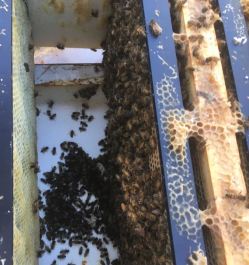
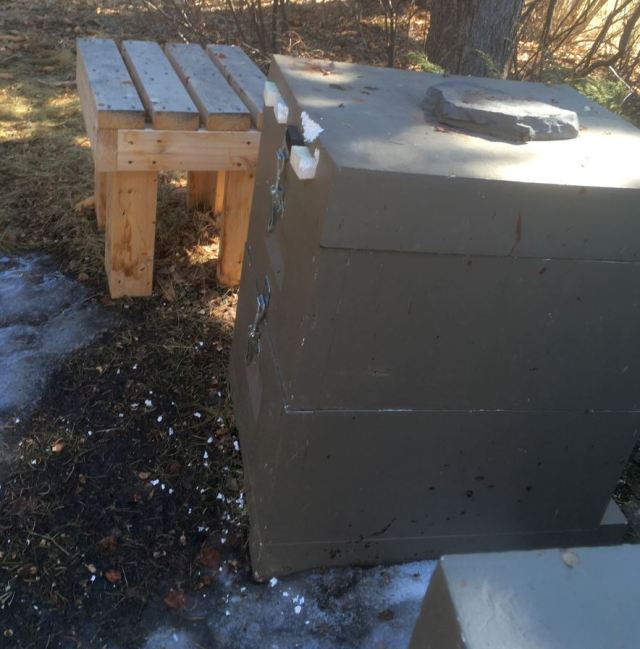
2) The bees wintered with smaller populations than I’d like. All the bees in both hives were in their upper boxes. Daniel removed the hive lid, placing it upside-down, on the ground, near the hive. The lids had bees in them. Those bees stayed on their upside-down lid through the entire process. The upper box (which had the bees, queen, and brood) was placed catty-corner on the inverted lid. This way, no bees were hurt and we could get into the bottom box to examine it. It’s hard to see, but the box on the right is the second chamber, sitting at an angle atop the inverted lid on the ground.
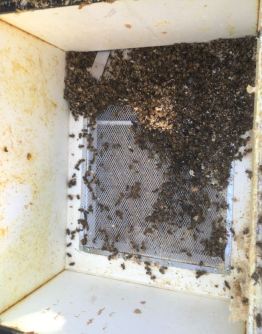
3) We took every frame out of the bottom chamber, separating honey frames from empty ones, leaning the frames against my nearby wooden bench/seat. We scraped a few handfuls of dead bees and debris off the bottom board, making it nice and clean. Don’t panic if it looks like there are a huge number of dead bees (photo, left). Unless, of course, the whole colony is dead. Then, panic is justified. In our case, those dead bees represent natural death over five months and the colonies were actually OK. It looks worse than it is. If you see signs of dysentery (we didn’t), then you need to consider fixing something. After cleaning up the bottom, we placed a frame feeder into the totally empty bottom box which sat atop the nicely cleaned bottom board. I used my hive tool to scrape propolis and wax from the frame rests before putting the feeder into the chamber.

4) The bees and brood were in the upper box, still perched nearby on the inverted cover. Starting from the end frame farthest from the main cluster, Daniel removed that frame. Since it was empty, we set it aside. If it had had some honey, it would have gone into the empty box sitting on the clean bottom board. In this way, we transferred the frames of brood, as well, looking very quickly for any sign of sick brood. (Luckily, there wasn’t any.) In the end, the top box was emptied of all frames, the lower box received all the brood and some frames of honey. By the way, in transferring the brood, we were careful to keep the combs in the same order as they had been, not disturbing the cluster shape. It is still March and the weather is unstable here. We didn’t want to risk splitting the brood nest.

5) We filled the division-board (frame) feeder with syrup that I’d made in the morning from 8 litres of water (which weighs 8 kilograms) and 8 kilos of sugar. By the way, you can use organic sugar, which Costco sells for three-times the price of regular sugar. This is a steep premium, but if you feed ten kilograms (25 lbs) in the spring, it will cost about $20 more than feeding non-organic. I’m just mentioning this because one of the local organic certifiers allows organic sugar to supplement the bees. We also placed a splotch of pollen supplement above the brood nest on the top bars. Again, if you’d like to go organic, you can trap a little pollen and blend it with organic sugar (or some of your own honey from disease-free colonies), along with organic whey and a bit of organic water.

6) We closed the lid on the (now) single-story hive, quickly placed all the extra (mostly empty) combs into the empty deep rim, and Daniel-the-sixteen-year-old hustled everything to the garage where it will wait a few weeks before being placed back on the singles to make them doubles again.

So, both of our backyard colonies survived. One is just fine – it even had sealed brood spanning three frames. The other is really weak – maybe a pound of bees and just a single patch of brood. I’ve ordered a new package which I’ll install over screens above the weak hive, then eventually combine the weak colony and the package. Maybe I’ll have a two-queen colony for a few weeks in the spring, we’ll see.

So, the hives were inspected for disease, cleaned of dead bees and wax bits, fed protein and carbs, and made cozy in singles. The latter step may seem unnecessary, but consolidating the bees in one box when they don’t need two at this time of year (at least here in Calgary) conserves heat and increases the colony’s defences. Some beekeepers will say that small colonies of bees are “less demoralized” than they’d be in a big, hollow, 2-storey hive. That’s bestowing a bit of an anthropomorphic spirit upon the bees, but there might be some truth to it.
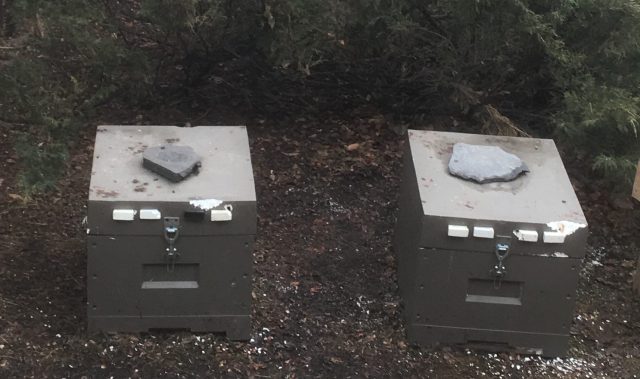
Afternoon, March 21: Spring hives are now in single deeps.

Posted in Beekeeping | Tagged , , | 7 Comments

Every bee has a job: a short National Geographic video

National Geographic, the society of nature, geography, and the occasional bewildering cause, posted this short clip today. It explains the stages of ‘bee jobs’ that change with a honey bee’s age. Among its rabbit-hole nuggets, the film mentions that the bee brain is the size of a sesame seed. That’s something to chew on.

There are some simplifications, but the videography is superb. Enjoy…

//assets.nationalgeographic.com/modules-video/latest/assets/ngsEmbeddedVideo.html?guid=00000169-a22d-dcc2-affd-f6bf7cf20000

Or, follow this link.

Or click the pic below:

Posted in Bee Biology, Movies, Outreach | Tagged , | Leave a comment

If it looks like a bee, it’s a wasp

A few of us got together last night for coffee to discuss something about the United Beekeepers of Alberta. After that, one of the folks mentioned that she was preparing to meet a group in a couple of weeks to discuss public panic about bees. She had a great display which really woke me to the reason people confuse wasps with honey bees. Such confusion can create a serious problem for beekeepers. Honey bees rarely cause mischief away from their nest. They are too busy finding flowers and can’t be bothered to bother us. But wasps are meat eaters, a bit more aggressive, pack a nasty sting, and often enjoy picnics, bar-b-ques, and the faces of guests on our backyard decks.

I used to think that everyone could distinguish a honey bee from a wasp. Honey bees, we learn from a very early age, look like this:

Maybe we didn’t eat Cheerios breakfast cereal and stare at its famous cartoon bee every morning of our childhood. Nevertheless, we probably had an overly-friendly grade school teacher who emboldened our first compositions with black and yellow and black and yellow bee stamps that featured bees doing math or saying pithy things such as Bee Good or Bee Happy. Like this:

So, we get this image in our young minds of a honey bee. Bright and shiny, black and yellow. And then we see one.

So, that’s what a honey bee looks like. If they are all over our deck, it’s time to call the neighbourhood beekeeper and tell her to come and get her pesky honey bees. She tells us those are wasps, then returns with a couple of photos that look like this:

Well, surely she’s made some big mistake, hasn’t she? Those don’t look anything like the cartoon honey bees we’ve grown to love.

Sometimes it’s hard to re-educate people. But my friend with these pictures had a good way of teaching the difference. I don’t know if my friend’s infographic, below, is her own original idea. It doesn’t matter. It’s a great tool. I’ll probably make a similar one to help people distinguish gentle honey-making bugs from wasps and yellow jackets.

Posted in Culture, or lack thereof, Outreach | Tagged , , | 3 Comments

Late-winter Feeding

Feeding the masses

Today is the last day of winter in the northern hemisphere. But the temperature – here in Calgary, at least – feels spring-like. It’s been in the mid-teens (60° F) for a few days. It’s the first chance for many of us to assess the damages caused by this extended winter. (February was painfully awful. Then it fell to minus 31° here in early March.)

We won’t have nectar and pollen for another month, so we’ll feed our backyard colonies. When I peeked at the bees on an atypically mild day in mid-January, I discovered weak colonies with bees already clustered on the top bars.  In January, you expect the bees to have honey, not air, above their winter cluster. We mixed up some fondant to try to keep starvation away. It seemed to work. Today, the colonies are still alive.

You may be feeding liquids by now, if your weather is mild, but when it’s cold, hard-candy is the better option. When I kept bees in Florida, fondant (or its near-cousin, candy boards) were a quick and easy way to feed and stimulate colonies in January and February, ahead of queen-breeding and citrus-blossom season. It was never particularly cold, yet we avoided the mess of sticky syrup, which could lead to robbing. Even the most careful beekeeper might end up with wild, destructive robbing – which happened to a chap I knew named James. He had bought gallon-sized canning jars, filled them with syrup, inverted them atop small holes drilled into his plywood lids, and let the bees take down the feed in one of his backwoods beeyards that stretched along the edge of an orange grove. He came back a few days later and discovered that someone had made sport of all his big glass jars – target practicing with a pistol. Thirty jars were shattered, the syrup was gone, and his apiary was rife with robbing.  James switched to hard candy feed.

It’s getting late in the season to feed fondant and we will switch to division-board feeders, tucked out of sight inside the hives. But if you’d like instructions for feeding the hard candy, here’s what we did in mid-January this year to keep our two errant colonies alive.

Basic Fondant Recipe:
4 pounds of sugar
2 cups of water
1 teaspoon of vinegar
Heat to 235º F
Cool to 180º F
Stir until it turns white and creamy
Pour and chill in pie pans
Serves up to 15,000 guests

You’ll find that it takes a long time to get the temperature up to 235º F. I used a cheap infrared, hand-held thermo-gun to monitor the heat. Twenty minutes later, the slurry was hot enough. Why is vinegar in the recipe? It’s supposed to help break sucrose molecules into glucose and fructose. Better for bees’ digestion.

On the stove for 20 minutes.

Then, we cooled it to about 180º and dumped the stuff into a Mix Master.

It goes from almost clear to the white taffy-like candy below. We poured it into pie pans.

When it cools, it shrinks a little and comes out of the pan in one nice solid piece.

It took about 30 minutes to make 8 pounds of this fondant. We served it the same day it was made, but that’s not necessary. I’m sure that this kept the bees alive during the weeks of bitterly cold weather we had from late January to mid-March. There was some honey in the hives but nothing directly above the cluster.

Here’s a picture of what the bees looked like last week. It looks like quite a bit of the feed is left, but the food has been eaten from underneath, leaving the nice round upper surface and not much else.

Posted in Beekeeping, Tools and Gadgets | Tagged , , | 5 Comments

Bitten by the cold

Alberta beekeepers had smooth sailing through January. It was so mild in southern Alberta that one beekeeper wrote to ask if bees could be swarming. Swarming to the toilet, yes. Literally swarming with queen in tow, no. But the activity was enough to concern a new beekeeper, I suppose. My own two backyard hives in Calgary acted like they owned the skies and the whole world was their personal sanitation system. (It wasn’t really that bad.) I think there were some record high temperatures last month. We had a chance to peak under the covers at the bees. In my case, I was not impressed with our backyard duet. They were buzzy, but not especially well-populated.

January became February and the tropical vortex was replaced by a polar vortex. It’s lasted two weeks already. What will be the effect of prolonged arctic cold? The good news is that mountain pine beetles, which have been killing millions of Canadian trees, have finally been dealt a setback. Not permanent, but it could buy the trees another year or two of life. But what’s bad for the beetles could be bad for the bees. After the mild days of January, the bees have cancelled all their ‘swarming’ plans. They are now clustered tighter than bugs in rugs.

The picture above is interesting in a couple of ways. I’m experimenting with polystyrene hives with no extra insulation wrapped around them. Having snow on the covers could mean one of two things – either the insulation is keeping all the heat inside, or the bees are dead and there is no heat to lose. I hope it’s the first reason.

So what should a beekeeper be doing in this cold? If your hives went into winter well-provisioned, well-wrapped, and well-populated, you don’t need to do anything. The January thaw gave the bees a chance to take cleansing flights, move closer to honey stores, and let the outer-cluster bees come in and the inner-cluster bees go out. The February cold weather will delay some brooding, but that won’t be a problem yet.  When If it warms up, we might start feeding. In a short while, a bit of fondant might be a good idea.

On a colder note, last week my wheelchair got stuck in the snow at the university. It was minus 25. I spend fifteen minutes, or more, trying to push my chair through the snow by turning the chair’s hubs with my bare hands. (I can’t wear gloves because some paralysis has affected my hands.) By the time I pushed myself into the building, I ended up with mild frostbite. It’s recovering nicely, likely with little lasting damage. If you’ve never seen a slight touch of frostbite, here is a picture of my right hand, taken three days after freezing. The dark areas were against the icy metal on the wheelchair for just a little too long. As soon as I could, I slathered aloe vera and honey (yes, honey) on the burns. So far, the skin hasn’t even blistered. I hope my bees are as lucky.

Posted in Beekeeping, Strange, Odd Stuff | Tagged , | 24 Comments

Century-old beekeeping equipment

Image courtesy of: The Photography of Coley Ogg circa. 1919, Beekeeping Demonstration at Berea College, Kentucky.

This picture is from 100 years ago. It was late winter, 1919. An agriculture agent came to this Kentucky Appalachian farm to teach modern beekeeping. He was teaching a form of ‘modern beekeeping’ that we can easily recognize.  Not much has changed in the basic bee yard.

The wooden ‘crates’ around the hives are for winter protection – those aren’t used much anymore. But the frame held  by the student is exactly the same shape and size as the frame used by most beekeepers today. We might have trucks and forklifts and ventilated white suits, but the heart of our beekeeping – frames, boxes, beekeepers – are the same.

I sometimes wonder why we are using century-old equipment, but the answers are fairly clear: it works and we’re stuck. If you buy a hive, it will probably be the same size and shape as great-granddad’s. And if you ever need to sell your bees, it’s much easier to sell the stuff everyone else is using. There might be a third reason – we sometimes enjoy the comfortable familiarity of the old hive equipment. Here’s a frame from a 1902 American beekeeping journal. It looks exactly like some of the frames that are in my own hives right now.

Posted in Beekeeping, History, Hives and Combs | Tagged , , , | 9 Comments

Bee A Valentine

Beekeepers are not sentimental. For most of us, Saint Valentine’s Day is a day of intense panic when male beekeepers rush out to buy something special for some darling or pigsney. (It’s not like we didn’t know February 14 was coming.)

bee-my-valentineSaint Valentine’s Day, though, wasn’t meant to be a day of loathing and dread. It comes to us from a mythical character of long ago. The love-struck saint’s day is built upon Lupercalia, a 3-day Roman holiday (February 13–15) which was intimately connected to fertility. (Luper himself was originally a lupus, or wolf-creature.) Lupercalia came from a much older spring celebration, maybe going back 10,000 years, stolen by the Romans, and then was borrowed and modified by the new Roman church just 1700 years ago. The church fathers used the old holiday to remember a sainted martyr, Valentino, who grew a new heart every night and give his old heart to anyone who was sick, feeble, or heartless. Giving out chocolate hearts is easier.

At least one beekeeper – someone whom I shall never meet – employed enormous energy and talent to make the really cool heart-shaped comb in the picture above. I ran across it on a Polish language bee-talk forum where members were showing various comb-honey gadgets. I couldn’t understand much of what I read on that site, but the pictures are great. If you have seen these heart-combs before or know the person who makes them, please drop me a note so I can credit the appropriate craftsman. Until then, maybe you can make a few of these yourself. You know, just before taking your special honey out to dinner.

bee-valentine-2

Posted in Comb Honey, Culture, or lack thereof, History, Hives and Combs | Tagged | 3 Comments

The Death of Sylvia Plath

Instead of a birthday anniversary, it’s a memorial for the poet Sylvia Plath. She was 30 when she made her final suicide attempt. Did she want it to succeed? Some of her biographers say no. But her preparations were elaborate and her life ended, February 11, 1962. From childhood, the poet had suffered from depression. It was over.

Sylvia Plath, the Pulitzer Prize winner (posthumously) lived like a spark. Or a short-fused stick of dynamite. Beautiful and talented, the Marilyn Monroe of American poetry sprang from a family of brilliant scholars.  (Sylvia’s own IQ was an astonishing 160.) Her father was a biology professor at the University of Boston.

Otto Plath was an entomologist, specializing in bumble bees. At home, he kept a few hives of honey bees. In the mid-1980s, when PBS filmed a documentary of Sylvia Plath’s life, they invited my oldest brother, David, to play the role of beekeeper Otto Plath. Donning a beekeeper’s uniform, my brother comes and goes throughout the documentary, as Otto Plath himself seemed to, in the eyes of young Sylvia. I found the documentary on YouTube, existing in six pieces. Here is a very short clip with my brother, mimicking Otto, as Sylvia remembered him.

Watch the series, on YouTube, beginning with the first segment here.  The hour-long documentary is comprised of six short pieces. I don’t know why they exist in this way, but I hope that you persist and watch the entire story of a beekeeper’s daughter.

Why watch a movie about a beekeeper’s unfortunate daughter? You’ll know after you take a few moments to read one of Sylvia Plath’s darkest poems:

                        The Bee Meeting, by Sylvia Plath

Who are these people at the bridge to meet me? They are the villagers—
The rector, the midwife, the sexton, the agent for bees.
In my sleeveless summery dress I have no protection,
And they are all gloved and covered, why did nobody tell me?
They are smiling and taking out veils tacked to ancient hats.

I am nude as a chicken neck, does nobody love me?
Yes, here is the secretary of bees with her white shop smock,
Buttoning the cuffs at my wrists and the slit from my neck to my knees.
Now I am milkweed silk, the bees will not notice.
Thev will not smell my fear, my fear, my fear.

Which is the rector now, is it that man in black?
Which is the midwife, is that her blue coat?
Everybody is nodding a square black head, they are knights in visors,
Breastplates of cheesecloth knotted under the armpits.
Their smiles and their voices are changing. I am led through a beanfield.

Strips of tinfoil winking like people,
Feather dusters fanning their hands in a sea of bean flowers,
Creamy bean flowers with black eyes and leaves like bored hearts.
Is it blood clots the tendrils are dragging up that string?
No, no, it is scarlet flowers that will one day be edible.

Now they are giving me a fashionable white straw Italian hat
And a black veil that molds to my face, they are making me one of them.
They are leading me to the shorn grove, the circle of hives.
Is it the hawthorn that smells so sick?
The barren body of hawthorn, etherizing its children.

Is it some operation that is taking place?
It is the surgeon my neighbors are waiting for,
This apparition in a green helmet,
Shining gloves and white suit.
Is it the butcher, the grocer, the postman, someone I know?

I cannot run, I am rooted, and the gorse hurts me
With its yellow purses, its spiky armory.
I could not run without having to run forever.
The white hive is snug as a virgin,
Sealing off her brood cells, her honey, and quietly humming.

Smoke rolls and scarves in the grove.
The mind of the hive thinks this is the end of everything.
Here they come, the outriders, on their hysterical elastics.
If I stand very still, they will think I am cow-parsley,
A gullible head untouched by their animosity,

Not even nodding, a personage in a hedgerow.
The villagers open the chambers, they are hunting the queen.
Is she hiding, is she eating honey? She is very clever.
She is old, old, old, she must live another year, and she knows it.
While in their fingerjoint cells the new virgins

Dream of a duel they will win inevitably,
A curtain of wax dividing them from the bride flight,
The upflight of the murderess into a heaven that loves her.
The villagers are moving the virgins, there will be no killing.
The old queen does not show herself, is she so ungrateful?

I am exhausted, I am exhausted—
Pillar of white in a blackout of knives.
I am the magician’s girl who does not flinch.
The villagers are untying their disguises, they are shaking hands.
Whose is that long white box in the grove, what have they accomplished, why am I cold.

Posted in Culture, or lack thereof, People, Strange, Odd Stuff | Tagged , | 12 Comments