Podcast: A Beekeeper’s Journey – Cameroon to Calgary

Season 1 Episode 7: About Bees, Culture & Curiosity Podcast – Cameroon to Canada – Patrick’s Bee Journey

In this episode of About Bees, we are joined by Patrick Tefouet Tonlio, who was an agriculture community organizer and teacher in the African nation of Cameroon. Patrick now lives in Calgary where he keeps honey bees and has been working on farm and bee projects with the Calgary Catholic Immigration Society’s Land of Dreams (https://ccisab.ca/land-of-dreams/).
 
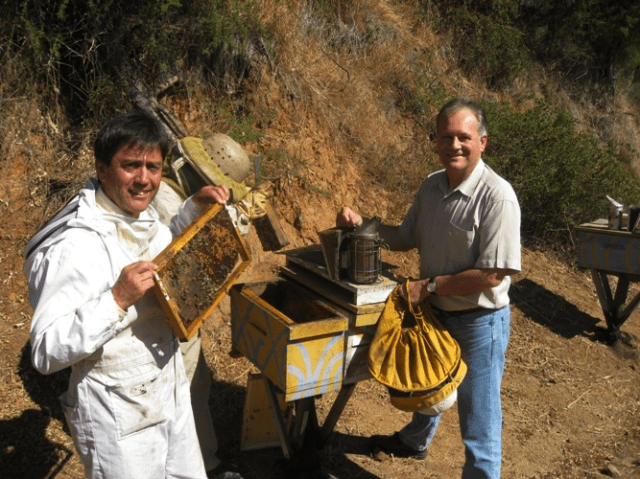
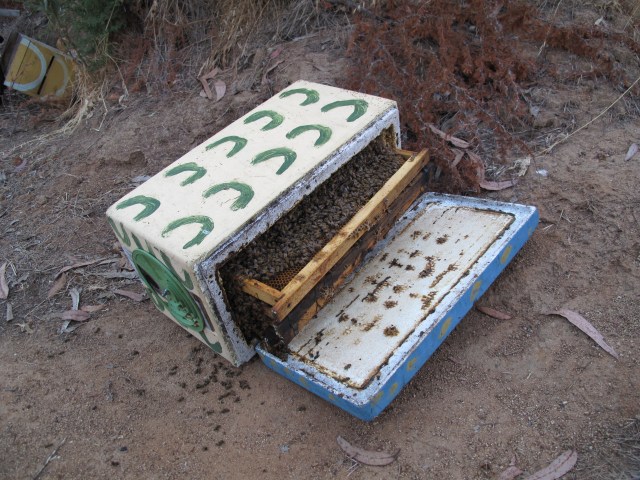
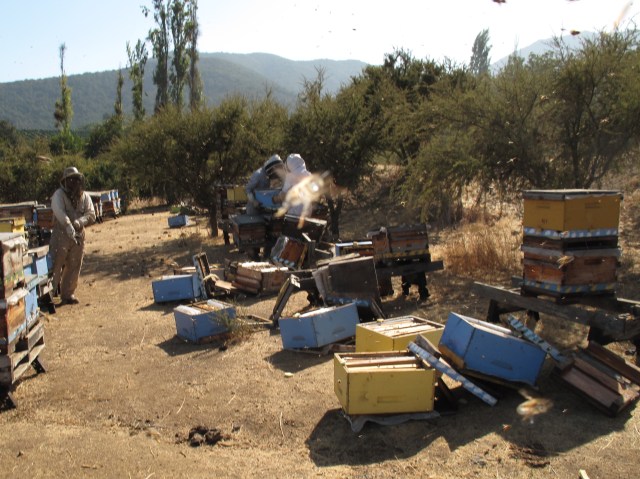
During his last year of high school, Patrick learned to work with bees from his grandfather when Patrick moved from the capital city to live in his grandfather’s village. Honey bees in Cameroon are extremely defensive, so most traditional beekeeping consists of making small bamboo hives, coating the boxes with propolis and wax as a lure, then putting the empty hives in trees about 3 metres (ten feet) above ground level. After wild bees occupy the boxes and after the nectar season, honey is harvested. 

Cameroon has commercial beekeepers, including the Fabasso family, friends of Patrick, who operate 15,000 hives. Mr. Fabasso has designed a hive, also made of bamboo, similar to Langstroth hives. The Fabasso honey crop is squeezed by a press invented by the Fabasso family. Pressing the honey yields a high-quality honey that doesn’t need to be extracted and is never heated during processing.(https://teca.apps.fao.org/en/technologies/10140/).  

Beekeepers may harvest 20 kilograms (45 pounds) of honey each year from traditional hives in Cameroon. But the ethnic group sometimes known as Pygmy people (Baka) harvest directly from wild colonies. To reduce stings, they use a special secret herb, rubbed on their skin. The herb? It’s a secret.

Please subscribe, like, love, and follow. We live or die by your adulation.

Podcast website: https://sites.libsyn.com/540327/site
About Ron Miksha: https://about-bees.org/about-ron/
Watch the podcast:  https://www.youtube.com/@ABCCPodcast

Finally: email your questions, comments, and angst:  ron@aboutbees.net

Posted in Beekeeping, Commercial Beekeeping, Ecology, Friends, History, Hives and Combs, Honey Plants, Podcasts | Tagged , , , , , , | Leave a comment

Podcast: America’s other weed

Season 1 Episode 6: About Bees, Culture & Curiosity Podcast – Sweet Clover: America’s other weed

Legal. Illegal. Legal. Illegal again. Sweet clover has quite a history. Introduced into North America from Europe about 300 years ago, farmers were once fined for having it in their fields. It can be used to feed cattle, but improperly stored, it can become a blood thinner and kill cows. On the other hand, the state of Kentucky was saved from bankruptcy by sweet clover. And so were some beekeepers.

Every acre of sweet clover yields as much as one-thousand pounds of honey from its nectar. Along with alfalfa and a few other choice nectar-producers, it’s a winner in the nectar sweepstakes. But this podcast also looks at an Australian beekeeper who found an even better plant. But we circle back to sweet clover and Bidzina reads a list of “Ten surprising facts about sweet clover.” Number eight is amazing.

Mostly we discuss sweet clover, but bees, horned toads and tobacco are mentioned. Let’s go!

Please subscribe, like, love, and follow. We live or die by your adulation.

Podcast website: https://sites.libsyn.com/540327/site
About Ron Miksha: https://about-bees.org/about-ron/
Watch the podcast:  https://www.youtube.com/@ABCCPodcast

Finally: email your angst:  ron@aboutbees.net

Posted in Beekeeping, Commercial Beekeeping, Ecology, History, Honey Plants, Podcasts | Tagged , , , , , | Leave a comment

Podcast: from Beyonce to bee forage and beyond

Season 1 Episode 5: About Bees, Culture & Curiosity Podcast – Some Bee Buzz

In today’s podcast episode, we jump from moving bees between Alberta and British Columbia to examining a recent paper about the ecology of disappearing bee species. Then, of course, we chat about Beyonce and Hex Art.

Bidzina describes conditions in British Columbia and why he avoided going farther into the mountains to make fireweed honey but instead split his colonies, doubling their number. He tells us a little about moving his bees back to Alberta, driving through the night with a trailer through the Rocky Mountains. In Alberta, he loses most of those hives over the next winter. But two survivor colonies are resilient and develop into strong colonies.

We discuss removing honey by letting the supers stay in the apiary, separated from the hives, allowing the bees to drift out of the honey supers and back to their homes, abandoning the honey. Bidzina also mentions nuisance bees at a wedding held where he was extracting.

Then, Ron talks about his two backyard hives. Both were replacements for colonies that died over winter. One was a package, the other a nuc. It was surprising to see that there was very little difference in strength between them by mid-July.

We drift to talking about trains and the enormous size of Canada. It’s a 7,500-kilometre road trip from Pacific to Atlantic. Maybe it should be tackled by train, not car or plane. Trains are good.

We explore a recent paper about land use changes (farming, urbanization) that are related to declining populations of native and imported bees. Across a huge temperate area, scientists broadly divided landscapes into forested, herbaceous, agricultural, and urban. One of those areas were better for bee health and survival. The results surprised me a little. We discuss the study’s results. See: “Land use changes associated with declining honey bee health across temperate North America”   https://iopscience.iop.org/article/10.1088/1748-9326/acd867

Other news bits include the collapse of insect species diversity, which leads us to wonder about the 2024 reversal of a ban on neonicotinoids in England and the implications for bee survival. Then we lighten up with a visit to Beyonce (the Queen Bey) and a glance at a paper on the prevalence of bees throughout the history of art – have you noticed that hexagons seem to be everywhere we look these day?

Please subscribe, like, love, and follow. We live and die by your adulation.

Podcast website: https://sites.libsyn.com/540327/site

About Ron Miksha: https://about-bees.org/about-ron/

Watch the podcast:  https://www.youtube.com/@ABCCPodcast

Posted in Bee Biology, Culture, or lack thereof, Ecology, Native Bees, Personal, Podcasts, Strange, Odd Stuff | Tagged , , , , , | Leave a comment

Podcast: The Bees’ Ears

Our latest podcast rambles around the bees’ ears. Available everywhere you grab your podcasts. Enjoy.

Season 1 Episode 4: About Bees, Culture & Curiosity Podcast – The Bees’ Ears

In this episode, we discover that insects, including bees, can hear. They have three ways of picking up sound – through their antennae, their feet, and through their armour (exoskeleton). Since bees can hear, does music calm the bees and reduce stings? And since bees can hear, does the old tradition of “Telling the Bees” make sense? Is that why, upon Queen Elizabeth’s death, the royal bees were told about her passing by the royal beekeeper? Why?

How do  bees buzz? Do they hear their own buzzing? Is the tone of a happy hive (261 Hz, middle C on a piano) the basis for all western music? If bees aren’t dancing at a party, do they feel left out and get sad? Is it wrong for us to attribute human thoughts and emotions to bees? Should there be bee insect sanctuaries? Where? How would that work? When Asian honey bees do their flash dance, is it noisy?

Finally, why don’t honey bees pollinate tomatoes? They can’t, but bumble bees can. It’s got everything to do with insect size, weight, and something called buzz pollination. Listen to this episode as we compare their buzzing skills.

Podcast website: https://sites.libsyn.com/540327/site
About Ron Miksha: https://about-bees.org/about-ron/
Watch the podcast:  https://www.youtube.com/@ABCCPodcast

Posted in Bee Biology, Culture, or lack thereof, History, Podcasts, Pollination, Science, Strange, Odd Stuff | Tagged , , , | Leave a comment

Podcasting about bees

I considered launching a podcast several times over the past few years. However, I had been a guest on half a dozen shows, so I recognized the enormous amount of effort and time that hosting a podcast entails. It’s a lot of work. The work would be interesting, but my hesitance was due to a lack of time. I have too many fires on my iron.

Then I was a approached by a young fellow here in Calgary, a casual acquaintance in the beekeeping world. We met a couple months ago. He asked if I’d like to co-host a beekeeping podcast. He would take half the work, so why not?

So, the friend – Bidzina Mosiashvili – lined up a studio while I researched the topics and created script outlines. Bidzina is the technical/recording producer and has been loading our chats to our YouTube videocast. Meanwhile, I created the podcast space, found an appropriate platform and edited the audio for the podcasts. Watch our videos if you can put your feet up, otherwise let the podcasts entertain your ears while you are driving, working, or in need of a quick bedtime sedative.

Bidzina and I make a good presentation combination. Bidzina is young and in the start-up years of his life and his beekeeping; meanwhile, after 65 years of bee infatuation, I am phasing out of life and out of bees. Our differing perspectives on everything from bees to philosophy, climate, business, religion, native species, history, literature, and unorthodox beekeeping habits make a lively, interesting discussion on those wide-ranging, fascinating subjects. Bidzina’s refreshing ideas make this podcast great. He’s not afraid to ask simple questions and then, a moment later, make profoundly deep comments.

On August first, we launched these four episodes:
1) Our introduction to the About Bees podcast;
2) A look at the ridiculous myths a lot of us beekeepers believe;
3) The savagery of robber bees from Leo Tolstoy's perspective; and,
4) A discussion about whether bees feel pain. (Sorry, you have to listen to that podcast to find out what happens in a bee's brain when it gets injured.)

A new episode will be set free every week until all the bees in the world go extinct. Then, during mankind’s final four years, we will podcast about Einstein or something.

The About Bees, Culture & Curiosity podcast is easy to find on Apple Podcasts, Spotify, GaanaAndroid, Deezer, or wherever you have entrusted your listening habits. Just search About Bees, Culture & Curiosity.

Be forewarned: this is an unusual “bees” podcast. There are a lot of other bees/beekeeping podcasts out there. This one is different. You’ll see. Let me know what you think about this new podcast by commenting below, please.

Posted in Beekeeping, Friends, Personal, Podcasts | Tagged | 7 Comments

Who’s afraid of a few bees?

Yesterday’s New York Times had a lengthy first-person account of the disturbing tale of a home invasion1. Dozens came in, none left alive. According to the author, Sarah Kliff, “Honey bees invaded my house, and no one would help.” This nightmare escalated. The family evacuated to the safe-haven of a hotel.

Ms Kliff carries us along from the first sighting, a bee which she crushed with a cookbook (honey recipes?), through an adventure that ends when the family sucks up the bees with a vacuum cleaner. Along the way, the writer discovers that honey bees are not going extinct, don’t need “saving”, can’t be chased away by the smell of citronella or the sound of Alexa making beeping noises, but may end up becoming permanent residents in her house. She was lucky, the bees moved on, unlike the colony I found in this old house on a Pennsylvania homestead fifty years ago.

The writer also discovers that most people believe that honey bees are endangered – exterminators wouldn’t kill them, but they recommended retrieval by beekeepers. Beekeepers wouldn’t help when they discovered that the bees seemed settled inside the walls of the house, a messy situation that requires a bee rescuer who is also a carpenter. (Beekeepers prefer capturing swarms from low-hanging tree branches.) They also surmised that the bees were scouts, not a settled colony.

Two things in the little article seemed important to me. One was the author’s discovery that honey bees are not disappearing from the planet. They aren’t going extinct. She talked to both Tom Seeley and Vox editor Bryan Walsh about it. Walsh was especially forthcoming when he admitted that his 2013 Time magazine article about the impending disappearance of honey bees had, shall we say, fallen short of apocalyptic expectations. Today, we aren’t living in a world without honey bees. In fact, ten years after that famous cover piece, the world has more honey bees than ever. Bryan Walsh has owned up to the poor prediction that brought worldwide attention. You can read his Vox update here.

The Times author had done her homework and learned that the honey bees in her house wouldn’t tip the balance of the world’s ecological stability, whether they lived or died. However, not all of her neighbours got that memo.

I had a vague sense that honey bees needed saving, and some of my neighbors felt strongly about the issue.“They are so important to our ecosystem,” one neighbor advised on WhatsApp.“Their number is dwindling.” She suggested we call a beekeeper.

The other important take away from the article, for me, was Sarah Kliff’s reminder that not everyone is as comfortable as me when it comes to hanging out with bees. I usually forget about the real fright (and legitimate threat) that bees cause for most people. As we enter another bee season, I’ll try my best not to scoff at folks who are so uncomfortable around bees that they spend a couple hundred dollars and two nights away (with family and dog) to escape a potential mortal threat. I know how I’d feel if several dozen two-legged flightless animals invaded my house and looked intent on staying. I doubt that a cookbook would be enough of a defense, nor would I be returning after just two nights at a hotel.

  1. Thanks to Thomas S. for telling me about this NYT piece! ↩︎
Posted in Beekeeping, Outreach, Save the Bees, Stings | Tagged , , , | 6 Comments

Stack ’em High

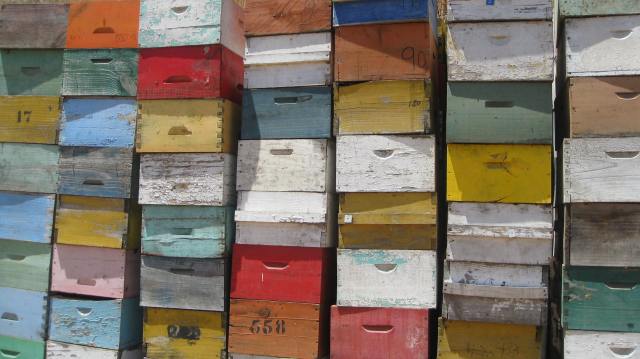
Long ago (about 1975), there was an amazing beekeeper, now a legend, in northeast Saskatchewan. He consistently had 300-pound/hive crops. This was Dr. Don Peer (PhD, 1955, U Wisconsin). Peer once told usIf I were king of the world, I’d make a law that every beekeeper had to own one more super for each hive of bees“.

This photo, taken in Wisconsin by my brother David, shows the extreme production from well-managed colonies. Unfortunately, the picture shows neither Dr Peer, who did much to promote expert beekeeping in Wisconsin, nor my brother. Maybe another day for that.

The point, of course, should be lost on no one – it takes supers to make big honey crops.

Don Peer kept about 1000 colonies in a remarkable honey domain. Bees could collect 30 pounds of cured honey in a single day. That required a lot of open comb space to deposit the nectar that was being reduced. Peer quit using 2-queen colonies after a few years because it was impossible to stack the supers high enough. His crew tried parking flatbed trucks close to the colonies so lids could be pried off and heavy honey boxes replaced with empties. Handling monstrous 2-queeners wasn’t efficient, so it was back to single-queen colonies.

But the key message – lots of supers on the hive – remains the same. We all do that out here on the Canadian prairies. Most years are an embarrassment of riches.

This table shows records from my western Canadian scale-hive. A lot of honey can be stored in just a few days. For this example, from July 10 (24 pounds net gain) to July 16 (27 pounds net gain) the hive averaged 20 pounds/day. It takes about a super to hold the nectar that becomes 20 pounds of honey each day.

Knowing that it takes many supers to make honey, I was stunned to learn that China and southeast Asia produce over a billion pounds of honey each year without using supers. Everything is operated in single-storey colonies. At harvest time, a single box serves as brood chamber and honey box. The result is a mess. The bees are shaken from all the combs (even the ones with brood) and then reinserted into the singles. This video shows a typical beekeeping set up. Around the three-minute mark, you can see that the entire brood nest is extracted, including frames with brood. :-(

Here in Canada, we caution hobby beekeepers to never extract brood frames. Spinning in an extractor can’t be good for brood. And, during the flow, a lot of the stuff flying out of the combs is raw nectar, which can easily lead to fermentation if it isn’t dried out. These days, the accumulation of hive chemicals that are applied in brood chambers increases contamination risk when brood combs are spun. So, please don’t extract brood frames.

Keeping bees in singles and removing honey comb-by-comb may have a role in some systems. In the 1940s, my father spent a year working for Al Winn in Petaluma, California. Winn was mostly a queen breeder, but during pollination gigs and off-season (when the bees were taken to the mountains), the singles would sometimes fill up. This restricted the expansion of brood and made colonies heavy to haul around. The solution was to remove frames 1, 2, 9, and 10 (the edge frames), extract them, split the tight brood nest between frames 5 and 6, then insert four empty combs in the centre of the nest. Al Winn and crew avoided extracting the brood. Even if a bit of nectar was encountered, the California climate was hot and dry. Wet honey (nectar) wasn’t a problem. This system of opening the brood nest to make space kept hives from swarming and allowed brood expansion, resulting in good colonies for building mating nucs.

I have long wondered why Asian beekeeping continues to shake all the bees out of the single box and extract every comb, brood and all. Why not use the California system, described above, or simply use supers and stack ’em high? I think the use of single-storeys is a matter of inertia and some convenience. Colonies are frequently moved (by hand) and singles are lighter. Supers don’t have to be owned and then stored off-season. Finally, there is the Apis cerana legacy. Commercial Asian beekeepers almost exclusively use the western honey (Apis mellifera), but their grandparents used cerana. These bees build smaller nests and reside comfortably in singles. Grandpa used singles, so . . .

But things are changing. Supers have arrived in China! Here’s a fascinating video that you must watch. Why does China stick to the path of common prosperity? was produced by the Chinese government. I imagine that there is a series of these videos dedicated to agricultural modernization. With the CCP advocating supers on hives, it might be just a decade or so before China’s eight million colonies are operated using western methods. Chairman Xi is not “king of the world” (to borrow Dr. Peer’s phrase), but if Xi suggests stacking ’em high, it will likely happen.

Get some popcorn, enjoy the film, and contemplate the future.

Posted in Beekeeping, Commercial Beekeeping, Culture, or lack thereof, Hives and Combs, Honey | Tagged , , , , | 2 Comments

Bees and frequencies

Hi, Everyone!

Chief Lee Crowchild and I have been asked to present at the Calgary Science Centre for an upcoming Indigenous Science Night. Attendance will be up to about 1700 people and the event is just a few weeks away, so I thought that I would reach out to readers for a little help.

The way the science program works, a ‘mainstream western scientist’ (me) is teamed up with an Elder (a Knowledge Keeper) from a nearby Nation. Fortunately, I was able to select my own presentation partner, Chief Crowchild, whom I have worked with for years – and who is a beekeeper on Tsuut’ina Nation. (We have taught courses together and we hang out every few weeks.)

The organizers have chosen the topic of “Wavelength and Frequency” as the evening’s theme. Our part of the presentation lasts about one hour and deals with bees. The Chief will decide how his portion will overlap with my discussion of wavelength and frequency, as related to bees. I am in the process of selecting my subject lines.

Here’s what I have in mind so far.

  1. The organizers suggested bee vs human eyesight with a discussion of the light spectrum. Bees see ultraviolet, which appears white to humans; humans see red, which appears black to bees.
  2. Wing-beat frequency varies with the angry buzz of disturbed bees to the gentle pitch of a humming happy hive.
  3. The speed of a scout’s dance loop (frequency – loops per minute) as it relates to distance of flower patch from hive.

I would love to hear ideas from readers. We will have plenty of time to include more than these three examples, slides and images, and corresponding indigenous observations. Our focus will be on native bees, but knowledgeable honey bee keepers may have some ideas that transfer to some species of native bee.

Many thanks! ~Ron

Posted in Culture, or lack thereof, Friends, Native Bees, Science | Tagged , , , , , , , | 8 Comments

Bees flying high

Almost every time I teach a beginning beekeeping course, a student or two comes forward to whisper: “If I move my bees to a patch of cannabis, will I get weedy honey?” I tell them that cannabis buds don’t secrete nectar. Then their balloons of enthusiasm deflate. “But the weed store. . . it sells weed-infused honey.”

There’s a big difference between nectar that carries psychedelics and psychedelics carried by honey. I direct my beginning beekeeping students to one of the many webpages that tells how to dry, crush, and infuse – such as here, here, and here. By the way, I was really impressed with the beautiful white honey being infused in the video in the last link.

In the ancient myths, honey was glorified as a super-food, taken by wise guys, such as the Greeks who visited mountainside oracles two-thousand years ago and then spun outrageous tales of odysseys. They believed that the nectar of the gods held power. Where did the super-food idea come from? Some say it was because, until the 1700s, people thought that honey was sent by God in a mist that descended on flowers from above. A pioneering bee book, The Feminine Monarchie (the first English-language book to note that the biggest bee in the colony is a queen, not a king), also endorsed the specious nectar-from-thin-air notion. Despite his enlightenment, the author, Reverend Charles Butler, declared in 1609:

So, for some of our ancestors, honey was linked to God’s scattering of nectar onto flowers. However, I think that honey’s magic is mostly rooted in its innate sweetness and its potential intoxicating power. When early humans discovered honey mixed with rainwater on abandoned, exposed combs, they had an extra treat. In the right situation, early people would have felt the unprecedented effects of intoxication by way of fermented honey. Honey, likely the first source to alter mental states, was magical. Dr Eva Crane, in her tome, The World History of Beekeeping and Honey Hunting, pages 594-595, speculated:

But, let’s return to the theme of nectar sources (sorry, not available from cannabis) that yield ‘hallucinogenic’ honey. Most notable is the wild honey of Nepal, produced by native bees which have been visiting native flowers.

Also called “mad honey”, this special mountain honey is produced by bees feasting on some species of rhododendron found in Nepal, Tibet, Turkey, and a few other places where rhododendron is abundant. The honey contains grayanotoxins (neurotoxins) that can cause hallucinations, vomiting, loss of consciousness, impotence, and seizures. Not my idea of fun, but to each their own.

Like anything in excess, it will kill you. It’s not possible to know what dosage of mad honey can cause these effects because the honey varies madly from place to place. Spring honey, from rhododendron nectar, is poisonous and may be hallucinogenic. Other honey, produced by the same bees at the same location but later in the year, may be entirely lacking grayanotoxic effects.

I have just finished reading This is Your Mind on Plants, by Michael Pollan. It’s an exploration of society’s relationship with mind-altering flora. Broadly, the book is divided into poppies, coffee beans, and cacti, which respectively deliver pain-killing sedatives, energy boosts, and hallucinations. Although rhododendron honey is not mentioned, I found the book to be an enchanting overview of illicit drugs and medicine plants as well as a provocative discourse on what things are considered illegal in light of the illogic of cultural norms.

I’ve never used illegal drugs. I was afraid of “the man” coming to lock me up, even though I knew that a lot of what is declared illegal is the result of vested interests, corporate overlords, and self-righteous Karens. Nevertheless, my mild consumption of alcohol, past adventures with a few strong cigars, current use of tea and coffee, rare post-surgery narcotics, and deep inner-directed meditation (Vipassana flavour, often) have acquainted me with things that can mildly alter conscious awareness.

Mr. Pollan is a well-informed, engaging, curious sort of person. I am happy to hear his comments on a wide range of subjects. Although I rarely listen to Joe Rogan (Who among us has time to eaves-drop on three-hour-long conversations?), I did listen to a Rogan Podcast when I knew that Pollan would appear. They talked about his book and about psychedelics in general.

Near the end, Rogan and Pollan briefly drifted over to the mysterious hallucinogenic Himalayan honey. Neither had a clue of what they were talking about, though Michael Pollan was grounded to reality better than Joe Rogan. They (especially Rogan) pondered the style of comb that bees foraging on Himalayan honey would design. Rogan knew the Himalayan comb was odd, compared to the comb built by American honey bees. Maybe these were the sort of combs that hallucinating bees generate. Strange and wonderful. On mad honey, could bees with a receptive creative mind (even if the brain weighs just 2 milligrams) build something sort of, well . . . mind blowing?

Pollan didn’t know enough about Himalayan bees to correct Rogan’s idea that the huge flat, unusual comb of Apis dorsata was caused by the evolutionary twists and turns of a species quite different from our western honey bee, Apis mellifera. Pollan is excused – Asian bees are not his strong suit. Rogan was just speculating about something he knew very little about. His podcast is entertainment, with a few bits of verifiable information cementing some of the blocks together. I encourage food experimenters to listen to the podcast here. (You will need a Spotify account.) Listen, but please don’t buy this type of honey – it has become so expensive and over-harvested that the bees that make it and the people that harvest it are in trouble. If the demand for the ultimate Joe Rogan experience accelerates, A. dorsata may become extirpated (locally extinct). That would be both a natural and a cultural disaster.

*Please note that mad honey and cannabis-infused honey is illegal in nanny states. It can present serious health risks for children and adults. Finally, sit down with your medical provider to discuss if natural grayanotoxic rhododendron honey is right for you.

Posted in Books, Culture, or lack thereof, Ecology, History, Honey, Honey Plants, People, Personal, Podcasts, Strange, Odd Stuff | Tagged , , , , , , , , , , , | 3 Comments

The heat is up

My badbeekeeping blog has largely avoided the topic of global climate change. It’s contentious. Some insist it’s happening; other insist that it ain’t. I have purposefully tried to limit my conversation on the topic because I didn’t want to alienate any readers who have deep convictions on the subject. But opinions – and deep convictions – sometimes change. Especially when facts are staring at us.

Should a beekeeping blog discuss climate change? Of course it should. If climate change is really happening, it can have an enormous effect on our honey bees’ survival, production, and pollination. A good beekeeper, especially one who leads a boy scout troop, is always prepared. Be ready for strange weather is going to help you stay in the bees.

A bit of my backstory may help before I continue. Most readers know that I owned and operated small commercial honey farms, chronologically, in Pennsylvania, Florida, Wisconsin, Saskatchewan, and Alberta. Dust, drought, and boredom pushed me out of my business in Saskatchewan thirty years ago. Looking for income for my growing family, I dropped by the University of Saskatchewan, and four years later came away with a high honours degree in geophysics. (Geophysics is a typical career move for bored commercial beekeepers.) That was 1991. The geophysics credentials led me to Calgary, the oil-centre of Canada and the place where nearly all geologists and geophysicists in the country ended up at that time. I was hired by the world’s largest oil company and worked there for five years.

During my years at Exxon, I learned that climate change is real and is man-made. I learned this from the scientists, engineers, and economists working for Exxon in the 1990s. As one example, our Arctic exploration team knew that high-water, low-ice scenarios would impact exploration of the Arctic Ocean during climate change. Exxon fully understood that anthropogenic heating was coming. As our boss’s boss’s boss, Rex Tillerson (who became Donald Trump’s first defense secretary) once said, “Climate change is real and it’s partly man-made.” But Tillerson was confident that we could engineer our way out of the problems fossils fuels were causing. (By the way, although we understood that fossil fuels caused climate change, Exxon’s message to the public was a bit different.)

I told my Exxon experience to a family member. He told me that he disagreed. He liked to do his own research, he said. And his research led him to the opinion that climate change is a hoax, created by governments as a way to control us. I was surprised that his research led him to different conclusions than what the men and women at Exxon had discovered. I told him that I appreciated that he was interested enough to do his own research and I respect him for that.

So, let’s assume that climate change isn’t happening. Let’s assume that burning eight billion tonnes of coal and nine billion tonnes of oil each year has no climate effect. We can at least agree that the pollution is real. When I lived in Pennsylvania, many years ago, acid rain from industrial burning of high-sulfur coal was killing lakes and forests around the Great Lakes near our home. When the Canadian and American governments put an end to that dirty fuel, the lakes recovered and the forests grew back. Pollution is a killer. When men worked the coal mines of West Virginia, they died young from black lung disease. The dust wasn’t confined to the mines, it travelled across the country in open train cars. And cities from London to L.A. had dangerously unsafe air for generations, due to fumes from vehicles. Changes to car emissions has improved that pollution problem enormously. Cutting back on coal and oil saves lives. For that alone, we need to move away from the fossils.

2023 was smoky in Calgary.

This is my son, Daniel, trying to enjoy a few moments outdoors.

The smoke was from huge forest fires that are consuming western Canadian trees. These unprecedented fires are due to a combination of poor forestry management, drought, and heat.

Let’s now assume that the climate is heating up because of fossil fuel use, something that the world’s largest oil company knew. In addition to the indisputable health issues caused by exhaust ingestion, what if the recent strange disruptive weather is due to man-made global changes in weather patterns?

We may argue that changes in climate are nothing new. Changes are cyclical. That’s true. But that’s like telling folks on the Titanic that other ships have been sunk by icebergs and it’s natural. Stuff happens. If you are on the sinking ship, it matters to you. Earth has gone through “Snowball” periods and hot phases many times in the past. These can be partly explained and predicted by models built from astronomical data. The models, using the Earth’s obliquity (tilt), eccentricity (orbit), precession (wobble), and Milankovitch cycles, help explain past climate conditions and predict that the Earth should now be entering another ice age. Imagine how hot the globe would be if we were headed into one of those hot phases right now. But astronomic forces are pushing us toward another ice age. We don’t feel that way because we hit the gas – literally and figuratively. It’s heating up instead.

We have left now 2023, the hottest year on record. We can hope that this was an anomaly and things will soon chill. However, such hope is akin to a retirement plan based on someday winning the Lotto. Recent climate changes have been more dramatic than the folks at Exxon predicted, and perhaps not reversible. When we should have been saving for our future, we were banking on some celestial lottery. Now, we are old and almost penniless.

Variation of Earth’s global average temperature, past 2,000 years. These data are normalized on the 30-year average temperature for the period 1961-1990. Note that from the year 1000 to about 1850, temperatures were about 0.5 °C below the 1970s period. But by 2019, the temperatures were about 1.3 °C above pre-industrial values.

To put these small numbers of degrees in perspective, in 2020, the Earth was only 5 °C warmer than it was during the last Ice Ages. It doesn’t take much to knock us off balance.

I didn’t intend for my first blog posting of 2024 to be nihilistic. But last night, at midnight, when the neighbours were merrily popping their fireworks on our front lawn, I could hear heavy rainfall. It was plus 6 °C and raining! Rain and mild temperatures on New Year’s Eve is rare as hen’s teeth in Calgary. It should be cold here. This is a kilometre-high city, hours north of Great Falls, Montana. The weird New Year’s Eve weather made me want to write about the cheerless topic of climate disaster. Sure, my house and yard are a single data point, at a single time, at a single place, so as it’s not to be confused with proof of global climate change. Nor is the fact that Calgary just now experienced its warmest December ever recorded. Nor even the fact that Canada had its warmest year ever recorded. But when a million global data points, from oceans to mountains and continents to islands, average out to being the warmest ten years we’ve ever know, we should pay attention.

I’m not going to tell anyone to use less energy. I don’t have to. Energy costs money – money that’s burned and gone. It causes pollution. It changes the climate. Becoming more efficient and using fewer resources is simply logical and even self-serving. You don’t have to be an altruistic do-gooder: even psychopaths watch their coins.

As beekeepers, we need to think about how climate change will affect our bees. That’s a topic for another screed, which I will reserve for the near future. Meanwhile, beekeepers can derive some assuaging of their conscience by knowing that the production of honey is perhaps the most energy-smart food-making activity we can do. Sunshine and plants give nectar that honey bees gather and turn into energy that we can eat by the spoonful. Calories consumed by the hot bee smoker, the metal extractor, the honey-shop electricity, transportation, and human muscle power is recovered a dozen times over by the honey we produce. We will do better, I think, but we have a rough patch ahead.

If you’re inclined to do your own research, NASA has the raw data online, for free. Meanwhile, make the best of what you’ve got. And good luck to everyone in 2024.

Posted in Beekeeping, Climate, Culture, or lack thereof, Personal | Tagged , , , , , , , | 7 Comments