Bee Meetings

bee club

A great bee club.

Best Bee Club in the World? Attended the Calgary & District Beekeepers Association monthly meeting last night, and as I drove home in the ten o’clock twilight, my mind recycled some of what I had learned. There was an absolutely stellar presentation on spring management – focused mostly on ways to make splits, or increases. The two gentlemen knew what they were talking about and their enthusiasm was infectious. Part of the discussion was around the 2-queen systems which were praised in every way except one – here in southern Alberta, 2-queen management leads to hives making four or five hundred pounds of honey – hives get stacked so high with supers that they are hard to manage. Other than that, it was pointed out that for the price of an extra queen, the producer may double their crop, reduce swarming, and with the variation of genetic make-up in the hive, improve the hive’s wintering and its house-cleaning habits. There was plenty of talk around the mechanics of making nucs, too. In a sentence: pull two or three frames of brood (without taking the queen) from the best hives (which reduces swarming) and add two or three frames of young bees from brood combs, drive off to a new location a few miles away, and put a caged queen into the newly created split. The result, at this time of year, is a producing colony.

So, there was good, practical advice for Calgary-area beekeepers. But I was equally impressed with the huge number of committees and activities sponsored by the bee club. This is the time of year for swarms, so there is a swarm committee. School bee presentations were addressed by the relevant folks. Beekeeping displays were at the annual science fair, several regional country fairs, Aggie Days, and will be at the Calgary Stampede. Honey judging at the Millarville Fair in August and the Chestermere Fair in September require honey judges and their training and recruitment are club responsibilities. There are committees that liaison with the city. The bee club is involved with a research project at a local college (South Alberta Institute of Technology) and is designing a steam-wax press for rendering old combs for the club’s members. Informally, some members loan extractors to other members. A group in the bee club sent delegates to pick up packages and queens from importers and there is a group that sends equipment for irradiation treatment. Classes in queen rearing and disease inspection are regular events as is the annual summer BBQ. There are monthly formal meetings for the 100 members (65 were at last night’s meeting) and there are casual get-togethers for beer and pizza at the veteran’s hall in Kensington. There is much to admire about this group.

Posted in Beekeeping, Friends | Tagged | Leave a comment

A Web Site Question

I have a question for my geeky friends. I have been approached by the Chinese government regarding this website – http://www.badbeekeeping.com. A company inside China wants to register the domain name http://www.badbeekeeping.com.cn – I asked the Chinese government (actually, a director at their internet regulatory board) to deny the request, and told them I’ve had this domain name for 15 years and it is named after my book, Bad Beekeeping. But then I received an e-mail directly from the company. The Chinese spokesman wrote:

Our company based in chinese office, our company has submitted the “badbeekeeping ” as CN(.cn/.com.cn/.net.cn/.org.cn) domain name and Internet Keyword, we are waiting for Mr. Jim’s approval. We think this name is very important for our products in Chinese market. Even though Mr. Jim advises us to change another name, we will persist in this name.

Well, this sounds ominous. I can not stop anyone from using a domain name identical to mine if it has the ‘.cn’ extension. Does it matter? Except for the obvious fact that I myself will not be able to later register the same name in China, does it matter in terms of how internet users will access my current site? If you know the answer, please send a note to me at (miksha@shaw.ca). Thanks!

Posted in Strange, Odd Stuff | Tagged | Leave a comment

Same Planet?

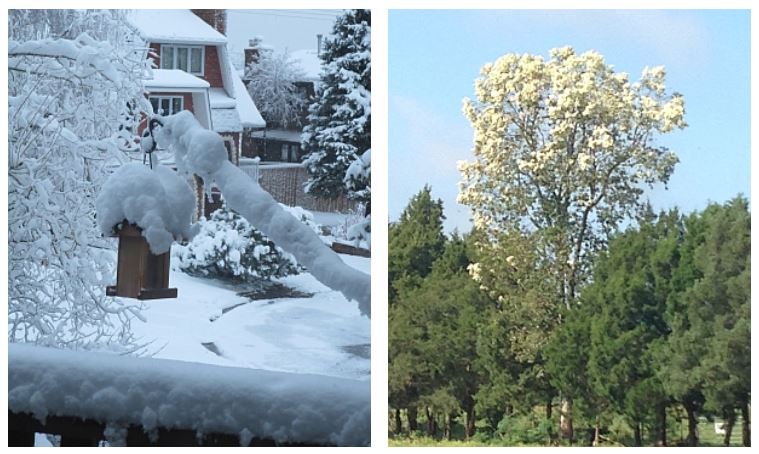
May 4th in Canada; May 4th in Florida Notice a difference?

May 4th in Canada; May 4th in Florida Notice a difference?

Living in cold Canada, it’s easy to forget some people have it hot. Especially right after we’ve had a big snowstorm – half a metre (over a foot) of white wet stuff in the past couple of days. So I thought I’d share the view from our back door. Meanwhile, my brother David has sent a reminder that not all trees covered in white are covered in snow. You can see his proof – he planted this eucalyptus on his Florida farm 15 years ago as a nectar source for his bees. The tree is flowering (and buzzing) brilliantly partly because central Florida had 15 cm (6 inches) of rain in the past week. And partly because that’s the way it is in the Sunshine State.

Posted in Climate | Tagged , , | Leave a comment

Rise of the Bee Thieves

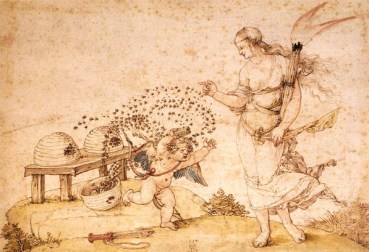
Cupid honey thief Durer

Dürer’s Honey Thief

Hive theft has been around ever since there were beehives and beekeepers. For example, the classic watercolour of Cupid, the Honey Thief, by Dürer was painted in 1514. Jumping ahead just a little, during the early 1980s, when I bee-kept in Saskatchewan (summers) and Florida (winters), an inordinate number of hives began disappearing in south Florida. Turned out that a beekeeper with a serious drug problem was stealing hives at night, taking them to his farm, shaking the bees into his own boxes, extracting the honey, melting the wax, then burning all the stolen branded equipment. By morning, there was nothing to show of the stolen bees except a drum or two of honey, some blocks of wax, and a pile of ashes in his burning pit.

With honey bees dropping like flies from CCD, pesticides, malnutrition, or poor beekeeping, bee thefts are back in the news again. Some beekeepers can’t resist repopulating their hives with other people’s bees. Bee rustling is about the same as cattle rustling. Darkness, daring, and the right equipment are all the thief needs. Experience is useful – the bee robbers are always beekeepers. They know the value of what they are taking, know how to load the illicit cargo, and know what to do with the bees once they have them.

Someone ran off with 30 hives on the outskirts of Calgary this spring, but this is not just a local problem. A news report from France tells of 61 colonies (worth 60,000 Euros) stolen in Loire and recovered hundreds of kilometres away in Brittany. In Australia, The Guardian tells about a dozen hives stolen near Ipswich while the BBC mentions “45,000 bees, 3 queens, along with 3 honeycomb frames” stolen in Craichie, Scotland and a separate theft of “6 queens and 18 honeycomb frames” from a farm in Coupar Angus last week. Similar robberies have been reported in California and near Houston, Texas, in the USA. Bee theft is tough to stop – most beekeepers keep their bees in fields and orchards far from their own homes. Landowners might not be concerned about a late evening bee truck visiting the property somewhere in the woods behind their home, thinking it is the owner/beekeeper moving some hives, not suspecting it is a bee thief. Usually the legitimate owner can prevent theft if the hives are behind locked fences. Branding the wooden parts helps, but as I mentioned earlier, a really desperate thief may simply remove the good parts and burn the wood.

Posted in Beekeeping | Tagged , | Leave a comment

The Empty Beekeeper

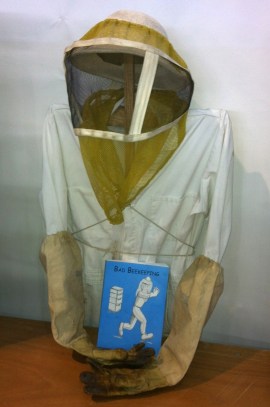
bad beekeeping bookAt first it felt a bit creepy when my wife texted this picture of an empty beekeeper holding my book. Then I was flattered. My wife was attending the Calgary Science Fair where our son’s entry (a behavioural-science study) was being judged. There were over a thousand entries, the science fair filled the Olympics Oval (built for the 1988 Winter Olympics, the big venue is used for a lot of conferences and programs). In addition to the children’s science project entries, there were several displays set up by Calgary clubs and organizations to show various ways science is used in the community. For example, the university’s health sciences department displayed some software used by doctors and a geology group demonstrated something about GPS. But the best-attended booth was the beekeepers’ exhibit – they had an extractor, posters, free comb honey samples for the kids, demonstration hives (without bees), eager beekeepers who talked bees with the youngsters, and of course, the empty beesuit holding the Bad Beekeeping book. Why not?

The Calgary Bee Club is a fantastically active group of amateur beekeepers who love their hobby and share their enthusiasm with everyone within earshot. Years ago, I was active in the group, even served as president for a number of years, but I lacked the energy and organizational skills of the new group of club enthusiasts. These beekeepers arrange programs all over southern Alberta – elementary schools, the Aggie Days at the Calgary Stampede grounds, local fairs and farmers’ markets, honey-judging contests. I should be more active with the group, they are an exuberant group of people, but I haven’t attended their meetings in months. I had no idea they were setting up at the science fair. (And no idea they sent an empty beesuit to hold the bad beekeeping book.) Planning, staging, and staffing an event like this is a lot of hard work. Kudos to the club for promoting honey bees to the kids at the science fair!

Posted in Culture, or lack thereof, Strange, Odd Stuff | Tagged | Leave a comment

Dead and Dying

almond tree in blossom

California’s State Tree?

California almond pollination season is finished. And so are many of the bees which made the trip to the west coast to participate in the largest honey bee mosh pit ever in the history of beekeeping. (For those of you over 30, I’ll define mosh pit: “The controlled violence of a mindless jumble of enthralled dancers and screamers (usually experiencing a buzz) participating in a large mutually attractive event.”

Mosh pits typically occur at concerts, but California’s honey bee mosh pit includes a beehive staging area where hundreds of thousands of colonies are off-loaded from semi-trucks arriving from New York, North Carolina, the Dakotas, and perhaps every state except Alaska and Hawaii.

The beekeepers, enticed by pollination fees now approaching $200 per hive, send the little buzzers via big trucks in December or January, parking them in huge apiaries (some ‘beeyards’ contain ten thousand hives on a few acres) where the bees are fed sugar syrup and pollen substitutes to keep them alive until the almonds blossom. The flowers usually open in February and the beekeepers again load the bees and move them into the groves. Since most of the pollinator bees are arriving from colder climates, the California sunshine excites them, the queen lays lots of eggs, the workers head out looking for flowers (they don’t find man), and the beekeeper feeds the colonies to encourage the insects’ population growth. The unnatural diet and close proximity to millions of neighbour bees is a bit rough on them. So are the insecticides sprayed around California’s countryside.

This year, beekeepers claim a quarter of all their honey bees died during almond pollination season. The direct cause seems to be insecticides, not malnourishment or overcrowded conditions. Increasingly, something called a “toxic tank” of poisons have been blamed. Most almond groves are controlled by enormous agribusinesses, not ma-and-pa growers. These farm corporations have been accused of mixing multiple toxins in a delicious cocktail that includes neonictinoids, fungicides, and various pesticides. Mixing such a toxic blend, instead of targeting specific problems with single passes, saves time and money. But it also escalates honey bee deaths. During the 2014 pollination season, an estimated 17,000,000,000 (17 billion) bees died from the sprays.

Sticking with the grim economics, that would be about 400,000 colonies at a cost of $200 each, an eighty-million dollar value. OK, in today’s economy, that is admittedly pocket change. But 400,000 hives have quite a multiplier effect: they add one billion dollars to the almond producer’s crop, then the same bees (if they hadn’t been killed) would travel to pollinate blueberries, cherries, apples, cukes, melons, and squash, where, if they were undead, they would have given consumers another four billion dollars worth of food. Many of the beekeepers who lost bees in California will not return to pollinate almonds next year – they have had enough death and destruction to last their lifetimes.

Lawsuits have been launched. Not so much against farm corporations, though that has been happening, but, significantly, the Environmental Protection Agency has had a legal notice of complaint filed against it. Beekeepers and environmentalists allege the watchdog has not done enough to test and regulate poisons, educate farmers, or protect bees. Specifically, the lawsuit claims that in “a vast and extremely risky experiment, EPA has allowed over two million pounds of clothianidin and thiamethoxam to be used annually on more than 100 million acres and on dozens of different plant crops without adhering to existing procedural frameworks and with no adequate risk assessments in place.” The plaintiffs also allege that the EPA approved the chemicals “without affording notice in the Federal Register and the opportunity for public comment, in violation of the FIFRA and the APA.”

Perhaps you are thinking the people who are suing the government for their lack of protection are a bunch of bleeding-heart liberals and wild-eyed environmentalists. Think again. The key plaintiffs include beekeeper Bill Rhodes, a former professional football player from central Florida, a gentleman I knew when I kept bees there some years ago. In those days, I saw Bill retire after two seasons with the Canadian Football League (which followed some outstanding years as a lineman at Florida State) and then Bill bought 50 hives, which he expanded to 400. Thirty years later, Bill Rhodes owns and operates 8,000 colonies. With his family, he also farms in Florida and Georgia. Bill is not a wild-eyed anything. He is practical, realistic, and he works very, very hard.

Many of us libertarian types are beginning to rethink our politics. We generally favor being left alone. We don’t think any government should control how we live, the people we live with, or what we do at home. We don’t want to pay high taxes so corporate welfare porkies can take salaries of ten million dollars funnelled to them through government subsidies. We have insisted on a lean mean government, but our carefully purchased politicians have cut only those things least likely to bite their fingers – the EPA, created by Nixon in 1970, has especially taken a hit. We have encouraged everyone – including agribusiness – to do whatever they want. Meanwhile, by insisting on trimming government spending, we have snipped the courage and funding from the Environmental Protection Agency, resulting in a toothless tiger that barely purrs. It now has neither the manpower nor the regulations to stop the incessant pollution and the persistent destruction defacing the landscape and slaughtering the bees.


Posted in Beekeeping, Ecology, Pesticides, Pollination | Tagged , , , , | Leave a comment

The Royal Bee?

Buzzy Bee Toy

Buzzy Bee: Age 70, but still fit for a prince

English royalty dropped by for tea in New Zealand. You know how hard it is to find that special gift for out-of-town visitors? Well, try entertaining a prince and his family. The Royals probably have everything they need. Probably. So their Kiwi hosts were in a bit of a pickle. A toy maker came forward with an idea. Why not give little George the same thing given to his father, thirty years earlier?

In 1983, Charles, Di, and baby Wills visited NZ. While there, the Governor-General’s wife, Lady Norma Beattie, presented a Buzzy Bee Pull-along toy to the family. According to the New Zealand Herald, Lady Beattie’s six children had had a wonderful time with their pull-along Buzzy, but had outgrown it, so why not pass the old wooden toy along to the heir to the British Empire? Why not, indeed? Buzzy Bee has been around for 70 years, and undergone only a few minor safety tweaks (no lead paint and smoother corners, for example). William pulled his first Buzzy Bee as a 10-month old. He was photographed from every conceivable angle with his new toy and, according to royal-watcher Miss Amanda Townsend-Blye, “Buzzy became as famous as Prince William – it rose to national icon level and stayed there for years. One couldn’t look at a bee without thinking of Prince William. And you know, even at ten months, we all realized handsome Willie would make a great beekeeper some day, just like his dad.”

Posted in Culture, or lack thereof, Strange, Odd Stuff | Tagged , , | Leave a comment

World Apitherapy Day

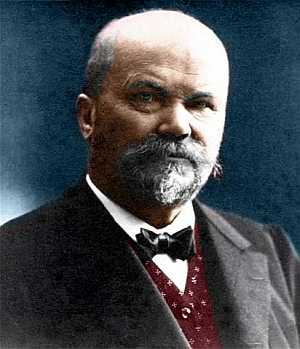
Filip Terc apitherapy

Filip Terč, Father of Apitherapy 1844-1917

March 30 is World Apitherapy Day. It is celebrated on this day because it’s the birthdate of one of the most important early promoters of happy bee stings – a chap named Filip Terč, whom you see glaring at you adjacent to this sentence. Terč was born in a remote village in western Bohemia but ended up in Maribor, Slovenia, where he worked as a physician. As a young man, he suffered badly from rheumatoid pain until, at age 22, he was accidentally stung by an aggressive pack of irritated honey bees. It changed his life. The pain was gone.

Terč, a diligent young doctor, began a serious study of the effects of BVT (bee venom therapy) and published the first clinical trials of the therapeutic effects of bee stings. His work led to the 1888 publication of “Report on the Peculiar Connection between Bee Stings and Rheumatism” in which he presented the results of his treatment of 680 patients with the collective application of 39,000 stings. 82% showed a complete cure, 15% had a partial recovery, while 3% had no relief from their rheumatoid condition. Although his work was published over a hundred years ago and his results have not been disputed, the medical profession has only recently begun to see the link between rheumatism, auto-immune dysfunctions, and some of the elements of bee venom. With immune disorders ranging from multiple sclerosis to allergies on the rise, the use of apitherapy treatments are finally becoming more accepted and generally more widely available. If you’d like to learn more, there is a great collection of materials at the Bees for Life: World Apitherapy Network website.


Posted in Apitherapy, Culture, or lack thereof, History, Stings | Tagged , , | 1 Comment

Ecological Boldness

“Corporate profits trumping ecological needs,” according to the National Farmers Union’s own website. That rather provocative statement is from the NFU’s Vice President of Policy, Ann Slater. Remembering the days when much of the NFU’s musings were simply echoes of agribusiness demands, I find such boldness rather refreshing. And surprising. Ms Slater is responding to the results of the Ontario Bee Health Working Group, which she says is “weighted with representatives of chemical companies and field crop growers” and, she continues, “essentially recommends that the use of neonicotinoid treated seed continue as usual.” This, according to the NFU vice president, is a missed opportunity to promote the “use of more ecological farm practices such as complex crop rotations, as well as to show a real commitment to Integrated Pest Management (IPM) practices, which recommends that pesticides be used only when there is a demonstrated pest problem instead of as routine practice.”

Personally, I don’t know if neonicotinoids are responsible for massive bee deaths. Probably not, as our area (southern Alberta) uses them extensively and has not suffered troubling colony collapses while other areas (west coast BC, for just one example) have far less neonic usage, but had the deaths some people associate with this pesticide. Nor has any independent researcher proven an unequivocal link. There have been far worse chemicals used by farmers in the past and I don’t want to see a return to those if neonictinoids are banned. However, farm practices need to shift towards IPM systems which can help the farmer (by cutting costs and improving product quality) while reducing agricultural stress on the environment at the same time. And I like the boldness of Ann Slater and the NFU’s stand – it is rare to see any farm representative willing to bite the hand that often pays for the donuts at farmers’ meetings.

Posted in Culture, or lack thereof, Pesticides, Save the Bees | Tagged , , , , | Leave a comment

What we don’t know

da vinci

Something Salty

Sometimes I am surprised by what we don’t know about bees. You would think we’d have it all figured out by now. I’m not talking about knowing when to wrap or unwrap hives; start grafting queen cells; split hives; or stack supers. These are largely weather-related and we can’t predict next week’s deep freeze or windy storm. Basic management remains in the realm of art, not science. With years of experience, the beekeeper usually becomes better and better at practicing the art of beekeeping and picking a good time to split, stack, or syrup the bees. Instead, I am talking about basic bee biology – I really thought we already knew bees taste salt with their toes. But that tidbit of knowledge has just now been added to the world’s encyclopedias.

Researchers at the University of Toulouse, writing in the journal Frontiers in Behavioral Neuroscience, have studied the honey bees’ tarsal taste system “through a series of behavioral and electrophysiological” methods. The scientists (mostly from Toulouse, France, but including a team in China) looked at the way bees respond when they step into sweet, salty, or bitter stuff. For bees, the feet can sense salt very, very easily – much more readily than they can taste sweet flavours. There seems to be no ability to taste bitterness through the feet (Hence, they never ‘taste the bitterness of de feet’).

This is new information. According to lead author Maria Gabriela de Brito Sanchez, “these results provide the first integrative study on tarsal taste detection in the honey bee.” So, just like most other insects, bees have flavour buds in their mouth, antennae, and feet. Must be handy, stepping in gooey stuff and knowing whether it’s edible. The only tastes I get from my own toes are sort of like old moldy cheese.

Posted in Bee Biology | Tagged | Leave a comment