A Cold Canadian Wedding

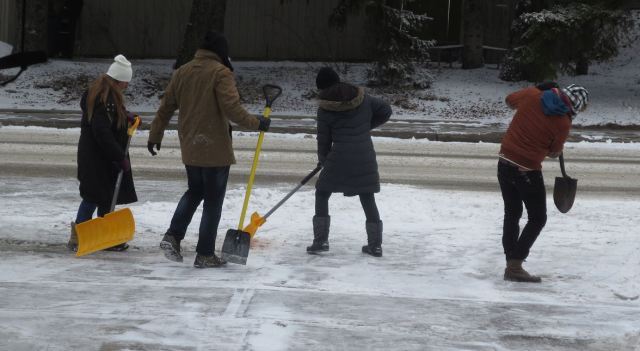
I’ve been preoccupied. My oldest son’s wedding was on the weekend. I’m sharing a couple of pictures. The bride’s family came from Colombia. Because of work, they were only able to visit for a week.  I was disappointed that we were having unusually cold weather here in Calgary. On their arrival, (March 7), they were greeted by minus 23 C – cold even by Canadian standards. Their hometown has never seen frost (the lowest temperature ever recorded there was 15 C, about 60 F) and is usually 35 C, summer/winter and almost day/night.

Well, I didn’t need to feel apologetic for the crime committed by our weather gods. They loved experiencing the frost-biting cold and they loved seeing snow for the first time in their lives.  Here’s what it looks like when my son takes his new in-laws out for the real-deal, Calgary-style cultural experience. A cold, cold Canadian wedding with warm, warm feelings of love and happiness.

Carmen, my son David, his wife Yesenia, and her brother, Danny

It was a beautiful Latin-Canadian ceremony with a blend of North and South American traditions. My son’s new wife has been in Canada awhile and is a language teacher.  Her visiting family stayed in our home for a few days, tasting maple syrup, my wife’s Hungarian cooking, and some locally produced honey.

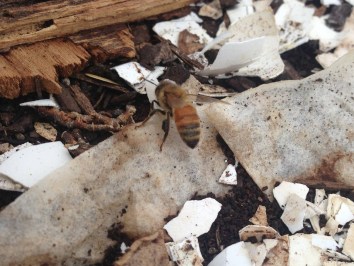
The honey was an especially big hit – apparently the only honey seen in Colombia by this family is as thin as water and as dark as molasses – and not particularly sweet. Thinking that it might just be a sugary syrup, I asked, Miel de abejas?  and they told me that is was and they seldom ate it.

In contrast to their local honey, they liked our thick, white, mild version – a good reminder that if you give people something really delicious, it’s appreciated. Either that, or guests from South America are especially gracious – something I certainly noticed during the past week.

I’ll leave you with one more picture. This was the moment that the newest Mr and Mrs Miksha celebrated their partnership. My grandson, the ring-bearer, thought it was rather funny.

Posted in Culture, or lack thereof, Friends, Honey | Tagged , , | 3 Comments

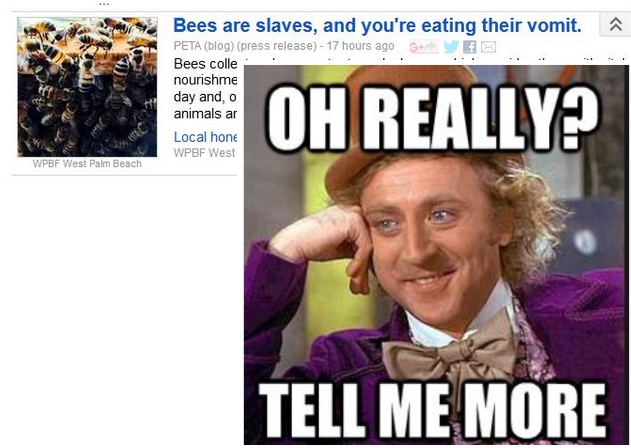
Eating the Vomit of Slaves?

This headline showed up in my beekeeping news feed this morning. It’s a disgrace to the cause of fighting against the abuse of animals and it shows total stupidity of the subject on the part of the PETA writer responsible. By headlining false, poorly-researched opinions and presenting them as facts, credibility for the worthy cause of defending apes, dogs, horses, chicken, cattle, and other mammals and birds is lost.  Honey bees are not enslaved, and honey is not bee puke – however, it’s the inane slavery remark that leaves me gob-smacked.

Bees are free to leave their hives whenever they want and free to fly wherever they wish. Comparing slavery to the homes provided to honey bees is a disgusting debasement of the suffering endured by humans who actually have experienced real slavery. Bees are free and are not abused. The forty-five million slaves in the world today  (and the hundreds of millions in the past)  have no such freedom. If PETA wants to fight an important cause, fight against the modern wretched practice of buying and selling humans. And when you are done, come back and tell me what you think you know about bees and beekeeping.


Posted in Culture, or lack thereof, Outreach, Save the Bees | Tagged , , | 7 Comments

International (Bee-)Women’s Day

A swarm catcher in 1883

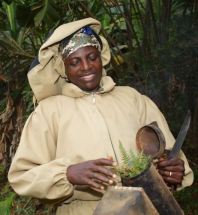
Today (Wednesday, March 8) is International Women’s Day. Women have always played an important role in beekeeping. In developing parts of the world, it is usually women who tend hives and produce honey for their families’ food and cash. In some cases,  honey money is a major part of a struggling family’s existence.

Here is part of a report about Uganda from the UN’s Food and Agriculture Organization:

Typically, a trained project officer from the NGO Uganda Women’s Effort to Save Orphans (UWESO) provides training, advice and starter equipment to families supporting orphans and chosen by the local UWESO branch. The beekeepers develop the hives and gradually increase the number, so that after two or three years a family may be operating about 30 hives. Each hive should produce two crops of honey and wax each year, which can be taken to the UWESO collecting centre and sold to local companies for local and export markets. This can provide a return of perhaps US$1400 in a year – well above the average family income level in rural areas.

The cost of such a project to the Trust is about US$140000 including the costs of the project officer, equipment and a collecting and processing centre. If 150 families can each increase their annual earnings by US$1 400 – the return on the single investment of US$140 000 is, amazingly, about US$210 000 each year! Even if some families underperform, the financial returns amply justify the investment.

From the same source, reporting on Afghanistan:

FAO provided training for women and men beekeepers. Since beekeeping can be practised in a home compound, beekeeping was regarded by the Taliban regime as an acceptable activity for women in Afghanistan. In addition to harvesting honey, a highly valued food under current circumstances, the women learned to make skin ointments and other secondary products useful for people living in harsh and isolated conditions. Men and women have been given training in making all the equipment needed for frame-hive beekeeping, so that they can continue without need for external inputs.

Glenda, a Calgary Bee Club teacher

Here in Calgary, it’s easy to see the influence of women on the progress of responsible beekeeping. This weekend, I participated in the Calgary bee club’s beginning beekeeping course. Two of my co-presenters were experienced female beekeepers while over half of the 60 students in our class were women.

One of our city’s other bee organizations – Apiaries and Bees for Communities – was developed by Eliese Watson, a passionate beekeeper who started ABC Bees in 2010. Eliese describes her organization, “We work with beekeepers, honey bees, native bees, and ecosystem development to ensure that the skin of our cities supports ecological diversity and protects all of us. We aim to conserve and protect bees and the communities that rely on them.”

Honey Queen

The leading roles of women in beekeeping should not be news nor very interesting. But 25 years ago, our club was 90% grumpy old men. Some of those grumpy old men have had a hard time acknowledging that our female beekeepers are usually smarter and more committed than the oldtimers. That may be because the ladies are younger and more enthusiastic than the older gentlemen, but it remains a fact. Hopefully, we are getting past the days when women were expected to bring the coleslaw and participate in Honey Queen pageants and do little else. (Not to disparage the hard work and promotion these women have done (!) – but men often forget that much more has been contributed.)

Eva Crane and eight of her books

Women beekeepers are not a new phenomenon. Great beekeepers of the past include Lady Agnes Baden-Powell, founder of the Girl Guides. In the 19th and early 20th century, she encouraged thousands of young ladies to pick up a hive tool. In the USA, Anna Botsford Comstock (How to Keep Bees: A Handbook for the Use of Beginners, 1905) was a pioneer at educating modern North American beekeepers. More recently, nuclear-physicist-turned-beekeeper Eva Crane made huge contributions through her books and organization work at the International Bee Research Association. Famous people who were also beekeepers include Maria von Trapp, Sylvia Plath, Scarlett Johansson, and Martha Stewart. And we have all known women who ran bee businesses – sometimes pretending that it was their lazy or inept husbands who were in charge.

Today, there is increasing awareness of the role women play in beekeeping.  Ontario Bee Journal had a great article last year with the witty title The Beeyard Ain’t No Place for a Woman. You’ll enjoy reading it. Some of the best websites (Women in Beekeeping, Emily Scott’s Adventures in Beeland,  Emma Maund’s Mrs Apis Mellifera, Girl Meets Bee, and Beekeeping Like A Girl) are produced by great beekeepers. These days, many – perhaps a majority – of bee scientists are female. Around the world, they are producing ground-breaking studies in genetics, environment, and disease/pest control related to honey bees:  International (Bee-)Women’s Day is a day worth celebrating!

Posted in Beekeeping, Culture, or lack thereof, History, Outreach | Tagged , , , | 9 Comments

Golf Magazine Calls Bee Study “Frivolous”

A magazine dedicated to knocking a ball into a hole in the ground is calling a bee study frivolous. I can imagine no greater authority on frivolity than a magazine called Golf DigestHere’s a link to their flippancy. While you are there, be sure to watch some of the golf videos that show people knocking their small white balls into holes in the ground.

golf-friv

Posted in Culture, or lack thereof, Humour | Tagged | 5 Comments

Maple Syrup is Dark

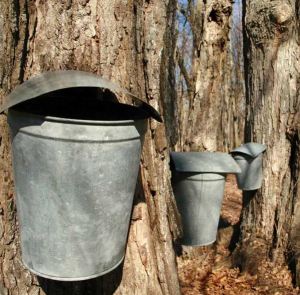
maple-syrup-tappingIt’s February. Maple syrup time in Quebec. The saps are flowing!

I live in western Canada (no maple syrup trees here on the windy prairies) so I don’t think a lot about the sugar tapping going on at the moment in the east. But maple syruplers (sur-PLERS) are the honeyman’s kindreds so I occasionally follow the maple news.

Most people know how the craft works. A sugar shack owner leases maple trees, drills some boreholes and then nails cans on the unlucky trees. Syrup bleeds, draining into buckets. It’s water with 2% sucrose.  In the sugar shack, a sugarman boils and thickens the thin syrup. Here’s a short tapping video, just in case you’ve never seen it done:

As days grow longer and temperatures become warmer, a sugar tree’s sap rises.  The tree awakens from its wintry stupor and prepares its blossoms and leaves. Sugar sap is like a cup of morning coffee. It’s a jolt of energy which the tree made the previous season and stored safely below ground, then used in the spring.

A lot of trees store sap below the frost line, then pump it upwards in late winter to give a burst of growth. In fact, here’s a list of 22 trees that can be tapped for syrup.  Sugar maples give the biggest volume. With a 2% sucrose concentration, it’s also the sweetest syrup. As a kid growing up in Pennsylvania, I snuck a taste from buckets dangling among sugar maples on property our family owned.  I was not impressed. A few Februaries later, I ventured inside a sugar shack and watched as 40 gallons (taken from two nearby trees) was condensed into one sweet gallon. That tasted much better.

Honey or maple syrup?

Honey is healthier than maple syrup. Maple syrup is pure and natural sap, boiled and caramelized in a sugar shack. It is pure plant sugar, so it’s almost 100% sucrose. When plants create sugar, it is always sucrose. Sucrose is the sugar we get from cane and beets – it’s table sugar.  Sometimes sucrose is reduced by natural enzymes into simpler, healthier forms. When we eat sucrose (table sugar), our bodies’ enzymes break sucrose into simpler monosacchrides. In honey, flowers and bees add the enzymes, turning nectar into healthy honey. Maple syrup is 97% sucrose; honey is 2% sucrose.

waffles-and-syrupVegans avoid honey but advocate maple syrup. That’s wrong. If beekeeping is done correctly, it doesn’t hurt bees; however, stolen tree sap makes a difference to the health, growth, and blossoming of maple trees – so tapping ultimately hurts foraging insects. Although maple syrup soaks the breakfast which my daughter and I make Sunday mornings, I wonder about the harm people are doing by tapping millions of trees. Are we depriving bees of some of the early nectar they might get if the sap made it up to the tree tops instead of ending up on my breakfast?

Damaged trees

The people who make and sell maple syrup say that very little tree damage is done and they are probably both correct and biased.  I found this PDF from The Journal of Northeast Agriculture. It describes the (‘slight’) damage done by a taphole bored through bark, beyond the thin vascular cambium and then into the fibrous vessel cells that transport water, nutrients, and sugar to the tree’s stems and leaves. Although it might not be painful for the maple tree, harvesters are told to give a tree a break for a year if it looks distressed and to poke new holes in spots far away from the previous year’s tapholes so that the tree’s wounds have a chance to heal.  At one website, I read that trees may be tapped for 40 years without being killed. Somehow that seemed less reassuring to me than if the writer had not mentioned it at all.

The dark business of syrup

can_flag_75Beyond the (minimal) environmental degradation inflicted by tapping the lifeblood out of Canada’s cherished symbolic flag-leaf tree, there is an unseemly dark business in the maple syrup industry. About 50 years ago, maple syruplers in Quebec formed a syrupler’s cartel.  A libertarian may argue that producers should be allowed to join together and set prices. For tree folks it has worked nicely – the price of maple syrup has been good for tappers. Almost all of the world’s maple syrup comes from Quebec and the Federation of Quebec Maple Syrup Producer’s 7,400 members. Supported by the provincial government, it’s illegal for non-members to tap trees and market their own stuff. This has effectively created a monopoly which Sunday morning pancakes have subsidized for years. It also wrecks the lives of small sideliners who would like to earn a few dollars tapping. It’s turned them into black market entrepreneurs, until they get caught and busted.  Here’s their story in a short video:

But wait! There’s more. The Federation of Quebec Maple Syrup Producers has been so successful controlling the sale of 77% of the world’s maple syrup that the price has hit $1,300 per barrel.  That’s 25 times the cost of a drum of oil and a bit more than a barrel of honey (which, by the way, is healthier and is not controlled by a quota-setting cartel).  The Federation du Dark Syrup keeps the price high by keeping millions of pounds of maple syrup drummed up in steel barrels and stacked in huge warehouses where it is sold for a price set by the federation. In storage, the stuff is referred to as the International Strategic Reserve, or the Global Strategic Maple Syrup Reserve. The federation is operated as a government-sanctioned cartel to control global maple syrup prices and supply, and was called “the OPEC of the maple syrup world” by the Economist in 2013.

Drums of maple syrup - part of the Global Strategic Reserve.

Drums of maple syrup (or air?) – part of the Global Strategic Reserve.

You might worry that millions of pounds of expensive sweetener stored in a few big buildings in Quebec villages might become a target for theft and fraud.  It was.  In 2012,  $13 million dollars of maple syrup (six million pounds) was stolen from the strategic reserve. Regulators who dropped by regularly to count the barrels didn’t notice that half of the strategic reserve was missing because maple syrup barrels had been replaced by barrels of air.  An intrepid inspector climbed a stack of drums to count them and one empty drum fell. It should have weighed 620 pounds and been steady as a rock. Police were called and thousands of empty barrels were discovered.  (The ultimate imitation maple syrup.) Eventually about 30 people were arrested and most of the Global Strategic Reserve was recovered.

🐝 🐝 🐝 🐝 🐝

PostScript: April 28, 2017.  A couple of months have passed since I wrote the piece above.   Sweet justice has been served – today, I heard that one of the key players in the maple syrup heist has been sentenced to 8 years in prison and a 9.8 million dollar fine.  If he doesn’t pay back the money, he gets another 4 years in the pen.

Posted in Honey, Strange, Odd Stuff | Tagged , , , , | 14 Comments

The Place to Pair (and pair and pair) with a Bee?

(Photo: Stephen Bennett)

Well-mated queen. How’d she get that way?   (Photo: Stephen Bennett)

Maybe I should have written this blog in Latin.  When I was a kid, I saw a bee biology book where the author switched to Latin when he got to the part about how queens and drones get together to make little baby bees. Until then, I had no interest in learning Latin.
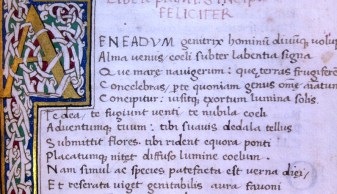
latin-book

A growing interest in Latin

I can see the author’s point – unless you’re headed to the priesthood, you have no reason to learn about honey bee sex. Or at least, the author figured that you need to attain a certain level of classical education before you’re exposed to the birds-and-bees part of bees.  Well, I’m not going to start writing this blog in Latin, mostly because I can’t. [However, Res apis mel: Dulcis in fundo!]  If the mechanics of insect sex is too raunchy for you, go study some Latin and then come back when you’re ready.

Here goes. A friend told me that she heard (from a wise source) that queens return to their hive after each individual drone encounter, one drone-friendship per trip. The workers clean her up before her next date. As most beekeepers know, when a young queen enters a drone congregation area, she’s pursued by drones, one of whom mates with her. Much to the drone’s surprise, his penis gets ripped out of his body (maybe this should be in Latin) and the drone falls to the ground, dead. My friend told me that she just learned that the queen immediately flies home where worker bees remove her ‘mating sign’, then she goes back out again. I didn’t think that was true, but her source seemed authoritative.

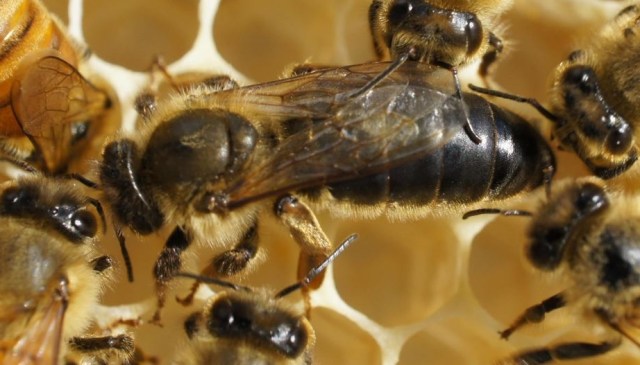
My recollection is that the queen kills a few more drones before heading home. But, then, I thought – do I know this for sure? Has anyone seen this adventure?  It happens way up there, out of sight,  as E.B. White noted:

Love-in-air is the thing for me
I'm a bee,
I'm a ravishing, rollicking, young queen bee,
That's me.
I wish to state that I think it's great,
Oh, it's simply rare in the upper air,
It's the place to pair
With a bee.

This we’ve known for a couple of hundred years (thanks, Huber and Janša) – queen leaves hive, meets drones, mates in the air. But does she return after each drone? The fact that the last drone’s man-parts block her passage implies that a trip home to freshen up might be necessary before the next nuptial. I wrote to two of the greatest bee sex experts that I know – Dr Larry Connor and Dr Norman Gary. They both wrote back within minutes!

Lawrence Connor, Honey Bee Sex Expert
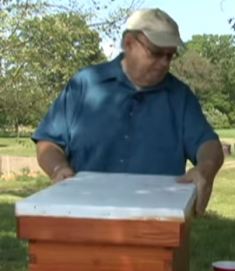
lawrence-connorLarry Connor, via Facebook, wrote, “This is answered clearly in the new Koeniger book, Mating Biology of the Honey Bee. They show that a queen can be mated fully in one flight.”

He went on to say that the other story (heading home each time) is just plain wrong. I have Dr Connor’s own books on the subject (Queen Rearing Essentials, 2009; Bee Sex Essentials, 2008) and he writes, “The drone separates from his endophallus left in the queen, falls to the ground and dies. Almost immediately, as another drone mounts the queen, the endophallus of the previous drone is forced out as he mounts her to repeat the process.” That’s pretty clear, isn’t it?

The Koeniger book (written by Gudrun and Nikolaus Koeniger with Jamie Ellis and Lawrence Connor),  Mating Biology of the Honey Bee, 2014, is one of the few bee books in the world which I don’t own. (I’ll fix that.) Koeniger et al. can be previewed here – the book looks great and there’s no Latin anywhere. I love that the dedication includes Anton Janscha (!) but not Francois Huber (There is a long-standing academic feud regarding which one to credit for discovering how honey bees mate. My own money goes with the Slovene, Anton Janša.)

Mating Biology of the Honey Bee has a seductive table of contents: Absent Fathers; How to Meet a Mate; Internal Anchorage of Drone and Queen; and thirty other cool/hot subjects. If you’d like to get your own copy – or Dr Larry Connor’s bee biology books – check out the publisher – Wicwas Press.

Norman Gary, Queen Mating Pioneer
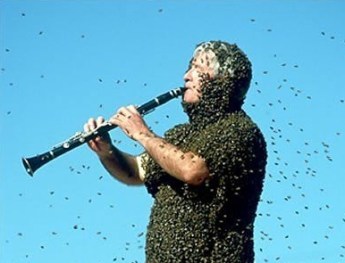
norman-gary-with-clarinetI sent the same question (“Do queens multiple mate each flight?”) to Dr Norman Gary and he answered that they usually do have multiple matings each flight. I specifically wanted to know about the proof. You know, in these days of ‘alternative facts’ and belief as a substitute for proof, I wanted to know the background. Have we actually seen the multiple matings or do we base the idea on conjecture – the number of minutes, the number of flights, the final spermatheca load. Maybe scientists are just guessing. Well, it’s not speculation. The multiple matings per flight are real.  I like the context that Norman provided in his answer to me. Dr Gary was the first researcher to observe mating behavior of flying drones and queens under controlled conditions. Motion picture cameras were just becoming reliable and could capture in slow-motion.  Gary and his associates observed and photographed the action.  Here’s part of his letter to me, received yesterday afternoon:

I designed an aerial suspension apparatus to display flying virgin queens tethered by a thread around two feet long that was attached to the thorax.  These queens were attached to horizontal line elevated 20-30 feet high, an altitude permitted normal mating flight behavior of drones.  In one experiment I witnessed 11 drones that mated with a tethered flying queen.  There were only a few seconds between each mating.  I introduced that queen to a colony and she laid eggs normally.  Drones cannot mate with the queen until she opens the sting chamber during flight.  Each drone removes the “mating sign” (endophallus) left by the previous drone.  There is good evidence that queens mate with a total of approximately 15 drones.  But the typical queen usually takes one or two mating flights, not 15!  So there is no question that the queen mates with multiple drones per mating flight.         – Dr Norman Gary, 2017

Professor Gary wrote his first observations in a paper that appeared in Journal of Apicultural Research in 1963. The study, “Observations of mating behavior in the honeybee”,  (Gary, N.E., J. Apic. Res. 2(1):3-13.)  can be accessed by members of the International Bee Research Association. Norman Gary – inspirational teacher, mentor, bee wrangler for movies (he ended up living in California), and accomplished clarinetist – has written more than 100 research papers over his years at Cornell and UC Davis. His most recent book, Honey Bee Hobbyist: The Care and Keeping of Bees, has had excellent reviews.  Published in 2010, it’s up-to-date and a good guide for aspiring beekeepers.

What do I know?

I wonder if either Lawrence Connor or Norman Gary were thinking that Ron Miksha (me) should surely know basic bee biology. The scientists were respectful and helpful with their responses. But, you know, the thing about science is that it changes. We think we know something, then someone comes along and proves it wrong. Or adds to the story. Or makes you question your ideas. Anyway, I knew that I could get the latest state of the knowledge from either (and both) of these guys.

I don’t have a copy of Dr Gary’s original flick of queen-drone intimacy.  (I hope someone does!) But here is something that few people outside this blog have ever seen. I have pictures of the scientific experiment as it was being done at Cornell back in the early 1960s. My oldest brother, David, was a high school summer student technician at Cornell when the experiments were going on. In August 1961, David took the pictures below. These unusual historic photographs document the historic documentation of how a queen mates.
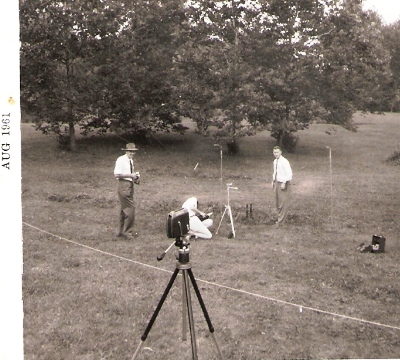
Cameras getting ready for the first queen mating pictures. <br>Dr Norman Gary is to the right.

Cameras getting ready for the first queen mating pictures.
Dr Norman Gary is to the right. When he saw this picture,
Dr Gary said, “I would not have been wearing a tie during normal research operations! “
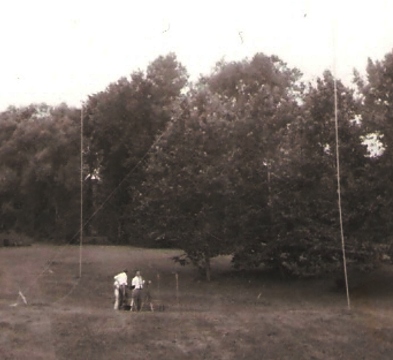
This tethering device secured multiple queens and led to Norman Gary's discovery of the queen mating pheromone.

This tethering device secured multiple queens and led to Norman Gary’s discovery of the queen mating attraction pheromone. Gary was the first to witness multiple (11 times!) mating sequences.
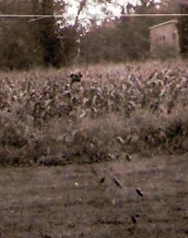
qm2-ball-closeup

The queen being lowered down from the tower shown in the previous photo. From here, she was introduced into a hive and began laying eggs.

Posted in Bee Biology, History, Queens, Science | Tagged , , , , , , | 7 Comments

Bee My Valentine

(Adapted from my 2015 Valentine post . . .)

Beekeepers are not sentimental. For most of us, Saint Valentine’s Day is a day of intense panic when male beekeepers rush out to buy something special for some darling or pigsney. (It’s not like we didn’t know February 14 was coming.)

bee-my-valentineSaint Valentine’s Day, though, wasn’t meant to be a day of loathing and dread. It comes to us from a mythical character of long ago. The love-struck saint’s day is built upon Lupercalia, a 3-day Roman holiday (February 13–15) which was intimately connected to fertility. (Luper himself was originally a lupus, or wolf-creature.) Lupercalia came from a much older spring celebration, maybe going back 10,000 years, adopted by the Romans, and then was borrowed by the new Roman church just 1700 years ago. The church fathers used the old holiday to remember a sainted martyr, Valentino, who grew a new heart every night and give his old heart to anyone who was sick, feeble, or heartless. Giving out chocolate hearts might have been easier.

At least one beekeeper – someone whom I shall never meet – employed enormous energy and talent to make the really cool heart-shaped comb in the picture above. I ran across it on a Polish language bee-talk forum where members were showing various comb-honey gadgets. I couldn’t understand very much of what I read on that site, but the pictures are great. If you have seen these heart-combs before or know the person who makes them, please drop me a note so I can credit the appropriate craftsman. Until then, maybe you can make a few of these yourself. You know, just before taking your special honey out to dinner.

bee-valentine-2

Posted in Comb Honey, Culture, or lack thereof, Hives and Combs, Humour | Tagged | 1 Comment

First View of a Bee’s Innards

swammerdam-comb-cells-3

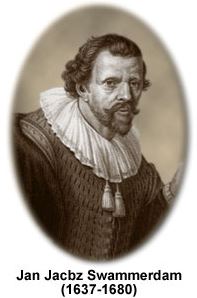
There are no pictures of Swammerdam, but this image Hartman Hartmanzoon (1591–1659) is usually placed in text books with his name under it.

There are no pictures of Swammerdam, but this image of Hartman Hartmanzoon (1591–1659) is usually placed in text books with Swammerdam’s name under it. I suppose it’s ‘directionally correct’.

Today’s birthdays include two notables whom you’ve likely heard of (Lincoln and Darwin, both born on the same day in 1809), and one luminary you’ve perhaps not encountered: Jan Swammerdam (1637-1680), also born on February 12. Though we have Darwin Days and Presidents’ Days, we don’t have Dutch-Beekeeper-Scientist-Microscopists’ Days. And that’s a shame because Swammerdam is worth celebrating.

Swammerdam’s father owned a drug store. Swammerdam Senior had a habit of collecting curios – rocks and minerals and dried sheep heads and the like. So he shouldn’t have been surprised when his brilliant son – trained as a physician – decided to put doctoring on hold while he built up his bug collection. But the dad was mad and disinherited Jan, forcing the young man to make a living by hacking off infected arms and affixing leaches to thin the thick blood of royalty. It paid well, but his heart wasn’t in it. He’d rather keep bees and explore wee bee bits under a microscope. (Those 16th century Dutch inventions were surprisingly good at viewing bee stingers and drone legs – their magnification reached 200.)

swammerdam-bee-eye

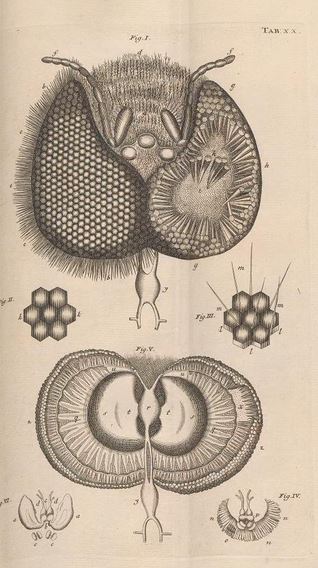
Compound bee eye and optical nerve.

To appreciate the man and his times, I recommend this 6-minute video. It’s made by a beekeeper who is a science guy. He does a great job with his story on Swammerdam.

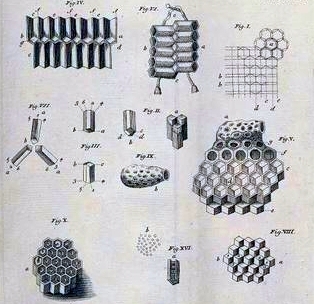
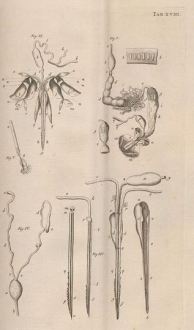
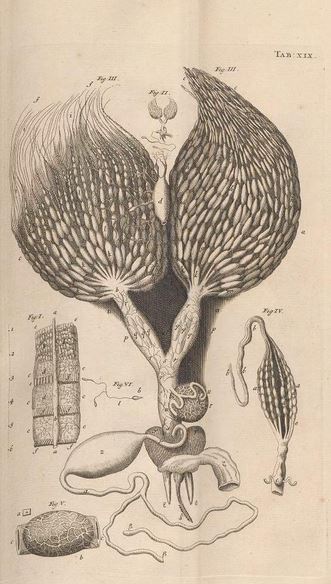
swammerdam-stingerYoung Swammerdam thin-sliced his subjects, teased apart their parts, and examined and sketched their innards. The anatomy drawings that populate today’s post are his: topmost is Swammerdam’s sketch of a bee’s home and stages of development; to the right is a honey bee stinger. Remember, these were drawn over 300 years ago and no one had ever seen such things before.  He continued these self-directed studies, diagramming the optical nerves that hooked compound bee eyes to brains and comparing well-developed queen ovaries with less endowed ones. On the side, Swammerdam discovered human red blood cells and tossed a chunk of Aristotelian philosophy out the loft window by demonstrating insect metamorphism. Until Swammerdam, people accepted Aristotle’s idea that caterpillars and butterflies are unrelated species of worms and flies.
Swammerdam didn’t last long. He burned out mentally before he was 35. He gave up science and became a disciple of a Flemish mystic who taught that the end times had arrived (in 1675!).  Swammerdam followed her and her other disciples into a life of penance and prayer, waiting for Armageddon. For Jan Swammerdam, it was a short wait. He died of malaria at age 43.

swammerdam-queen

Queen ovaries, tubes, and spermatheca

Posted in Bee Biology, Culture, or lack thereof, History, People | Tagged , , | 6 Comments

Painting the Bees

bee-mural-3

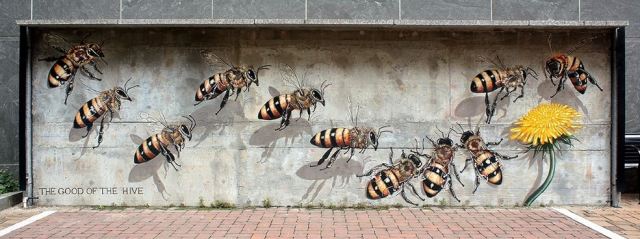
Photos © The Good of the Hive 2016

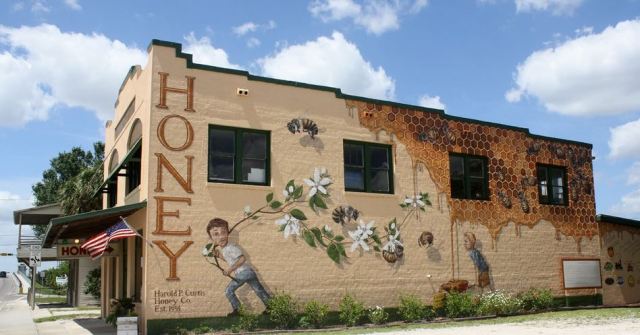
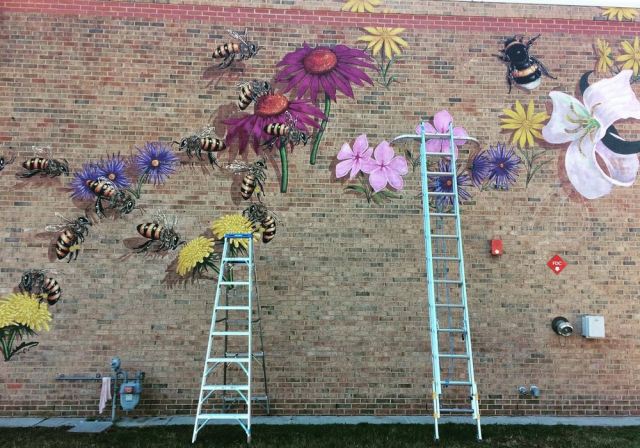
Let’s celebrate bees –  and enjoy a really cool art project at the same time! Matthew Willey, an energetic and talented artist, is highlighting beauty and nature with a series of gorgeous honey bee murals.  It’s an ambitious project. Willey’s plan is to personally paint 50,000 honey bees (the number typically found in a colony). There are 11 bees in the mural just above, so it would take over 4,000 similar paintings to reach that goal!

I asked Matt how long it will take to paint murals with 50,000 bees. He told me that he anticipates spending 15 to 20 years at this project. “But the idea is not to hurry and has nothing to do with time. I actually do not get tired of painting bees. Each mural is different and I keep challenging myself to take things to the next level with the work. It is freeing to have the subject matter be anchored in the bees and let the imagination go from there,” he said.

bee-mural-1

Photos © The Good of the Hive 2016

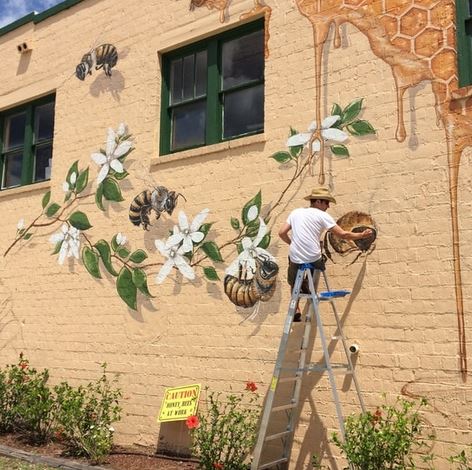
The murals (which you can view in detail at his The Good of the Hive webspace) are cropping up around the USA and eventually beyond. (Canada? “At some point without a doubt,” answered Matt). Today, you can find his murals from LaBelle, Florida (Curtis Honey Company) to Seattle, Washington (Broadstone Sky Building).

bee-mural-2

Curtis Honey Co., Labelle Florida.   Photos © The Good of the Hive 2016

Several ambitious murals are in North Carolina – near Durham (at Burt’s Bees’ offices), Chapel Hill (Estes Hills Elementary School), Raleigh (NC Museum of Natural Sciences), Asheville (Foundation Skate Park), and Carrboro, where he worked in blistering heat to paint the town fire hall. I asked Matt about it: “The Carrboro mural was painted in excruciating heat, but I just imagined that the firefighters inside the building where I was painting work in REAL heat! And every time a little kid comes by and points at the big bees with excitement, my heart melts back into the work. Even with all of the issues that come with painting large, public outdoor murals, it really has been an incredibly joyful experience so far.”

bee-mural-4

Carrboro Fire Hall Photos © The Good of the Hive 2016

Matthew Willey’s The Good of the Hive mural project is just starting its second year. His team will be launching a crowd funding effort in a few weeks and I’ll remind you when it happens. I’d like to contribute a little to this effort and hope you will, too. We’ll have more of Matt’s art on this blog when we visit him again in March.

(All photos on this posting are courtesy The Good of the Hive: Photos © The Good of the Hive 2016.)

Posted in Culture, or lack thereof, Outreach | Tagged , , , , | 4 Comments

This Cat Don’t Eat Honey

jump-puffHumans can taste one drop of sucrose (table sugar) diluted in 150 parts water. A honey bee outranks our sugar sensitivity six-times over: about one part in a thousand and the bee is on it. What about Puff, the cat?

Puff doesn’t jump on command nor does she care much for honey. Why do cats lack the fundamental sweetbuds that seem to line almost every bit of real estate on our human tongues? I, an ordinary sample human, have a sugar addiction. Cats don’t. Lucky them – they can’t taste sweetness. Rotten carcasses, however, seem to attract their licky tongues.

The science of sweetness taste-testing goes back about a hundred years. A group of three scientists – Beister, Wood, and Wahlin – working at the University of Minnesota led the way. They ‘invited’ undergrad students to lend them their tongues. Droplets of pure water (Yummy!) were placed on student sugar buds. As the experiments progressed, more and more sugar was added to the water until the students reported that they could taste the sugar. This is known as a ‘threshhold taste test’ and it was repeated by the scientists with a range of sugars – sucrose, fructose, glucose, maltose. Those four are the principal sugars in honey.

The scientists carefully tested and documented the relative sweetnesses. In their 1925 paper, Carbohydrate Studies, they wrote, “”Although the consumption of sucrose has increased rapidly…accurate information as to the relative sweetness of pure sugars is lacking.” Their research confirmed that fructose is more than twice as sweet as glucose. Food packers love information like this – they can buy half the amount of fructose and give consumers the same sweetness with fewer calories. (In a later blog post I will discuss how fructose has become a ‘bad’ sugar in recent years.)

The three scientists assigned a value of ‘100’ to sucrose. Then, comparing sucrose to the other sugars’ sweetness as judged by the college students, they derived the scale below. By the way, the researchers did their science at the University of Minnesota where they taught, marked tests, wrote papers, and advised students. But they were never paid properly nor given the title ‘professor’ because it was 1925 and they were. . .  well, you know, girls, not boys.

The Beister-Wood-Wahlin Sugar Sweetness Scale

The Beister-Wood-Wahlin Sugar Sweetness Scale

None of this means much to a cat.  Cats don’t enjoy ice cream or rocky mountain fudge. Or honey. (Good thing, house cats get plenty fat without having a sweet tooth.)  So, why do some cat food makers add sugar? Well, they know that the cats’ humans will taste the stuff before passing it along to their masters.

fat-cat

Posted in Culture, or lack thereof, History, Honey | Tagged , , , | 5 Comments