Meanwhile in Montréal

Roof apiaries ,ay apear 5hroughout Montreal.

Roof apiaries may appear in Montréal, but city beekeeping is not a new idea.

Here’s an interesting idea. Beekeepers rent massive numbers of colonies to almond, blueberry, cranberry, durian, eggplant, and so on farmers. Money is the attraction – neither the meager honey crop nor the diseases picked up on most of these pollination excursions are alluring. It’s the pollination fee. The money.

Beekeepers living in the city don’t usually cash in on bee rentals. They keep just a few hives (seldom more than 100) and often struggle to find urban bee yards. Well, what if you rent hives to city gardeners for a pollination fee? The beekeeper gets a spot to place hives. It’s a place where the gardener is enthused about bees, recognizes their value, welcomes the insects, and pays a few dollars.

A Montréal company rents hives to about 250 backlot gardeners. Rather than charging a pollination fee, this outfit takes the idea a few steps further. The gardener who pays to rent the colonies actually gets to do the beekeeping and keeps the honey the rented bees make. This is especially appealing to people who want to give beekeeping a try, want to see a hive in action, want an unusual summer project, want to save the bees and eat local, but don’t want to invest in the cost of a colony. In this rental system, the hive usually gives enough honey to pay the rental cost. Best of all, it gives gardeners a way out if, after one year, bees are not their thing. Interested? Here’s a link to a CBC news story about the business.

Bee in Toronto: By-laws or not, bees live in cities.
Credit via Wikipedia: Shawn Caza

How well will the bees do? It takes skill to care for bees, so the Montréal company (Alvéole) teaches beekeeping. Cared for properly, honey bees in Montréal may make 30 kilos (60 pounds) of mixed-flora honey in a typical backyard. Cities usually have more floral diversity and fewer pesticides than rural areas. The only downside is that the activity may be illegal (by-laws sometimes limit where bees may be kept) and homeowners may need extra liability insurance. But for many people, the obstacles can be overcome and the bees are worth it.

I like bees. I understand the attraction for city homeowners. I am waiting for a dairy to start a rent-a-cow business here in Calgary. Our backyard isn’t huge, but we live next door to a greenspace – a village commons, as it would have been called 300 years ago. My kids could sit with the cow whenever it went to the greenspace. Once there, Betsy or Bossy (we haven’t agreed on her name) could graze and fertilize the city’s grass. We’d keep the milk, of course.

Posted in Bee Yards, Outreach, Save the Bees | Tagged , , | 2 Comments

Bee Rustlers on the Rise

In the old days, cowboys occasionally stole cows. Horse thieves were sometimes hanged. Not always, though. Back in Val Marie, Saskatchewan, a cattle town that I lived in for ten years, there was a fellow named Joseph Ernest Nephtali Dufault who showed up from Quebec in 1910. He worked for local ranchers for three years, then was chased off, accused of horse theft.

Getting chased out of Val Marie turned out to be a good thing for Mr Dufault. He headed south, and though he stole horses again (in Nevada), got caught, and spent time in prison, he finally straightened out and did OK. He ended up writing books about the old west. In California, he wrote screenplays. By then, he’d changed his name to Will James and had sold 23 books – 5 became movies. Here you can watch his most famous work, Smoky the Cowhorse, adapted into a 1946 film, starring Fred MacMurray, Anne Baxter, and Burl Ives. Thirty-six minutes into the film, you get to see Smoky hoofing the ground.

Not every horse thief becomes rich and famous. Must just get caught and live a life in shambles. Or they briefly occupy a noose. Bee thieves also have their problems. When I kept bees in Florida, a ring of bee bandits were maundering apiaries at night, stealing hives, taking them home, killing the bees, extracting the honey, melting the wax, and burning the equipment. By morning the evidence was gone. The crooks allegedly used the cash to feed a cocaine habit.

I’ve never had any hives stolen. But I’ve heard of bee thefts, even up here in neighbourly Canada. Today’s news tells the story of a Quebec beekeeper who has had 184 hives go missing.  The newspapers report it as a $200,000 theft. I don’t want to argue the number, but that’s over a thousand dollars a hive. The bee company’s president calculates the loss this way: “It’s a big loss because first you lose the [blueberry] pollination in Lac St. Jean, you lose the pollination for the cranberries, then you lose the honey crop, and you have to build new hives. It’s costly. It’s a loss of a few hundred thousand dollars,” he said.

It’s the biggest bee theft I’ve ever heard of and it’s a tough time of the year to lose bees. Replacement packages can’t be found this late in the season. Pollination contracts have to be filled. This is a really bad situation for the beekeeper.

The police are looking for 5 million missing Quebec honey bees. We presume that the colonies have not been killed, combs melted down to supply a bee rustler with drug money. Instead, the brand burned into the wooden bee hive equipment should alert investigators of the bees’ rightful owners. Hopefully the beekeeping family will get their stolen property back.

Proper punishment: This is Albrecht Durer's The Honey Thief

Proper punishment for a bee bandit:
Albrecht Drürer’s 1514 watercolour, Cupid, The Honey Thief


Update: The Mounties always get their man men. Two brothers have been arrested for the alleged Quebec bee theft:

http://www.ctvnews.ca/canada/suspect-arrested-after-5-million-bees-stolen-in-quebec-bees-remain-missing-1.2892500

Posted in Commercial Beekeeping, Movies, People, Strange, Odd Stuff | Tagged , , , , | 2 Comments

Herbicides, Bacteria Killers, and Honey Bees

Recently, I learned that herbicides such as Roundup and 2-4-D kill bacteria. Not only do they do a fine job of killing broadleaf pollen producers, they also kill some microbes. This information didn’t come from the tin-hat doom-sayer who lives on the other side of my computer screen. I saw it written up on the pro-business Forbes website, so it might be true.

For years, I’ve puzzled over the complaint that herbicides kill bees. I thought this was a mistype. Surely they meant insecticides kill bees. Herbicides are supposed to just kill weeds. Nasty weeds that choke farmers’ fields.

But now I learn that herbicides kill bacteria. You will see in a moment why that’s not so good for bees. A lot of chemicals are antiseptics – rubbing alcohol, iodine, and fire, for example. Honey, of course, also kills bacteria. So it should not surprise us that some of the ingredients of the most popular herbicides are also bactericides. These are either antiseptics (killing bacteria locally and topically) or antibiotics (disrupting bacterial growth, including internally). Here’s a brief summary of a few favourite herb-killers:

2,4-Dichlorophenoxyacetic acid (usually called 2,4-D) is an organic compound. Yes, folks, it’s organic. Its chemical formula is about as complicated as sour dough’s: C8H6Cl2O3.   2,4-D is a systemic herbicide which causes uncontrolled growth in most broadleaf plants, killing them, while most grasses such as cereals, lawns, and grassland are relatively unaffected.  2,4-D has been around since 1945.  Its patent expired long ago so any company with a chemistry lab can make it. As a result, over 1,500 herbicide products contain 2,4-D as an active ingredient.

Roundup’s key ingredient is glyphosate. A Monsanto chemist, John E. Franz, discovered that glyphosate is  an herbicide in 1970.  Its patent has also expired, but Monsanto cleverly and profitably created glyphosate-resistant Roundup Ready crops, enabling farmers to kill a very wide range of weeds without killing crops.  This allows even better (and actually cheaper) weed control for farmers, but they need to buy seeds developed specifically to tolerate the organophosphorus compounds.  Monsanto sells those seeds, of course. Unfortunately, in the same way that Monsanto was able to find genes that resist glyphosate, Mother Nature (a semi-independent unincorporated entity only partially owned by Monsanto) enabled weeds to evolve and become glyphosate-resistant. This is not as bad as it sounds, the weeds are only partially resistant and are killed by increasing the amount of glyphosate applied. (Of course, in a few years, the weeds will evolve to be even more tolerant. But then the farmer simply increases the dosage again. Meanwhile, the World Health Organization found that glyphosate is carcinogenic.  In 2007, glyphosate was the most-used herbicide in the United States’ agricultural sector’s arsenal and the second-most used in home and garden, government and industry and commerce.   But what’s to worry?

what me worry

Dicamba is sold under names like Banvel, Diablo, Oracle and Vanquish. Is it just me, or do those sound like Satan’s nom de plumes? The Dicamba family is made of organochlorines derived from benzoids. In this 25-year-old fact sheet on Cornell University’s website,  dicamba is described as a highly corrosive acid that can cause skin irritation and “severe and permanent eye damage.”   Sprayed on broadleaf plants, it kills.

We have our pick of dandelion killers:  2-4,D, glyphosate, dicamba. There are others. Now let’s consider if these herbicides kill bees. I can see how they’d make a bee’s life less enjoyable. Just as the bee approaches a bright yellow dandelion flower, grounds-keeper Willie floods the septal nectaries with glyphosate. That shouldn’t kill the bee, but it might make her groggy. Hopefully, she can still return to her nest with her slightly damp pollen. But that’s where the real problem may start.

Bees use bacteria to make pollen more palatable. The bacteria, mixed with pollen in beebread (the bees’ staple protein dinner), makes the pollen more easily digested. Herbicides kill bacteria. Obviously, if the herbicides kill bee-friendly pollen-reducing bacteria, herbicides may result in malnourished bees. This alone does not cause colony collapse disorder, nor has it alone caused the demise of bumblebees and other creatures. But it’s probably one more ingredient in the toxic soup that makes a bees’ life brief and dreary.

Posted in Ecology, Pesticides, Save the Bees | Tagged , , , | 6 Comments

Honey Times in Oz

scarecrowI’ve not yet travelled to Australia –  Oz, as some here in Canada call it. We who have never seen Oz can only picture the place with the same sense of awe that the scarecrow had for the Emerald City.  I’ve been lucky enough to see a few fascinating places, but Australia remains on my bucket list. It’s on my list partly for the kangaroos, but mostly for the honey flows.

As a child growing up among bees and beekeepers in North America, the idea of year-long honey flows under eternally blue skies held a fascination. The closest I could get to living in a honey-bee-Shangri-La has been here in western Canada. I like it here, but I’d still enjoy indulging in raw eucalyptus honey, freshly scraped from a drippy burr comb pulled out of a burgeoning 8-storey hive while a koala looks on.

Australia conjures many images. For some people, the crocodile hunter, Steve Irwin, comes to mind as the quintessential Australian. But my own legendary Australian is someone few have ever heard of – Rob Smith.

Back in the fifties, Mr Smith kept bees in Australia’s western forests. One year,  he produced an average of 762 pounds of honey from each of his 460 hives.  That’s right, a 762-pound (345-kilo) average. Many of his hives made a thousand pounds of honey.  His bees were all in one big apiary, in a remote forest 300 kilometres south of Perth.

karri blossom

The unassuming flower of the Karri tree . (Credit)

Smith set up a small camp, complete with an extractor. He lived among his bees in the apiary. He extracted almost every day and put the emptied boxes back on his hives. The empties were refilled by the bees and emptied by Smith over and over again. This went on for 7 months. Finally, after months without rain, the blossoms on the karri trees dried out and stopped secreting nectar. The bees quit making honey. Rob Smith and his hives moved away.

Since then, others have claimed impressive honey crops, but I don’t think anyone ever topped Rob Smith’s production.  It may be hard to believe that single hives could make 762 pounds of honey, but it has happened here in western Canada.   Canada has a much shorter season, but for several consecutive years my scale hive produced over 400 pounds annually. My scale for hive - smallerscale hive’s best day was 33 pounds. The best week was 143 pounds net gain of honey. A few of my individual hives yielded over 600 pounds (I kept track.) – that’s a barrel of honey per hive.  (And there are better beekeepers here than I. I’m thinking of some of the masters around Nipawin, Saskatchewan, who ran 2-queen colonies. There were also spectacular crops in Alberta’s far north Peace River area.)  One year, the average for my entire outfit was 360 pounds – but that’s still just half of Smith’s enormous crop!
Smith surely holds the world’s most astounding result for an apiary. I sent notes around Australia a few years ago to see if the legendary Rob Smith was more than a legend. From Bill Winner, a corporate Beekeeper Services Manager:

“We can confirm the average production of 346 kilograms (762 lbs) per hive from 460 hives. The beekeeper’s name was Bob Smith from Manjimup, Western Australia. The honey was Karri. The year was 1954.”
Mr. Winner adds: “This figure is confirmed by R. Manning Land Management Journal Vol 1 (5) P24-26, in a table provided as Fig 1. in “Honey production from the Karri with Redgum & Jarrah.” Stating that commercial beekeeping commenced in 1936 with reference to Smith’s crop in a box titled “World Record”.

Manjimup, Smith’s town, is in Western Australia state. About the same time that Smith was doing the improbable, other beekeepers were doing well on the other side of the continent, too. Beekeepers there often produced five-hundred-pound honey crops. This is not happening anymore, according to friends in the country. Commercial beekeepers these days may run a few thousand hives in locations where a few hundred once made those phenomenal crops. Commercialization, deforestation, and global warming have cut into those legendary crops.

Seventy years ago, the Australian National Film Board sent a crew to follow a couple of east coast beekeepers, two ex-servicemen working for a honey outfit in New South Wales. The film crew made an excellent 10-minute documentary that really gives a sense of what beekeeping was once like. But you will also see much that hasn’t changed at all – except perhaps the size of the honey crop.

Here is the 1947 video, Bee-keeping on the Move:

Posted in Beekeeping, Commercial Beekeeping, History | Tagged , , , | 12 Comments

Bumblebee Honey For Sale?

My brother was at a farmer’s market in North Carolina this weekend. A vendor was selling a thimble-full of honey for $10. Maybe slightly more than a thimble. The seller told my brother that you wouldn’t smother a pancake with this special honey. It was medicinal. It was made by Central American bumblebees. I forgot to ask why it was ‘medicinal’ – was there some particular illness it was intended to cure? But that’s off-topic for today’s blog post.

I’ve never eaten bumblebee honey. Nor has my brother – he didn’t buy it. The man selling the honey claimed that he himself kept bumblebees in Latin America. He harvests a few pots from each nest. Perhaps, but even a few pots seems excessive and, I think, would deplete the bumblebees’ pantry. I could be wrong, of course. Perhaps bumblebees fill their little honey pots with wild abandon. Meanwhile, the beekeeper protects them and gives them a safe nesting spot. That would be OK by me,  if it’s true.

Bumblebees don’t make much honey. They gather nectar and pollen like honey bees do, but there are far fewer bumblebees in a nest and they save much less honey/nectar for rainy days.  You can see the problem in this picture of a bumblebee nest:

A highly immobile bumblebee nest.

Florida bumblebee nest. Photographed by the author in the Ocala Forest.

You can see the pots. Each is smaller than a bumblebee. Most of these hold developing larvae, but in time there may also be a few containers of nectar. Bumblebees never store kilograms of honey as honey bees. Bumblebees store mere grams. This is because they have quite different life cycles and don’t need big reserves.

To get through bad times (winters, droughts, nectar scarcities), honey bees eat some of the huge surplus of honey they’ve stored. Even in the winter, there are thousands of honey bee mouths to fill. Bumblebees, however, have a different survival strategy. The have fewer members per colony so they need less stored honey. During really bad times, only a single mated female, a queen, survives in hibernation. When the season improves and flowers bloom, that solitary bumblebee makes a new nest, completely on her own. She fashions a few pots, lays a few eggs, collects a bit of food for her offspring. When her brood becomes adults, they help expand the nest, adding a few more pots. This allows yet more workers to emerge.

By late season, a bumblebee nest may have grown from the solitary queen who established the colony to a group of two or three hundred bees. Meanwhile, the honey bees have built a huge population (50,000 or so). Honey bee workers expand the nest, not the queen. The workers gather the food and feed the larvae, the queen’s main function is egg-laying. She does little else. Honey bees specialize, using divisions of labour, splitting tasks between queens and workers. Bumblebees don’t, at least not on the same scale. Honey bee workers collect a big surplus of food; bumblebees produce a mere pittance.

Bumblebees are threatened. Their numbers are dwindling. If there really are bumblebeekeepers, maybe they can keep those bees alive. But I’d still be uncomfortable partaking more than a few drops of bumblebee honey on the tip of my tongue (just to know what it’s like). For that, I’d gladly pay ten dollars – if I knew a bumblebee colony somewhere in Central America was getting part of the money, at least in the form of a protected nesting site.

Posted in Apitherapy, Bee Biology, Ecology, Friends, Honey, Save the Bees | Tagged , , , | 11 Comments

Packages Arrive in Calgary!

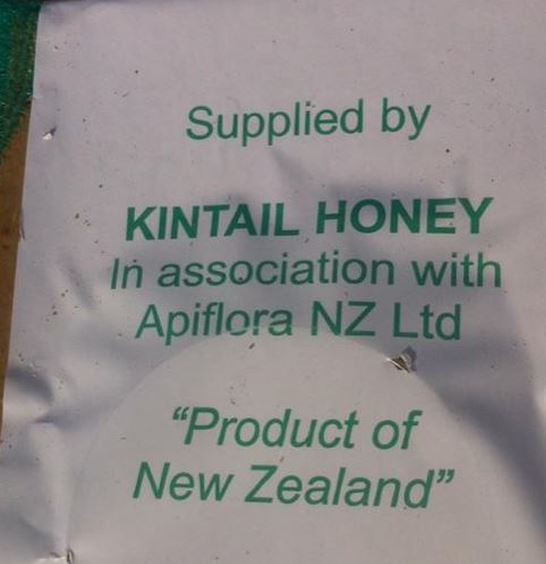
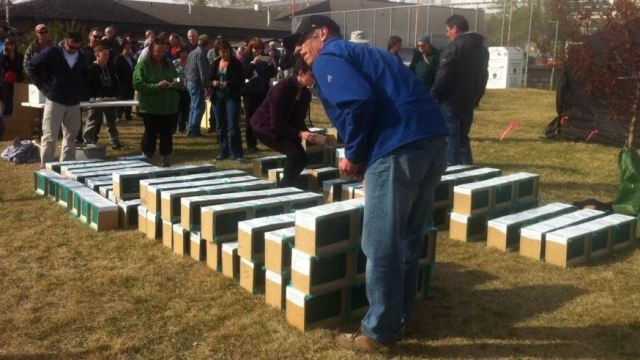
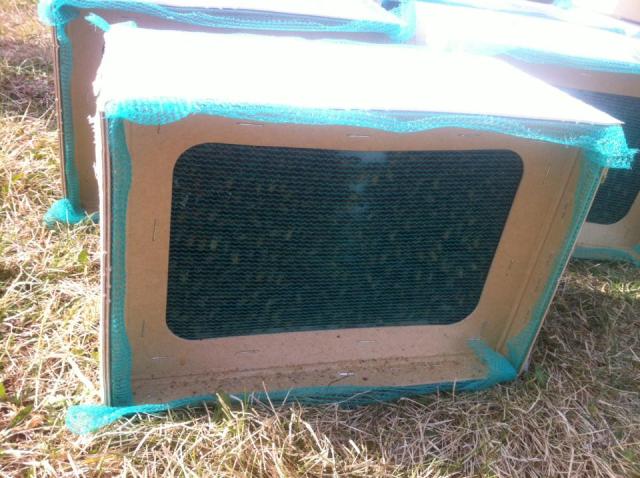
Calgary has a hyper-active bee club. Members help members with all manner of thing. Equipment exchanges, educational programs, disease control. The latest big event was the arrival of 160 packages of bees from New Zealand. By the way, 160 packages contain 160 queen bees and about 1,008,047 worker bees.

This is an exciting, albeit anxious, event for new beekeepers. For many of the folks picking up their bees, this was their first encounter with their own honey bees. Most of these novices had taken the Calgary Bee Club beginner’s bee course. They’ve paired up with mentors (or will when the season starts), and they have spent the winter reading bee books and attending bee club meetings. And yet. There they are, grasping cages of bees, nervously loading the back of a truck or the trunk of a car with thousands of living, buzzing insects.

brisebois 1

The bees speed off with their new servants, inexperienced beekeepers whose lives have suddenly flipped upside down. From now on, these beekeepers have new masters – masters with stingers.  Already there are internal e-mails between new beekeepers and old beekeepers, further exposing trepidation.  One beekeeper may have lost a queen while installing the package. Now what?  Another’s queen cage fell to the bottom of the hive box. Cork open, but no guarantee the unseen queen crawled out. What to do? Others were concerned that the weather is turning cool. Is that good or bad? And on it goes.

Reassuring answers bounced back to the newbies. In most cases, the bees will be fine. They will settle down in the cool weather (though they will need easy access to feed) and the queens will soon be laying eggs. (Unless she took flight during installation. In that case, a new one is needed yesterday or even sooner.)

Here in western Canada, we can still get some cold weather, hopefully some wet weather, and there will be sunny days. Packages installed this weekend should build into fully productive hives by late June. They will likely make over a hundred pounds of surplus honey this summer. It all happens fast and even oldster beekeepers are impressed and surprised by the production of packages.

In today’s blog, I’m not going to go into the politics about Calgary beekeepers getting their bees from New Zealand (12,ooo kilometres away) instead of the more sensible source next door in the USA. And I won’t discuss the reasons that Canada – after 30 years of gallant attempts and much ballyhoo – never succeeded in being bee-independent. Instead, we’ll just celebrate the return of the robins from the States and the arrival of the bees from the south Pacific!

I wasn’t at the package pick-up point Friday afternoon where angst was in oversupply. But at least one club member took pictures. Their photos were used in this blog post – I give thanks and full credit to www.briseboisbees.com.

brisebois 2 New Zealand package

brisebois kintail

Posted in Beekeeping, Friends, Outreach, Queens | Tagged , , | 2 Comments

Weird Spring

stark desert sun 2We are having weird, weird weather here in Alberta. It’s dry as a desert and almost as hot as one. Since January, our temperature has stayed well-above normal. Ten  degrees above normal, in fact. And that’s embarrassing.
It’s embarrassing because when I helped teach a couple of beginner’s bee courses this winter, I told the new beekeepers what to expect in the spring.  I led a session about nectar sources and their blooming periods in the Calgary area.

“Around April 15, you can expect the first pollen. It’s from crocus and pussy willow. The peak dandelion is May 25 and it’s our most important spring flow.”  Well, I sure didn’t anticipate anything like this season. So far, this year is proving me seriously wrong. We’ve had pollen since early March, over a month too soon. Bees collected frames of pollen by April 1. This week, I spied patches of dandelion. Not a full-blown dandelion nectar flow yet, but there is some yellow on south-facing hillsides. A month early. It’s probably not a good thing.

April dandelions in Calgary. The grass should be lush green from spring showers, but the drought has left it brown. Even the dandelion flowers look stressed.

April dandelions in Calgary. The grass should be lush green from spring showers, but the drought has left it brown. The dandelion flowers look stressed.

Unusual heat has advanced our season. This week we broke a hundred-year-old record. It reached 28C (83F) on Tuesday. That’s the warmest it’s been on this date in recorded history. Maybe that’s not so hot for you, but up here in Calgary, Canada, we’re getting summer temps. At this time of year, our normal high is 13C and our typical overnight low is below freezing. It has been warm for weeks. Our flowers are confused. We may have to get used to this erratic weather if climate change continues. (And that  looks likely.)

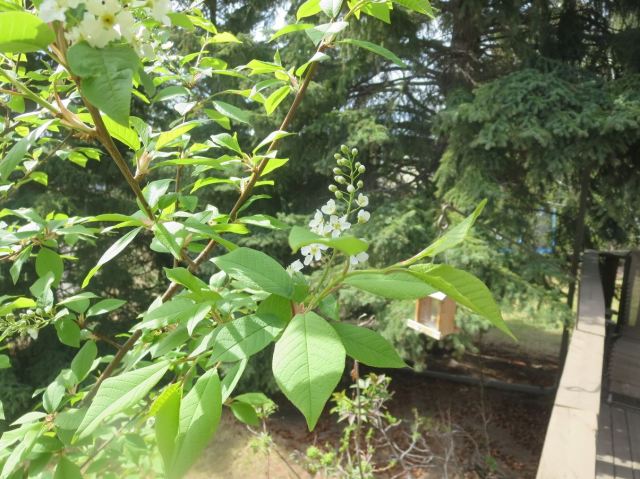
Our backyard cherry is also blooming a month early. This isn't good.

Our backyard cherry is also blooming a month early. This isn’t good.

What does a warm spring mean for bees? It might mean trouble later this year. Although the spring helps marginal colonies recover from the winter, the long-term consequences of all this heat can be bad. We will get a longer “June Gap” – the dearth between spring flowers and the main honey flow. This may force beekeepers to scramble to feed hungry hives during the gap. Further, with the early spring, bees may peak too early – already Calgary beekeepers are collecting swarms. When the summer flowers begin (clover and alfalfa for us), they may not last long. They may stop giving nectar in the heat and drought.

But the nice thing about all of this is that I could be completely wrong. Today’s Friday and it’s cool and cloudy for the first time in a days. By Monday it might be cold and rainy (or even snowy). And that would slow down the earlier blossoms, freshen the soil, and hold back the peak dandelion flow until May 25th or so. One can hope.

Posted in Beekeeping, Climate | Tagged , , , , | 2 Comments

The Queen, or Her Majesty Queen Elizabeth the Second

queen elizabethQueen Elizabeth commands tens of thousands and lays up to 2,000 eggs a day? That might be an editing error. Dan Graur, a biologist in Houston, discovered that Reuters News Service once required that all stories about “the queen” should henceforth refer to her majesty as Queen Elizabeth. Thus, instead of “the queen and her horse boarded the queen’s yacht,” reporters must write “Queen Elizabeth and her horse boarded Queen Elizabeth’s yacht.”  Well, that’s good, respectful policy. In theory. In practice, it threw a spanner in the works.

Soon after setting the standard, Reuters ran this cock up:

queen and reuters

If you’re not able to read the science news piece above, it says in part:

With its highly evolved social structure of tens of thousands of worker bees commanded by Queen Elizabeth, the honey bee genome could also improve the search for genes linked to social behavior.

Queen Elizabeth has 10 times the lifespan of workers and lays up to 2,000 eggs a day. Despite having tiny brains, honey bees display honed cognitive abilities and learn to associate a flower’s color, shape and scent with food, which increases its foraging ability.

Queen Elizabeth has 10 times the lifespan of workers?  I guess that depends on their type of work. Nevertheless, she will outlived a lot of us.  Today (April 21) marks her majesty’s 90th birthday. Grand celebrations are sweeping the Commonwealth as royalists pay homage to the lucky lady who has (as Reuters says in their piece, above) a genome that could improve the search for genes linked to social behaviour. Jolly good of her.

QE II hat-2

Posted in Culture, or lack thereof, Humour, People, Queens, Strange, Odd Stuff | Tagged | 3 Comments

Hive Materials

Yesterday an e-mail arrived from a European beekeeper. He is new at bees and wanted my opinion about bee things (hive types, honey plants, eco-tourism). One of his questions particularly stood out.  He had found an ad for “honeycomb material” designed for the aeronautic industry. Rigid, light-weight, and made of synthetic materials. You can see the ad at this link. Here is a picture of the material. It looks like bees made it, doesn’t it?

The advertisement reads:

Aramid Honeycomb is a lightweight, high strength, nonmetallic honeycomb manufactured from aramid fiber paper. After the honeycomb is formed, it is coated with a heat resistant phenolic resin to increase its strength. The core material exhibits high strength to weight ratio, low density, and is very bondable. Aramid honeycomb is becoming increasingly used in high-performance non-aerospace components due to its high mechanical properties, low density and good long-term stability. The Standard Cell honeycomb is manufactured with the typical hexangular cell shape.

You are all welcome to comment below, but my first thoughts are that the material is likely not approved food-grade, the cell-size might not align with a bees’ knees, it may emit fumes toxic to bees inside a hive, and honey bees are reluctant to use fully-drawn artificial combs. That’s how I answered the person who wrote. I also told him that I could be wrong – I often am.

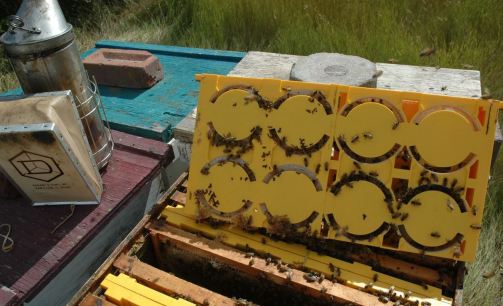
I appreciate innovation and I think that plastic bee supers and frame parts are fine. Our own 8-comb honey frame, pictured here, makes great use of durable, re-useable plastic. We have been making and using these for 10 years.

Summit Comb in use

honeycombpacking

I haven’t always used plastic, of course. Nor are all our hive parts plastic – most are made from western softwoods. The first bee boxes I ever hammered together (rather poorly, I hasten to add) were made from an aging tulip poplar tree that grew on our Pennsylvania farm. We milled it with saws we had set up just outside our cow pasture. Tulip poplar (also called American poplar and tulip tree) is neither a tulip nor is it a poplar in the sense of the aspens or Walker poplars that are common out here in western Canada, where I’ve lived for the past 40 years.

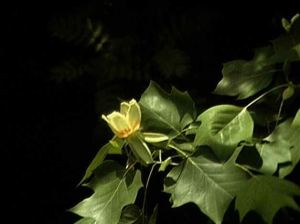
Tulip poplar in bloom

Tulip poplar in bloom

The tulip poplar tree has magnificent tulip-shaped flowers as big as teacups. At night, those teacups refill with about a teaspoon of fresh nectar in each. There are hundreds of these flowers on a mature tree (which can reach 200 feet, or 60 metres). Bees love tulip poplar trees, but most seasons the skies are gray and drizzly. The nectar is often washed out by raindrops, not bee tongues, leaving little for the beekeeper. With cooperative weather, the beekeeper may get about 40 pounds of tulip poplar honey during the brief flowering season, but that’s about it.

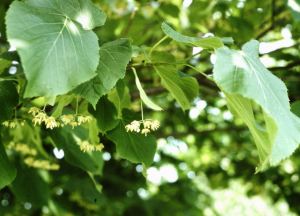
trees in bloom: Tulip poplar, left; basswood, right

Basswood (Linden) in bloom

In Pennsylvania, near my family’s farm, beekeepers and mill-operators chopped down thousands of the beautiful basswood (linden) trees that once dominated the eastern landscape. Beekeepers used the soft pliable basswood to make squares for comb honey sections. From 1880 to 1920, they used one million of those basswood boxes each year for packaging comb honey. So many trees were cut for comb honey that basswood trees almost disappeared from the eastern forests.  Ironically, basswood is a nectar fountain, prolifically yielding white mild honey when few other sources are available in the Appalachians. Cutting the tree to make the package for the tree’s honey was about as sensible as killing a goose that lays golden eggs.

Old-fashioned honey section, made of basswood. Thousands of trees were destroyed to make these.

Old-fashioned honey section, made of basswood. Thousands of trees were destroyed to make these.

When I lived in the east in the early 1970s,  I felt it was a bit rude to turn nice (honey-producing) trees into tulip-poplar honey supers and basswood section-boxes. I was uncomfortable with the idea then and even more uncomfortable today. This is why using plastic (especially for hive parts that may last a hundred years) has some appeal to me.

But this does not mean that we can experiment with every construction material we encounter. My plastics are food-grade, tested and certified. The aramid honeycomb construction material that started this blog post (non-metallic and “coated with a heat-resistant phenolic resin“) is probably not so great for holding honey. The Estonian beekeeper who wrote to me and inspired today’s blog post knows this and was not planning to use it as frame material. He was just curious, as we all should be.

Posted in Hives and Combs, Tools and Gadgets | Tagged , , | Leave a comment

Rhodo Poison?

Rhododendron bushes

The rhododendron is a beautiful plant, but it’s rumoured to intentionally maim and kill honey bees.  My mother had a favourite rhododendron bush in the yard by our house in the Appalachian foothills. Now that I am older and presumably wiser, I’m surprised that we had rhododendrons on our farm at all. If its nectar kills honey bees, the plant would have been cursed by the  dozens of hives stationed on the hillside behind our house.

But rhododendrons are nice. They include over a thousand species and 28,000 cultivars, according to the International Rhododendron Registry. Almost everyone in the right temperate zone wants one.  The extensive family of ‘rose-trees’ (as the Greek name ‘rhodo-dendron’ translates) includes tree-like shrubs with rose-like flowers. It also includes the common azalea, a smaller and less showy type of rhododendron.  When I was in northern Kentucky last month, azaleas were beginning to bloom. The ridge line of the Appalachian mountains is erupting in rhododendron scent at this moment.

People have long noticed the sweet honey smell of rhododendron flowers and wondered why bumblebees liked them but honey bees didn’t. Here, for example, is a description of the plant  from John Lovell’s 1926 book, Honey Plants of North America: (1)

Lovell on Rhododendrons

Do you notice how Lovell begins by telling us that rhododendrons are bumble-bee flowers?  Although beekeepers reported sweet nectar falling in large drops from the rose-shaped flowers, they claimed that honey bees ignored the plant.  Bumblebees, however, were seen working it. Lovell does not elaborate and does not mention that for honey bees, rhododendron nectar may be poison.

There is some debate about whether honey bees actually visit rhododendrons. If the nectar is toxic, we might guess that scouts which return with the stuff are looked upon rather disapprovingly by their fellow bees. Or maybe the scouts simply die in the field, never reporting their finds to their hive-mates. However, bees must store some of it because there are accounts of people becoming sick from rhododendron honey. With over a thousand species, it is likely that some rhododendrons produce stronger potions of poisons than others. This, I think, could explain the discrepancies in the reports.

For example, a European variety of rhododendron (R. ponticum) is visited by honey bees. Those bees produce a mildly toxic honey that was once allegedly used during wars to poison invading enemy troops. Stories tell of soldiers finding rhododendron honey left by fleeing citizens. According to legend, the invaders sometimes ate enough of the tainted honey to become too sick to fight.

Maybe it was something he ate.

Maybe it was something he ate.

These days, it is the European rhododendron itself which has become the invader, occupying vast stretches of Wales and some of England’s southern heaths. It displaces native vegetation when it escapes backyard gardens. It is spread by prolific seed production and maintained by stubborn suckers and green-thumbed blokes. You can read a delightful and informative piece about the European rhododendron at Emily Scott’s site, Adventures in Beeland.

To me, the existence of toxic nectar is a scientifically intriguing puzzle. Why would plants generate nectar that poisons pollinating insects? That sounds counter(re)productive. We have come to believe that flowers evolved to attract pollinators with nectar. Happy bees make happy flowers. Dead bees don’t.

cartoon bee with honey

The favoured pollinator.

The answer may be in an article in the journal New Scientist. It’s a piece called  Bitter sweet nectar: Why some flowers poison bees.  Why do flowers do this nasty deed? One of the answers is clever and may even be correct. According to Stephanie Pain in her 2015 report, some ecobiologists think the rhododendrons are selecting a certain subclass of pollinators – bumble beesthat have evolved to tolerate rhodo-poisons called grayanotoxins. These have different effects on different bees. “They have no apparent effect on worker bumblebees.  Mining bees show short-term symptoms of malaise. They lie on their backs with their legs in the air but recover later.  But honeybees die within hours.

It seems that European rhododendrons have been poisoning honey bees as a favour to bumblebees. The bumblebees tolerate the toxin and pollinate the flowers. This assures a surplus of food for the preferred pollinator. Other bees are simply dispatched – dead or wounded – leaving more food for the true friends of the flower.  This would explain why, a hundred years ago, John Lovell wrote “The Rhododendrons are bumblebee-flowers.”  Indeed they are.

(1) 1926. John Lovell, Honey Plants of North America, p 194. Since the reproduction above may be hard to read, here is what the text says:

RHODODENDRON.  The Rhododendrons are bumblebee-flowers. The following report from a beekeeper at Divide, West Virginia, is noteworthy : “I am reasonably sure that honeybees never visit the Rhododendron in this locality.  Last season tons of nectar dropped from the flowers by my apiary, but I was unable to find a single bee on the bloom. The nectar fell in large drops, was pleasant to the taste, and very sweet. The Rhododendrons cover the land for mile after mile, and when in blossom present a most beautiful appearance.”   A number of observers have reported visits to the bloom by several species of the larger bees, but the Rhododendrons are not listed as honey plants in any state. The flame-colored azalea (R. calendulaceum) is exceedingly abundant in the mountains of North Carolina.

Posted in Bee Biology, Ecology, Honey Plants, Pollination | Tagged , , , , , , | 3 Comments