Cher Justin Trudeau…

Regular readers of this bee blog know that I avoid politics with as much self-discipline as most people avoid lounging on sunny days on a south-facing deck. This is a bee blog, not a political blog. If I ever mention liberty, secularism, or social justice, you know it’s just common sense, not politics  – right?

But with the viral eruption of the Canadian prime minister’s quantum physics lecture (now shared by a million Facebook users), I thought I’d be safe saying a few words about Justin Trudeau’s politics of personality. If you missed it, here’s the former science teacher’s explanation of quantum computing, delivered on Friday at Canada’s theoretical physics lab:

Canada’s prime minister was likely briefed, but he skillfully carried the day. At his press conference, the question that prompted Trudeau’s science lesson actually was about Canada’s role in fighting ISIL terrorists. At first, Trudeau side-stepped the question and responded to the reporter’s joke, which was about quantum computing.  The prime minister proceeded to describe the difference between binary and non-binary systems. It was a cute and charming retort, drew laughs, and astonished non-scientists. But the shared videos (including the one above) sell the prime minister short because at the press conference, his jest was just a prelude to his explanation that fighting terrorism is not an on/off or yes/no binary challenge, but is more nuanced – sort of like quantum physics. The attention he got for his prelude, which received far more attention than his more serious second point, tells us much about politics, successful politicians, and the susceptive public.

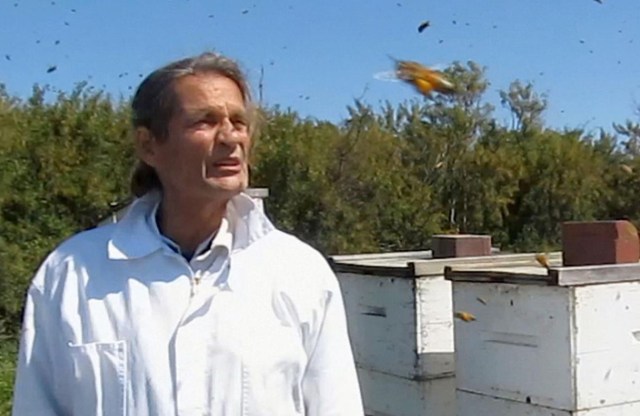
It takes work to be a successful politician.  A few years ago, a friend of ours met Justin Trudeau in southern Alberta. Trudeau was not the prime minister of Canada at the time. Our friend – Jacques – presented a comb of honey from our honey farm to the young politician. Jacques loved bees, had helped with our honey farm regularly, and was a part of our circle of friends. He once told me that bees (along with his wife and six kids) were one of the few pleasures he had as his days were becoming more and more difficult. Here you can see Jacques in a picture I took of him a year before he died of a long-term illness. As you can see, Jacques was something of a bee-charmer.

Jacques, at one of our apiaries, in 2011

Jacques, at one of our apiaries, in 2011

When Jacques met Justin Trudeau, the future prime minister spoke a few words in French, thanking Jacques for the honey and telling him that his father (Pierre) regularly bought comb honey for the family when Justin was a child.  A week after they met, we received a hand-written letter which arrived in the mail at our honey farm. It was from Justin Trudeau, addressed to our farm, and directed to “Jacques”.  I think that Trudeau’s staff used the label on our honey comb to look up the mailing address on our website and then Trudeau wrote his thanks, commenting about how long it had been since he had eaten such good comb honey. To a beekeeper, a honey compliment ranks with a strong handshake. (In turn, Jacques gave me the letter –  I treasure it.)

I’ve met other politicians but few make such efforts to be gracious. Some will forget you as soon as they turn away.  You can be sure that my accolade is not intended as validation of everything Justin Trudeau’s government is doing. But the man’s wit, charm, and grace are a genuine reflection of his effort to do his job as a politician and are probably an accurate depiction of his personality.

trudeau letter

Justin Trudeau’s gracious note of thanks for the honeycomb.

Posted in Comb Honey, Friends, Outreach | Tagged , , , | Leave a comment

Ecology 1,2,3

bee with pollen

On Friday, I led an ecology program at the local elementary school. My 32 students ranged in age from 6 to 12. They were part of an experimental class where kids in their school could select their interest and indulge for a couple hours each Friday.  One of the school’s teachers invited me to lead a 2-hour honey bee ecology session. Bees, flowers, little kids. What could go wrong with that?  Actually, it went much better than I expected so I’ll share what I did and what worked best.

dani-comb2We started the program inside a classroom. I made a 30-slide Powerpoint which featured bees, flowers, and children working with bees. (For a kids’ Powerpoint, use just one picture per slide and just two or three large, simple words. Don’t clutter the slide with wordy details and excess photos. This advice goes double on presentations for adults – they have even shorter attention spans.)

The pictures were a backdrop to the more active hands-on presentation which I conducted simultaneously. It began with a big plastic garbage bag. Meanwhile, the first slide showed someone’s palm covered in bees. The kids squirmed and one youngster demanded to know why the hand in the picture wasn’t getting stung. In answer, I held up the plastic bag.

“I have a bee in this bag.  Is everyone OK if I take the bee out and show it?”  A few kids slid away from me. I didn’t let their anxiety build. I promised it would be OK if I took out Benny the Bee.

Benny in veil 2Benny is a big, stuffed, adorable bee. He’s a boy, just like the bees causing concern in the picture on the white-board behind me. “Boy bees, like Benny and the drones on the screen, don’t have stingers.”  I used this as a starting point for bee safety. (“Girl bees can sting if they feel threatened.”) I began a quick overview of bee anatomy. Even the smallest of the kids knew that bees have three main body parts. I described the head as the brain, eyes, and mouth of the bee while the thorax is like a huge muscle that powers the wings and six legs. The abdomen (for the kids’ presentation) is mostly a stomach and a stinger.  The kids were fascinated that bees have three sets of eyes. I didn’t go into the way polarized light can be sensed by a bee’s third eye, but I did touch on ultraviolet, comparing the bee’s extra colour vision with the high-pitch sound perception of their pets – something these kids understood.

bee suit presenterThe presentation continued like this. After a few more slides, the teacher dressed a child in the little bee suit which I’d brought. Meanwhile I passed around a new Pierco frame and a new small copper smoker. We talked about these, but mostly I wanted the kids to physically connect with what we were doing.
We had pictures and discussions of bees on flowers and the idea that bees communicate their discoveries. It was time for the waggle-dance. After half an hour of patiently sitting and listening, the kids needed a stretch, so they waggle-danced. They stand, wiggle quickly, walk forward, turn around, and repeat. I strongly recommend this activity if you are talking bees to small kids for any extended period. The kids need to stretch and they’ll remember that bees dance to communicate.  At all times, I try to give simplified but directionally accurate information. This is not the time to point out that debates exist regarding the precision or utility of bee dance communication. On the other hand, respect the kids, use intelligent language, and don’t coo and giggle. They’ll respect you as an adult and pay attention if you treat them as smart young people.

I mentioned flowers and pollination. At this point – with little tots as your audience – you want to select your words carefully so you might be invited back another day and not spend the afternoon explaining yourself at the principal’s office. I never use the words ‘sex’ or ‘reproducing’ – it’s enough to say “bees help flowers make seeds. Without bees, there would not be flowers, seeds, or fruits like apples and blueberries.”  The kids never ask for more details so you can generalize.  Show pictures of bees dusted in pollen. Talk about the way flowers attract bees with nectar. But genetics can wait until junior high.

At this point, the teacher led the children outside. Benny the Bee accompanied the youngsters, carried by a shy-looking kid whom I’d spotted.

q-tip

I had three outdoor activities planned. Since the focus was bees and ecology, I wanted the kids to 1) notice flowering trees, bushes, and annuals; 2) look for places where bumblebees might winter (cracks in the ground) or where honey bees might nest (cracks in the school building’s masonry); and, 3) collect pollen.  I distributed Q-tips (cotton swabs) from a new, unopened box which I’d brought. The kids each got one new Q-tip and (gently!) attacked flower blossoms, dabbing pollen, pretending to be bees. Soon, almost every child was thrusting a Q-tip towards my face and asking, “Is this pollen?” They always received an affirmative, even when the swab looked like it was covered with dirt.

The kids become rather confident of their knowledge about bees and any fear they may have had abates a bit. So it’s good to use the outdoor setting to remind them again to be careful and respectful of bees. Too much exuberence may lead to stings.

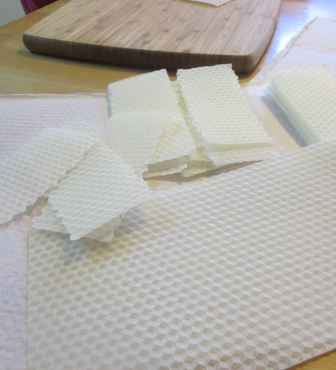
wax rectanglesBack inside the classroom (where the children were counted), I distributed handouts with bee cartoons to be coloured and trivia questions to be answered. The kids liked these but were even more interested in the small rectangular strips of new wireless foundation I gave them. This is always a big hit because they notice the waxy odour and hexagonal pattern right away. I caution them not to eat it, but I know that some will and I know that wax is harmlessly ingested. Giving wax is better than giving honey (which beekeepers sometimes distribute) because it’s not sticky and parents are not going to call with complaints about their youngster’s blood sugar and dietary restrictions.
All of this lasted about two hours. In two hours, you reach over 30 kids and, indirectly, a few dozen parents. It takes a few hours to prepare, but if you use some of my tips (especially the wag-dance stretch break, the wax gift, and the outdoor activities),  you will find that the kids will enjoy learning and the message about the importance of bees will get out to the schools.

Posted in Ecology, Outreach, Pollination, Save the Bees | Tagged , , , , | 2 Comments

Saving Honey

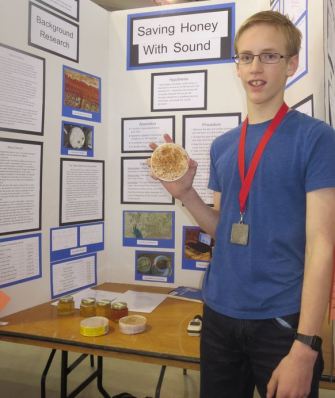
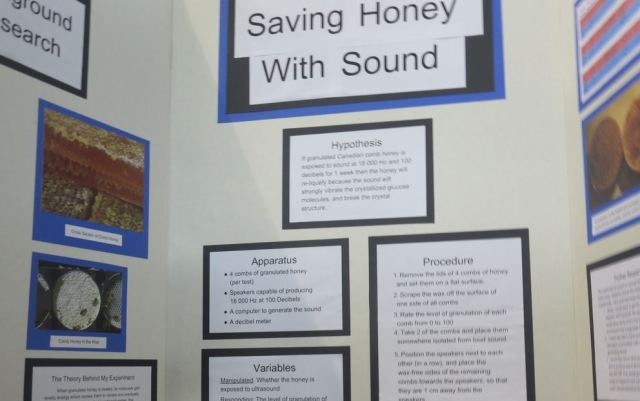
SciFair-2Brag time.  We just got home from the big Calgary science fair competition. My 13-year-old won three awards. Here’s the kicker: his project was called  Saving Honey with Sound.  His experiment was based on sending ultrasonic energy waves into combs of granulated honey, attempting to liquefy the honey without using heat and without melting the wax comb.
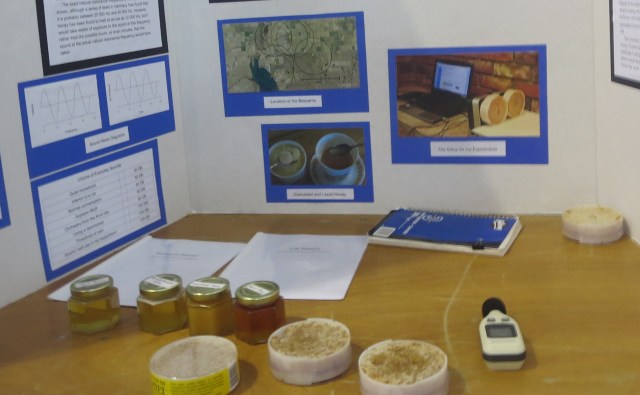
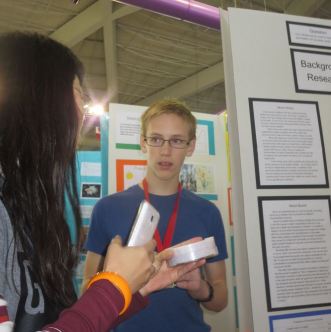
His awards included a gold metal for creating a great original experiment, an award from a home economics group, plus the Consumers Economics Prize from the Haskayne School of Business. Also, the University of Calgary presented him the Hunter Centre Secondary (ie., high school)  Consumer Science Award.  Being recognized meant competing with 902 other students, all of them there by invitation because they had placed well at their local school events. Across Canada, over half a million kids participated in this year’s science fairs. That’s the same number that participated in hockey this year. So it’s a big deal.

SciFair-3

My son wanted to help beekeepers who face trouble when honey begins to crystallize in the comb. For experts, he talked to some Alberta beekeepers and he interviewed a major honey packer. For background, he studied physics books. For coaching, he relied on his mom, who is a physician, not a keeper of bees, and who is a skilled public speaker. I stayed entirely out of his project. This was our son’s experiment – he spent about 60 hours in the basement working on it and we are happy that he put such effort into the science.  For example, he learned that it’s largely the glucose/fructose ratio in honey that causes granulation. This varies flower-to-flower, which is why some honeys crystallize more quickly than others. He explored heat-induced honey damage and investigated cheap ways to generate high frequency sound waves. He also learned about resonant frequencies and how they can cause molecular vibration which in turn can phase-change solids to liquids.

SciFair-6Here is what I learned from him. The idea of using ultrasound to reverse granulation works, at least as part of a small-scale experiment. It may even have commercial application, but my son is not totally convinced. He used speakers which emitted 18,000 hertz sound waves at just over 100 decibels. (By the way, at such a high frequency, the sound is inaudible to humans. There is no risk of hearing damage – we asked an auditory physician before we allowed the boy to start.)  After seven days, there was some liquefying. He told me that if he had bigger speakers and if he had an amplifier that could generate a higher frequency, the results would have been more spectacular. That’s what he thinks would be required in a honey operation if a beekeeper wants to extract any combs which are crystallized.


SciFair-5

You can see the benefits.  If the idea actually can scale up, hot rooms might be replaced with sound rooms. Honey sold in the comb could be restored. The science fair judges recognized this, hence the economics award for an experiment that combined the physics of sound and the chemistry of honey.

SciFair-8c

Posted in Comb Honey, Hive Products, Honey, Outreach, Tools and Gadgets | Tagged , , , , | 12 Comments

Too much to do…

During the past two weeks, I flew from Calgary to Cincinnati (and back again); organized, prepared, and co-presented a day-long beekeeping economics program; ran a 2-hour ecology school at the neighbourhood elementary; was an invited “expert” at ask-an-expert night at the bee club; and co-judged all the entries for the Calgary Stampede’s first-ever honey show. Somehow I even completed a geological mapping project for a Colombia, South America, client. The last on the list represents my day-job and it’s not as exciting as it sounds.

So, two weeks ago, I flew back home to Calgary from Cincinnati. It was my first trip to the USA in almost ten years. If a person visits The States after a decade’s absence, you’d think they’d go to Florida, or Manhattan, or San Francisco, right?  Well, this impromptu trip arose from a benign but indomitable set of circumstances – I was pulled along by circumstance.

My wife and our two school-age youngsters were enjoying spring break with family in central Europe. They took a quick, one-week, pop-in/pop-out trip. I’d been there last summer, so I thought I’d stay home and write blog posts or something.  But then I thought I should fly to San Diego to see my sister. She comes up to Calgary every year, so I certainly needed to return the visit. But during spring break, my sister would be travelling to Cincinnati to see her twin, a young lady about the same age as she, as you can see in the pic below:

My sisters and I at Cincinnati's Krohn Conservatory

My sisters and I at Cincinnati’s Krohn Conservatory

I went to Cincinnati to see two sisters with one flight, so to speak. Then more family started to appear, like robber bees scenting spilt honey. Well, actually more like spring flowers gracing an alpine meadow – these are wonderful people whom I’d not seen in years. It was all good.

I had been to Cincinnati a few times in my younger days. I already knew about its enticing lack of tourist attractions and its disquieting weather. But there is now a new Freedom Museum (celebrating  dreadful stories about the Underground Railroad and America’s escaped slaves who, making it across the Ohio River, into Cincinnati, connected to routes north to Canada) and there is the old architecturally stunning and historically inspiring Plum Street Temple where the American Judaic Reform movement began. So, even if five of my siblings had not shown up to greet me, there would have been things to see and do.

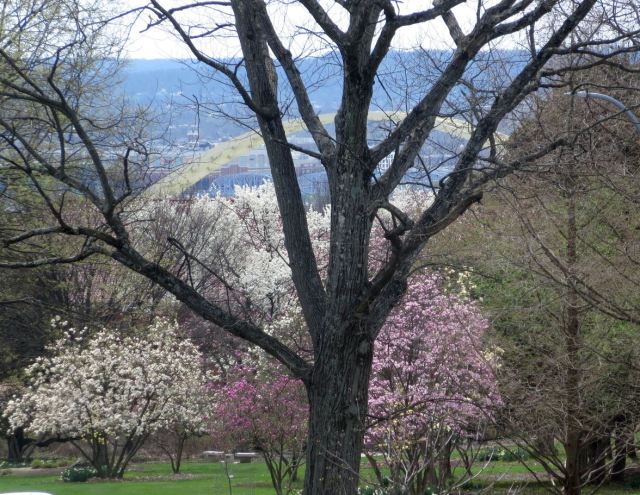
cherry treesAlthough the Ohio River’s Queen City is known for icy winter roads, gray gloomy skies, and sweltering summers, I knew that spring in Cincinnati could be delightful. Except for a day of tornadoes, it was.

My first glimpse of the rolling hills as my plane dropped towards the airport revealed thousands of stunning white trees – dogwoods and cherries sporting glorious blossoms. Driving towards my sister’s home, I snapped dozens of pictures of tulips, daffodils and forsythias. The next day, at the Krohn Conservatory, we were regaled by exotic tulip-flowered magnolias in pink and purple costume. The grass was green and the sun shone sweetly.

I didn’t see honey bees. There were a few bumblebee types and some butterflies, but the honey bees were notable for their absence. I knew that on this brief visit I wouldn’t have time to track down local beekeepers, so I didn’t even try. If you are not a beekeeper, you’d think that honey bees would do well among the tulips and daffodils, but you’d be wrong. Not every flower feeds honey bees.

Beekeepers in this area are intrepid souls, keeping bees for the love of it, not for any certainty of wealth. Changeable weather, acidic soils (which turn clover and alfalfa into weeds rather than fountains of nectar), and extensive corn fields all conspire against the beekeeper.  In my younger days, I parked two hives of bees in an oak grove near Florence, Kentucky, ten kilometres south of Cincinnati. I did this so that my oldest sister’s family could experience bees. The bees died within two years. Not due to neglect or mites (this was in the days before either neglect or mites existed) but instead due to the relentless wearing down of bees kept where bees do poorly.

Very pretty, but not a honey bee's paradise.

Very pretty, but not a honey bee’s paradise.

At our four-day-long reunion, the laughter and stories were warm and nostalgic.  I am a middle child of ten kids so I had the mediator’s position of watching four older and five younger siblings grow up, then disperse across North America from our childhood subsistence farm on the edge of Pennsylvania’s Allegheny Mountains. There was much to reminisce, some of it charming, some of it tragic.

Too often,  there is too much to do. Connecting with an extended family gets sublimated to the duty of nurturing one’s closer family. I left Cincinnati and flew back to Calgary, where my wife and youngsters were arriving the same evening from Europe. Then it was back to preparing the bee course, the ecology lesson, the honey judging, the geology mapping. These were all interesting, entertaining, and successful and will be subjects of future blog posts. But the journey into America’s heartland and the time spent with far-away family will remain in my memory for a long time.

Posted in Friends | Tagged , | Leave a comment

Buzz the Bee is on Vacation

Buzz sweetens cereal

Benny suitcase standing up

General Mills is sending Buzz the Bee, their cheerful Honey Nut Cheerios spokesbug, on vacation. Or into hiding. In a campaign bound to raise awareness for the world’s suffering bees, and maybe to inadvertently sell more Cheerios, packages of the breakfast cereal will temporarily be gloomy boxes of oats without happy Buzz images. The hapless bee left without saying “Goodbye”, “So long”, “Ciao”, or even “Cheerio”. Buzz simply left us one cold dreary morning.

Diphaglossa gayi

Diphaglossa gayi   (Source)

General Mills (GM) says they have sequestered their happy bee so that bloggers such as I might write about the world’s missing bees, bringing attention to the plight of bees. No one doubts that bees are plighted. With climate change and our chemically soupy environment, it’s getting rough for all sorts of creatures. There were once about 25,000 species of bees in the world, now there are hundreds fewer. The honey bee is just one  species of bee (Buzz the Bee is a subspecies of honey bee, technically it is Apis mellifera generalfoodi). Humans are preventing honey bees from going extinct, but less celebrated bees, such as Diphaglossa gayi are pretty much on their own – and are becoming rare.  (When was Diphaglossa gayi, the Chilean Valdivian Forest Forked-Tongue Bee, last seen on a box of cereal or a carton of milk? Huh?)

GM’s people tell us that “Buzz is missing because there’s something serious going on with the world’s bees . . With deteriorating bee colony health, bees everywhere have been disappearing by the millions and it’s time we all did something about it.”  To bring back the bees, General Mills is giving away packages of seeds. Put a few seeds in the ground and before long you’ll have bees. Not directly from the seeds, by the way, but from the wildflowers that may grow from the seeds that will feed the bees.  Why not?

The free seeds seem to be a Canadian give-away. This  offer might not be available if you don’t naturally say ‘eh’,  eh?  Anyway,  the free wildflower seeds are at the other end of this link.  “With ongoing losses in bee populations being reported across Canada, we’re issuing a call to action to Canadians to help plant 35 million wildflowers — one for every person in Canada,”   says Emma Eriksson, Director of Marketing for General Mills Canada.

What can you do to bring the General Mills cartoon bee mascot back from its hiatus? Buy cereal! Let GM know that you miss their goofy bee. With enough of us stocking up on Honey Nut Cheerios (We bought 3 boxes!),  it will send a loud and clear message. We want Buzz back!  And hurry – we won’t survive long (Einstein says 4 years.) without Buzz the Bee on cereal packages.

Benny with Cheerios


Posted in Humour, Save the Bees, Strange, Odd Stuff | Tagged , , , | 4 Comments

Location, Location, Vocation

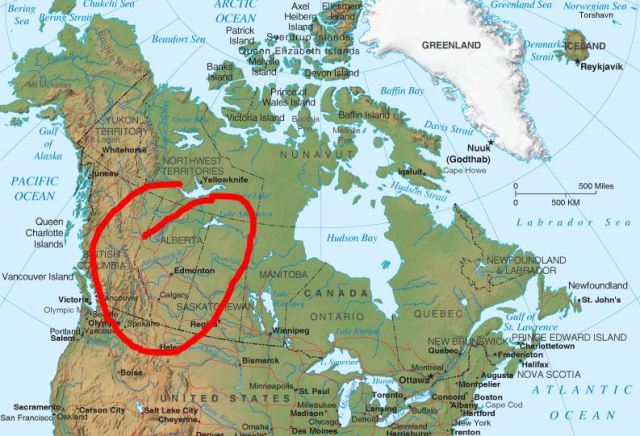
Alberta on a mapMy last two blog posts (Alberta is Beekeeping and Canada’s Hive Beetles) were unseemly braggadocious pitches. I wrote about how great beekeeping is on Canada’s western  prairies. Alberta, Canada, has not had CCD, but instead has increasing numbers of kept bee colonies (twice what it had in 1987, and still growing), and has production that averages around 150 pounds per hive. Winter losses have been around 10%.  In my writing, I may have implied that Alberta beekeepers are universally hard-working, intelligent, god-like souls who create peppermint-scented gas after heavy meals. Granted, that perfectly describes most of us. But I should lay due credit and burnt offerings before the altar of the well-designed western prairies. Good beekeeping is a function of good location more than anything else.

One of our more scenic yards, south of Calgary, in sight of the Rockies

One of our more scenic yards, south of Calgary, in sight of the Rockies and amid alfalfa

Alberta, a western-Canada province with 4 million people and 300,000 colonies of bees, has millions of acres of canola, alfalfa, and sweet clover. All three of these honey plants do well on Alberta’s sun-drenched alkali soils. They secrete millions of tonnes of water-white nectar, of which honey bees gather a small percentage. Alberta beekeepers produced about 43 million pounds of honey in 2015.

The western prairies is a good honey place. It’s easier to be a good beekeeper when you have money from honey and can do all the best things that your bees demand – replacing older brood comb each year, requeening regularly, managing pests intelligently. In some parts of the world, beekeepers struggle to produce a crop and lack money to give their bees the time and resources they need. In Britain, for example, a colony of bees averages 30 pounds of honey a year. (A few years ago, the average was 8 pounds per hive in the isles.) You have to really, really love beekeeping to continue with bees when things are that bad. (And most British beekeepers really, really love beekeeping.) It is almost impossible to sustain a commercial business with small crops – unless you are raising queens or doing pollination.

Bad Beekeeping, coverTen years ago, I published a book called Bad Beekeeping. It’s a memoir about running a small commercial honey farm. I titled it Bad Beekeeping because I had met a Canadian beekeeper who was making enormous (200-pound) honey crops and he asked me why American beekeepers average just 60 pounds a year. I explained about the lack of good forage, cool wet summers, poor soils, weak honey flows, focus on pollination instead of honey production, and so on. When I finished, the gentleman said, “No, Ron. I’ll tell you what it is. It’s bad beekeeping. They could make big crops, too, if they were better beekeepers.” The fellow who made the remark was a good beekeeper but he was also living in a place where 200-pound honey crops are possible. Our tendency to take credit for success due largely to lucky birth and lucky circumstances is tiring and unfounded. But it’s nearly universal. Sometimes it’s useful to give credit where it’s due.

Location, location, location is the oldest adage in real estate and lemonade-stand positioning. It’s certainly true in beekeeping. Just as it’s hard to be a deep-water fisherman if you are from Rugby, North Dakota (North America’s geographic centre) and it’s hard to learn to tame alligators in Kivalliq, Nunavut, our location influences our vocation. Western Canada’s beekeepers owe a huge debt to continental drift and mountain-building which combined to give us our perfect latitude and rich soils. Sure, we are god-like in our beekeeping skills, but it helps that in western Canada, the sun is shining on some fabulous fields of nectar.

  • A reminder that  a special bee course that I’m helping present, called “Making Money from Honey” and will be held here in Calgary on April 9th, 2016. My teaching partner, Neil Bertram, will tell students how to make money with bees while I specialize on losing money from beekeeping. (I can hopefully give cautionary tales.)  It should be a good balance. Course information is here: makingmoneyfromhoney.com. The seats are filling up. If you are in the Calgary, Alberta, Canada area, consider this one-day session in the economics of beekeeping and contact us today through the course website.
Posted in Beekeeping, Commercial Beekeeping, Honey, Honey Plants | Tagged , , | 5 Comments

Canada’s Hive Beetles

Medhat Nasr at the Calgary Bee Club

Medhat Nasr at the Calgary Bee Club

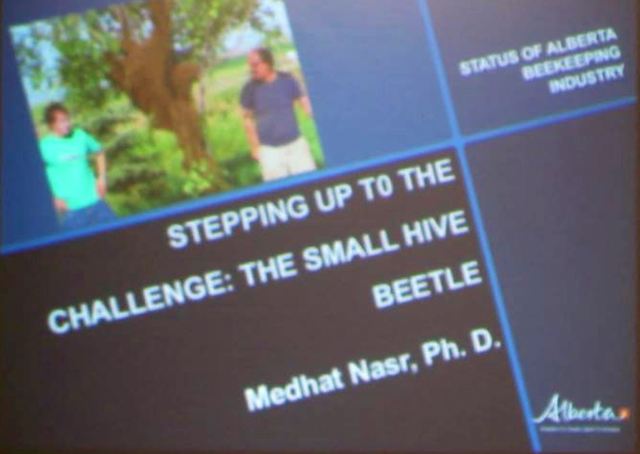
A couple of nights ago, Alberta’s chief apiculturist spoke at our local (Calgary) bee club meeting. Close to 150 people turned out to hear Dr Medhat Nasr give us a recap on the status of Alberta beekeeping and the status of the hive beetle in Canada.

There was plenty of good news in Medhat’s talk. Alberta beekeeping is thriving with more colonies (296,000) than there have ever been in our history. That’s more than twice the number of hives as there were back in 1987, according to provincial statistics. And production is high – the province-wide average was 145 pounds of honey per colony in 2015. The average would have been higher, if the 50,000 or so colonies kept for pollination weren’t counted – pollinating hives aren’t used to produce honey crops. Still, I’ll take 145 pounds per hive – it’s better than Britain’s 30 lb average, or the typical 60 pounds per hive gathered in the USA. Colony count in Alberta is growing, production is high, and wintering has been good for the past several years, with close to just 10% losses.

However, Medhat Nasr, Alberta’s provincial apiculturist, did have some potentially troubling news for beekeepers here. After running through the stats on production and after briefly talking about the free downloadable bee-health app his department created, Medhat’s Wednesday evening talk switched to the appearance of hive beetles in British Columbia, a Canadian province that shares a border (and a ridge of Rocky Mountains) with Alberta.

hive beetle slide 1

For those not familiar with the fifth horsemen of beekeeping doom* (or the Fifth Beatle, as I’ve heard the small hive beetle called), here’s what you might get when you open your hive and its got the beetles: slime and wiggly worms. Sometimes the only thing a beekeeper can do to stop a serious infestation is to burn everything. The fruit-sucking, honey-slurping creatures can multiply by the thousands with ugly, smelly results.

hivebeetles

Small hive beetle damage.

We correctly associate the small hive beetle with sloppy beekeeping in hot humid climates, so we are liable to become complacent on Alberta’s dry prairies where winters are long and cold. But apiculturist Medhat cautions us to be vigilant. He described research that claims the beetles cluster among bees through cold winters and even use their little antennae to beg for food. The kindly bees, it is said, are tricked into keeping the beetles warm and plump all winter. The best offense against the slimy intruders is defensive behaviour on the part of beekeepers. A hive does not always get overrun when hive beetles are present.

A few years ago, I saw a bee outfit in Florida where just a single hive beetle was hiding under a pollen cake. The beekeeper told me that as long as his hives were strong and things were kept clean, the beetles never appeared in any big numbers.

Medhat repeated this advice – if the small hive beetle shows up in Alberta it will likely be no more than a minor nuisance among operations that are kept tidy and run efficiently. Among other beekeepers, though, some bad habits may need to change. Extracting can’t be postponed for days or weeks, for example. Such a lazy lag allows the beetles time to establish themselves in a shop and start messing with your honey. Extracting immediately has always been good policy among good beekeepers. Now it may become a necessity.

Although bees may tolerate a few beetles inside their hive, strong colonies don’t allow the numbers of beetles to grow. But in a big box with just a little cluster of bees, there are lots of places for the small hive beetle to hive. So, the usual advice of keeping strong colonies continues to be true.

Will Alberta have small hive beetles? It’s certainly possible. Just across the continental divide and over the ranges from us is the mild Pacific coast. That’s British Columbia and the beetle has been found there.  We call the mild coastal area “the lower mainland” and it is where Canada’s palm trees grow. It’s also home to the city of Vancouver and some outlying towns, villages, acreages, and orchards. A few Alberta beekeepers winter their colonies in the lower mainland where the winter temps hover around plus 5 to 10 (that’s Celsius, which is around 40 to 50 F). At the same time, Alberta may linger at minus 20 for weeks. Spring arrives much earlier on the coast, bees build up, can be split for increases, and perhaps rented to orchards. By May or June, the visiting Alberta bees head back 800 kilometres (500 miles) and start on the summer honey flows on the prairies. This could result in the inadvertent arrival of small hive beetles, which were recently spotted down in the lower mainland.

Our apiary inspector and chief bee scientist wanted the Calgary and District Bee Club to be aware that the small hive beetles may be coming to a venue near us. He showed us what they look like and how to get in touch with inspectors who could come and confirm the beetles if we think we’ve got them. (Follow this link to contact the inspection department.) But Medhat also suggested that we not panic but instead keep good strong hives, operate our bees on an efficient schedule, and maintain a clean and tidy shop. If we do this, we’ll have better bee operations and we won’t have to worry too much about the exotic small hive beetles.

   *The other horsemen of beekeeping doom and gloom are varroa, nosema, Africanized stock, and American foulbrood.

Posted in Beekeeping, Diseases and Pests | Tagged , , , , , | 2 Comments

Alberta is Beekeeping

Medhat, Alberta's provincial apiculturalist

Medhat, Alberta’s provincial apiculturist

Last night, the Calgary and District Beekeepers Association hosted its monthly general meeting. About 150 people showed up. To accommodate the growing membership and big turnout, our club’s president found an affordable and spacious new meeting hall near the Bow River, about 5 minutes from the city’s downtown. The bigger space was a real boon as we had a special speaker last night – our provincial apiculturist, Dr Medhat Nasr. (Don’t call him Dr Nasr. He prefers that everyone simply use ‘Medhat’.) Well, Medhat always draws a large audience and last night was typical.

Before we get to what our guest-speaker spoke, I’ll recap some of the club’s business. Committees talked about the pending arrival of queens and packages and the resounding success of last weekend’s beginner’s bee course. I helped teach it and was I glad to hear the overwhelmingly positive response from attendees. Also mentioned was the upcoming honey competition (which I will help judge) held in association with Calgary’s Agriculture Exposition (Aggie Days). Winners of next month’s honey show will have their wares exhibited at this summer’s Calgary Stampede and will be awarded admission tickets to the world’s greatest cowboy show. You still have time to submit your winning honey entry – see details here. (Winners will be famous for 15 minutes – over a million people visit the fairgrounds each year and I’ll mention their honey on this site.)

I was given a couple of minutes at last night’s meeting to announce a special bee course that I’m helping host. It’s called “Making Money from Honey” and will be held here in Calgary on April 9th. My teaching partner, Neil Bertram, will tell students how to make money with bees while I specialize on losing money from beekeeping (I can hopefully give cautionary tales). It should be a good balance. Course information is here: makingmoneyfromhoney.com.

Calgary, soon to be renamed "Bee Town"

Calgary, soon to be renamed “Bee Town”

With the big active Calgary bee club in mind and the popularity of beekeeping here, guest speaker Medhat Nasr kindly suggested that our city’s nickname (“Cow Town“) be replaced with “Bee Town”. There are now several hundred bee colonies in and near the city – certainly more than the number of cows in town.

Medhat spoke on two related bee topics at the meet-up – the small hive beetle and the status of Alberta beekeeping. Well, they are loosely related because the Beatles have not been performing in Alberta yet, though they’ve been spotted in British Columbia. A few Alberta beekeepers winter their hives in BC, so they could possibly haul the beetles back here in the spring. Tomorrow, I’ll write about what Medhat told us about the small hive beetle. Today, I want to briefly touch upon his status update for Alberta beekeeping.

Alberta is beekeeping. The province’s beekeepers are keeping their bees alive – and prospering. The provincial apiculturist showed us the statistics. While alarmist claims are made that honey bees are going extinct (they are not), Medhat used real numbers to prove the contrary. Alberta had 145,000 colonies in 1987. Today, it has twice as many – 296,000 hives. The increasing trend accelerated in the past few years, even as headlines in papers like the Washington Post and Time magazine screamed the opposite. (Around the world, the number of colonies has also increased recently – up by 50% since 1961, according to the United Nations.) Alberta now has 10% more colonies than it did five years ago. And those bees are doing well – the 2015 crop average was 145 pounds per hive!

Medhat presented Alberta’s wintering statistics. These were absolutely gob-smacking. During the past three winters, the average province-wide loss has been just 10%. A few beekeepers lost more, sometimes due to inexperience or negligence. But 10% is the average. The worst winter in recent years had an autumn that caught beekeepers off-guard – bees made honey late into September with daily 10 pounds gains late in the fall. You might think that heavy hives going into winter is the best thing for the bees. It’s important, of course. But when honey clogs the brood chamber so much that the queen quits laying eggs, the result is few late-winter worker bees left in the hive. The population collapses in February or March. Our own outfit did OK, with minimal losses, because we put three empty drawn frames in the center of each brood nest  in mid-September when we realized what was happening. This gave us late-autumn brood and a good population of young bees later in the winter.

So, Alberta beekeepers are doing OK. High honey prices and big crops have helped beekeepers do things right. Minimal winter losses and expanding colony numbers also owe a nod of thanks to Dr Medhat Nasr’s government apiary office which has led the growth of beekeeping through research into bee diseases and education programs that help beekeepers beekeep smarter and better.

Part of the 150 folks attending last night's bee club meeting in Calgary.

Part of the 150 folks attending last night’s bee club meeting in Calgary.

Posted in Beekeeping, Friends, Outreach, Save the Bees | Tagged , , , , | 4 Comments

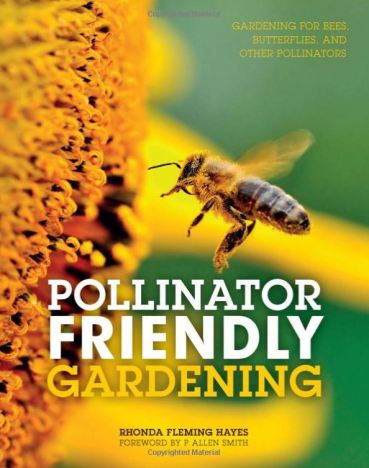
Pollinator Friendly Gardening

Helpful gardener's book. Available at Amazon.

Helpful gardener’s book.
Available at Amazon.

Pollinator Friendly Gardening: Gardening for Bees, Butterflies, and Other Pollinators, by Rhonda Fleming Hayes, is a new book for the gardener who wants to help pollinators. With all the news about loss of habitat, warming climate, and pesticides, most wild bugs and birds seem to be in trouble. Ms Hayes’ book will give you some ideas on how you may help them.

A gardener friend told me that she feels a little guilty about her flower garden because she knows it has displaced the wild natural habitat that once occupied her backyard. But her city – like most in the world – prefers tidiness over naturalness so letting it go wild is not an option. She has asked me what she might plant instead of Kentucky Bluegrass. This book will add greatly to our conversations.

Pollinator Friendly Gardening makes it easy to select plants that are known to be helpful to pollinators. You may be disappointed to learn that not all flowers give food to bees, butterflies, or hummingbirds. Actually, most do not – or they are marginally helpful at best. Bright and cheerful flowers are often like clowns at the circus – beneath their cheery posturing is a dearth of pollen and nectar.

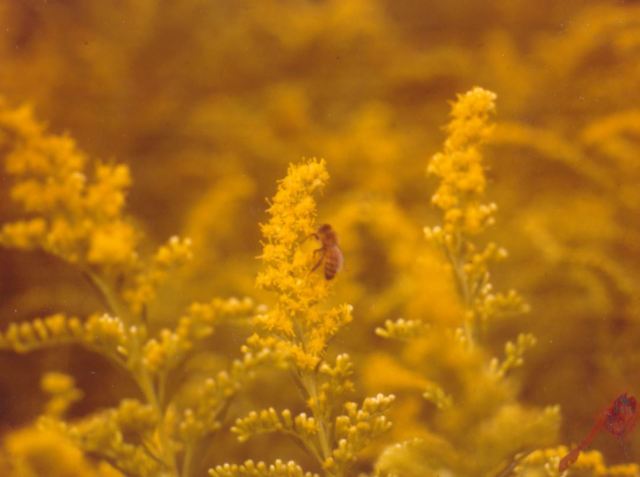
Goldenrod, not a typical choice for a flower garden. But in some regions, highly attractive to honey bees.

Goldenrod, not a typical choice for a flower garden. But in some regions, highly attractive to honey bees.  (Photo: Miksha)

This book helps you find flowers that are both lovely and fruitful for pollinators. If you really want to be natural and helpful, you may consider going native. The author obliges with lists of native (to North America) plants that are attractive to bees. Native perennials in her list include asters, California poppies, goldenrod, and sunflowers. For annuals, Ms Hayes suggest that you consider alyssum, marigolds, snapdragons, and zinnias among many others.

If you are a beekeeper, perhaps you are thinking you can cultivate a few flowers for your colony and the bees will love you more because of your thoughtfulness. Forget it. Your bees fly five kilometres in each direction every day. Unless you are planting half a hectare of yellow sweet clover or canola, they will not stay home. Some researchers tell us that honey bees prefer flowers located between 500 and 1,500 metres better than those closer – even if they are the same species. So, keep your bees happy by supplying water on hot days (Pollinator Friendly Gardening mentions essentials like water, shade, and wind breaks) but fill your backyard with flowers that non-honey bees and butterflies will enjoy. These creatures have ranges that are closer to their homes and it is this group that is most at risk from changes in our environment.

Pollinator Friendly Gardening explains the relationship between plants and pollinators of all sorts. This information makes it easier for anyone to turn a yard into a friendly habitat for pollinators. “Gardening” is a broad topic. I like the way the author handled the wide range of subject manner. She appropriately covers the ecology of the garden and the symbiotic relationship between bee and flower.

This is a useful, attractive book. It is arranged in a fun way with charts and informative pictures. Unfortunately, the dozen or so inset factoid boxes (“It takes 100 honeybees to do the same pollination job as one mason bee” and “Since butterflies don’t have eyelids, it’s doubtful they even sleep!”) are almost all incomplete and/or erroneous.  100 vs 1 mason bee – to pollinate what? For most plants, this statement is simply wrong. Further, I’m surprised that she wrote honeybees as a single word in that factoid. It is not. Honey bees are honey bees.  I’m also surprised that the author does not know that all insects have wide-open eyes, all the time, and all insects enter a sleep-like state to rest.  She makes up for such occasional silliness with sections such as  “Ask the Expert” that include Q&A’s with people as noteworthy and knowledgeable as bee researchers Marla Spivak (Have you seen her Ted Talk? It’s here.) and Chip Taylor (A renowned bee guy who is quizzed about monarch butterflies.)

This book is a good choice for advanced as well as beginner beekeepers. Turning our garden into a sanctuary for bees, butterflies, birds, and flowers is not beyond our grasp. Regardless my minor criticisms, I enjoyed reading this book. So did reviewers at newspapers such as The Monterey Herald and The Spokesman, among many others. If you like gardening, you’ll like the book, too.

One final note. The author, Rhonda Hayes, is clearly an advocate for pollinators and a crusader for the cause of healthier, more natural gardens. But she does not blare her convictions through a megaphone – instead she quietly and intelligently shares her ideas through useful, relevant information. Her book is a credit to the voluminous ecology literature and a nice respite from ardent alarmists announcing the extinction of birds and bees with every mint-flavoured breath. This new book (released in 2015) is sold in finer bookstores or can be ordered from Amazon.

Posted in Books, Ecology, Honey Plants, Pollination, Save the Bees | Tagged , | Leave a comment

De-stressing during the Oscars

Feeding Bees

In our continuing series on Oscar-winning beekeepers…

Leo says keeping bees reduces stress during the annual awards cycle. Funny, I find it helps me the exact same way.  Similarly, beekeeping seems to be a preferred pasttime for Scarlett Johansson, Morgan Freeman, Martha Stewart, Bon Jovi, and a few other big names, as it once was for Henry Fonda and Mae West.

Beekeeping is the sensible thing to do to calm down during the tense Oscar Awards season. DiCaprio says he’s hooked on bees. Bees are good and can certainly be relaxing. But it would have been a bit unfortunate had he accepted his first little gold man Sunday night while sporting a swollen lip or bee-stung eyelid.

Posted in Culture, or lack thereof, Outreach, People | Tagged | 1 Comment