
Combs clinging to rock ledges and human foragers climbing to harvest part of the sticky sweet honey gathered by wild bees on the edge of the Himalayas conjures up images of a way of life few of us will ever witness.
However, a couple of weeks ago, I had a note from someone who rekindled my envy.
The note was from Deepa Pudasaini, who works for a community-run honey company, Himalayan Cliff Honey, in Nepal. They have been working with the indigenous people of the Himalayas who harvest a sustainable amount of wild cliff honey produced by the giant bees in Nepal. We are also directly working with the local beekeepers of the Himalayan region helping them market their honey and other bee products. Deepa’s role is editor and contributor for Himalayan Cliff Honey and you can read more about her at https://deepapudasaini.com.np/
Here is Deepa Pudasaini‘s story of the cliff bees…
Wild Bees of the Himalayas
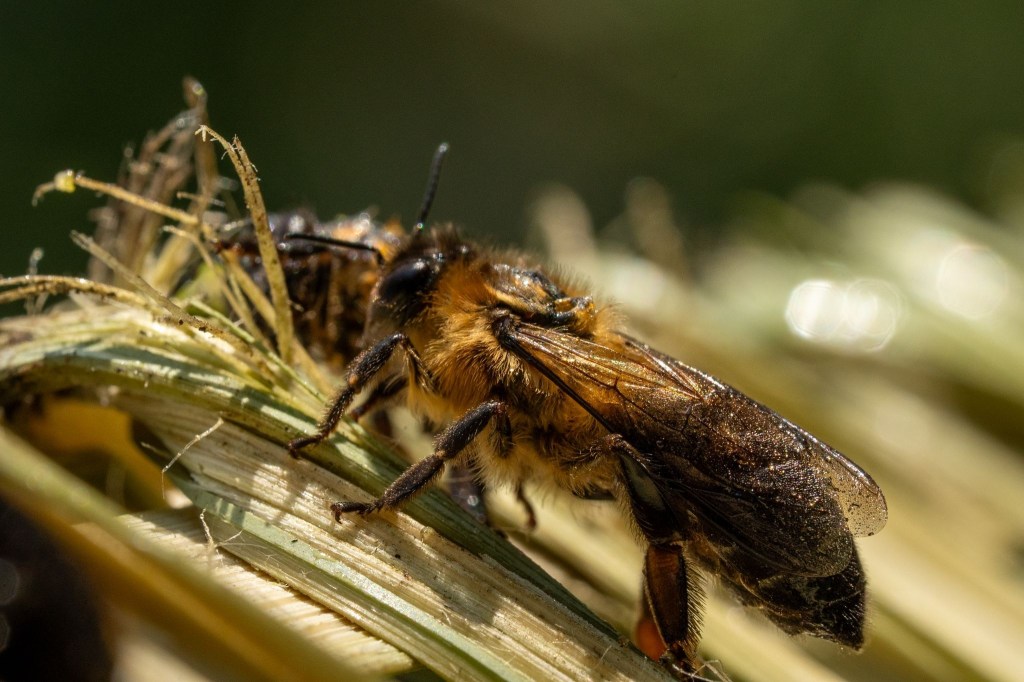
In the high altitude of the Himalaya Kush Region- mountain range in Asia, there lives a giant bee species. The world knows it by the name of the Himalayan giant honey bee and the scientific community recognizes it under the name Apis laboriosa.
As a bee behavior common in any honey bee species, it makes honey recognized by the world as “mad honey”. But before the immense popularity prevailed, natives in Nepal were already using it- for centuries with the name cliff honey (“Bhir maha” in Nepali).
This blog covers every aspect of these Himalayan pollinators, from this bee’s detailed description, its popular honey to how only natives of the mountain villages in Nepal harvest it.
Double The Size of Regular Bees
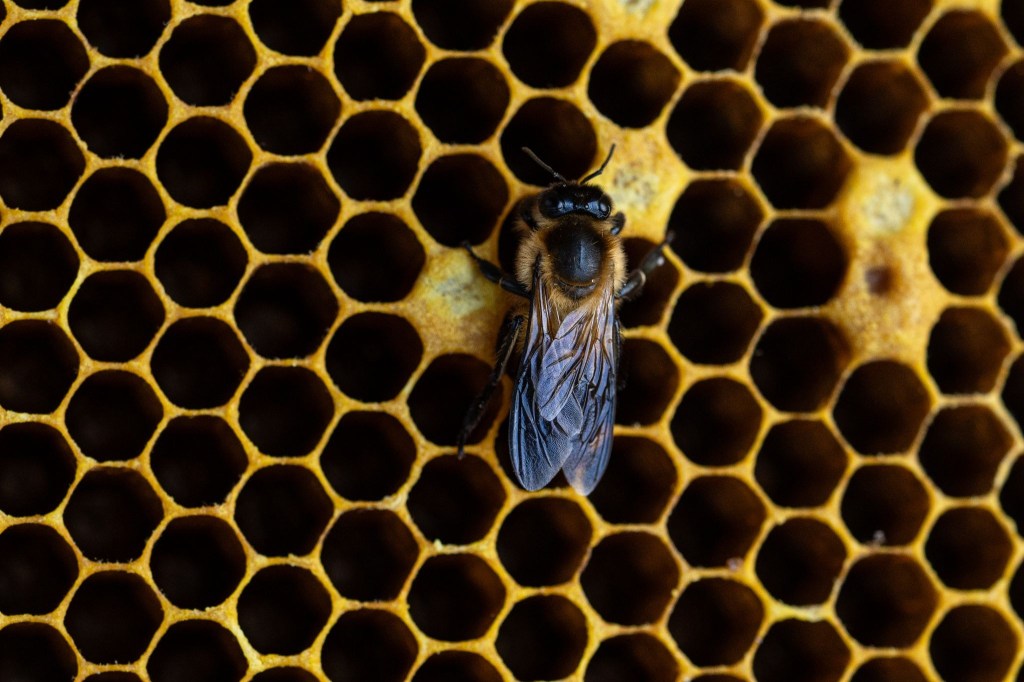
Beginning with how the bee appears to be, it’s almost double the size of the regular honey bee species. For your best imagination, you can compare its body size with that of a hornet.
The bulky body mass is of benefit to them. At least when they have to sit intact in their nests amidst the turbulent mountain breezes and also when they need muscle power to generate enough energy for long-term flights while foraging in the huge mountain forests.
The structural difference can be observed as nature’s way to help them function optimally in the harsh living conditions of the higher altitudes.
Pollinators of The Himalayas
The Himalayas have one of the most extreme environments on Earth. The colder climate and windier environment are the main hurdles to the existence of any pollinators. The air at high altitudes above a certain level has a sparse oxygen level where normal bee species can not survive.
Among the limited population of unique pollinators seen in the region, Apis laborisa has been reported to survive beyond 4,000 metres. This species has played the role of key pollinator and spends its life helping alpine and subalpine plants thrive. The local crops in the Himalayas are also a gift of these honey bees.
They are the best fits as the main pollinators of the mountain ecosystem. And for this they went through major adaptations over time. Some of the surprising features we hardly get to see in regular bee species include:
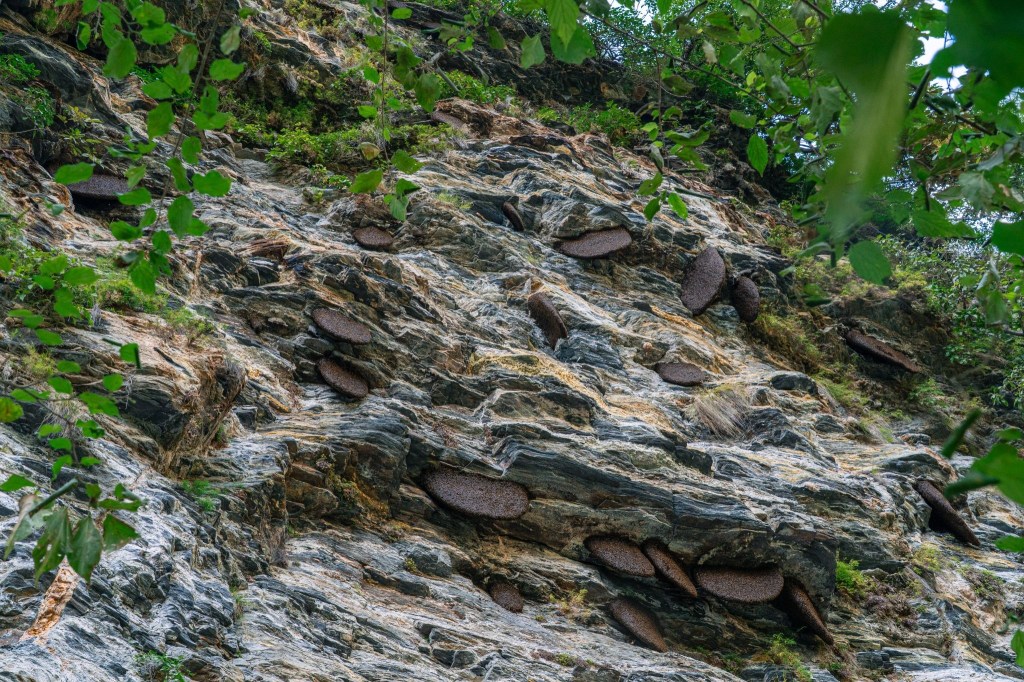
- Apis laboriosa has huge hives that can accommodate more than 100,000 bees. This huge population forms a tight cluster year-round and the warmth thus created is what sustains them throughout the year in extreme conditions.
- The hives are built facing south-east directions with the motive to get warmth from the sun throughout the day (amazing how nature has shaped these bees!).
- Worker bees make a huge proportion of the colony. This allows for the storage of a huge amount of food. So there will be less chance of scarcity.
- The colony’s defensive behavior is too aggressive especially to protect the hive from the birds and other predators.
- The migratory behavior is also sophisticated. Once the cold hits the mountains and the temperature starts to become intolerable, the colonies move down the cliffs to overwinter.
Limited Honey Batches
Unlike commercial honey production, these wild bees have their own cycle of nectar deposition and use. Spring and autumn are two different seasons when flowers bloom in the mountain regions where they inhabit. These are the only times when they can collect enough nectar to survive for the rest of the year.
One single honey hive has 90 to 100kgs of mad honey in it and the excess was consumed only by natives residing on the foothills of the Himalayas for centuries. But now, the scenario is different. The “cliff honey” once limited to the mountain villages is now established as an exotic honey in the international market as “mad honey”.
There is an interesting turn to how cliff honey got the name “mad honey”. Rhododendron flowers, the main alpine floral nectar source for these bees have a psychedelic compound known as “grayanotoxin”. This compound is deposited in the produced honey and once it gets metabolized in our body, we feel mild euphoria, and what we experience is dose-dependent. When compared, the spring batch is more potent than the autumn ones as it is mainly made of rhododendron nectar.
Centuries-old Honey Hunting Tradition
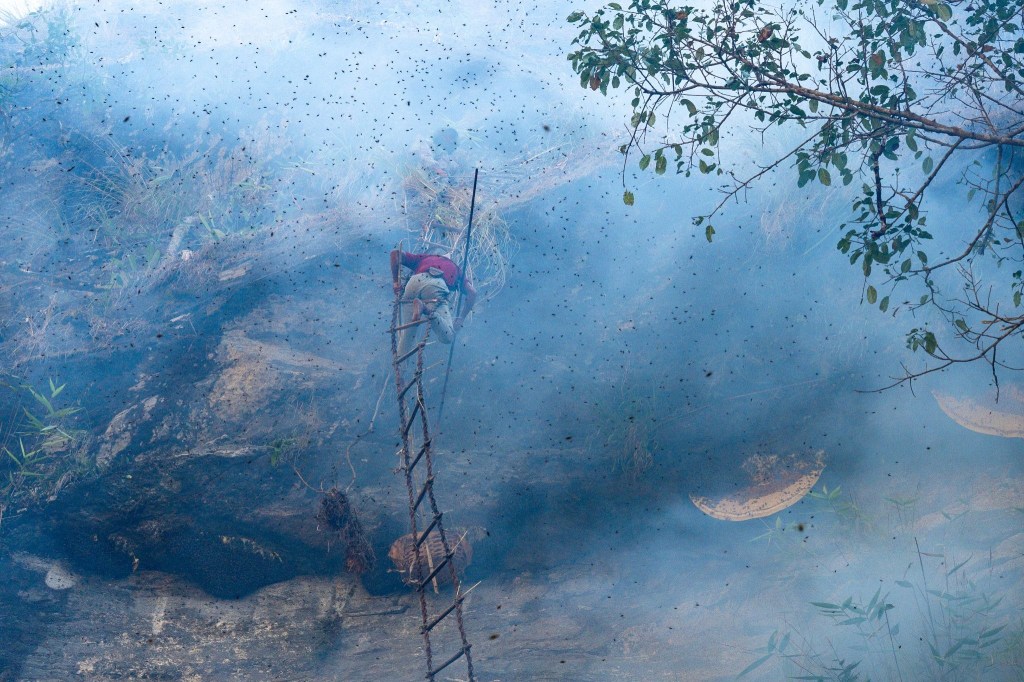
It can be quite unnatural if you think wild honey can be harvested like regular honey, especially when it comes to cliff honey. The bees’ hives are hundreds of meters above the ground and reaching them is already a challenging task.
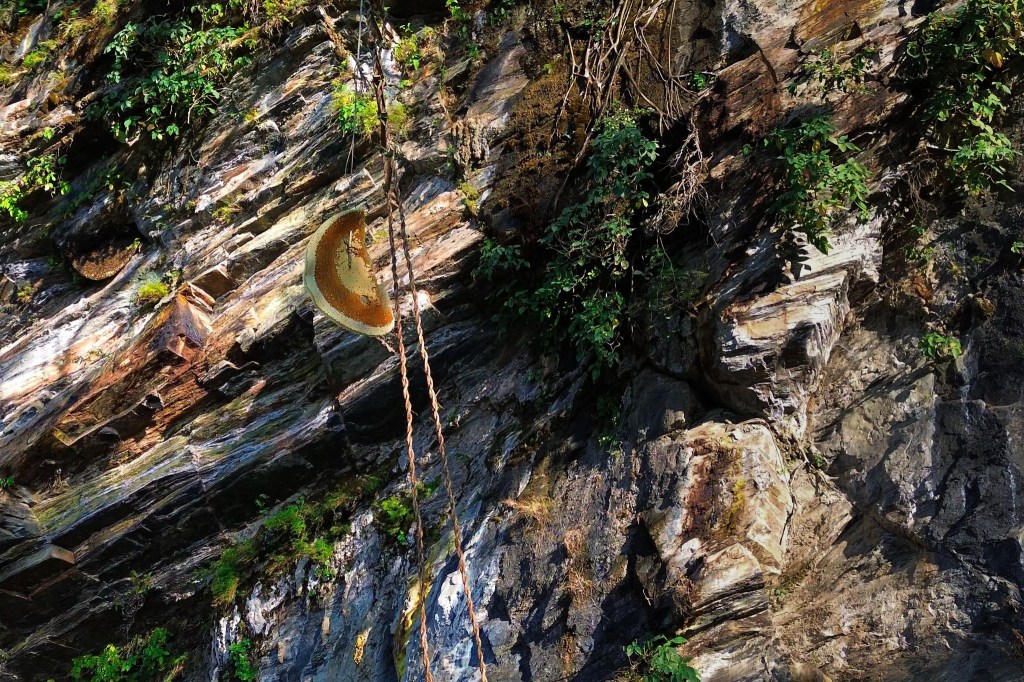
The Himalayan natives recognised cliff honey as a potential food source and deliberately developed ways to reach the honey hives that seemed too far away, Over time, an established cliff-hanging technique was developed that’s still in use. Every step was continuously refined considering safety, convenience to climb the steep cliffs and no harm to the bees.
Today, the community comes together for the preparation. They make their own climbing ropes using bamboo fibers, collecting baskets with bamboo strips and cutting tools from bamboo poles. The hunter climbs the cliff and cuts down mature hives taking hours. For anyone viewing the whole process, every move the main harvester makes is nothing short of a thrilling adventure.
The honey’s use was previously limited to the harvesting communities. They added it to their traditional fermented drink, herbal potions which they used as a remedy for various ailments and stored excess for the rest of the year. Today, they sell it at a price enough to feed the whole community making it an important commodity along with the mad honey expedition attracting tens to hundreds of tourists each year.
Conclusion
Himalayan giant honey bees are survivors of high altitudes. And nature has shaped their behavior perfectly for sustenance. The alpine and subalpine floras limited in the mountains are thriving because of the existence of a few pollinators including this bee species.
Although this significant pollinator has a huge role in the world ecosystem balance, they are more known for its “mad honey”. The Himalayan residents are the original harvesters of mad honey which later became an important source of economic support and food security. In return, they have contributed to maintaining the sustainability of the bees by carefully avoiding any actions that could damage cliffs or hives. In conclusion, they share a long-standing relationship of coexistence.
For more photos and details about the giant cliff bees, be sure to visit the Cliff Honey website!
I hope you enjoyed this blog. Remember that I have a podcast, About Bees, Culture, and Curiosity. It’s available everywhere you get your podcasts, and at this link.
https://podcasts.apple.com/us/podcast/about-bees-culture-curiosity/id1760959092


