
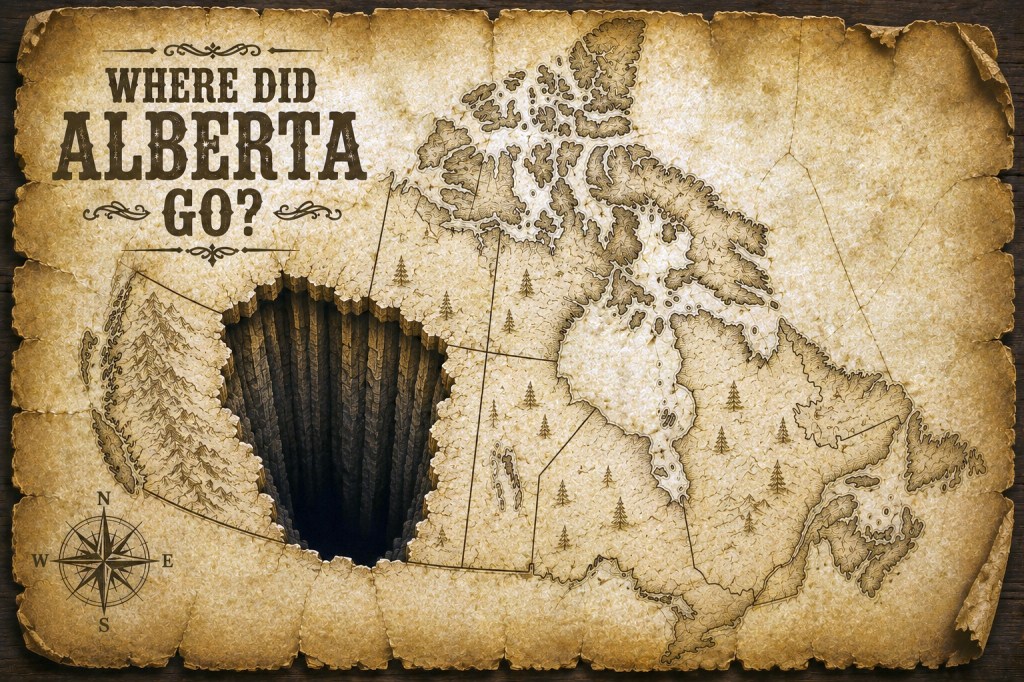
Alberta has a separatist movement with a minority (20%?) of people out here thinking Alberta should become an independent country, then join the USA. I talked about this in detail on my latest podcast (which also includes a recap about my backyard Calgary bees and some bee news stories).
Please listen to this podcast episode, my 99th published so far, for a bit more of the story. But, meanwhile, here are some of the key points that I cover.
What beekeepers could expect if Alberta became the 51st state.
1. Alberta’s bee border would effectively disappear
Canada’s restrictions on importing packages of honey bees from the United States have probably slowed the introduction of pests, diseases, and undesirable genetics into Alberta. If Alberta became a U.S. state, those barriers would likely disappear, bringing cheaper replacement bees but some biological risks.
2. Migratory beekeeping would transform Alberta’s bee industry
Alberta beekeepers could become part of the vast American migratory pollination circuit, wintering colonies in southern states before returning for the canola honey flow. While this would create new business opportunities, it would also increase competition from very large commercial operators and place additional pressure on forage and bee-yard locations.
3. Alberta could lose protection against excessive colony density
An influx of tens of thousands of migratory colonies could dramatically increase the number of hives competing for Alberta’s nectar sources during the summer. Higher colony densities often lead to reduced honey yields, increased drifting and robbing, and faster spread of pests and diseases.
4. Cheap replacement bees could weaken local bee breeding
Easy access to inexpensive package bees might reduce the incentive to overwinter colonies and raise queens adapted to Alberta’s harsh climate. Over time, this could erode locally selected genetics that have proven their value under northern conditions.
5. Canadian honey standards would be replaced
Canadian honey is produced under CFIA regulations, while American honey falls under a different regulatory framework administered primarily by the FDA. Alberta honey would also enter a much larger market where imported honey plays a far greater role than it does in Canada today. 80% of honey eaten in the USA is imported. That’s only 15% in Canada.
6. Varroa treatment options would change
Beekeepers would transition from Canadian pesticide registrations to the American regulatory system, where approved treatments and product labels differ. Increased movement of colonies could also speed the spread of treatment-resistant Varroa mites across the province.
7. Pesticide policy could become less predictable
Responsibility for pesticide regulation would shift from Canada’s national system to a combination of federal EPA oversight and individual state rules. Policies change when politics changes, creating uncertainty for farmers and beekeepers.
8. Commercial beekeepers could face much higher health insurance costs
Beekeeping is physically demanding and dangerous work. Injuries are a reality. A move to the American health-care system could substantially increase insurance costs for self-employed beekeepers and family-run operations.
9. Seasonal labour would become more complicated
Alberta’s commercial beekeeping industry depends heavily on seasonal workers. Many arrive under Canadian immigration programs. Transitioning to U.S. visa and labour rules would create additional paperwork, uncertainty, and higher operating costs during the changeover.
10. Canadian research and support networks might be lost
Alberta currently benefits from world-class Canadian bee research, diagnostics, and national biosecurity programs developed specifically for Canadian conditions. Although American institutions could provide some replacement services, Alberta would become only one of many bee-producing states competing for federal attention and research funding.
Also, I have to mention the latest US tariff threats. If they go into effect on August 19, 2026, a 50% duty will be applied to Canadian honey. American packers, who would have to pay the duty, won’t be able to buy honey from Canada. If Alberta were an American state, that duty would not apply.
Winners and Losers
Alberta’s beekeepers might get access to almond pollination, southern wintering, less expensive packages, a big domestic honey market, and American equipment suppliers. But Alberta could lose its geographic and regulatory separation from the flow of millions of migratory colonies.
The likely winners would be large, mobile, well-capitalized operations able to participate in American pollination circuits.
The likely losers would include smaller honey-focused commercial beekeepers, Alberta queen breeders, operators used to uncrowded canola locations, family businesses facing private health-insurance costs.
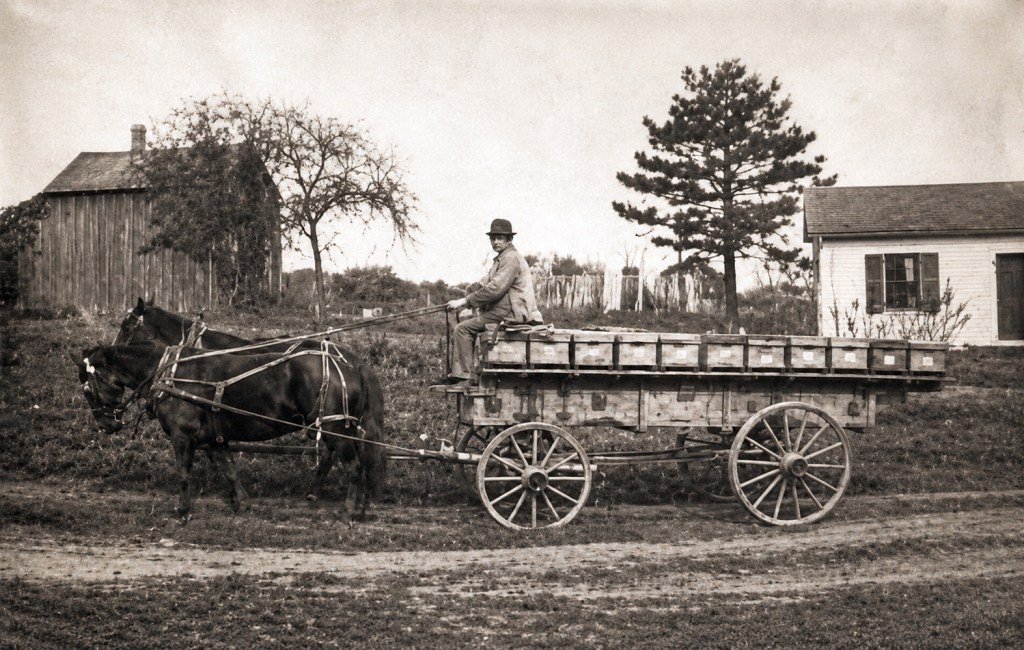
Beekeeper leaving Canada?
If you’d like to know more about this, and catch a bit about summertime beekeeping in Alberta, my About Bees, Culture, and Curiosity podcast goes into illuminating detail, so I invite you to listen and enjoy. The ideas expressed here on this blog and on the podcast are subject to refinement with my exposure to new facts.
I hope you enjoy this blog and the podcast episode! The podcast is available everywhere you get your podcasts (Spotify, Apple, Podbean, Deezer, Dasher) . . . and online at this link.
https://podcasts.apple.com/us/podcast/about-bees-culture-curiosity/id1760959092


I can’t really deal with podcasts so thanks for writing all this.
Instead of wishing for Alberta to become a US state, I might wish for New York State to become a Canadian province. :)
LikeLiked by 1 person
Glad you appreciate reading. The podcast has a lot more detail and listening appeals to people driving, cooking, or changing plumbing in their house, so that audience is big, too.
I doubt that Albertans will vote to consider separating. Some of the activity is sincere, but some is theatre. And, please join Canada! We’d love to have New York (and New England, Minnesota, and the entire west coast) as part of Canada!
LikeLiked by 1 person
Lots to consider, Ron, that’s for sure!!
LikeLike
Lots to consider, but the correct choice is clear.
LikeLike