
An acquaintance – someone active in our 400-member Calgary Bee Club – reported that he had an allergic reaction to a sting. He’s been keeping bees quite a few years and he’s had dozens (perhaps hundreds) of stings. Then, a week ago, he had a very bad allergic reaction. He asked our group if others have had similar experiences. Several had.
I have never had a dangerous reaction to a sting, though I did have a problem once when I was unloading a couple hundred hives by hand in awfully warm weather. My brother and I had loaded the hives in Wisconsin. Alone, I drove down I-80 to Pennsylvania in the dark, but it was one of those blazingly hot late summer nights. I had driven the 800 kilometres alone and was by myself when I removed the hives from the big van. The overnight low was about 30C (86F), the bees left their boxes trying to cool off. I began to offload at my destination (Mercer County, Pennsylvania) as the sun was rising. My 240 hives were camouflaged by a brown carpet of crawling bees. I worked as quickly as I could, but the bees demonstrated their irritation at being trucked from Wisconsin’s clovers to Appalachian goldenrod. They were not impressed. The venom of about a thousand stings made my stomach churn. I became a bit fevered – and pretty sore. It was an overload of venom, but probably only half of a lethal dose.
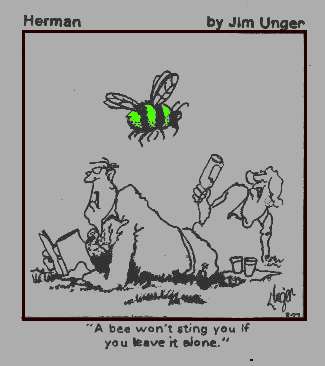 Here in Calgary, my friend’s surprise sting reaction was caused by a single bee. I’ve heard of this happening – a beekeeper goes for years without incident, then gets an unexpected allergic reaction. Why?
Late summer is an especially dangerous time for beekeepers in the northern hemisphere (hives are strong but the flows may be over), so I decided to share the info which I sent out to our bee group. You may be similarly affronted, so I’m printing it for you, too.
🐝 🐝 🐝 🐝 🐝 🐝 🐝 🐝 🐝 🐝 🐝 🐝
Here, paraphrased, are my bee-allergy thoughts:
First – and importantly, I am not a medical doctor. My comments should be construed as neither medical advice nor necessarily fully informed information.
As you know, allergies are an immune system response to a foreign allergen in a biological system. In general, continuous and mild exposure to the causative agent allows the body to regulate and balance a response to the invading allergens. If a long period elapses between exposure to the allergen, the balance can be lost (but not always) and subsequent exposures may be life-threatening. This is why anecdotal evidence suggests beekeepers who are regularly stung usually do not develop systemic reactions whereas those who receive only infrequent stings are more at risk to systemic anaphylaxis. If months pass between stings, the likelihood of too much immunoglobulin antibody building up increases and a reaction is more likely. Since it takes a bit of time for the body’s allergen response to develop after an initial exposure, we don’t usually expect any systemic reaction with the first bee sting. We sometimes hear people say, “I was stung when I was a kid, so I’ll be OK.” In reality, the opposite may be true. That initial sting could set the body up for a huge reaction years later. Getting stung regularly is usually the best way to keep from having a bad reaction in the future.
Children of beekeepers may be especially vulnerable. If our kids get stung, we try to prevent a second sting – months or years may pass before they get stung again, sometimes with disastrous consequences. In addition, when ‘bee dust’ on our clothing comes into the house, it gives the kids low-level exposure to bee proteins which may result in their bodies’ development of an excess of antibodies which will react badly when they eventually get stung.
You may be surprised that I mentioned ‘bee dust’ on clothing. Systemic bee reactions are due to allergic reactions to bee proteins, not directly from the poisons in bee venom. In really huge quantities, venom is fatal. A person who is not allergic to bee stings will die if she gets several thousand stings. That’s poisoning from venom, not an allergic reaction. Allergies are more closely related to a bee’s body, not its venom. I knew a beekeeper in northern Saskatchewan who had extreme anaphylaxic shock from the bee dust in his hive equipment. It was as severe as if he was have a reaction to a bee sting. Before he sold his business, he wore a dust mask and gloves just to handle his frames. Bottom boards were especially a problem for him.
The allergic reaction mostly depends on the bee’s protein, not its venom. Venom may change slightly when bees work different sorts of flowers. [Just as a cow’s milk may be bad if the cow eats milkvetch or loco weed.] When I was a teenager keeping bees in the east, I used to move a couple hundred hives into buckwheat fields each summer. After the bees had been working buckwheat for a few days, their stings became much, much more painful. I could normally take a half dozen stings without noticing them, but a single sting when bees were on buckwheat would make me shudder. (Even as I right this today, I get queasy just thinking about that pain!)
Wasps, alkali bees, bumblebees, honey bees, etc., all have DNA different from each other. You may have a severe allergic reaction to a bumblebee sting but no such reaction to a honey bee sting. Or vice-versa, of course. Similarly, if you are allergic to a honey bee’s protein, then you are allergic to all honey bees. It doesn’t matter what the bee was foraging on because its food won’t change its DNA, which, in turn, designs its proteins. Someone asked whether the flowers “could affect the poison?” and the answer is yes, it could affect the chemical properties of the venom (See: https://beelebanon.files.wordpress.com/2016/01/7-chemistry-and-pharmacology-of-honey-bee-venom-l.pdf) as I mentioned with the buckwheat anecdote. But that’s different from the cause of the typical allergic reaction. With an allergic reaction, our body is arguing with the bee’s foreign protein, not the venom itself. (This is a simplification, of course. Among other chemicals, venom contains peptides, enzymes, and various proteins. The proteins are from the bee. So, you are getting an injection that includes bee protein. However, it might be useful to think in terms of a systemic reaction being a response to the stinger more than the sting.)
The idea of bees collecting nasty things on their stingers was mentioned by another person on this bee chat group. Bees normally keep their stingers covered by quadrate plates so their stingers remain retracted until deployed. I’m not sure how likely it would be for bees to pick up something nasty on their stinger. The person added, “it sounds a little far-fetched that bees pick up stuff on their stingers” and I agree. But anything is possible. Physicians sometimes have a rather shallow understanding of honey bees – when I had bees near the Grasslands National Park in Saskatchewan, a rancher knocked over a few of my hives with his swather. It was an open cab and he was quickly covered with bees. He was stung a few hundred times. At the hospital, the doctor instructed the nurse to pull out all the throbbing little sting sacs with tweezers. This stupidity, of course, gave the poor guy another dose of venom. When I visited him later that day at the hospital, he was swollen and in horrible pain. Before I left, I had a discussion with the doctor.
Finally, I want to say again that I am not an expert in allergic reactions. All of the preceding is a simplification. I may have confused some terminology. But the bottom line is that reactions to bee stings are unpredictable and can be dangerous. Having the right meds and an epipen in the truck, shop, and house are essential for any unexpected emergencies. I can’t explain a sudden unexpected systemic reaction, but several people have pointed out that subsequent stings for them were not serious. Sometimes we get stung by other creatures and assume it was a bee. Sometimes the antibodies build up for unrelated reasons and we get a bad reaction.
I remember another beekeeper who had a severe reaction. He took a few bees with him to the hospital, along with his epipen and antihistamines. He waited in the hospital parking lot with a friend and proceeded to sting himself. Twice. He waited an hour, then went home without needing Benadryl, epinephrine, or doctors. You never know about bees.
– Ron
I hope this helps explain a little about why bee stings are unpredictable. If you’ve had any bad bee sting experiences (or good ones!) please feel free to share them below in the comments.


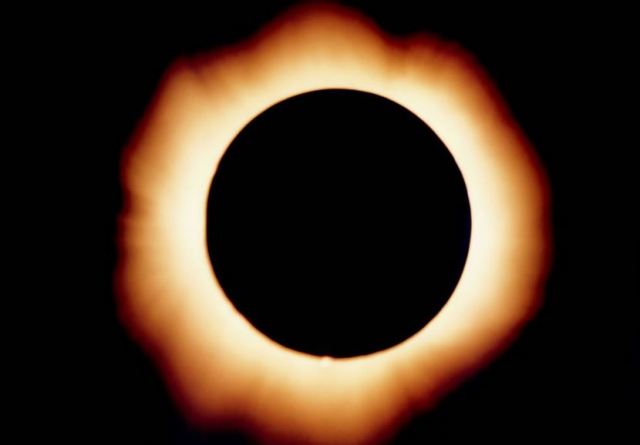
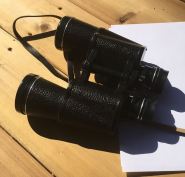 OK! We survived the 81% eclipse! We had a bright clear day and a nice broad deck with a great view of the sun, so we had front-row seats. My teenager set up my 35-year-old old army binoculars to direct sunbeams toward a sheet of paper. It worked really well!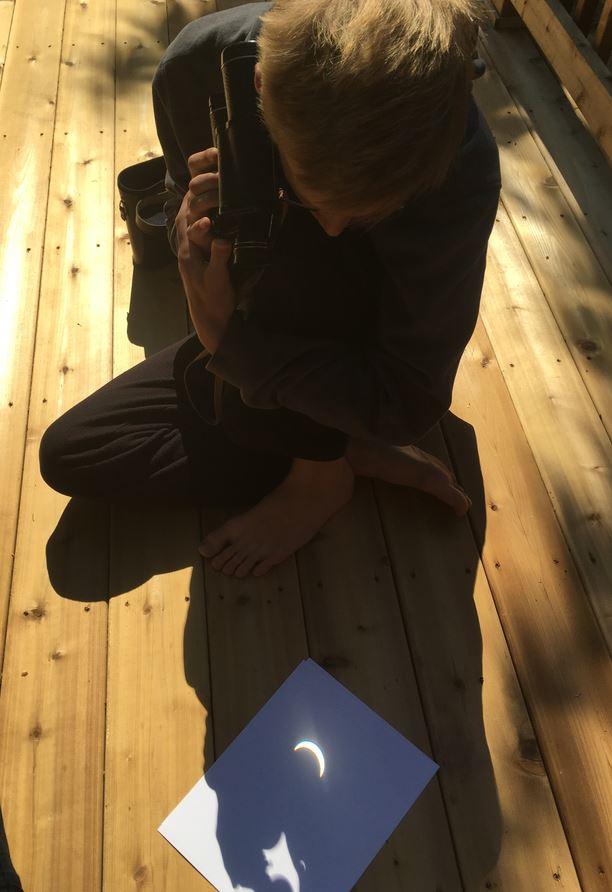



 Returning to the pod-waves after a two-month hiatus, Kiwimana is back. Since May 24, I’ve been suffering mana-withdrawal, but


 More untruths. Einstein, the poor chap who wasted thirty years of his life fighting quantum physics and trying to discover a


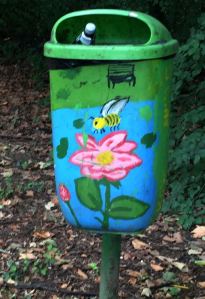 You can catch glimpses of the bee everywhere. Here’s a litter box, anonymously enhanced by a creative graffiti artist. I saw this in the
  Meanwhile, a stop at our favourite ice cream cafe on a city centre plaza shows us another cultural permutation of the Hungarian honey bee – this time a culinary treat. At perhaps 2,000 calories per plate, the 690 Ft ($3.50)





 Bad Beekeeping Blog