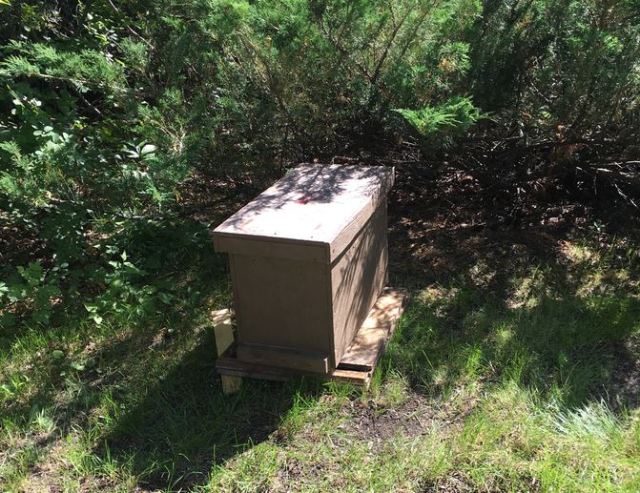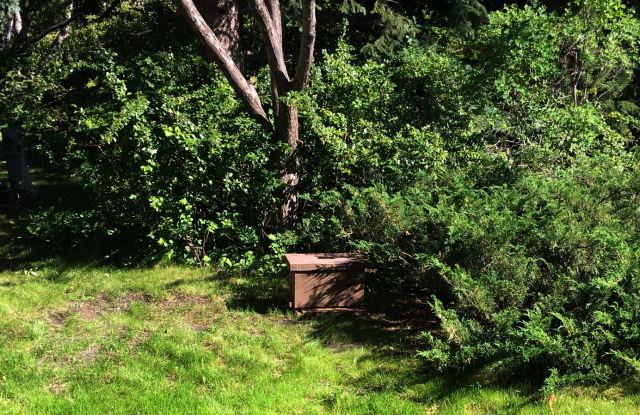
Our backyard hive.
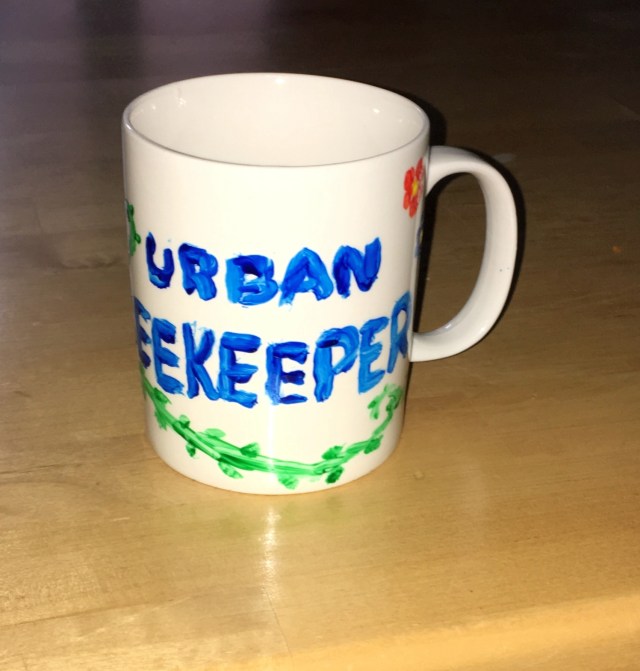
Yesterday evening, I brought a small hive of bees to my back yard. It was thrilling. That may seem odd to those of you who read this blog regularly. (Did you miss my Urban Beekeeper post?) Surely I’ve got dozens of hives somewhere. That’s a valid assumption, considering that I write frequently for American Bee Journal, teach several beekeeping courses a year, and mentor other beekeepers around the community. But it’s true – I’ve had no hives of my own for a few years, for a variety of reasons that you’ll see in the story which follows. Many of you have read my book, Bad Beekeeping, which describes my twenty years of commercial beekeeping in Pennsylvania, Florida and Saskatchewan, so you know how I got here. For the rest of you, here’s the Cole’s Notes summary of the book:
I was the middle kid in a big family. My parents led a self-sufficient lifestyle – building, growing, and making almost everything they needed on their 50-acre farm in the Appalachian foothills. We had cows, sheep, greenhouses, and acres of orchards, vineyards, potatoes, tomatoes, cukes, and peppers. And there were bees. My father’s original goal was to be a commercial beekeeper. He eventually reached 800 hives around 1960, when I was a pre-schooler. He couldn’t make a living from it (Pennsylvania has feeble, undependable honey flows.), so my mother chose greenhouses and row crops as their business. She was right – people came from as far as Pittsburgh to buy Summit Gardens’ Golden Peppers and assorted delicacies.
The bees performed a less important role on the family farm, but by then my three older brothers and I had all been thoroughly stung. David, the oldest, moved to Florida where he still operates a fine queen business. By the time I had a driver’s license, the older boys were in the army or off the farm, so I was told to care for the 300 hives that were left from my father’s previous 800. (He gave/sold the rest to the older boys.) I made a lot of mistakes, but had some modest success. I was learning a lot. At 18, already with a few years of commercial bee experience, I left home to beekeep in Florida (learning from my brother David) in the winter and Wisconsin (learning from my brother Don) in the summer. Along with producing queens and orange blossom honey in Florida and clover honey in Wisconsin, my bees pollinated West Virginia apples. A couple years later, I met a guy selling hives in Saskatchewan. No money down. I was on my way.
Production in Pennsylvania had been 50 pounds per hive. In Florida, it was about 60 (plus queens to sell), while in Wisconsin my bees averaged 100 pounds per hive. But western Canada was known for amazing crops of water-white honey. Beekeepers were making 200 pounds per hive, so I joined them. That was the best decision of my life. I arrived in Canada in the 1970s and ran a thousand hives for over ten years. My base was a cowboy town near the Montana border. During my first four years, I averaged a little over 300 pounds per hive and paid off the entire farm. Then the area had a drought. No rain for 14 months. Crops died. My honey average was 14 pounds in 1985. I drained my savings, then sold the business. I kept 300 hives and placed them near Saskatoon, where (at age 33, in 1987) I started university. Four years later, I had an honours degree in geophysics – and several job offers in Calgary. So, I drove eight hours west and started a new life. Again.
Earth science had always interested me (volcanoes, earthquakes, gravity and magnetism, rocks, fossils – what’s not to like?) but I found myself doing the less interesting work of analyzing seismic signals. Lots of math and physics. Not so much fun and fresh air. So I bought 5 hives and put them on a friend’s quarter-section. It got me out of town and I soon split them to 15. Things were going well, but in a few years, I noticed some muscle weakness. I was tripping and falling. The diagnosis was ‘probably ALS, Lou Gehrig’s disease‘. That usually causes complete paralysis within three years, followed by death. But my progression has been strangely slow. My ‘atypical ALS’ began 20 years ago, yet I still do most of the things I need to do. You never know about such things – you just have to see how it goes.
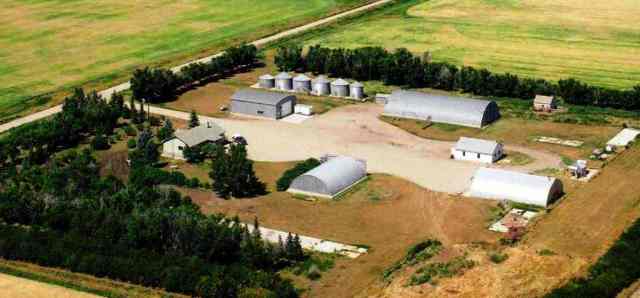
A little over ten years ago, I invited one of my older brothers to Calgary to operate a new honey farm which I wanted to build. I bought ten acres and we soon had 500 hives. It was entirely devoted to comb honey production – a beautiful product with much less heavy lifting and much more cash per hive. That seemed the right move at the time as we were in our 50s and my muscles were slowly becoming weak. But after seven years, my brother moved on, going back to the States with his wife so they could be closer to their grandchildren. Meanwhile, my illness was progressing, so I couldn’t move bees or pull honey. Besides, I was still consulting in geophysics. My oldest daughter and her husband, both nearing 30, were interested in running the farm. So, I handed them the keys. It hasn’t been easy for them. But they both have some of the skills that help beekeepers succeed. Erika is good at marketing and works in the shop (and sometimes in the bees) while Justin is great with woodworking and was a furnace-repair guy, so he knows mechanical things and is learning beekeeping. But it’s been a slow start for them.
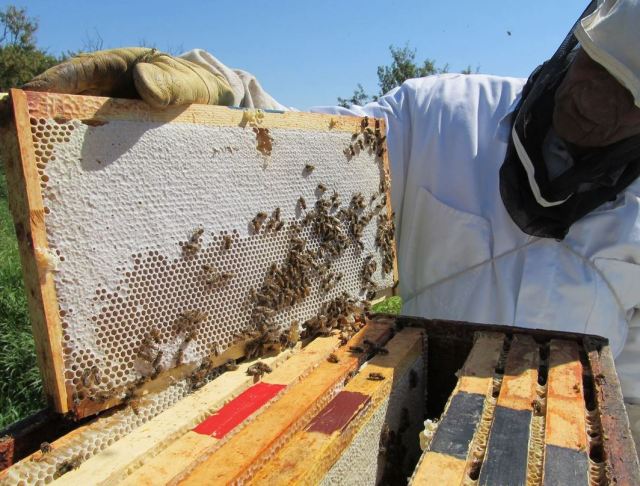
That brings us to yesterday, when I visited my daughter, her husband, and their three little kids. Justin set up a queenless nuc for me. He had built some really nice nuc boxes and gave me two frames of brood (about half in pearl-stage) along with four frames of honey, pollen, and attached bees. We didn’t shake any extra bees into the nuc and we made sure that we found the queen and left her behind. I wanted a moderately weak hive which would have to raise a queen.
My goal (this year) is not to have a huge hive, but instead to intentionally keep the colony weak through occasional queenlessness and regular use of foundation. I just want to easily observe some honey bees. (I can see them from the deck while I’m writing these words!) As a bonus, my two younger kids (ages 10 and 15) seem more excited about the bees than I am. They’re curious about nature and bugs and things. I like that the hive also gives them a special family connection to something stretching back a century and across a continent, yet sitting in a small box in our back yard.
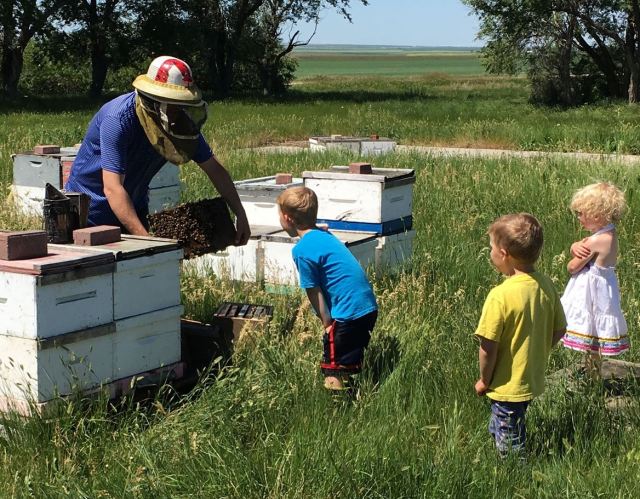
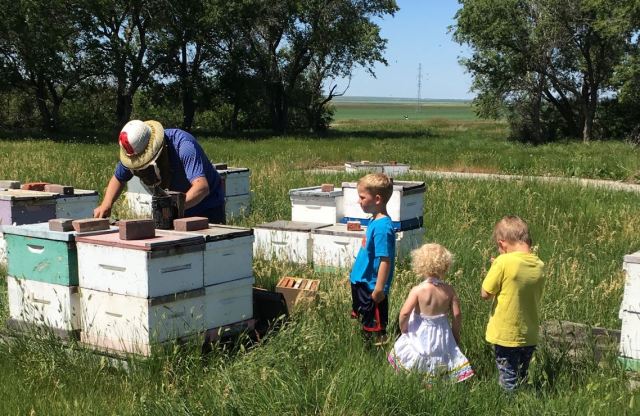
Finally, here’s a picture I took yesterday of my son-in-law preparing my nuc. He’s being helped by his kids (my grandkids). Over the next few days, I’ll describe how the nuc was made, transported 130 kilometres in my van, and hauled into the back yard. Oh, and I’ll need to name the hive, too. Any suggestions?


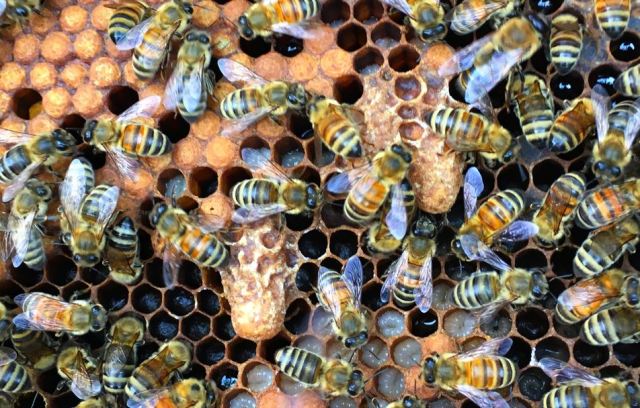
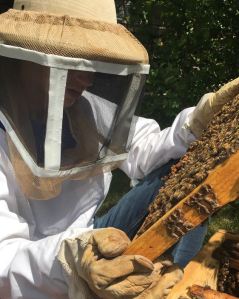 intentionally built as a queenless hive. When my son (left, now a confirmed beekeeper) and I dug through the deeper chasms of the little hive, we found the cluster of queen cells captured in the image above.
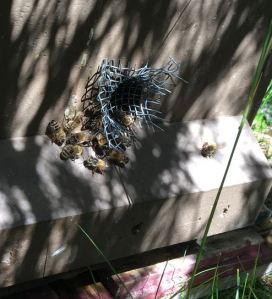 The bees. After Justin and Erika set up my new nuc, they stapled a screen across the small round hive entrance. When I moved bees in the past, I never used screens. But a lot of people do, so they’re probably effective. My nuc has one small hole as its only entrance, the rest of the box is solidly bee-tight. Stapling a wire mesh across the entrance helps keep bees safe during a trip. In the photo, you can see the screen barrier after we partially opened it at the nuc’s new home in town. When you move a hive, bees are confused for a few days. A small entrance slows them down and forces them to realize that they are in a new place. I may keep the entrance reduced all summer (unless the weather turns really hot). A small convoluted entrance protects against wasps that sneak into small colonies and kidnap bees.
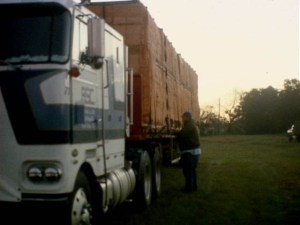 When we move big loads of bees, commercial beekeepers usually leave hive entrances open. Entrance screens aren’t typical. If it’s a really short haul (less than ten or twenty kilometres), we like to move under the cloak of twilight when it’s cool and the bees aren’t interested in flying. Thirty or forty hives are loaded in half an hour. A short drive later, we quickly set the hives off the flatbed. For long hauls, a bee net covers the load. Moving without a net is probably illegal almost everywhere, so if you’ve got a bunch of bees, buy a nice big fluorescent net. The one shown here covers 400 double-story colonies. It cost me a few hundred dollars and weighs 100 pounds. There are cheaper and lighter ones available. Dealers will give you details. I bought mine custom-made from
 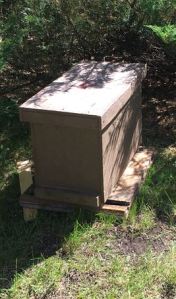 A trick. So, here we are – 5,000 bees in a little camo nuc box. I worry about loose screens and dislodged hive lids, so here’s my trick: a large black garbage bag. Big bags perfectly encapsulate a single-story hive. I’ve stuffed dozens of colonies into such plastic bags, usually without screening or closing the hive entrance. It keeps the colony quietly in darkness, and keeps every bee inside the bag if they venture out of their box. The only caveat is a concern about heat. When I moved hives this way, it was always around 20C/70F or cooler. But when I toted this nuc on its 130-kilometre journey, I turned on the A/C in the van because it was over 27C/80F outside. I kept the van’s air conditioning set at 18C and the hive was kept shaded. Too much heat can be a killer when it comes to transporting bees.
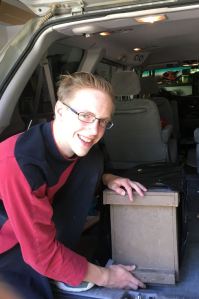
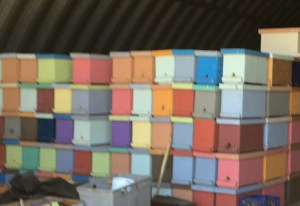 The nuc which I brought home is not supposed to become a powerhouse. It was made with just two frames of brood, no queen, but plenty of honey and enough bees to keep the brood warm. (It still dips below +10C/50F here each morning.) The box itself was designed by my son-in-law. He built a bunch of rugged 6-frame nuc boxes and painted them a rainbow of colours. From the blue, pink, yellow, white, red, and various pastel tones, I asked for something that would blend in with the shrubs and grass in my back yard. I certainly didn’t want a white hive. No sense calling attention to the box of bees in my back yard – camouflage was my choice.