A few years ago I mentioned in my post “Garlicky archipelago” that I had seen bumblebees (Bombus spp.) following the ferry from Southampton to the Isle of Wight, a distance of about 1.5km across water. If I remember correctly it was my colleague Scott Armbruster who first mentioned this to me: he lives on the Isle of Wight and commutes regularly to the mainland.
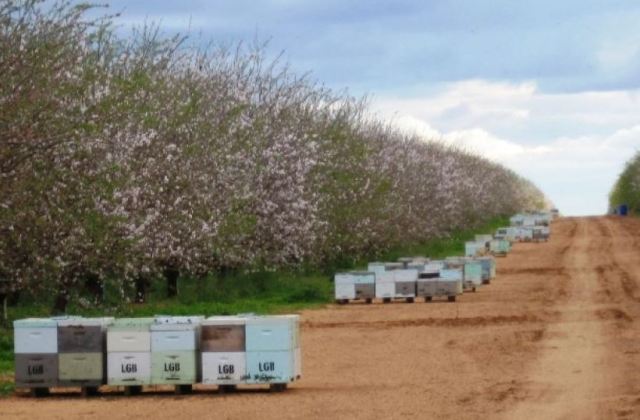
I’ve not thought much about this since then as 1.5km is a fairly modest distance for a bumblebee to fly. But then a few weeks ago I saw the same thing in Denmark, but this time over a much longer distance.
Karin and I were visiting friends on the small island of Sejerø, which (at its closest point) is about 8km from the mainland of Zealand. To get there you have to catch a ferry which takes about an hour to cross…
No bees, no honey, no Rosh Hashanah. Sweet. The Calgary Jewish Community Centre (JCC) is hosting a “beeswax and sweetness marketplace” this week, Tuesday, September 27th from 3 to 7 pm.
This year’s market at the JCC: “No bees, no honey, no Rosh Hashanah” is a nice reminder of the bees’ role in the world.
From the JCC website: Apples & honey tastings, cartis bracha (greeting cards) crafts. Everybody welcome. Free admission.
I’ll be there. Events like this really bring communities together. If you’re in Calgary, drop by. If you are in England or New Zealand, there is still time to fly in. Let me know.
There was a pile of brood in front of my hive. Why?(Today’s topic)
I have four good hives, but I think that the fifth might be queenless. What should I do?
Why is there dead brood in front of my hive? This is hard to answer without samples, a photo, or a trip to the beekeeper’s apiary. But anytime there’s a suspicious bee death, we should pay attention.
More winter-dead bees than you want.
Usually, of course, dead bees in front of a hive are adult bees. The most common ‘natural’ cause (at least here in Canada) is cold. Bees may fly out on sunny winter days (to use the outdoor plumbing) but then get chilled and drop in the snow before they get back into the hive. A few dozen such casualties is completely normal, but hundreds of bees lying in the snow may mean some sort of trouble.
Fog can play the same nasty trick on the bees. Years ago, my father worked for Al Wynn, a California queen breeder. Along the coast near Napa Valley, according to my father, they would occasionally lose bees when heavy fog drifted inland. The beekeepers found chilled damp bees near the hive entrances and queen mating was poor for that round.
At almost any time of year, skunks might bother hives here in western Canada, and around much of North America, I suppose. Mephitidae scratch beehive entrances at night, inviting bees to come out and see what’s making all the commotion. Then the skunk laps up bees like a kitten with milk. The next day, the beekeeper finds hundreds of desiccated adult honey bee bodies in scat or spat piles near the hives.
Another big cause of lifeless adult bees in front of hives is poisoning. These days this isn’t too common up here in western Canada. But a generation ago, aerial spray to combat pests on canola and alfalfa led to honey bee deaths by the millions. Today, farmers are more aware of the need to keep honey bees and other creatures alive and healthy. Farmers have changed some of their bad habits and they’ve switched to pesticides that don’t blanket the entire field (and nearby apiaries) in poison. It’s been a while since I’ve heard of bee kill here on the prairies, but we know that insecticides are still used around honey bees – most recently the disaster in South Carolina where the county used bombers to attack mosquitoes. That resulted in millions of inadvertent honey bee deaths.
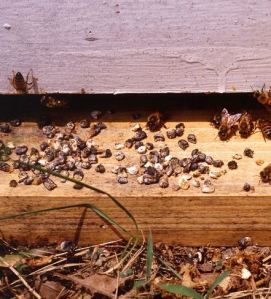
Those (pesticide, skunk, weather) bee massacres result in mounds of adult bees in front of hives. It’s all too common. But it’s rare to find dead brood in the grass. Obviously, the brood must be carried out of the hive by adults because bee brood is immobile. (It would be pretty creepy if you opened a hive and found your bee larvae crawling around.) Honey bees like to keep things tidy, so they drag out anything that seems out-of-place. That includes bits of paper that wrapped your pollen patties or united your colonies as well as dead brood.
Chalkbrood discarded
If the larvae died from foulbrood, it’s unlikely you’ll see it in the hive’s front yard. Such stuff deteriorates quickly into a smelly mess, then hardens and sticks in the cells. However, if the brood is chalk (or ‘stone’) brood, you may find masses in front of the hive and on the landing board. Chalkbrood stays together is a tidy clump that the bees pull out of the cells. Usually it falls to the bottom board after the bees excavate it. Often workers drag it from the bottom board, or directly from the cells, and deposit the chalk mummies in the grass. Serious cases of chalkboard reduce a hive’s population by ten percent or more, but I’ve never heard of it being fatal. Hygienic bees clean it up more quickly, so you can sometimes reduce chalk by replacing the queen. Moving the hive to higher, less mould-inducing turf also helps.
I couldn’t answer the question about why dead brood was in front of the hive because there is another possibility. Without a clear description of the dead brood, I couldn’t know if it had died from chalk or from mite infestation. Both relate to bees’ hygienic behaviour – honey bees remove sick or dead brood, reducing the chances of disease spreading within the hive. If the dead brood in the grass is plump larvae and not chalky gray/white mummies, then it could be brood that was accidentally killed during your last hive visit, or more likely, it’s brood that was infested by mites and then flown out of the nest by house-cleaner bees.
So, once again, I have failed to answer the question, except to say “It depends…” on factors that I wouldn’t know unless I visited the apiary myself. And even then, I might be wrong.
There was a pile of brood in front of my hive. Why?
I have four good hives, but I think that the fifth might be queenless. What should I do?
What’s the best extractor to buy? Someone whom I’d never met before asked me that question. I didn’t know anything about the beekeeper, so it was hard to answer.
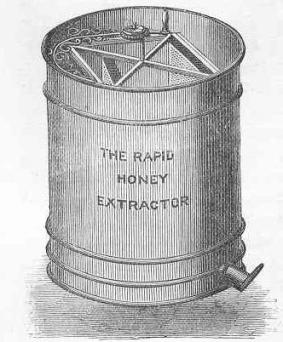
What’s the best extractor to buy? It depends. It’s the extractor that returns the most value for you based on your number of hives, average honey crop volume, food-health inspection requirements, extracting room’s space, your physical abilities, and your budget.
Plastic/stainless steel, homemade/store-bought, horizontal or vertical axis, radial/tangential, 2-frame/240-frame, electric-power/crank, rent/borrow/own, permanently mounted or mobile – so much to decide and so little time, especially if you are in the northern hemisphere and still thinking about extracting this year’s crop.
You can see how complicated this is. A lot of beekeepers buy the smallest, cheapest extractor that suits all the criteria I mentioned (and more, I’m sure). Buy small and trade up if business grows. A 20-frame extractor will handle your small crop more quickly than a 4-frame, but set-up and clean-up take longer. You must also consider storage space for a contraption you use just two or three times a year. Most beekeepers suggest that nebbies start small and grow if interest in beekeeping continues.
I won’t write more than this about extractors today… there are oodles of websites and youtube videos to confuse inform you.
Here’s a review of a 2-frame extractor:
Reviews of 5- and 10- frame, electric and hand cranked:
A 20-frame extractor:
Finally, let’s pretend that someone gave you a 60-frame extractor and you don’t have a clue how to use it:
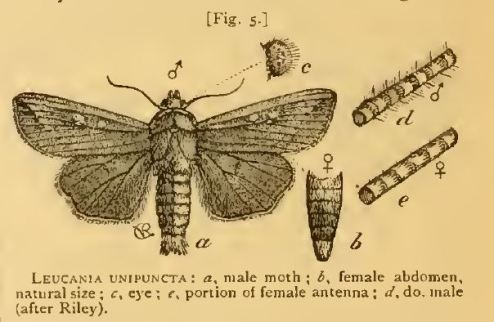
September 18 is the birthdate of British-American entomologist Charles Valentine Riley. Riley pioneered the scientific study of insect pests and their impact on agriculture. He founded the US Department of Agriculture’s Division of Entomology and was one of the first to use biological pest control. Oh, he saved the French wine industry, too. He had an unlikely start.
C.V. Riley (as he was usually known) was born in Chelsea, the yuppie section of 19th-century London. His father was a minister, a rising star in the Church of England. At age 11, C.V. was sent to the continent (France, then Germany) to study languages, art, and science. But within a couple of years, his father died and C.V. was brought back to London. His widowed Mum remarried and C.V. was disinherited.
By 17, C.V. Riley was on his way to America to work as a farm labourer on property owned by a British investor who had taken an interest in the young man’s plight. After a few years of grueling farm work, Riley found a job as a reporter and artist for a farm journal, Prairie Farmer. It was 1864 – Riley was 20, drafted into the American Civil War, and released after his compulsory 100 days of service. Riley then went back to the magazine, continuing as an artist and reporter, but taking on the added job of editor of the journal’s bug division. The boy from Chelsea was the Prairie Farmer’s entomology editor.
American politics
His talent as an observer and artist were noticed. In 1868, at age 24, Riley was appointed Missouri’s first state entomologist. It was a time of huge emphasis on all thing farm-related. America’s first universities were “state agriculture schools” where research on best farm practices were conducted. The west was growing explosively, populated by European homesteaders. The government bolstered settlement and farming. To assure success, new crop varieties were developed, including drought-resistant wheat and fast-growing cotton. As farmers specialized, miles after mile of grain was seeded in 1870s-style monoculture, resulting in insect plagues. The concentration of food led to infestations of bugs, beetles, and especially grasshoppers. Economic entomology – mostly geared towards killing pests – was born.
One of C.V. Riley’s first distinguishing studies involved the 1873-1877 Kansas locust plague. He convinced Congress to form the US Entomology Commission. Riley was appointed chair of its Grasshopper Commission. In 1878, he was appointed the USDA’s first entomologist. But he got into a big spat with the ag department’s chief, a political appointee and Civil War general, so Riley quit. But two years later, the general was gone and Riley was back. But he never mastered diplomacy.
He was volatile – I read a letter which he wrote to a famous naturalist, Mary Lua Treat, where he mocks her efforts at mailing galls (caused by parasitic insects) to him, then wishes she has many more galls in her future. He was probably teasing, but the letter sounds really rude. Riley was also severely overworked and given to bouts of “nervous exhaustion”. He held a USDA post until 1894. Simultaneously, he was the Smithsonian’s first curator of insects.
Science and wine
Throughout all the politics, C.V. Riley edited entomology journals which he founded and published – the American Entomologist (1868–80) and Insect Life (1889–94). These journals were brightened by Riley’s sketches and drawings of all manner of insect. He was a gifted observer, an talented artist, and an influential author. Charles Darwin’s work (butterfly colouration; insect kinship; cross-fertilization of plants; insect/plant dependence; insectivorous plants) was mentioned in nearly every issue. In 1880, Riley showed how flowering plants, hymenoptera, and diptera co-evolved during the Cretaceous.
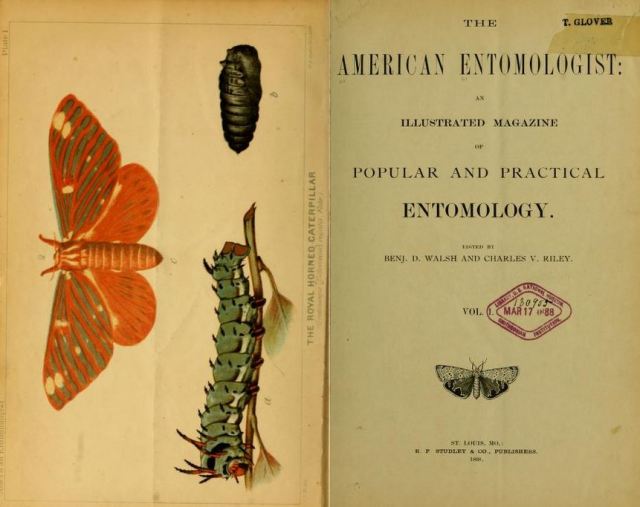
On the science front, he is credited with the first use of biological control (instead of chemicals) when he imported a beetle from Australia to eat scale that was destroying California’s citrus industry. Soon after, he was one of the first to notice that American grapes, Vitis labrusca were resistant to a yellow sap- sucking insect called Phylloxera which was devouring European vineyards. With J. E. Planchon, Riley grafted French grape stems on American V. labrusca root stock and shipped them to France. Together, they saved the French wine industry. For this, Riley was awarded the French Grand Gold Medal and was named a Chevalier of the Legion of Honor.
Not so enthused about bees
With all this brilliant bug stuff – saving the French grapes from Phylloxera, starting entomology journals, founding biological pest control, rising rapidly in the ag department – I wondered what C.V. Riley had to say about honey bees. Not much. And the wee bit of ink that he spilt towards bees was mostly negative. His magazine, The American Entomologist, carried a piece called The Bee Nuisance, which describes all sorts of bee complaints. At the Illinois State Horticultural convention in 1874, his talk was titled “Apis mellifica as an enemy to horticulture.”
His main contentions were that honey bees injure ripening fruit and they are a nuisance to farm workers. Riley’s journals carried numerous stories about honey bees attacking grapes, peaches, and raspberries, making farmers flee in fear while the bees bruised and battered crops before harvest. Riley also urged people to chase beekeepers out of their neighbourhoods if they ran too many hives. Meanwhile, from what I could see as I leafed through several hundred pages of Riley’s journals, he wrote very little about the honey bees’ importance as a fruit pollinator. Because of Riley’s prestige, all of this created problems for beekeepers in the late 1800s and into the early 1900s. Much of Riley’s criticism was unwarranted – I’ve not heard complaints from growers about excessive fruit damage and today they recognize the importance of honey bees as pollinators.
Regardless his apparent honey bee animosity, C.V. Riley was one of the world’s first true practical entomologists and his contributions (especially making Rhône Syrah and Bordeaux Cabernet Sauvignon possible) deserve our recognition. We can only speculate what he may have accomplished if his life had not ended tragically at age 52. In 1895, he and his fourteen-year-old son were racing their bicycles down Columbia Street towards Riley’s Smithsonian office when he hit a granite building stone that had fallen from a wagon. C.V. Riley smashed into the pavement and was carried home where he died that evening, never regaining consciousness.
A few days ago, I wrote about the way new beekeepers are generally sure about the right way to keep bees while oldtimers are reticent when it comes to answering questions. Sometimes there are a dozen ways to solve a bee issue but maybe only one of them is right at any particular time. Anyway, on that earlier post, I introduced the following questions which were overheard at a recent bee meeting. I intend to eventually answer all of them. Just keep in mind that my solutions are likely wrong.
Here are some questions that were tossed around at the meeting:
Wasps are attacking my hives. How can I stop them? (Today’s topic)
What’s the best extractor to buy?
There was a pile of brood in front of my hive. Why?
I have four good hives, but I think that the fifth might be queenless. What should I do?
I tried to answer the first question, about uncapped honey, a couple of days ago.
Today, I’m going to look at those nasty wasps. But first, an awful joke: What do you do with a limp wasp? Take it to a waspital. Or, step on it a second time.
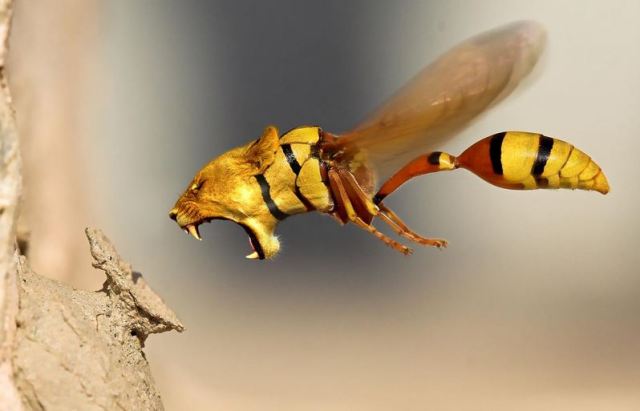
Wasps deserve their bad rap. I’ll admit that I don’t like wasps (the insect kind) at all. Their stings are dreadful – one knocked me off a ladder years ago and I’ve never forgiven any of them for that. Even now, I can feel the pain of those stings on my forehead while I was holding paintbrush and paint can. Even now, as I type these words, I get a shutter down my back. The pain is unmended.
My dislike of wasps goes way back. I was a farm kid. If insects didn’t pollinate or produce some sort of crop, they weren’t welcome. I’m trying to come around to the PC view that all of nature’s little buddies have their job to do, but wasps will take me a while.
A decoy wasp nest, spotted in Banff, Alberta. Does this actually work?
Around the apiary, wasps may mean the end of your beekeeping career. We don’t see many wasps in Calgary, where I live now, but up near the Rockies, beekeepers seem to have serious wasp problems. Now that autumn is close and bee populations are dwindling, the harassment caused by wasps is increasing.
What to do? I think you really need to minimize beekeeping activity, reduce entrances and keep colonies strong. Minimize activity by working quickly and deliberately. Don’t leave the covers off while you’re eating your lunch. Reduce entrances. Maybe duct tape holes in boxes and close extra entrances if the wasps are attacking. Keeping colonies strong is good policy all the time. Bees will defend themselves if they can. What about decoy wasp nests? I have no idea if they work.
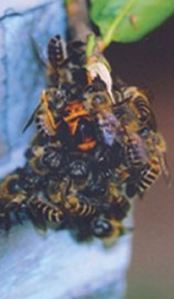
Strong hives try to fight wasp invasions. Here’s a picture from China. Wasps there attack Apis cerana and Apis mellifera with equal malice. You can see that the bees have surrounded a wasp and are killing it. They have tightened around the intruder, raising body temperatures by 5 ºC – they’ll persist until the wasp is dead.
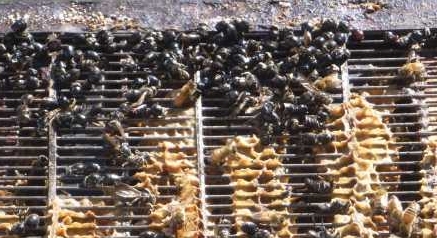
Last August, my friend Dieter sent me the picture below. It shows a honey excluder which has trapped large black wasps by the dozens. I’ve never seen anything like this in my life. I don’t know the whole story – maybe wasps had found an upper entrance and were trying to get down to the brood nest. If you look closely, you can see a honey bee near the center, clasping a dead wasp, probably pulling it towards the great garden cemetery just outside the door. All of this is good evidence that small restricted passages (especially since the honey season is over now) and a strong colony are the best defence against these awful dreadful horrible foul deadly creatures.
Dead wasps stuck on excluder. Bee near center is dragging one to the exit. (Photo credit: Dieter Remppel)
The Cedar Rapids (Iowa) Gazettehad a story yesterday about a fellow in Monticello who ran afoul of the law for something he’s growing in his back yard. His crime? Cultivating (Milk)weed.
Bee and butterfly enthusiasts know milkweed. So do curious kids who squeeze the stem and watch white sap drip out. I used to love pulling apart milkweed pods in the fall. I’d liberate the seeds, back in the day when such activity was legal.
Milkweed is the main plant that stands between the fluttering wings of a Monarch Butterfly and extinction. But milkweed is a noxious, obnoxious invasive plant within the city limits of Monticello, Iowa. Mostly because it’s unsightly. Considered invasive in places where manicured lawns and Wal-Mart discount flowers flourish, milkweed is actually native to Iowa. It has fed migrating monarchs for centuries. But Monticello has its rules – no milkweed, no matter how hungry the butterflies get.
At a city council meeting, defendant Michael Felton explained how his property is a designated waystation and restaurant for monarchs heading to Mexico. His milkweed patch is registered and supported by Monarch Watch (and possibly by Prince Charles & Sons’ lesser-known charity, Monarchs for Monarchs).
According to the Gazette, Felton was reminded that inside Monticellian limits, all weeds over 8 inches tall must go. Felton explained that the plants are lovely and he considers them flowers, with all the rights and privileges generally granted to flowers. Council, which apparently sets standards for lawn care as well as definitions for beauty, wasn’t budging on that.
Felton then asked how he should get rid of his cone flowers and milkweed. The answer came quickly from an attending councilman: “Roundup.” Most of my readers know that Roundup is a dandy herbicide that can clean up the nastiest herbal lifeforms, even milkweed, unless the plants contain a patented anti-Roundup GMO gene. That’s an option that could make Mr Felton’s milkweeds Roundup-resistant and I’ll bet money that he hasn’t thought of it.
If you are a beekeeper or beefriend or monarch lover, milkweed has already captured your heart. The lanky, homely weed has nondescript leaves that only a monarch caterpillar would munch and dull flowers that only a hungry bee would seek. But when the weather is right and the stars are aligned, milkweed nectar is collected in great gobs.
Honey from milkweed fills supers and honey jars. Frank Pellett’s American Honey Plants reports that bees sometimes stored over 100 pounds of milkweed honey and, Pellett wrote, in northern Michigan, beekeepers used to expect 50 pounds of light-coloured, mild-flavoured honey every year. Berkshire Farms in western Massachusetts tells us that milkweed is a good honey plant there and it grows in meadows near their old mill house along a river.
So easy to get tangled up here. Also, note the ‘milky’ latex at the branch joint.
There are 55 milkweed species. Some, like the swamp milkweed at the top of this post, have flat flowers, but most are globular, like the one to your left. Honey bees are fond of fragrant milkweed flowers, but sometimes find big trouble while milking the milkweeds. Bees can get trapped by the pollen-containing pollinia. Rather than face certain death in the flower trap, some bees manage to rip off their stuck legs or antennae and then hobble home with a tank of honey. (Others just sit there and die.) If homeward hobblers manage to make it back they’re greeted as disabled veterans by their hive mates – they are dragged out of the nest and exiled until dead. (So much for embracing the bees’ utopian society.)
If you have a hankering to be a rebel with a cause and make urban mischief, here’s a link on How to Grow Milkweed. But beware that you may be breaking some stupid archaic nanny-state law and also be aware that I’m not Donald Trump – I can’t afford to pay your bills if you get sued and need a lawyer. You’re on your own. But here’s that link again, just in case you missed it the first time: How to Grow Milkweed.
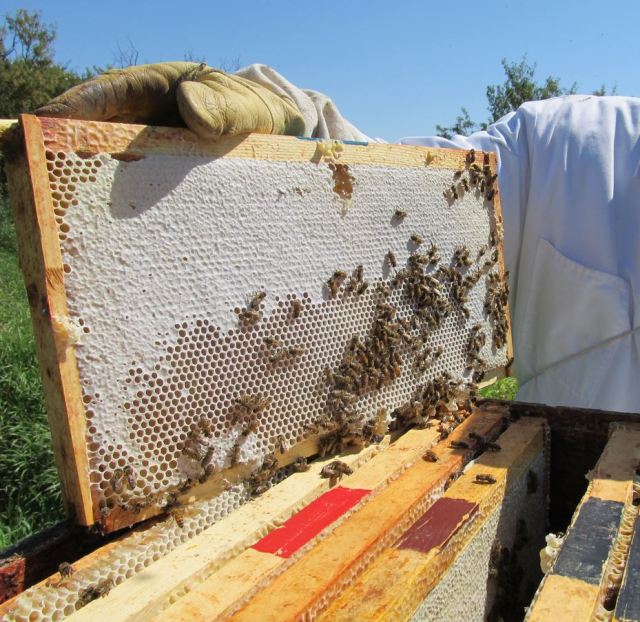
Ready or not? This frame is 60% sealed. To be sure it can be safely extracted, test it with a refractometer.
Yesterday, I droned on and on about how beekeepers who are smart and mature don’t know anything. It’s the new beefolks who have all the answers. I’m not quite at the point where I know nothing, so I’m going to try to tackle a few questions that I heard from some bee folks.
Here are some of the questions tossed around last night:
My honey isn’t capped. What should I do with it? (I heard that one from three different beefolks.)
Wasps are attacking my hives. How can I stop them?
What’s the best extractor to buy?
There was a pile of brood in front of my hive. Why?
I have four good hives, but I think that the fifth might be queenless. What should I do?
Each of these deserves a long, winding, exhaustive answer, so that’s what I’ll do. And I’ll just answer the first one on this blog post.
My honey isn’t capped. What should I do with it?
It depends on the moisture content and on your plans for your bees. Since it’s mid-September and we are in the Ice Kingdom of Canada, our honey season is pretty much over. Especially out here on the western prairies were minus thirty is only a few sleeps away. So, get those stupid boxes off the bees and quit hoping that they will seal everything. They probably won’t. (Though there was late September 1987 when the bees gained 40 pounds around October 1. And a huge late flow in 2008. So, I may be wrong.)
Most beekeepers properly worry that unsealed honey will spoil. That’s what they’ve heard at our beginner bee courses. It’s true – it may spoil, but maybe it won’t. Usually (but not always) bees reduce the moisture in honey to a non-fermenting level (below 18.6% water) before they seal it with wax. If honey has less than 18.6% water, yeast usually can not grow in it. Below 18.6%, the honey rarely becomes a bubbly, fermented or sour product best suited for bibation. Bees usually don’t seal properly dried honey. However, the bees are sometimes wrong. A beekeeper in our area came to my house last week with a sample taken from sealed combs. We tested it with a refractometer. It was 21% moisture. Why was it so wett when it came from sealed frames? I don’t know – maybe the hive was in a damp forest, maybe the honey was gathered and sealed during mid-July when we had four inches of rain in a week. I’d not seen sealed honey with such high water content, but bee stuff happens.
Just as wet honey may be found under cappings, dry honey can appear on unfinished frames. Late in the season, if the flow abruptly ends, the bees usually won’t cap half-finished frames even if the honey is completely cured, dry, and ready for storage. In a dry climate, it’s entirely possible that unsealed honey will be dry enough at any time – even mid season – to be harvested and extracted. The only way you can be absolutely certain is to test the honey with a refractometer.
So, here’s my suggestion. Bring the boxes in from the bees. Prepare your bees for winter – in our area, that may mean feeding and medicating. If the bees need feed and medicine, those should have been on the bees yesterday because the season is getting late. For those using Apivar to fight varroa, treatments must be removed from the hive within six weeks, so you need to be on that right now. All of this means that pulling the last honey supers is something that needs done immediately.
In the extracting shop, scoop a few drops of honey directly off the frame from a few different unsealed spots and blend it together on the refractometer prism. (Connfused? See the video above.) Test the honey with the refractometer. If it’s below 18.6% moisture, you may sell it or use it without too much concern for spoilage. If it’s over the moisture level and still in the frame, you may try drying it by keeping the combs in a warm, dehumidified room for a few days (or at least use an electric fan to circulate dry air – you’ll remove some moisture).
Calgary and District Beekeepers Association. I was about half way up the aisle when I snapped this. Big swarm of beefolks!
Last night we had another meeting of our local bee club, the Calgary and District Beekeepers. These are becoming legendary events with over 150 bee people, sipping coffee and doing bee-talk. Although it’s great fun mixing with so many nice folks all at once, many bob up with peculiar questions, issues, or observations in tow.
Our meetings’ organizers always leave a bit of time for questions, but most beekeepers don’t want the weight of 300 ear lobes thrust upon their personal bee problem. So old timers get questions before the session starts, during the coffee break, and while we are packing up and sneaking towards the exits.
Here are some of the questions tossed around last night:
My honey isn’t capped. What should I do with it? (I heard that one from three different beefolks.)
Wasps are attacking my hives. How can I stop them?
What’s the best extractor to buy?
There was a pile of brood in front of my hive. Why?
I have four good hives, but I think that the fifth might be queenless. What should I do?
There is only one correct way to answer these questions. Start with “It depends…” and then draw out details that help form a decent answer.
However, when such questions float among us, beekeepers with just a little experience often step forward, answering quickly and confidently. Sometimes they nail it, but too often they confirm Abe Lincoln’s admonition about keeping one’s mouth shut (and looking foolish rather than opening it and removing all doubt). Actually, that’s not quite fair. Usually any answer will be correct in some situations. Either “Kill your bees” or “Don’t touch nuthing” might nail it. It depends.
In contrast, the ‘mature’ beekeepers in the club drone on and on with long-winded explanations which beeginers find annoying. “I just want to know what to do, I don’t want the history of beekeeping since Aristotle.” However, mature advice should begin with “It depends” followed with several scenarios. To me, this is the only way to answer cold-off-the-street beekeeping questions.
Beware of the confident beekeeper who can answer all your questions quickly and easily. When most people start beekeeping, they understand it thoroughly. They have it figured out. They know everything. But as time goes on, they realize that bees do unexpected things and each season and each location adds nuances to bee behaviour.
My favourite beekeeping adage goes like this:
Beekeeping is one of those things where you start off knowing everything, but as time goes on, the bees show you that you know less and less – finally, if you live long enough, you realize that you don’t know anything at all.
About those questions: unsealed honey, wasps, extractors, dead brood, and weak hives. Will I answer them? …It depends on whether I have time tomorrow.
Today (September 9) is the 94th birthday of Warwick Estevam Kerr, the man who made the Killer Bees. Just like his bees, Kerr comes from hot, tropical Brazil. And just like his bees, Dr Kerr has been much maligned and misunderstood in the popular press. But Kerr did more to help his country’s agriculture than perhaps any other individual.
When the Africanized hybrid honey bee entered our awareness in the 1970s, the bee was described as a killer bee (in Brazil, they called it the assassin). The man who brought African honey bees to South America was turned into a mysterious fiend who had “disappeared from sight” after “he turned killer bees loose”. Well, he did disappear for a while. He was in prison. But not for any reason you might guess. First, some background.
What was Kerr’s crime?
Dr Warwick Kerr brought Africanized genetic stock to South America in 1956. In today’s context, importing an alien creature from another continent seems horribly reckless. In Dr Kerr’s day, the importation of bees from Africa was hardly daring. First, recall that all honey bees in the Americas are imported from somewhere else. Honey bees are not native to the western hemisphere. Second, Kerr was not introducing a new species. The African bee (Apis mellifera scutellata) is a cousin of a common European honey bee, Apis mellifera iberiensis, which was in Brazil when the African queen bees arrived. Kerr’s importation of 26 queen bees from Tanzania is in league with importing Clydesdales long after Arabians and Morgans were already established. Kerr’s goal was to improve the non-tropical honey bees which farmers were using in Brazil. He rightly assumed that tropical genetic stock would be more successful in his tropical country.
Warwick Kerr’s sour reputation came directly from the Brazilian government. Although he was a geneticist and was at first entrusted with developing a better bee for Brazil’s farmers, the Brazilian military dictatorship attacked Kerr’s stand on civil rights. He was imprisoned in 1964 when he publicly fought government corruption. In 1969 he was re-arrested, this time for protesting that Brazilian soldiers who had raped and tortured a nun went unpunished. Sister Maurina Borges, who ran the Ribeirão Preto Orphanage, was an activist; the soldiers were part of Brazil’s military dictatorship, committing crimes encouraged by the government. [See page 16 of this 2005 interview with Kerr.] Most of the western press didn’t bother to investigate the reasons behind the Brazilian government’s dismissal of Kerr’s work and his qualifications.
Creating a clown
All of this is lost on most people who write about this subject. For example, this is from a blog promoting a book called The Animal Review: A Report Card. The writer calls Dr Kerr a clown:
“It is strange and unfortunate that there is not a Nobel Prize for Really Bad Mistakes In Science. This international award could be presented annually in Stockholm by a sad clown wearing a lab coat and goggles, giving scientists that much more of an incentive to get things right for once. Brazilian geneticist Warwick Estevam Kerr would have made a fine nominee. For it was Mr. Kerr who introduced Africanized honey bees (Apis mellifera scutellata) to the Americas. Oops. Bring in the clowns…
“The full scope of the blunder was not immediately apparent to Kerr. Being a brilliant geneticist, he brilliantly assumed the African queen fugitives would breed with feral bees — thus diluting their infamous aggression.
“But on the bright side, Africanized honey bees pollinate plants and plants are crucial to agriculture production everywhere in the blah, blah, blah, blah.”
” Warwick Estevam Kerr, Grade: F- ”
Almost everything in the preceding story is wrong, but I put it here to illustrate how the popular press saw Dr Kerr – a clown deserving an F- grade. In fact, it’s the lazy reporters who earn a big Fail.
Here’s another example: National Geographic blunders portraying Dr Kerr in their 2006 documentary, Attack of the Killer Bee.“Incredibly, nearly one trillion killer bees can all be traced back to just one man…” [I’ll bet you know who they’re talking about.] In Africa, says NG, Kerr “chose the best specimens he could find, but he noticed something disturbing.” (At this point, the actor playing Kerr gets stung on the finger and yelps “Ouch!” in pain. “Doctor Kerr was wrong. Very wrong. And the western hemisphere is still paying a steep price.” This is verbiage that sells.
You should watch the first few minutes of the NG fantasy. The devilish portrayal of the black Africans who sold Kerr the ‘deadly’ bees is also vile National Geographic reporting, but that’s fodder for a whole different story. I have the video below queued up to start at 3 minutes – that’s where an actor playing Kerr gets ready to leave for Africa. Don’t bother to watch more than a minute of this.
The Killer Bees
Warwick Kerr was responsible for bringing African genetic stock to Brazil in 1956. As a geneticist, he wanted to improve the health and hardiness of the European honey bee which came from Portugal in 1834. That European strain was poorly adapted to the tropics, so the Italian honey bee (Apis mellifera ligustica) was imported in the 1880s, but it wasn’t much better. A few farmers and monks kept the languid bees, mostly to collect beeswax for church candles.
In 1956, Brazil’s annual honey production from the European honey bees was just 15 million pounds. Brazilian agriculture was expanding and needed a tropical honey bee for pollination and honey production. After the African bees arrived, Brazil’s beekeepers produced 110 million pounds. Brazil went from 43rd in the world to 7th largest honey producer. By 1994, L.A. Times headlined: “Brazil’s honey production has soared since the ornery invaders took over beekeepers’ hives”. Today, most of the world’s organic honey is produced by Africanized honey bees in Brazil’s forests.
Honey bees with African genes are more aggressive than European bees. Beekeepers in Brazil had to learn appropriate management techniques. Although the venom is the same, more bees attack if their colony is disturbed. People have died from massive stings. Those deaths are sorrowful and this story about Dr Kerr’s bees should not dishonour personal tragedies. Some of the traits which make Africanized bees exceptional pollinators (refined olfactory sense, quicker movements, flights in inclement weather, superior navigation skills) also make them more likely to sting. However, they are managed by farmers and beekeepers. Indiscriminate killers they are not.
Decoding sex among stingless bees
At first, Warwick Kerr worked with Melipona bees, not honey bees. Some of Brazil’s poor and indigenous were wild honey gatherers, or meleiros. Meleiro, isolated and rural, is named for the meleiros, who are named for Melipona honey trees. There are only 7,000 meleiros, but their precarious existence in the 1940s – which included raiding Melipona bee trees – concerned Dr Kerr during his bee research. He hoped that his work would draw attention to the importance of preserving Melipona and their habitat. Understand and help the Melipona, and you help the meleiros, figured Kerr.
Melipona quadrifasciata is a eusocial stingless bee, native to southeastern coastal Brazil. The meleiros call it Mandaçaia, which means “beautiful guard,” as there are always guard bees defending the narrow entrance of their colony. Brazil’s Melipona builds mud hives inside hollow trees. These have narrow passages allowing just one bee to pass at a time. Stingless bees, they can give a nasty bite, but their intricate passage system also defends against predators.
Dr Kerr’s first influential paper, “Genetic Determination of Castes in Melipona” (1949), researched the development of males, females, and workers among Brazil’s common stingless bee. Kerr found that their caste development was different from honey bees. Drones in both species are haploid, but in Melipona, things get weird for the girls.
In Apis mellifera, “a larva develops into a queen or into a worker depending upon the food it receives. In Melipona, on the other hand, caste determination is genotypic. Fertile females (queens) are heterozygous in some species for two, and in other species for three, pairs of genes, homozygosis for any one of which makes the individual develop into a worker.” – Kerr, 1949.
For the exotic Melipona quadrifasciata, alleles (one-half of a gene that controls an inheritance, for example the ‘b’ in a ‘Bb’ gene) determine caste. Drones (as in honey bees) are haploids with a single set of chromosomes; queens and workers are diploid (two sets of chromosomes, one from each parent), but queens have some specific alleles that are different, or heterozygous (for example, AaBb), while workers have identical, or homozygous, caste-determining genes (AABB, AAbb, aaBB, or aabb combinations). If you find this confusing, imagine sorting it out with 1940s technology.
Kerr was born in São Paulo, Brazil, in 1922, into a middle class family with Scottish and American roots. He received an agricultural engineering degree, then specialized in genetics. His work as an entomologist spanned decades, with research that included genetics of honey bees and native Brazilian bees, as we’ve just seen.
Warwick Kerr’s education included post-doc research at the University of California, Davis (1951), and at Columbia University in New York, under the renowned evolutionary biologist Theodosius Dobzhansky. One of Kerr’s influential papers, “Experimental Studies of the Distribution of Gene Frequencies in Very Small Populations of Drosophila melanogaster“, cites Dobzhansky as an adviser and is co-authored by a University of Chicago genetics statistician. This fruit fly research was done way back in 1954 and the paper was one of the first to deal with the nascent field of genetics statistics. Kerr published 620 research papers during his 60-year career.
Warwick Kerr is largely responsible for establishing the study of genetics in Brazil. He was a director of the National Institute for Research in the Amazon and worked at the University of São Paulo. Later, at the Universidade Estadual do Maranhão, he created the Department of Biology and served as Dean of the University.
Warwick Kerr says that his most important work was developing staff, technicians, teachers, and researchers in his country. At the University of São Paulo, he established a department of genetics which focuses on entomological and human genetics, using mathematical biology and biostatistics. Kerr has memberships in the Brazilian Academy of Sciences, the Third World Academy of Science, and the US National Academy of Sciences.
I’ll end with a pleasant little video made three years ago. In it, you will see that his interests have shifted to botany. The film is in Portuguese, but even if you don’t understand the language, you’ll get a good idea of Warwick Kerr’s enthusiasm and curiosity.