Rooftop Bees

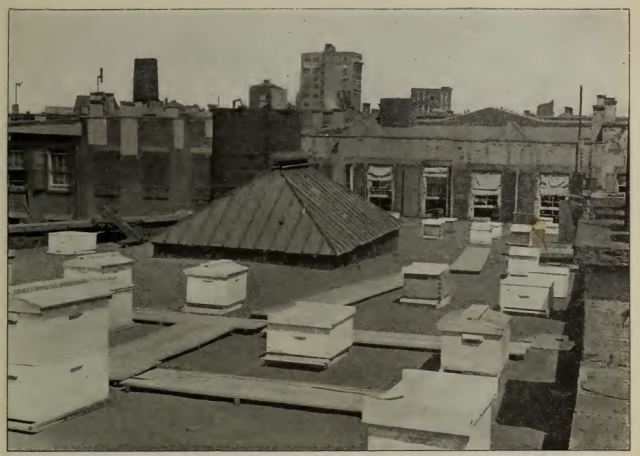
NYC rooftop apiary, 1905

NYC rooftop apiary, 1905

There’s a jolly fat man up on the roof. With a smoker and hive tool. Rooftop beekeeping seems modern, trendy, and new, but it’s been happening for generations. Ever since homes had rooftops. I’m surprised there isn’t a Rooftop Beekeepers Association somewhere.  (Maybe there is.)

Perhaps it never occurred to you that you could keep bees up on the roof. As long as you don’t have a habit of running whenever your bees get anxious, there aren’t too many hazards keeping bees on your roof. Of course, this might not work in Switzerland (a steep roof will dislodge winter snow as well as summer hives). But if you have a flat roof and if you are in a crowded urban community, maybe you could try beekeeping above the ceiling.  (Using a balcony is cheating.)

Keeping bees on the roof is a good way to hide hives from nervous neighbours.

Keeping bees on the roof is a good way to hide hives from nervous neighbours. No one would ever notice an apiary like this vintage 1912 bee yard, would they?

Advantages of rooftop beekeeping: Privacy (people might not even know you’ve got bees up there); Few of the bee-nuisance issues that arise from ground-level bees; and, Reduced roof vandalism. (Remember the last time you had to chase kids off your roof? Let the bees do it for you!)

lharperOur previous Canadian prime minister (Stephen Harper) has a fearless wife who grew up on an Alberta farm where bees were kept. A few years ago, a chef led Mrs Prime Minister of Canada (and an entourage of reporters) to the roof of Toronto’s Royal York Hotel where hives were kept. The chef seemed to have lost his way with the bees. The insects chased the poor guy, leaving the prime minister’s wife to replace the lid on an angry hive. To the left, you see the chef, a bit removed from the action, struggling with errant bees.  Bravo to Laureen Harper! (You can see a short video of the misadventure here.)

I didn’t see anything quite so exciting in British Columbia last month, but at Kelowna’s Delta Resort, where I ordered a most excellent salmon, I noticed a story about two beehives (oddly named “Stay in a Hive” and “Honey Cru”). The bees were featured in the restaurant menu, below. Not as part of a wholesome stew, but as rooftop hired help.  We were told that the colonies have names so that the bees “know which hive they belong to.” Scoff and mock if you must, but a lot of fine eateries are puttering around under rooftop honey makers. I think it’s generally a good thing. It’s upbeat free publicity for honey and bees.

O&C Hives

If you have been venting the excuse of postponing your beekeeping career because you lack space, your hive cover is blown. Almost everyone has a roof. If yours isn’t flat, flatten it. To tempt you further, here’s an artsy video of a New York City rooftop beekeeper. (Please ignore the stupid part that quotes Einstein – he was never a rooftop beekeeper.)   Nevertheless, watch, dream, then do:

Posted in Bee Yards, Culture, or lack thereof, Humour, Outreach, Save the Bees | Tagged , , , , | 4 Comments

Dead bee, in the middle of the ‘shield…

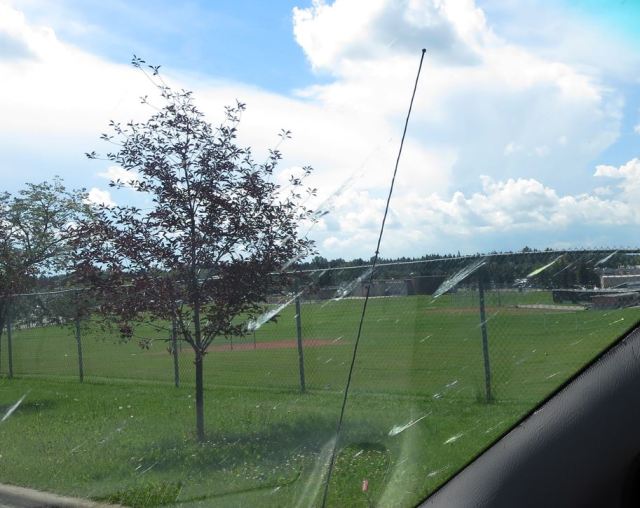
Bee collisions on an Alberta (Canada) highway. Can you spot all four?

Bee collisions on an Alberta (Canada) highway. Can you spot all four?

A few days ago, I had a road trip that took me two hours from my home in Calgary. Flying low at 130 kph, I expected to whack a lot of bees on the forehead of my van, but I only clipped two on the way, then another two on the way home. Both highway accidents occurred at the same location on the 4-lane freeway. I don’t know why the bees were hit only at that one spot. (Hopefully, it wasn’t the same two bees each time.)

It was a bright beautiful day, the sort when bees store ten or twenty pounds of net-weight honey. Nectar plants were at their prime everywhere.  Since the only bee collision occurred about half-way between Calgary and Lethbridge, perhaps that was the only spot with hives close to the highway. The bees should have looked both ways before crossing.

lookleftlookright

I was reminded of Loudon Wainright III’s classic folk song about the dead skunk in the middle road (“…should have looked left and he should have looked right…”).  Here’s the video. Replace ‘skunk’ with ‘bee’ and you’ll do fine. The point in the song about pollution remains unchanged.

(*Queasy Alert and Reaction Trigger: Video contains scenes of dead skunks, a cat, and other animals in the middle of the road – none were intentionally killed in making this film.)


A few years ago, I wrote about bee/windshield interactions and what they cost the beekeeper. Since most of you missed that piece (from August 2013),  I’m repeating myself here:

Road kill. In this case, it’s bees. I was out of the city yesterday, cruising the Alberta back roads at 110. (The posted speed limit was 100, so maybe that was really my speed.) I passed a few bee yards tucked into meadows within small groves of trees. On one moderately busy paved road three honey bees spit up on my windshield. Big blobs of nectar were the imprint on the glass where those unfortunate bugs made contact with my van. I spent the rest of my trip calculating how much money this collision cost the beekeeper in lost honey. Not much, it turns out. But I wasn’t the only traveler out there.

How many bees does it take to make a dollar? These days, a dollar’s worth of honey is about half a pound. Well, those hapless bees that damaged my windshield were fat, but there certainly was not half a pound of nectar among the lot. And nectar cures into honey at a pretty high ratio. So we are talking partial pennies, of course. (Canada no longer uses pennies, so this becomes a mote point.) The math (and the guilt of ending three promising foraging careers) was making it hard for me to think about my driving, so I decided to look at this in a different way. Yesterday, about one car every two minutes passed that bee yard at the same speed as my van – or faster. (Alberta’s farmers drive quickly – their grandparents all raced horses at one time or other.) At a rate of two vehicles per minute, that’s 30 each hour. If, like my van, they each kill three bees, then we’ve killed almost a hundred bees. That would be a thousand in the course of each of our very long, very sunny summer days. Over a period of thirty days of peak honey flow, that amounts to 30,000 dead honey bees. This is just an estimate, but it represents something close to half the foraging population of a producing hive for the month. The average crop here is 200 pounds, so the beekeeper – over the course of his season – has lost about 100 pounds of honey, or 5 pounds from each of the 20 colonies in that apiary. One hundred pounds of honey, at today’s prices, is $200. That’s something to notice. And, five kilometres down the road was another yard and another honey bee slaughter site.

What’s the solution? Always a believer in the benevolence of a big cumbersome government, I could advocate for more highway signs and stricter enforcement. Why allow drivers to speed along at 110 when there are bees at play? We should have heavy fines for offenders. Or, perhaps we could have police checkpoints where kindly RCMP officers scrape windshields or otherwise count the road kill and drivers then pay a fee, especially if they’ve been killing without a license. To be effective, the fee would be much greater than the pittance of lost honey from the few bees clobbered – a prohibitive penalty, if you like. Then there is the libertarian’s perspective. The government stays out of this particular issue. The marketplace takes over. Honey prices soar because of the reduced crop. Or beekeepers, counting all those partial pennies lost, simply move their bees to safer spots.

There is some good news in this story. The squashed bees on my messy windshield indicate the Alberta honey flow (at least in our area) isn’t over yet. And with the forecast predicting warm sunny weather, maybe it will last into September.


Update: August 10, 2016

I had another road trip, not as lengthy as the one reported at the start of the blog above. But this one had a lot more collateral damage. At least 30 bee/van incidents. Multiplied by millions of vehicles, it might be time for the Save the Bees-ers to ban summer driving.  Here’s a pic of part of my windshield when I got home:

windshield - signs of the flow (reduced)

Posted in Bee Yards, Beekeeping, Culture, or lack thereof, Humour, Strange, Odd Stuff | Tagged , , , | 2 Comments

Canola: Canada’s Yellow Carpet

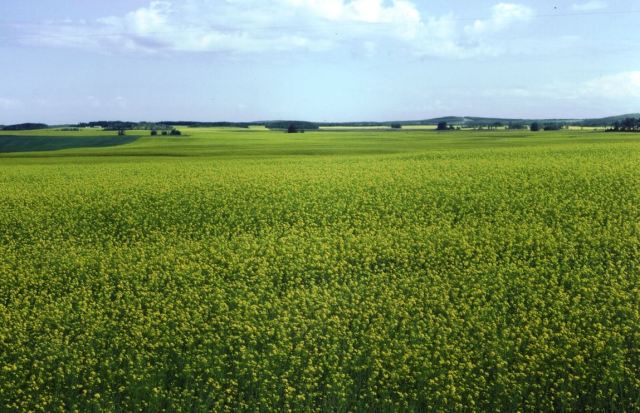
Alberta canola: about 1,000 acres of Canada's 20 million acres of canola.

Alberta canola: about 500 acres of Canada’s 20 million (!) acres of canola.

Yesterday I wrote about honey that hurries towards granulation. Canola (the honey plant formerly known as rapeseed) is our local example of quick-setting honey. Canola honey is nice:  white and mild with a slight minty flavour. I like it but I was always on guard against granulation in combs and the hardening of the workshop’s arteries of settling tanks, sumps, and pipes. They could hold solidify while filled with honey and without much warning.

Canola crystallizes quickly because of its high glucose content. Atop that, in our cool environment, combs stacked high on a hive may experience cool overnight temperatures – around 50 to 60 degrees Fahrenheit promotes granulation. The final factor is the low-water content of honey in our dry climate – the lower the moisture, the faster the granulation.

But canola is a great nectar producer. And there is a heck of a lot of it here. Western Canada has about 20 million acres of the stuff. Theoretically, that much acreage yields enough nectar for two billion pounds of honey – if there were enough bees to gather it all.

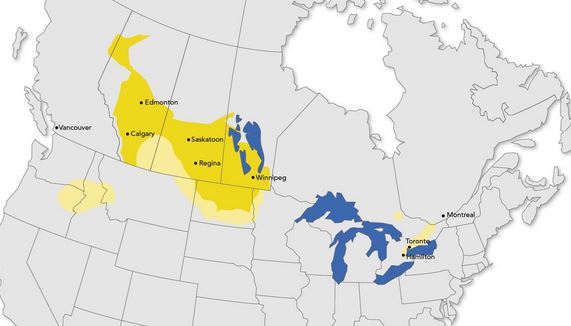
Canadian canola is found from Alberta’s north (Peace River Country, as it’s called), south into the USA, and makes an almost uninterrupted carpet of yellow all the way east to the Precambrian Shield region at the Manitoba/Ontario border. There’s even a wee bit grown north of Toronto on Ontario’s rich farmland. Here’s a map from the Canadian Canola Growers that shows canola’s extent:

Canada's canola district.

Canada’s canola district.

On Canada’s western prairies, canola blooms from late June to early August. The timing depends on the local micro-climate, the arrival of spring, summer heat, and moisture in the ground. It’s almost finished here now, mostly gone to seed. So here are a few photos from the past month to show you what it looked like.

On July 11, I flew west from Calgary. Most canola is east of the city, on the prairies. I was surprised to see this west of Calgary, near the Rocky Mountain foothills.

On July 11, I flew west from Calgary. Most canola is east of the city, on the prairies.
I was surprised to see this west of Calgary, near the Rocky Mountain foothills.

It's not hard to find a canola field in July in western Canada.

It’s not hard to find a canola field in July in western Canada.

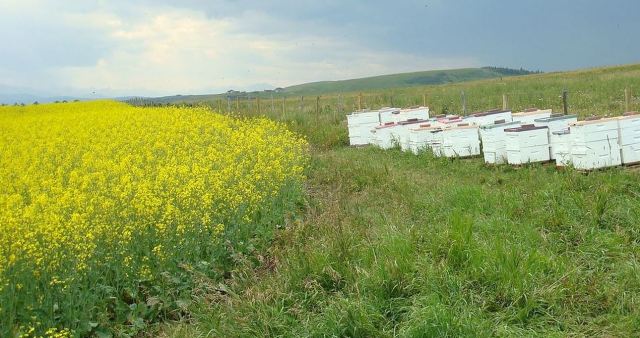
Author's bee yard alongside canola field. Honey produced here will granulate quickly.

Some of our bees alongside a canola field, just south of Calgary


Posted in Honey Plants | Tagged , , , , , , | 2 Comments

Can’t Get it out of the Comb?

Author's bee yard alongside canola field. Honey produced here will granulate quickly.

Author’s bee yard alongside canola field. Honey produced here granulates quickly.

The American Bee Journal  published a timely piece in their August issue. It just hit my mailbox. The article is about avoiding granulated honey in your extracting frames. It’s written by your favourite bee-blogger. Me.

I’m not going to repeat my article here because you can read the whole thing in the bee journal. If you don’t already subscribe to the ABJ,  you should. It’s a great resource for beekeeping and bee science. You can see my article in the magazine, but I will paraphrase part of it because it’s an important topic.

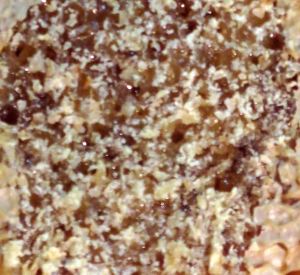
Granulated comb

Trouble: granulated comb

Granulation can be a big expensive problem for some beekeepers, but others never see combs of crystallized honey. Along north Florida’s Apalachicola River, beekeepers produce tupelo honey which almost never granulates. But in northern, dry regions of the plains and prairies, canola honey may crystallize in the hive a week after bees store it.

Most honey is between the extremes of canola and tupelo, crystallizing a few months after extracting. The primary causes of granulation are the honey’s glucose-to-moisture ratio, storage temperature, the passage of time, and purity of the honey. I cover these in detail in the American Bee Journal. Today, I will just give a summary of two points – moisture and glucose.

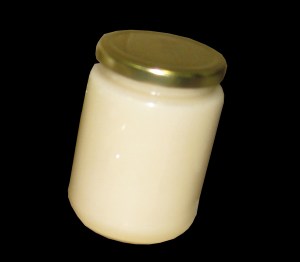
High-glucose honey - safely in a jar.

High-glucose honey – safely in a jar.

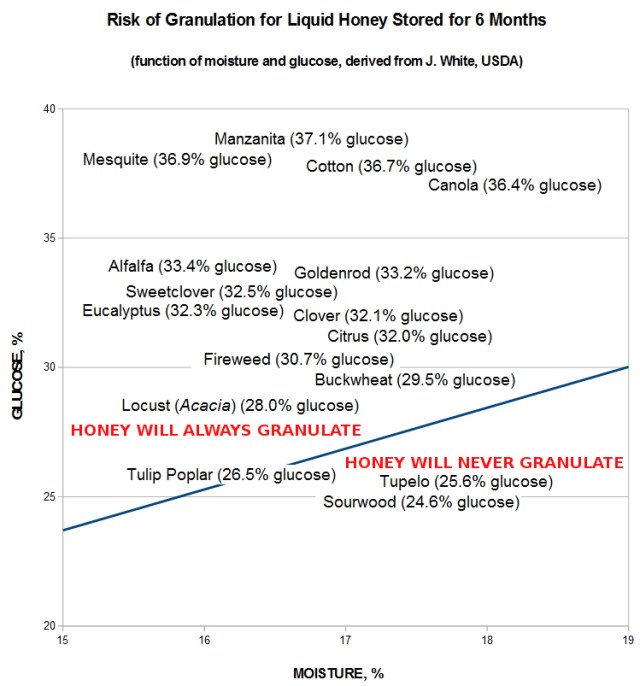
There are two main sugars in honey – fructose and glucose. They vary between species of honey plants. It’s the glucose that forms crystals. Just a little more glucose makes a big difference in granulation. Floral varieties high in glucose include canola, cotton, mesquite, and manzanita. Those with low glucose levels include tupelo, acacia (black locust), and sourwood. The low ones are slow to granulate.

Water is also important in this discussion. Think of honey as an unstable, supersaturated solution of just glucose and water. Glucose crystals precipitate if there is about one-and-a-half times more glucose than water in the honey. In other words, if your honey is 18% water, then 27% glucose is the cut-off. Very few types of honey have such low amounts of glucose.  Average American honey is 31% glucose. Canola averages 36% while tupelo is just 25.6%. These numbers are similar in other parts of the world – most honey has enough glucose to crystallize if moisture is below 19%. (Honey over 19% is less likely to granulate, but it will sour and ferment.)

Here’s how this relates to your honey crop.  You probably can’t avoid areas or crops with higher contents of glucose. You probably don’t want to – maybe that’s where you make most of your honey. But if you are in such an area, get the honey off the bees quickly (as long as it’s ‘cured’ or ‘ripe’ enough and below 18.6% water content. Then keep the boxes warm – combs granulate most rapidly at about 15 ºC  (60 ºF). Finally, extract as quickly as possible – don’t let the boxes sit around for weeks, but get at ’em and get ’em done!

There is more to this story. Temperature and timeliness are important. And there’s something I call ‘purity’ in my article. This involves avoiding dust and old granulation crystals in the honey frames. These serve as starting points for new granulation. These things (and more) are included in my American Bee Journal piece. The bottom line is keep things clean and warm and get things done on time – the same advice you’d hear from any beekeeper.

Which honey will granulate? Those at the top left are most likely because they have the highest glucose level and lowest moisture.

Which honey will granulate? Those at the top of the graph are most likely to crystallize because of their higher glucose level. Moisture varies with region and local climate, lower moisture honey granulates more quickly than higher moisture honey.


Posted in Beekeeping, Climate, Commercial Beekeeping, Honey | Tagged , , , , , | 10 Comments

Bird-brained Hunting Partner

The Honey Guide (Source: CC/gisela gerson lohman-braun)

The Greater Honeyguide
(Source: CC/lohman-braun)

Scientists may have proven that African Honeyguide birds “communicate” with their human partners. You have probably already heard about this, as it’s been reported this week in Zaire’s Times, the New York Times, The New Yorker, and fine papers everywhere. The original report, Reciprocal signaling in honeyguide-human mutualism, by Claire N. Spottiswoode  is here. A very lucid explanation (I recommend that you read it.) was written by evolutionary biologist Jerry Coyne – his piece is Honeyguides and humans: a wonderful mutualism between our species and a wild bird. You will find it here.

All these stories have been produced by much better writers than me. My intention here is to simply give a quick summary of this bit of science, in case you’ve somehow missed it.  Then I will spend a moment on something that’s related.

The honeyguide story (in case you don’t plan to read the links I just gave you) informs us that humans make a distinct call to honeyguides whenever the human is in the mood to go bee-tree climbing. Birds respond to the humans’ Br-r-r-r-UHM by teaming up with the honey hunter. The guide bird finds wild swarms, the human hunter dislodges them and shares the wax and bee brood with the bird. Scientist Claire N. Spottiswoode is fairly certain that there is no training or coercion involved. Honey guide and honey hunter simply cooperate. Cooperative birds reproduced more abundantly, resulting in successful lineages of mutually cooperative birds.

I’m just a geophysicist and not a biologist, so don’t trust me on what follows. But a few years ago it occurred to me that we sometimes inadvertently manipulate species’ evolution in our environment. I’m not talking about planned breeding programs, but indirect consequences which have affected our world – such as the difference in temperament between Africanized and European honey bees.

The thing that occurred to me is that we may have influenced the genetics of honey bees. Central European bees (Apis mellifera carnica) are usually quite gentle. They can be handled easily. They rarely sting. For over a thousand years, these bees were kept on porches, along walkways, and in gardens in Slovenia, Austria, Hungary, and Croatia. Any hives that were irritable were given the sulphur treatment. The human goal was not to breed gentle bees for the future, but to reduce stings in the present. Nasty colonies were killed. Gentleness was thus encouraged.

Hives beside the house in Croatia.

Hives beside a house in Croatia, 1985.

Meanwhile, in equatorial Africa, native honey bees (Apis mellifera adansonii) tended to prefer life in trees. Moving them into hives near homes was less successful. If a person wanted honey, they had to climb trees (maybe after the bees’ nest was discovered by a honeyguide bird). In the tree, the meanest and most aggressive bees repelled the honey hunters while meeker colonies were eaten. Beekeepers in Africa learned to make hives and keep them in trees (partly to avoid predators). Without daily intimate contact, the emotional disposition of the bees wasn’t a great factor in determining which nests would be exterminated. In fact, aggressive bees chased beekeepers away. In this human-bee relationship, irritability was promoted.

1906 - Bee hives in a tree, at the base of the hills south of Munarago, British East Africa

Beehives in a tree, south of Munarago, British East Africa, 1906.

Undoubtedly there is more to this story.  Readers may offer corrections. I haven’t seen these relationships invoked elsewhere to describe honey bee temperament, so it might be wrong. Other environmental pressures (resulting in genetic changes) also contribute to adansonii behaviour (after all, it is a different subspecies).  However, it is interesting that in Brazil, where the Africanized honey bee was released in 1957, the invasive bees were at first extremely aggressive, but after 60 generations of interaction with Brazilian beekeepers, they seem to have lost some of their sting.

Posted in Ecology, Genetics, Hives and Combs | Tagged , , , , , | 2 Comments

The Greatest Show on Earth

That's me, brandishing the branding iron at the Trottier ranch.

That’s me, brandishing the branding iron at the Trottier ranch. TU was Buzz Trottier’s brand. This looks mean, but keeps the cows home.

My home town – Calgary, Alberta, Canada – hosts an annual 10-day cowpoke fest called the Calgary Stampede, aka, “The Greatest Show on Earth”. I’m not a cowboy, but I’ve been lucky enough to help friends with spring branding and fall herding. In the past, I was bewildered to see people with clean boots and pressed shirts swinging their lariats in town, but I’ve come to see it as a compliment to western and cowboy culture rather than some sort of awkward cultural appropriation.

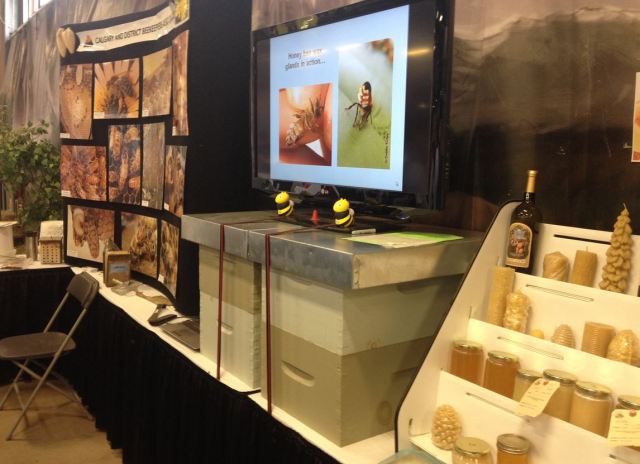
So, I am among the fans of the Stampede.  Each year, a million or more folks wander around the exhibition grounds in early July to see things like blacksmith finals competitions and girls on ponies racing around barrels. This year there was a new and extremely popular display: The Calgary and District Beekeepers Association set up a big exhibit highlighting Alberta’s honey industry.

My friend Liz Goldie was one of the many beekeeper-volunteers on site and she gave me the pictures that follow, taken at the 2016 Calgary Stampede.

stampede-2

Pierre the Bear points visitors to the bee exhibit.

Getting down and Partyin' at the Calgary Stampede

Gettin’ down and Partyin’ up – at the Calgary Stampede’s bee exhibit.

stampede-4

The place was sooo crowded most of the time. Liz took the following picture early in the day, before the bee exhibit was overwhelmed…

stampede-5

Pierre the Bear bothering a bee. You can't get much closer at catching the spirit of the Calgary Stampede!

Pierre the Bear bothering a bee.
You can’t get much closer at catching the spirit of the Calgary Stampede!

Again, I’d like to thank Liz Goldie for these pictures. By the way, Liz was one of the three finalists in the Calgary Stampede Honey Show. Her honey is on the top shelf, below!

honey show winners

Posted in Culture, or lack thereof, Friends, Outreach | Tagged , , | 1 Comment

Bees Do Do-Do

Diapers for bees?  Some folks stopped me when I was leaving an apiary that I once had in a Florida orange grove. They didn’t own the grove, but their house was within fifty yards. They told me that my bees were crapping on their bright shiny car. Well, OK, their brownly besmudged car. I saw half a dozen specks. It looked like some sort of yellow rain. They were polite, I was polite. They suggested bee diapers. I told them I’d be moving the hives in a few days, and I did. The citrus honey flow was over.

No, bees didn't do this. They couldn't do this even if they didn't like you.

No, it’s not bee do-do. Bees couldn’t do this even if they wanted to.

I had planned to move my bees. But there’s an outfit in Massachusetts that would find relocating rather difficult. The owners are 3rd-generation beekeepers with a 55-acre farm. According to news reports, some distant neighbours have filed a nuisance complaint. They say that they can’t enjoy the outdoors without receiving natural bee fertilizer.   In their hair. On their car.

They filed a complaint. The local health board ruled that the bee business “unreasonably interferes with the owners use and enjoyment of their property.” The beekeepers have a few days to remedy the situation or face a $1,000 a day fine. I think it’s significant that its the local health board that issued the violation notice. They suggest bee droppings are a health issue. They are wrong.

Bee crap is not a health issue. No one gets sick from the scattered bits let loose by flying bees. I agree that the excrement can be unsightly and a nuisance to clean from a bright shiny car. It’s part of life on – or near – a farm. From the complaint, it’s an alleged problem only in May and June. Honey bees do their business in flight, flushing their toilets at about 30 feet. Granted, that’s lower than the Boeing that lets our stuff loose into the stratosphere. But the bee’s do-do is much cleaner. Bees digest honey, they are not the nasty omnivores we are. Bee pooh is clean pooh. Frankly, their shit don’t stink. Not a health issue.

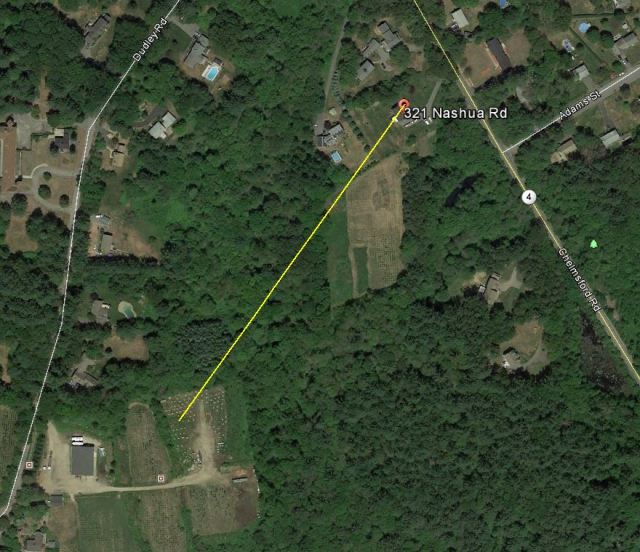
Bee yard, lower left, complainers, upper right - over 300 metres away.

Bee yard, lower left, complainers, upper right – over 300 metres away.

I don’t know all the details, but I looked up the location of the complainers and the location of the honey farm. You can see on the map above, they are 320 metres (about 350 yards) apart. There are a lot of other homes (no complaints?) nearby and quite a few trees and fields around. Bees usually relieve within 100 metres of their hives. The alleged distance is unusual. If you take the numbers of bees and divide by the potential Area of Defecation (AOD), you can see that the actual likely number of defecators within any specific AOD located 350 metres from the hives is pretty small. A trickle, so to speak.

All done!

All done!

To heap dumbness atop dumbness, the Billerica Health Board suggested a silly remedy to the beekeepers: they could plant flowers on their own farm to keep the bees at home. I can feel the ground shake with vibes of unrestrained laughter. Do these people actually think that bees will stay on a farm if flowers are planted for them? Bees fly kilometres in search of food. They don’t recognize any farm’s boundaries. (Bees are smart, but not that smart.)

I suppose that the health officials working for the Massachusetts town of Billerica were trying to be helpful. However, if the health board sages were truly thinking at their best, they would have recommended diapers for the bees.

Posted in Bee Yards, Beekeeping, Commercial Beekeeping, Humour, Strange, Odd Stuff | Tagged , | 15 Comments

Falling Honey Price Makes National News

Something in the news caught my attention. The falling price of honey is now a national news item.  We noticed that prices began falling a year ago, when wholesale prices started their tumble from $2.25 to $1.25.  Now even the press has caught the story.  Here’s a sheet from the USDA’s monthly honey price report:

2016-05-24 prices paid to Can

That’s right. You can buy barrels of Canadian organic honey for as little as $1/pound. It might as well be free.

I figured that beekeepers would suffer this price-tragedy in silent resignation, but then a major news network carried this headline: Global Honey Glut Stinging Manitoba Beekeepers: Producers worry over-supply could force some out of business. This refers to Manitoba beekeepers, but the story is identical across the country. And around the world.

Here in Canada, last year’s crop was almost 10% larger than the year before, so beekeepers found themselves with a lot of 2015 honey on hand. In fact, some beekeepers may have miscalculated and decided to hold their honey when prices first began to drop, hoping prices would soon recover. Tonnes of last year’s honey are in shops while the 2016 crop is being extracted.

Kissing good prices goodbye.

Kissing good prices goodbye.

Honey is in temporary oversupply. Nothing too dramatic. It only takes a small surplus to collapse prices. Let’s say, for example, there is 5% more honey than the world needs. That would be a hundred million pounds excess. No one wants to be among the folks holding that hundred million pounds. The sad reality is that a 5% oversupply can cut prices in half.

So, beekeepers drop their price to move their stock. As soon as one or two major suppliers sell cheap, others have to match the trend or risk holding honey that becomes less valuable each day. (It works the other way, too. If there is a shortage, beekeepers could hold their crop, hoping prices will continue trending upwards, thus adding to scarcity and pushing prices even higher.)

I suspect with the current downturn, some beekeepers will reduce their colony numbers, and wait for the price to rise again. It will, but it could take a year or two. For beekeepers who have been struggling, two years may be too long to wait. Beekeepers without supplementary income or deep pockets may need to close their businesses. Of course, that will create a future shortage and higher prices.

Posted in Beekeeping, Commercial Beekeeping | Tagged , , | Leave a comment

Elderberry Honey

Arlo's Honey Farm, Kelowna, British Columbia

Arlo’s Honey Farm, Kelowna, British Columbia

Yesterday I wrote about a lovely honey farm called Arlo’s which is near Kelowna, British Columbia. The farm produces a variety of noms (specializing in garlic) but there is a large well-kept apiary, too. I asked beekeeper Helen if she could sell some unusual honey to me. She brought me a jar of elderberry honey.

Elderberry in blossom

Elderberry in blossom

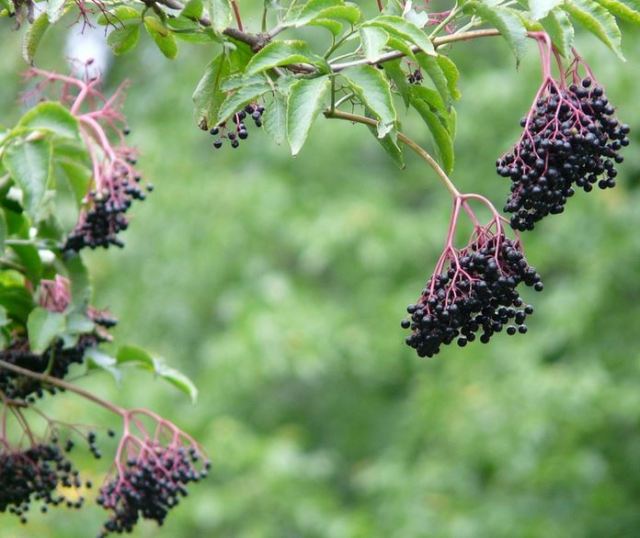
Elderberry (Sambucus canadensis) is a small tree or large bush, depending on who is describing it. It is as tough as a weed and fairly drought-tolerant. It prefers temperate climates, is common in central Europe, but the best berry producer is the Canadian subspecies. And once established, it’s hard to remove. The native North American variety feeds migratory birds and pie-making humans.  When I was a child, I tried to eat the berries, but was not impressed. My father drank the fruit – adding it to his Concord grapes to make a dark sweet wine. I’ve never seen more than a single bush or two growing in an orchard, so it’s surprising to me that there are dense groves of elderberry where enough blossoms are available to actually add up to a distinct variety of honey. But that’s part of the attraction of travelling afield and encountering unusual foods and flavours. You meet the unexpected.

Elderberry fruit: ripe for wine, berry pie, or nibbles for birds and bears

Elderberry fruit: ripe for wine, berry pie, or nibbles for birds and bears

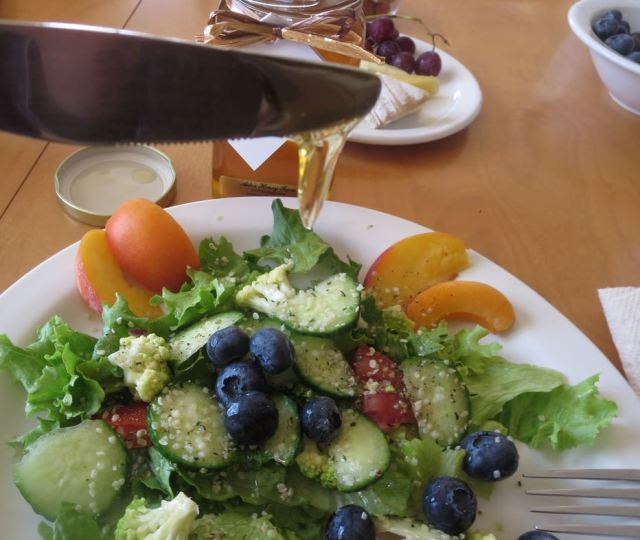
Elderberry HoneyThe elderberry honey which I purchased at Arlo’s Honey Farm in south-central BC was darker than golden, very thick, and had a rich – but not overwhelming – taste and scent. To me, it epitomizes what most people think honey should be. Not mild like my favourite (sweet clover) but not as powerful as buckwheat honey which (to me) is almost medicinal in potency. It’s great when gobbled by the spoonful, but also very nice when drizzled on fresh peaches and blueberries. I even touched up a salad with some of the extraordinary elderberry honey.

elderberry honey and salad

Posted in Honey, Honey Plants | Tagged , , , , | Leave a comment

Dropping into Sunshine Valley

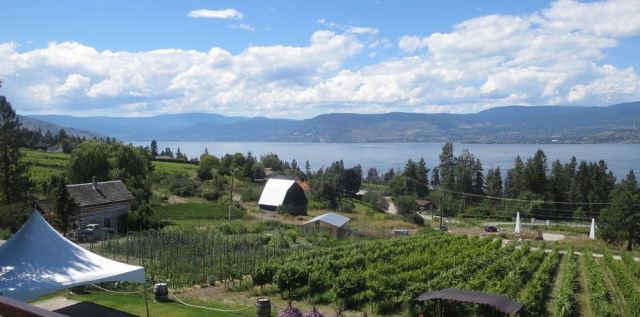
My hometown – Calgary, Alberta, Canada – is having a much needed wet spell. In fact, there has been some ghastly local flooding which I’ll cover in a future blog. Lucky for me, I am a few hundred kilometres farther west, in a milder and sunnier part of Canada. I’m in the town of Kelowna, British Columbia. Kelowna is the biggest community in the Okanagan Valley, a fertile fruit and wine region with a large herd of retirees and an uncomfortable number of mansions. I can see the attraction. If I were wealthy and retired (and didn’t have kids in junior high school), I might add to the traffic snarls on a regular basis.

I am visiting Kelowna for a number of reasons, not least of which is to learn about beekeeping near deep blue Lake Okanagan. This area is nearly a desert, but the lake’s water, used for irrigation, has turned it into an oasis of peaches, apples, and increasingly, vineyards specializing in wine grapes. There are also beekeepers who make a bit of honey and help keep the fruits pollinated.

After dropping into this sunshine valley (a one-hour flight from Calgary), renting a car from Enterprise, finding the rental house, and driving around in ever-widening circles atop the mountains surrounding Lake Okanagan, I set out for Arlo’s Honey Farm, perched on one of the area’s scenic hills.
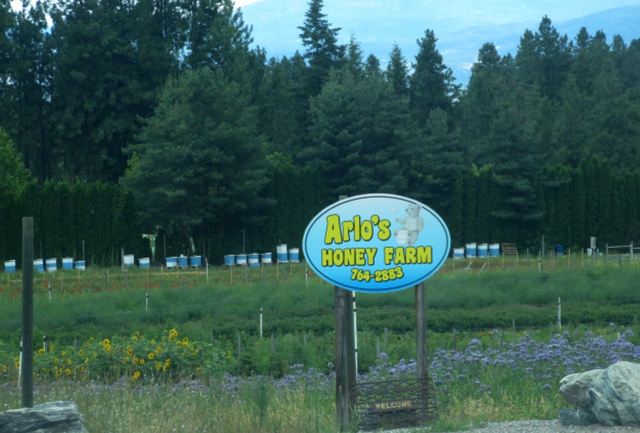
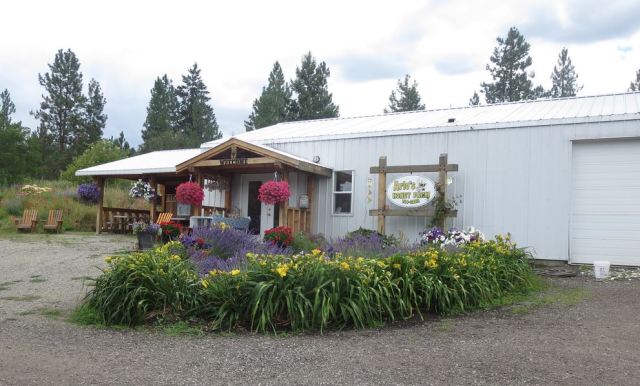
I approached the honey farm from a road called Bedford and entered a lane called Bedford. The farm was unmistakable. The Arlo’s Honey Farm sign was obvious, but so were the strings of beehives stretching along the far side of the farm. The acreage was gorgeously outfitted in blossoming herbs. To my left, as I drove in, were flowers and beehives; to my right, the honey shop. I parked in front and made my way up to an outdoor sitting area. There I chatted with a family on tour from northern Alberta.
Okanagan-03 - Arlo's shop

The Albertans had driven 1,000 kilometres to be here! The group had purchased some very fresh Russian garlic – stems, bulbs, sand, and all. Among the herbs and vegetables, Arlo’s sells over 50 varieties of garlic. My family grew garlic on our farm when I was a kid. I was gob-smacked to learn there are at least 50 kinds – I thought that the world has maybe 3 or 4 varieties, not 50! The folks I chatted with also showed me a jar of raw BC wildflower honey. I assured them they’d made a great choice. It was slightly darker than golden, seemed a bit cloudy with pollen and maybe even natural beeswax, but was still somewhat translucent. When I flipped their jar end-for-end, a big trapped air bubble slowly rose, telling me that this honey was seriously low-moisture. This appealed to me because I much prefer thick honey over the watery sort.  I guessed that it was about 16% moisture and told the honey jar’s new owners that this sample would keep well for a long, long time. However, it looked so good that I suspect it will be gone before their car has another thousand kilometres on it.

From the picnic tables and that family of tourists, I made way behind the honey shop where another string of colonies was lined up. (They’re in the photo above.) These weren’t noticeable from the entry road, so I was surprised and delighted that I could get personal with some bees. Besides their neat and professional appearance, two things immediately caught my attention. First, the flowers (which grew right up to the hives) were buzzing with bees; and, second, the bees were curing nectar in the afternoon heat, giving off a sweet odour that told me this was a good honey day for them. I would soon learn that these flowers were no accident.

The farm was designed with bees in mind, embracing  veggies and produce that flourish along with the honey bees. I was told that there are thousands of crocuses and pussy willows in March, honeyberry (haskap) in April, later, there’s crop rotation with clover, garlic (bad bugs avoid garlic and its neighbours because it’s a natural insect repellent);  strawberries, raspberries, and gooseberries add to the bees’ floral treats. But at the moment, various fragrant herbs held the bees’ attention.

Arlo’s Honey Farm resident beekeeper, Helen Kennedy

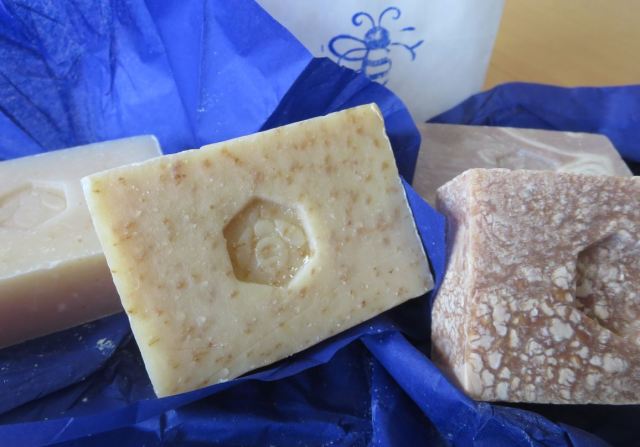
Soon I was back to Arlo’s storefront, enjoying the sunshine and a pleasant chat with the beekeeper/farmer/owner.  Arlo’s is named after a bear, I was told, but is run by Rick and Helen. Helen Kennedy is the beekeeper. She gave up part of her afternoon, talking bees. I wasn’t jotting down notes, but I think she told me that most of her bees were on the acreage.(*) There were somewhere about 60 colonies in the two lines that I saw. I addition to the herbs, garlic, and honey, her farm store also sells hand-made natural soap. I bought four bars – you can see them in my picture. Instead of hog’s lard and willow ashes, Helen uses her honey, plus the oils of almond, palm, sunflowers, and tea tree, along with grains and the like to make her various soap varieties. (The soaps smell delicious – it’s hard to remember not to eat them.)
Okanagan-06 - soaps

Helen told me that (just like everywhere) they have good years and bad years, mostly dependent on rainfall and seasonal weather. One key to her success is the idea that “healthy bees are happy bees” –  by maintaining a clean, low-stress environment, her bees live a healthy and happy life. From the spring crocus bloom through to the autumn asters, the bees usually have something to feast upon every day. While I was visiting, I saw bees on sedum, cleome, calendula, and lavender.

In this hot dry valley, thick, low-moisture honey is pretty much guaranteed. I told her that I’d guessed that the jar she’d sold a bit earlier was 16% moisture. “Our honey usually runs 15%,” Helen told me. I couldn’t resist, so I asked her to sell something unusual to me. She brought me a jar of elderberry honey. This is a variety of honey which I’d never had before. In tomorrow’s blog, I’ll show you elderberry honey and tell you what it was like.
Okanagan-07

(*) correction:   In the original post, I said that Arlo’s keeps most of their hives on their farm. Since then, Helen Kennedy told me that they operate a few hundred hives and keep eight outyards.

Posted in Bee Yards, Beekeeping, Ecology, Friends, Save the Bees | Tagged , , , , | 5 Comments