I try to stay on topic. This is a bee blog. But it’s hard to think about bees when our weather is so crummy. It has been extremely cold! Winter is officially over, but only on the calendar. A few days ago, my 11-year-old daughter said that winter leaves, then the next day, throws the door open and shouts, “And one more thing!” (Don’t worry, she’s not picking that up from her parents.) Anyway, I guess winter has a lot to say this year.
I’ll write about bees next time. For now, I’ll just prattle about last weekend, which was a happy one for me. If you saw my post last Friday, you know that it was my birthday (and it was Apitherapy Day!). I was given some great gifts – a book written by Steven Pinker, a CD by insensitive Calgary pop star Jann Arden, and some crafts made by my kids, like the painting below which was from my 15-year-old. It’s my first-ever oil portrait and I rather like the style, if not the substance. Next time I get lost, I’d love to have my missing persons’ posters feature this portrait.
My son didn’t ask me to pose for my portrait. Instead, he furtively snapped the picture you see to the left. Then he spent a few hours making art and presented the result as a surprise birthday gift. As an artist, he is creative but methodical. You can see how he printed the photo in black and white, then gridded it to get the proportions. He kindly made my hair less gray but I think that he could have given me less forehead, too! You can see that he has an impressionist style, but for the forehead, he went for realism.
I have no idea how he became such an outstanding artist. He has sold several paintings (his Jerusalem was great and sold back around Hanukkah). I suspect he’ll put himself through astrophysics school by selling paintings – like this one.
If his talent arrived genetically, it was from his mom. I can hardly assemble a stick-figure, even though I’m pretty good with figures. (Maths are my strong suit.) Here’s my best (and only) stick figure:
My very first stick-figure!
My birthday was on Good Friday, so last weekend included Easter. My kids painted eggs – I’ve never understood why the Easter celebration includes decorating eggs, followed by looking for them (while eating chocolate bunnies and marshmallow peeps) on Easter morning. I’m guessing that there’s some obscure conflation with redemption from original sin symbolized in the egg hunt. Maybe a reader will be kind enough to explain it to me. Nevertheless, this year, I joined my kids by painting an egg – you can see it here.
It’s my fragile Earth egg. As they say, you can take the beekeeper out of geophysics, but you can never take the thrill of plate tectonics out of the beekeeper.
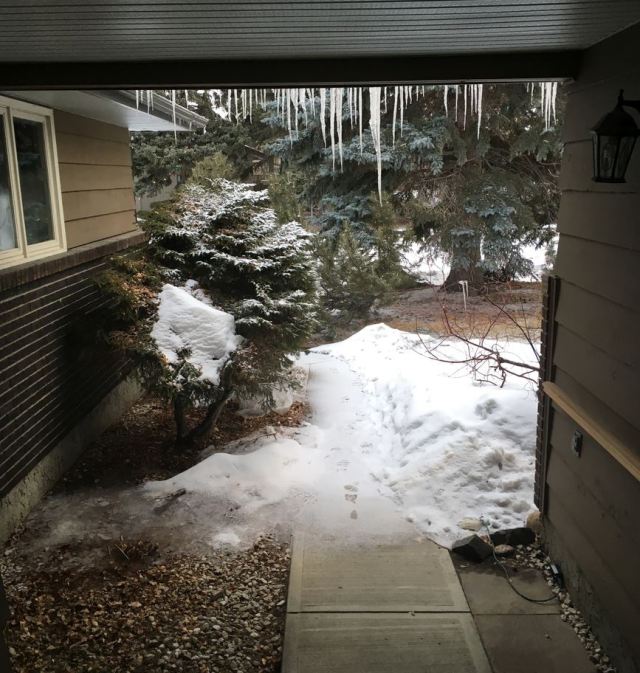
Back to our cold spring weather. Yesterday was brutal. It began at minus 24 °C here in Calgary. The high was about -11 °C, but the wind was wicked – it felt like minus 40 to me. I hope it warms up soon. We have a couple of packages of bees flying in from New Zealand in two weeks. (Boy, will their wings be tired by the time they arrive!) The forecast teases that it will be above freezing by then. I hope so. Meanwhile, here’s what our breeze-way looked like this morning, April 7, 2018:
Today is World Apitherapy Day. Apitherapy, which means using bee stuff for health, can include eating pollen, propolis, wax, royal jelly, bee larvae, and the like – or rubbing them on your face. But for many, apitherapy is bee sting therapy. Stings are sometimes promoted as a treatment for autoimmune disorders, like MS and rheumatism. Less frequently (but with more notice), bee venom is an ingredient in skin creams. It’s rumoured that the Duchess of Cambridge learned about it from the Duchess of Cornwall – as you can read here. (And here, here, and here.) That’s nice, but such gossip needn’t make the evening news. However, a recent death due to a bee sting administered as apitherapy is newsworthy.
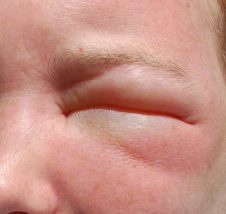
Just winking?
I don’t want to deflate the World Apitherapy Day balloon, but if you’re not careful, bee sting therapy can be fatal therapy. Most long-time beekeepers have been stung thousands of times. (That’s not an exaggeration.) We may forget that, for some people, a bee sting can be much worse than a bit of swelling, redness, and pain. A single bee sting can kill. Although bee stings therapy may work wonders on some auto-immune syndromes, stings might send a patient into systemic shock. That’s what reportedly happened in Spain.
A 55-year-old woman was undergoing bee sting therapy to treat stress and muscle fatigue. Her fatal sting was not her first bee sting – she had reportedly been getting sting therapy monthly for two years. Her fate is really unusual. If a severe reaction occurs, it is usually within the first few treatments. Sadly, although she had at least 20 previous sting sessions over many months without incident, the woman suddenly developed a “loss of consciousness immediately after a live bee sting,” according to the Journal of Investigational Allergology and Clinical Immunology:
During an apitherapy session, she developed wheezing, dyspnea, and sudden loss of consciousness immediately after a live bee sting. An ambulance was called, although it took 30 minutes to arrive. The apitherapy clinic personnel administered methylprednisolone. No adrenaline was available. When the ambulance arrived, the patient’s systolic pressure had dropped to 42 mmHg and her heart rate had increased to 110 bpm.
The woman never regained consciousness and later died from organ failure at hospital. Such bee-therapy fatalities are rare. Only one other treatment is known to have ended a life. However, a meta-analysis of several hundred studies showed that a significant number of therapies have caused serious reactions. The figure given in the analysis (Risk Associated with Bee Venom Therapy: A Systematic Review and Meta-Analysis) indicated that 12% of people undergoing bee venom therapy from live stings (as opposed to physician-administered controlled injections of bee venom) experience serious reactions.
In two of the courses which I help teach – Making Money from Honey and Beginner’s Beekeeping, I always show a slide about bee sting therapy. For the beginners’ group, I mention it because many new beekeepers know the health benefits of a jab of bee venom, as seen on YouTube. For more advanced beekeepers, I mention bee sting therapy as something they may have considered as a source of income (and a way to help people). In both courses, I strongly advise against stinging anyone. Intentionally inflicting bee venom so that a client may gain health benefits might be considered “practicing medicine without a license.” And you could kill someone.
I don’t want this blog posting to be an anti-apitherapy diatribe. I think that there’s a lot of evidence that bee sting therapy can help some people some of the time. I’ve met people who claim that they are alive and active today because of bee stings. But I still refuse to get involved in administering the treatments myself – I’m not a trained first responder. If something goes very badly wrong, the patient needs to be in the hands of someone with proper emergency experience.
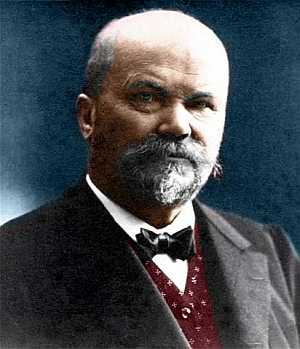
Filip Terč, Father of Apitherapy 1844-1917
That’s my soap box speech for apitherapy caveats. You may wonder why March 30 is World Apitherapy Day. Today is not only my birthday (Happy Api-birthday, Ron!) but it’s also the birthdate of the most important early promoter of healthy bee stings – Filip Terč, whom you see glaring at you adjacent to this sentence. Terč practiced medicine in Maribor, Slovenia, over a hundred years ago. As a young man, he suffered badly from rheumatoid pain until, at age 22, he was accidentally stung by an defensive mob of irritated honey bees. It changed his life. His pain was gone.
Terč began a serious study of the effects of bee venom therapy. He published the first clinical trials of the therapeutic effects of bee stings in the 1888 publication “Report on the Peculiar Connection between Bee Stings and Rheumatism”. He presented the results of treating 680 patients with the collective application of 39,000 stings. He claimed that 82% experienced a complete cure, 15% had partial recovery, and just 3% had no relief from their rheumatoid condition. Although his work was published over a hundred years ago and his results have not been disputed, the medical profession has reluctantly appreciated the link between rheumatism, auto-immune dysfunctions, and some of the elements of bee venom. With immune disorders ranging from multiple sclerosis to allergies on the rise, the use of apitherapy treatments are finally becoming more accepted and generally more widely available. So, with cautious caveats, celebrate World Apitherapy Day. (And all those beekeepers with birthdays today).
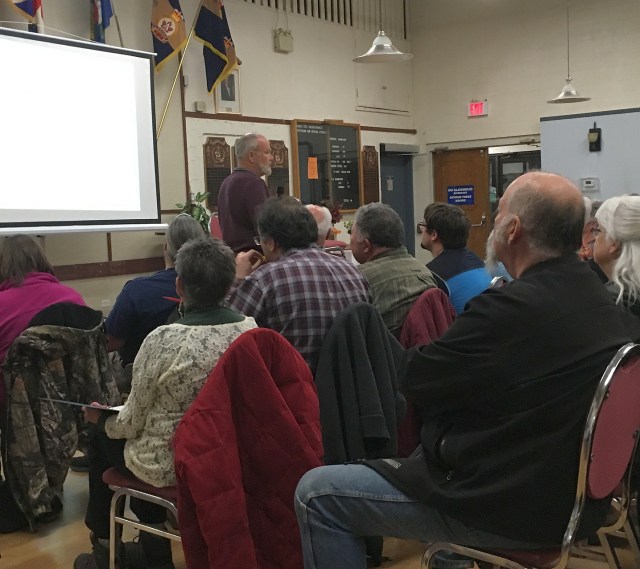
A few days ago, three long-time beekeepers were asked to sit on a panel and take bee-management questions from a large audience of (mostly) younger, newer beekeepers. The three beekeepers were all commercial beekeepers or had run commercial outfits. Altogether, they probably had 130 years of beekeeping experience. I’m not saying that a combined number of years means everything – the audience numbered over a hundred folks so the audience probably had over 300 years of experience. But there they sat, these older, experienced beekeepers, taking questions. I was one of the old guys on the panel.
I admit that being old and experienced does not necessarily make you good. One of our local Calgary bee club flame wars was a hot dispute about cooking varroa with heat. This was met by derision from some of us older beekeepers. “An old idea, tested and rejected. The heat will won’t kill many mites but can kill bees,” some of us old people said. Well, the club beekeepers with very little experience who had read about this treatment on the internet wouldn’t give up. One of them finally wrote, “Arrogance of age is not wisdom.” That really stuck with me. It’s true. Just because someone is old, they are not necessarily wise. But there is a strong correlation.
It’s awkward to be one of three on a panel when you respect and admire the other two panelists. It’s especially awkward when you know they are smarter than you. Someone in the audience asks a question. You sit there, microphone in hand and begin with “Well, it depends…” and you give your off-the-top-of-the-head answer. The mic passes to a better beekeeper who politely rebukes your answer with a good response that you don’t agree with, but you smile and nod anyway, knowing that their response to that question might be right, some of the time. Then the third panelist answers in yet another way.
One of the panelists was Neil Bertram, a youngish beekeeper with 30 years of experience and about 300 hives. That’s him, to the right. Neil consistently produces over 200 pounds per hive. One year he hit 100,000 pounds from 300 hives. Pretty good, eh? Neil is my co-teacher in our workshop “making money from honey” – Neil tells the participants how to do it right while I’m at the workshops for comic relief, telling the students how they might lose money by keeping bees. (I’m really good at that.)
The other co-panelist at the bee club’s “Ask the Experts” night was the luminous and accomplished Allen Dick, someone many web readers know. Allen has an extremely popular website where he dispenses great practical advice – the nuts and bolts of beekeeping. We both, separately and unbeknownst to each other, began our respective websites the same year, back in the 1990s, making ours the oldest two bee sites in the world.
I think that Allen’s website is better than mine (but thank you for reading this). I tend to focus on bee squabbles, news, and interpretations of bee research while Allen Dick’s Honey Bee World has been a respected go-to site for down-to-earth beekeeping tips. (Though he doesn’t mind jumping into squabbles!) If you want to know how to keep bees better, he has the site to search.
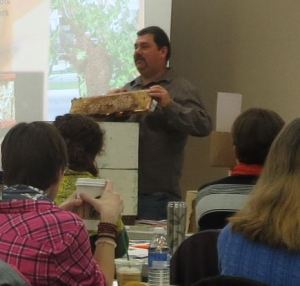
Allen Dick doesn’t attend the Calgary bee club meetings very often. He lives over an hour north of the city. So, with him in town, the bee club asked if he’d give a spring management talk before the panel took questions. Here’s the old geezer at Wednesday night’s meeting. He walked the new beekeepers through the bee routines that they need to know to get their hives in shape for summer.
Allen Dick, talkin’ bees to Calgary and District beekeepers
Panels are great. When I’m asked a bee question, I often give two answers which will probably solve the issue, but a panel of three people yields six opinions. Isn’t that wonderful? Here’s an example. Someone asked, “If I have two really good hives, should I put a third brood chamber on top or split them – but I don’t want more hives.” I answered first, explaining that the bees likely don’t really need a third deep Langstroth brood chamber. There are lots of tricks to keep bees from swarming – foundation, rotating pearl brood down, inserting dry frames into the brood nest (weather permitting), and so on. This usually keeps all the bees home and maximizes the crop. Then the microphone passed to Allen. He agreed but added something that I would not have thought of until after the meeting was over and everyone had gone home. Allen suggested splitting off a good new third hive from the two powerful ones and . . . selling the new split. He added that it’s easier to sell a hive than sell honey. That’s a brilliant answer. And that’s why it’s good to ask three ‘experts’.
Having three professionals on the panel, all of whom are hedging and interpreting questions differently, can be eye-opening for some new beekeepers. One of the harder things for novices to accept is that the world of beekeeping is loose and fast and everyone may be right and wrong at the same time – depending on the situation. Every question has multiple answers. Experienced beekeepers often respond with, “Well, it depends…” leaving the novice beekeeper wondering why there is no single correct answer. Although there are important “correct” concepts (“don’t kick the hive” and “bees don’t fill supers that are left in the shop”), most bee things are complicated. This is worth remembering if you are new to bees.
On several occasions, I’ve had new beekeepers ask for a step-by-step guide complete with dates which they can place on their family calendars, like so many anniversaries and birthdays. “March 4th, start feeding the bees pollen” and “June 23rd, place first honey super on hives”. But those dates vary every year. Shocking as it may sound to some folks, there’s no recipe book for keeping bees. There are certainly some (almost) inalienable beekeeping truths. But every year is different. Every apiary is different. Every hive is different. The good news? If you keep your lights on, your eyes open, stay curious and adventurous, and live long enough, you will probably become an experienced old-timer beekeeper yourself.
Most folks I know reset their clocks last night. This is great for hobby beekeepers who race home after work to don gaudy bee suits and ignite smoker fuel, hoping to beat the setting sun. Not so fast, Beekeepster. You can slow down and still enjoy a whole extra hour of afternoon beekeeping.
Most North Americans moved their clocks’ hands forward last night. Others in the northern hemisphere will do this a week or two later. Meanwhile, some folks in the southern hemisphere do the deed in the opposite direction. Others never change to Daylight Saving Time, so they aren’t moving any time soon. It’s a gemisch of spinning clock dials, but the world’s biggest mess is in the United States, on the Navajo Nation in the state of Arizona. We’ll get to Arizona in a minute. But first, the whole notion of springing forward in the spring and falling back in the fall shall be examined.
Ben Franklin, America’s inventor/ambassador/kite-flyer/publisher/ scientist/statesman/postmaster proposed the idea back in 1784 as a way to save money. His father was a candle maker. From an early age, Ben realized how expensive it is to light a house at night. Instead of “early to bed and early to rise” making a man wealthy, Ben figured that pushing the clocks ahead in the spring could do the same trick. Thus, he invented daylight Saving Time. While ambassador to France, Franklin told a Paris audience that their city would save 128 million candles a year if people simply moved their clocks one hour. But his idea wasn’t adopted anywhere until 1916, when Germany and Austria used clock setting as part of their war effort. The USA began saving time in 1918, but not every American state joined in.
Saving time really does save money. Roosevelt instituted War Time from February 1942 to September 1945 – non-stop Daylight Saving Time. In 1973, Richard Nixon decreed an extra-long summer savings of time during that year’s fuel crisis. That summer, people used Saving Time for an extra few months, saving millions of dollars and tanker loads of oil – 3 million barrels a month, according to the US Transportation Department. With such success, one wonders why we don’t move the clock back two hours and keep it there. But there are dissenters.
Maybe you don’t move your clocks at all? For a few years, I lived in Saskatchewan, Canada. It’s one of the few northerly places that doesn’t bother with Savings Time. It’s a cow thing – Saskatchewan cows rarely wear watches, so the cows of Saskatchewan saw the idea as so much BS. They knew when they needed milked and the farmers had no choice but to stay with natural time. But within Saskatchewan, there’s a group of untimely dissenters: The Hutterites. Years ago, I was their Honig Mensch and became good friends with some of the folks on those communal farms.
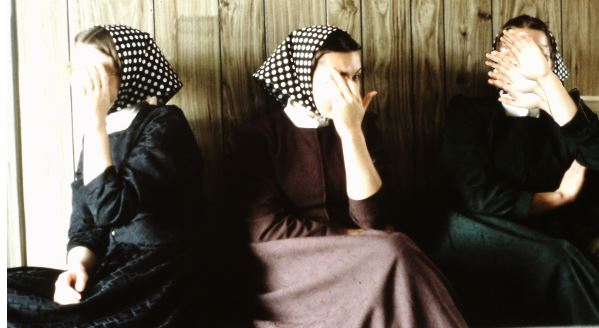
Saskatchewan Hutterites – from another time zone. (Image: Miksha)
Hutterites don’t use Daylight Saving Time, but they don’t use Saskatchewan’s permanent Central Time Zone, either. They use Slow Time. When I visited Hutterite colonies, I was careful not to show up at the communal farm during daily prayers, which were at 5 pm, slow time. This Mennonite-type group set their clocks to their own unique slow time, which is an hour behind the rest of Saskatchewan. This way they coordinated prayer time with other Hutterite colonies across North America. However, Slow Time put their clocks at the same time as Quebec, in the Eastern Time, 3,000 kilometres away, which I thought was highly anachronistic.
Saskatchewan’s Central Time Zone began at the edge of each Hutterite colony. The permanent Central Time Zone of Saskatchewan, with immobile clocks that never experience ‘savings’, has its merits. Saskatchewan bees have the highest annual per colony honey production in North America (about 180 pounds per hive). Keeping bees on a stable clock apparently kicks in the extra nectar.
Elsewhere, back in August 2015, the wizard of North Korea magically moved his country even further back in time, making news by retro-shifting clocks thirty minutes. Supreme Leader Kim Jong Un created the new Jong-Un Time Zone where Un-time not only stands still, but occasionally even runs backward. That’s not all. Water, I’m told, sometimes flows uphill in Pyongyang.
Saskatchewan’s Hutterite colonies and North Korea’s kingdom are not the only places with idiosyncratic time shifts. There are other enclaves of other-time peoples, particularly in Arizona. Get this:
1) Arizona does not change to Daylight Saving Time when the rest of the United States does.
2) However, within Arizona, the Navajo Nation does move clocks ahead to Saving.
3) However, within the Navajo borders, the Hopi Reservation does not change its clocks.
4) However, living on a ranch in Hopi country is a family where the mother works on the Navajo Reserve, so that house moves its clock.
This results in a complicated situation where a family’s clock is ahead of their neighbours’ clocks that are behind a surrounding community that is ahead of a state that is behind a country that moves ahead. For the rest of you, enjoy the extra hour with some bees. (But don’t forget to give it back in November.)
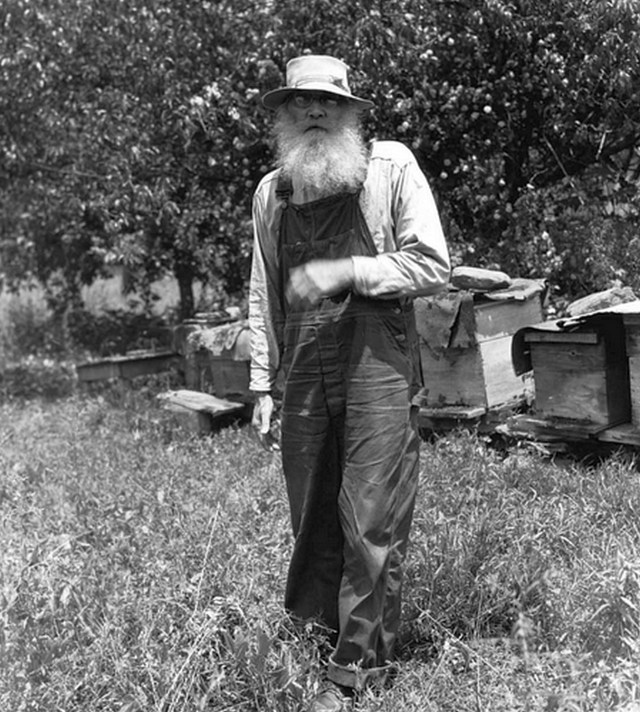
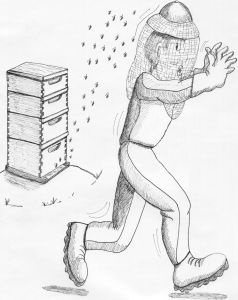
The manual is a colourful, user-friendly booklet that should keep you from looking like the guy in the picture to the left. The best-practice guidelines begins by describing why beekeeping is important:
“While residential beekeeping can prove extremely rewarding to the beekeeper (a single colony can produce more than 40 pounds of honey, as well as other valuable products such as pollen, propolis, and wax), it also provides considerable benefits to neighbors and the city as a whole.
“Honey bees play an important role in the residential community, providing pollination for the beekeeper’s property and for properties up to two miles away. As cities and towns encourage residential beekeeping and it becomes more established, the benefits increase and become integrated into a number of public services, such as educational projects, income opportunities for under-employed populations, and personal and community-building activities.”
The booklet then gives you the nuts’n’bolts of doing it right. Topics include flight path, water for the bees, swarming, defensive behavior, robbing prevention, locating the apiary, proper number of hives to keep, stings, allergies, good neighbourliness, and lots more. It doesn’t cover a few things which every beekeeper should know (diseases and mites, for example) but that’s not the purpose of this guidebook. Instead, the clear focus is on being a good citizen backyard beekeeper and not a nuisance. There are a few paragraphs about legal stuff, town ordinances, and apiary registration which won’t be completely transferable everywhere, but the rest of the manual generally is applicable for most community beekeepers.
This is a well-organized, well-written, and well-illustrated manual. For example, here’s a simple figure showing how to reduce pedestrian contact with your bees. As most beekeepers know, honey bees very rarely sting when they are away from their hive (unless you bare-footedly step on one or try to pick one off a flower – then, I’m sorry, but I’ll side with the bee on this). Close to their nest, however, bees can become rudely defensive. Foot-traffic along a pathway in front of a hive entrance almost always causes trouble for the bees and for pedestrians. Thus, this simple but appropriate drawing:
There are a few things missing from this 17-page manual (for example: how to stop robbing once it has started; how to carry a hive of bees into your back yard without discommoding the neighbours) but this guidebook doesn’t pretend to cover everything. There’s a lot more you need to know before you start beekeeping – things you should learn at a two-day beginner’s bee course taught by your local bee club. For those extra details, the authors recommend that you participate in a bee course, learn from a good neighbour beekeeper, or at least seek out good practical advice.
Further, the authors suggest, “…the Best Practices are guidelines only, and are not intended nor should they be considered as hard and fast codes, rules or ordinances that must be followed and enforced. Rather, the Best Practices are to be used to foster nuisance-free residential beekeeping.” Fair caveats, but I think that we all should try to follow this manual’s guidelines. They are the closest thing I’ve seen to best practices for backyard beekeepers. This guidebook isn’t just for beginners. Even if you have been keeping bees for a long time, you will pick up a few things and maybe adjust some of your unintentionally mistaken habits.
By the way, some of you will remember meeting the principal author, Andony, on my blog – he hosts a popular bee talk podcast, PolliNation, produced at OSU. I’ve written about it a few times. If you haven’t caught some episodes by now, give it a chance. A lot of good bee science is chatted about on that podcast.
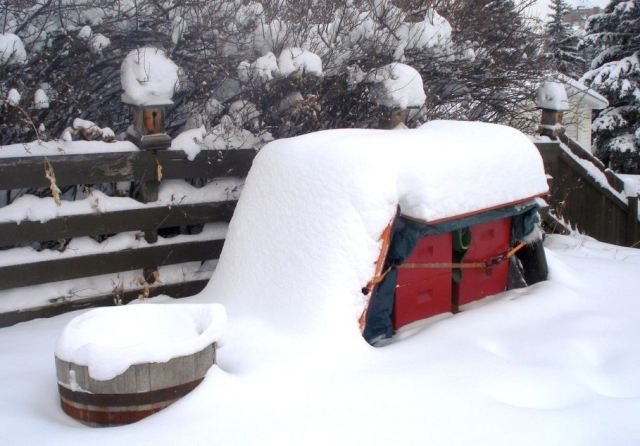
Wintered hives in Calgary, February 2018. (Credit: Mark Soehner)
Spring teased us today. It looked good for a few minutes. The sun was shining and we could imagine that someday it could be Cancun-warm here. But we will get another layer of snow tonight here in western Canada. Nevertheless, people are starting to peak at their bees. A neighbourhood beekeeper sent the lovely photo, above, which he took a few days ago. Mark said his bees are looking good – both hives are alive – and he starting feeding them some pollen substitute. The snow, by the way, provides great insulation and the exposed hive-fronts are facing south.
March is often the worst for wintered bees in our climate. Old over-wintering workers shuffle off to their last snow pile and the weakened hives sometimes suffer greatly from the stress of fluctuating temperatures, low stores, and small clusters. The queen will do her best, but her brood needs warmth and food.
With that in mind, I thought that I’d share the list of common beekeeper excuses for dead hives. These data were gathered from beekeepers by CAPA, the Canadian professional apiculturists’ association. Bees in your area may succumb to other winter maladies, but here’s what Canadian beekeepers self-reported last spring:
Poor queens topped the list as the number one reason for winter losses in most provinces. However, in Alberta, Canada’s main beekeeping province, beekeepers say most hives were lost because of “ineffective varroa control”. Now, that’s a real problem if it means that mites are out-witting the dope we use to kill them.
Weak fall hives was cited as the main culprit in Manitoba and the second leading cause of winter loss in four other provinces. This could be due to mites weakening the hives in autumn or it could be because brood nests plugged out in August, leaving no open areas for the queen to lay. We almost had this problem a decade ago in our own operation. We ran around sticking empty frames into the brood nests in early September. That saved our bees, but many operators were caught off-guard – Alberta had high winter losses that year.
Starvation was the third most common explanation for losses over 2016-2017. This may happen if bees build up too fast in February and beekeepers can’t get into remote snow-filled apiaries. Starvation might also happen in weak colonies that can’t generate enough heat to move their cluster to nearby honey combs. That’s always sad for the beekeeper to discover – ten pounds of honey inches away from a dead mass of starved bees.
Quite a few beekeepers simply said that their bees were killed by “weather”. I’m not sure what that’s supposed to mean. Too cold? Wrap the hives and keep stronger wintering colonies. Too windy? Shelter them. Too long a winter? Well, that’s a killer for all of us and I don’t have an easy answer.
Winter losses for Canada were around 25% last year. That’s an awfully high loss. In the days before mites and cell phones, losses were around 10%. (Cell phones has nothing to with it, but the days before mobiles were good days.) I don’t know if we’ll see 90% success in wintering again – we might eventually subdue mites, but ag-chemicals, pollution, and other bee stresses will likely keep losses high. Beekeeping’s not for the faint-hearted.
Winter’s not over yet. Hopefully, Mark’s bees will begin to build nice populations and they won’t suffer during the next two months of unsteady weather. He’s keeping an eye on them and he’s ready to give them any help they’ll need.
In the USA – and probably no place else on Earth – today is Presidents Day. When I was a kid, we called it Washington’s Birthday and got the day off from school, though Lincoln’s birthday seemed to be somehow conflated with it. These days, I live in Canada. We also get a holiday. It’s not “Prime Ministers Day” but instead today is Family Day and it has nothing to do with politics.
But let’s look at Presidents Day. I think that all presidents could be better leaders if they were beekeepers before entering the White House. Bees teach patience, restraint, and frugality. They encourage caution yet promote curiosity. Every beekeeper becomes a mini-scientist, observing how nature and ecology interact while testing new techniques. Beekeepers are business folks and environmentalists and they blend these worlds together, becoming diplomats and experts at compromise. They make deals with their bees by honest actions, not lengthy contracts written in legalese. Certainly these beekeeper’s qualities are qualities that a president ought to have.
Few presidents kept bees, but at least one was keenly interested in beekeeping. Thomas Jefferson is sometimes described as a farmer, scientist, diplomat, musician, and writer. The third US president kick-started the whole American experiment (Declaration of Independence, Constitution, 2-term president) yet he found time to ponder and maybe even putter among the bees. His library included beekeeping books, including Francois Huber’s famous bee guide that described the freshly-discovered secrets of the queen bee’s mating habits. It had been published about the time Jefferson took office.
Jefferson had an insatiable curiosity – when he went to his inaugural ball, he had fossils in his waistcoat pocket. He knew that a geologist would be there and he wanted to see if the fossils could be identified. Later, after he doubled the size of his country through the Louisiana Purchase, he sent Lewis and Clarke west to map it and to search for scientific curiosities.
It was partly from the explorers that Jefferson confirmed that honey bees had been imported from Europe and were not native to the continent. It’s interesting that this was even a question in the president’s mind, but more than two hundred years had passed since the early settlers had brought the first bees across the Atlantic. People had lost track of whether bees were native to America, or had arrived with the Europeans. In Jefferson’s Natural History Encyclopedia of Virginia, he wrote that the natives “call them the white man’s fly” and Jefferson agreed with them – honey bees are European imports. Here are Thomas Jefferson’s own words about the arrival and distribution of honey bees:
“The honey-bee is not a native of our continent. Marcgrave indeed mentions a species of honey-bee in Brasil. But this has no sting, and is therefore different from the one we have, which resembles perfectly that of Europe. The Indians concur with us in the tradition that it was brought from Europe; but, when, and by whom, we know not. The bees have generally extended themselves into the country, a little in advance of the white settlers. The Indians therefore call them the white man’s fly, and consider their approach as indicating the approach of the settlements of the whites.”
Estate records for both George Washington and Thomas Jefferson listed dozens of hives on their plantations. There aren’t many stories about those hives, but I saw a bit about Edmund Bacon, Jefferson’s plantation manager. He wrote, “I remember General Dearborne coming to my house once with Mr. Jefferson, to look at my bees. I had a very large stand, more than forty hives.” Forty hives, in the early 1800s or today, is significant.
After the first and third presidents, I don’t know if any others had bees among their possessions. If we skip way, way ahead, we find that the Obamas had bees at the White House. These were kept by a fellow who worked on the grounds but the bees were enthusiastically welcomed by Michelle and her daughters.
The American president was on the lawn on a beautiful spring afternoon, reading Where the Wild Stings Are to a hundred kids who are distracted by . . . a BEE. The youngsters are scared but Obama calms them down. He said three of the coolest words ever uttered by any president: “Bees are good.”
🐝 🐝 🐝 🐝 🐝 🐝 🐝 🐝 🐝 🐝 🐝 🐝
Post Script: I didn’t intend for this to be a political piece, just an appeal to reason. I didn’t mention the current president by name, but I have no doubt that he’d have a different personality if keeping bees had been part of his background. Beekeeping transcends politics – most of the readers of this blog are conservatives and I sometimes agree with their thoughts. A few months ago, I blogged about Vice-President Pence’s wife, Karen, an avid pet owner and beekeeping enthusiast. Karen keeps bees at the government-owned vice-presidential estate near D.C. where she, Mike, and the kids live.
Feel free to add your comments, below, whether political or otherwise. But play nicely with each other or you will be banned from this site….
The bane of the bee is varroa. We warn new beekeepers that varroa will kill their bees faster than they can say “varroosis“ five times. Varroa kills. Thirty years ago, the mites weren’t as bad as they are now. In those days, they sucked a bit of bee innards, slowly weakening and killing the bees. But over the years, peripatetic mites began to carry viruses from bee to bee. Some researchers suggest that varroa’s viral accomplices cause more damage than the mites themselves. Because of the attached viruses, the effect of varroa is more harmful than it used to be. And the problem may get worse with time as mites encounter new viruses and spread them.
Tobacco leaf with ringspot virus
A new viral culprit was recently identified by researchers at the USDA and the Chinese Academy of Sciences. Tobacco ringspot virus is incredibly nasty but was thought to just injure plants, not animals. Ringspot almost wiped out the tobacco business (must try harder next time) and causes such grief that farmers may abandon infected crops, plowing them under, and returning only years later when they hope the virus population is low and won’t be a problem for a while. Despite the name, the tobacco virus also affects dozens of different sorts of plants. Now, it seems, it can hurt animals, too. This is new to me – until now, I never heard of a virus jumping from plants to animals. Avian flu jumped to humans and HIV came to humans from chimps – but I didn’t know that a plant virus could hurt some animals.
Normally, a plant virus is benign to insects. Plant and animal cell structure is fundamentally different. Injury shouldn’t occur, but viruses ride in pollen and travel from plant to plant, spreading plant infections like uncovered coughs. In the case of honey bees, the virus is picked up in pollen and brought to the hive where it’s ingested. It’s not uncommon to find a variety of viruses in bee guts and saliva. Typically, the virus does no harm to the insect carrier. It hangs out in the bee, then gets excreted onto some unlucky plant during a bee’s cleansing flight. Liberated, the virus attaches to a new host plant and starts making ringspots again.
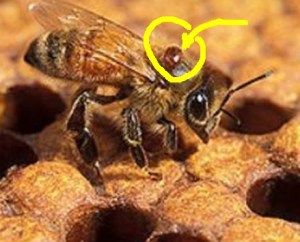
In the journal mBio, American and Chinese scientists reported that tobacco ringspot virus affects bee guts – and wings, antennae, blood and all other body parts of bees. The virus is believed to shorten a bee’s life. The virus travels when a varroa mite sucks out the innards of honey bees. As a mite passes from bee to bee, she (phoretic varroa mites are girls) injects victims with the virus as she eats.
You can read the entire paper online, but here’s part of the abstract from “Systemic Spread and Propagation of a Plant-Pathogenic Virus in European Honeybees, Apis mellifera”:
“…In the present study, we showed that a plant-pathogenic RNA virus, tobacco ringspot virus (TRSV), could replicate and produce virions in honeybees, Apis mellifera, resulting in infections that were found throughout the entire body. Additionally, we showed that TRSV-infected individuals were continually present in some monitored colonies. While intracellular life cycle, species-level genetic variation, and pathogenesis of the virus in honeybee hosts remain to be determined, the increasing prevalence of TRSV in conjunction with other bee viruses from spring toward winter in infected colonies was associated with gradual decline of host populations and winter colony collapse, suggesting the negative impact of the virus on colony survival. Furthermore, we showed that TRSV was also found in ectoparasitic Varroa mites that feed on bee hemolymph, but in those instances the virus was restricted to the gastric cecum of Varroa mites, suggesting that Varroa mites may facilitate the spread of TRSV in bees but do not experience systemic invasion.”
From the abstract, above, you’ll note that varroa mites spread the virus but the mites don’t “experience systemic invasion.” Wouldn’t it be great if it were the other way round – a virus carried by bees that doesn’t hurt bees, but kills mites? I’ll bet someone is working on that right now.
Spreading a virus?
The idea that a plant virus can spread within an animal is an uncomfortable surprise. It reminds us of the original movement of varroa itself from Apis cerana, where it didn’t cause much mischief, to Apis mellifera, where it is devastating. Once again, we have a pest jumping species (actually, in this case, jumping from the plant kingdom to the animal kingdom).
Ringspot now gets added to the growing list of other viruses spread by varroa mites: deformed wing virus, acute bee paralysis virus, varroa destructor virus-1, the Israeli acute bee paralysis virus and the Kashmir bee virus. The novelty with the tobacco virus is that it shouldn’t reproduce inside honey bees and hurt them, but it does.
What’s this got to do with you and me? Well, two things. If you give up smoking, there will be fewer tobacco plants and that means fewer ringspot viruses and that means healthier bees. (And a healthier you.)
Secondly, if the big problem is unpredictable new mite-carried viruses, control of mites becomes more and more urgent. The ‘new’ virus warns us that unexpected varieties of these tiny creatures will continue to invade bees and make them sick. We can’t anticipate what sort of virus will be next nor can we create inoculants. (Heck, we can’t even tame the virus that causes human colds.) So, be prepared – this problem is going viral.
How do you prepare to fight viruses? Rest, drink lots of fluids (chicken soup!), stay warm, and reduce stress. On a deeper level, white blood cells and the hormone interferon help you fight viruses. Similarly, honey bee colonies may shake off some viral infections if the bees are otherwise healthy, have prolific queens (the source of healthy young replacement bees), plenty of nutritious pollen, and strong populations. Spring can be a particularly vulnerable time – bee population is low, queens are aging, fresh pollen is scarce. Life-cycle stresses weaken the hive. You want strong hives. Strong colonies are more resistant to afflictions of all sorts.
Do everything you can to keep healthy colonies and kill those blasted virus-toting mites. You’ll give your bees a good chance to survive the spring and grow into honey-making hives.
There was a time when tobacco and bees mixed freely. This is from a 1950s Virginia tobacco festival parade.
I’ve received a fascinating message from a relatively new beekeeper. The note was from a young man who is crowdsourcing funds to help pay for the translation and printing of an unusual beekeeping book.
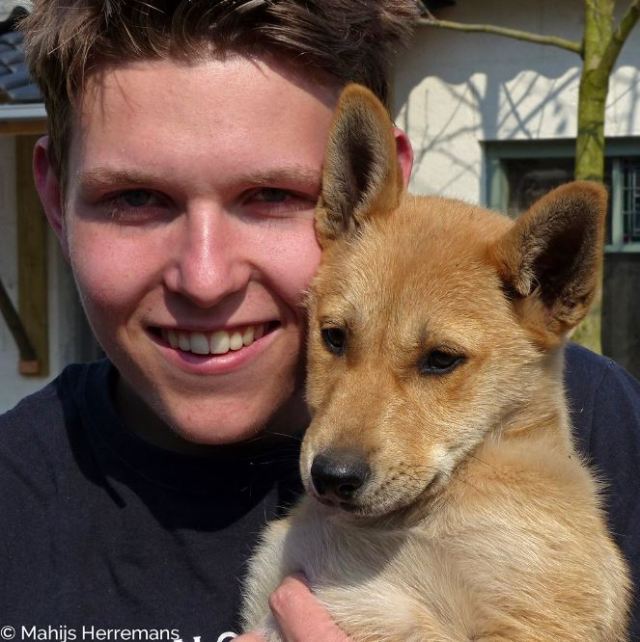
Mathijs Herremans is a young Dutch beekeeper with nine colonies. Beekeeping has been a great experience for him. He tells us that his enthusiasm for bees has opened doors which his autism had kept closed in the past. It is often difficult for people with autism to participate in social activities, but Mathijs finds that he can talk about bees with strangers at honey markets and he enjoys interacting with the older beekeepers at his bee club.
The book which Mathijs is writing is based on a series of interviews with beekeepers in other parts of the world. He has met with beekeepers in the Netherlands and Spain and plans to go to Sicily in April. He has corresponded with beekeepers in other areas (including Cuba, Poland, Madagascar, Chile, Australia, and Pitcairn Island!). His contacts include commercial and organic as well as tree and skep beekeepers. He tells me, “I used to think there was only one way to keep bees, now I know there are so many!”
European dark bees: Apis mellifera mellifera (photo by Miksha)
Mathijs does a lot of volunteer work for the beekeepers in his Association and is learning from the more experienced beekeepers. He is very ambitious this year – in addition to writing his book, he plans to learn queen breeding. Last year, he started keeping European dark honey bees found on Texel, a Dutch island.
Texel is a small, isolated, tourist destination with a few colonies of bees native to the island. Harsh varroa treatments of bees are avoided. Most beekeepers there rely on a system they call “Dreigangenmenu”, which sort of means three-course meal. This includes interrupted brood management, drone removal, and some soft organic-based chemicals. Mathijs tells us that the native dark bees have apparently built up some varroa resistance. Annual mortality rate is less than nine percent. Mathijs (among others, of course) is considering ways that other isolated Dutch islands might be used to breed native European varroa-resistant bees.
Here is a link to his crowdfunding page. Mathijs would like to reach €5000. Any amount will get him closer to his goal. The book will be printed in Dutch, then if funds allow, he’ll follow with an English translation. Today, using my pseudo-anonymous Dutch pen name (“Gast“) I donated €10 to the project. I hope that you can spare a few dollars, too. The fundraiser page is in Dutch – don’t let that scare you. Donations speak the international language of the Visa card.
My son is a fan of a YouTube sensation who calls himself the “Crazy Russian Hacker.”Taras Kulakov came to America from the Ukraine as a child refugee. He’s 30 now. A few years ago, he began making fun videos about things that interest him. Stuff like the taste of military rations, how chainsaw guards work, dry-ice lollipops, exploding giant gummi bears (filmed in slo-mo) – all the while narrating in a thick Russian accent. (His favourite expression, “BOOM!”). Sounds delightful. The young man has a staggering 10 million followers and his videos have amassed over two billion views. That’s right: TWO BILLION VIEWS!!
Last year, Taras got interested in bees. He makes a heck of a lot of mistakes (“BOOM!”), but his love for his bees and his incredible enthusiasm are endearing. Well, this winter, the Crazy Russian Hacker discovered that six of his seven hives – which were strong and healthy in September – are now dead. (“BOOM!”). Taras, a North Carolina beekeeper, suspects moisture killed his bees. But I don’t think so. Please watch his short video before continuing to read my blog post.
I decided to write to the crazy Russian. Here’s the letter I’ve sent. Feel free to add your own comments below. Taras and I will appreciate your thoughts.
Hello Taras,
My 15-year-old son, Daniel, is a huge fan of your work. He asked me to write to you about your beekeeping disaster. I have been a beekeeper for 50 years – as a commercial operator and also as a teacher, leader or workshops, author of beekeeping books and journal articles. I am also associated with the local university’s ecology department.
First, allow me to express my admiration for your enthusiasm and your attitude towards the world around you and also my condolences for the loss of your bees. Here’s what I think happened.
I think that your bees have died from varroa mites and the viruses which mites carry. You had strong populations which dropped suddenly. They used to call this colony collapse disorder. Not exactly what occurred in your hives, but similar. This is a varroa-associated syndrome.
I noticed (in an earlier video) that you used Api Life Var, which is an organic treatment for “the suppression of mites”. I appreciate your intent to use an organic method, but the ingredients – thymol, eucalyptus oil, menthol and camphor – are only partly able to reduce mites. This is especially true if the bees have sealed brood (your hives had a lot of sealed brood) because the chemicals don’t reach the mites inside the sealed brood where mites hide and reproduce. Under ideal conditions, Api Life Var may sometimes kill 95% of the mites, but you must have no brood in the hives. It’s less effective in a long-season climate like yours and especially ineffective when there is lots of brood in the hives. You might need four or five consecutive treatments which include some broodless periods. I think you may have had only about 50% mite kill. Two months after you treated with Api Life Var, the varroa population exploded and (BOOM!) you now have dead hives.
You are correct that moisture is a leading cause of winter loss, but with moisture, the bees would have been moldy inside their cells and stuck between the frames, not lying on the bottom boards. They would be mushy-wet and covered with mold. The frames would not be as clean as yours are in your video and there would have been five times as many dead bees as you saw.
I don’t like doing an autopsy without first-hand observations, but your video shows good detail. I think mites weakened the hives (this can happen in a matter of days, once the tipping point is reached), most of the bees flew out and died, the remainder did not have a sufficient population to survive, they succumbed to the cold and the blood-sucking mites – and (BOOM!) they dropped to the bottom of the hive.
After falling dead, their bodies were later soaked by the dripping jars. A strong colony keeps their box and syrup warm. But inside a dead hive, the fluctuations in warm and cold weather causes the syrup to leak. With a strong colony, any minor leaking syrup is immediately consumed.
Most beekeepers would not feed their bees constantly through the winter for two reasons. As you correctly point out, it adds moisture to the hive and damp hives are hard on the bees. Secondly, syrup stimulates the queen’s egg-laying. It is better that the colony have a non-egg period when the weather is the coldest, then you should start feeding them right away in early spring (probably February in your area).
Again, thank you for your work and for raising awareness about beekeeping. Your videos are fun to watch and instructive.


 you see to the left. Then he spent a few hours making art and presented the result as a surprise birthday gift. As an artist, he is creative but methodical. You can see how he printed the photo in black and white, then gridded it to get the proportions. He kindly made my hair less gray but I think that he could have given me less forehead, too! You can see that he has an impressionist style, but for the forehead, he went for realism.


 Tired of irritating your neighbours with your pesky bees? Help is on the way. A very bright professor at Oregon State,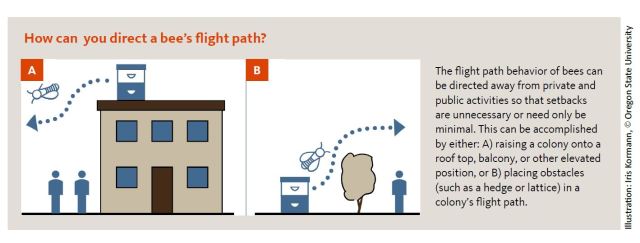



 My son is a fan of a YouTube sensation who calls himself the
