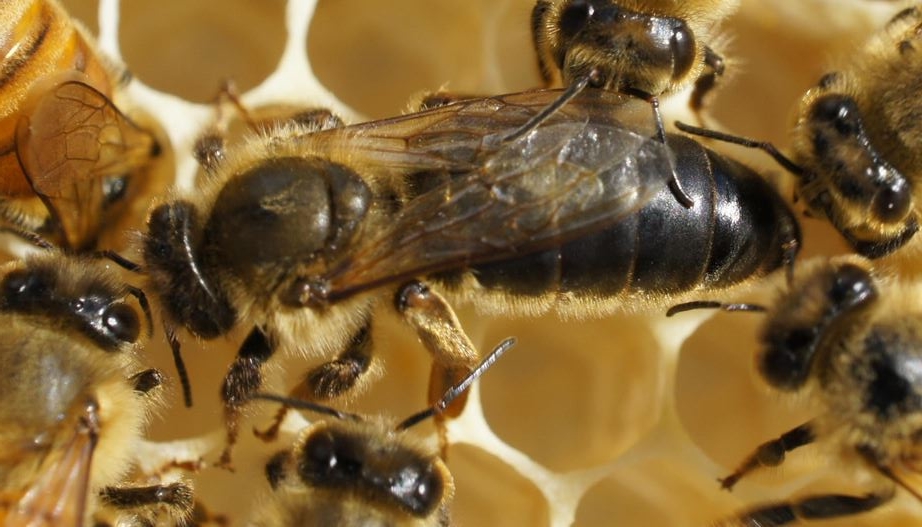
Well-mated queen. How’d she get that way? (Photo: Stephen Bennett)
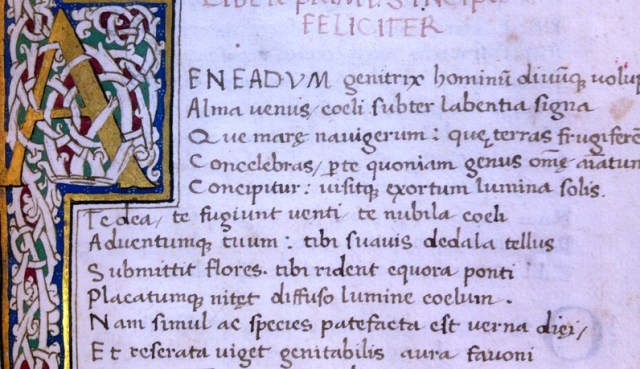
Maybe I should have written this blog in Latin. When I was a kid, I saw a bee biology book where the author switched to Latin when he got to the part about how queens and drones get together to make little baby bees. Until then, I had no interest in learning Latin.
A growing interest in Latin
I can see the author’s point – unless you’re headed to the priesthood, you have no reason to learn about honey bee sex. Or at least, the author figured that you need to attain a certain level of classical education before you’re exposed to the birds-and-bees part of bees. Well, I’m not going to start writing this blog in Latin, mostly because I can’t. [However, Res apis mel: Dulcis in fundo!] If the mechanics of insect sex is too raunchy for you, go study some Latin and then come back when you’re ready.
Here goes. A friend told me that she heard (from a wise source) that queens return to their hive after each individual drone encounter, one drone-friendship per trip. The workers clean her up before her next date. As most beekeepers know, when a young queen enters a drone congregation area, she’s pursued by drones, one of whom mates with her. Much to the drone’s surprise, his penis gets ripped out of his body (maybe this should be in Latin) and the drone falls to the ground, dead. My friend told me that she just learned that the queen immediately flies home where worker bees remove her ‘mating sign’, then she goes back out again. I didn’t think that was true, but her source seemed authoritative.
My recollection is that the queen kills a few more drones before heading home. But, then, I thought – do I know this for sure? Has anyone seen this adventure? It happens way up there, out of sight, as E.B. White noted:
Love-in-air is the thing for me
I'm a bee,
I'm a ravishing, rollicking, young queen bee,
That's me.
I wish to state that I think it's great,
Oh, it's simply rare in the upper air,
It's the place to pair
With a bee.
This we’ve known for a couple of hundred years (thanks, Huber and Janša) – queen leaves hive, meets drones, mates in the air. But does she return after each drone? The fact that the last drone’s man-parts block her passage implies that a trip home to freshen up might be necessary before the next nuptial. I wrote to two of the greatest bee sex experts that I know – Dr Larry Connor and Dr Norman Gary. They both wrote back within minutes!
Lawrence Connor, Honey Bee Sex Expert
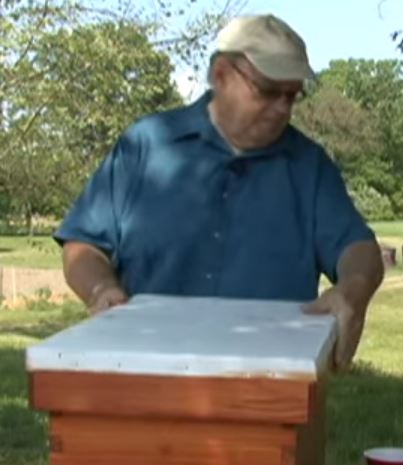 Larry Connor, via Facebook, wrote, “This is answered clearly in the new Koeniger book, Mating Biology of the Honey Bee. They show that a queen can be mated fully in one flight.”
He went on to say that the other story (heading home each time) is just plain wrong. I have Dr Connor’s own books on the subject (Queen Rearing Essentials, 2009; Bee Sex Essentials, 2008) and he writes, “The drone separates from his endophallus left in the queen, falls to the ground and dies. Almost immediately, as another drone mounts the queen, the endophallus of the previous drone is forced out as he mounts her to repeat the process.” That’s pretty clear, isn’t it?
The Koeniger book (written by Gudrun and Nikolaus Koeniger with Jamie Ellis and Lawrence Connor), Mating Biology of the Honey Bee, 2014, is one of the few bee books in the world which I don’t own. (I’ll fix that.) Koeniger et al. can be previewed here – the book looks great and there’s no Latin anywhere. I love that the dedication includes Anton Janscha (!) but not Francois Huber (There is a long-standing academic feud regarding which one to credit for discovering how honey bees mate. My own money goes with the Slovene, Anton Janša.)
Mating Biology of the Honey Bee has a seductive table of contents: Absent Fathers; How to Meet a Mate; Internal Anchorage of Drone and Queen; and thirty other cool/hot subjects. If you’d like to get your own copy – or Dr Larry Connor’s bee biology books – check out the publisher – Wicwas Press.
Norman Gary, Queen Mating Pioneer
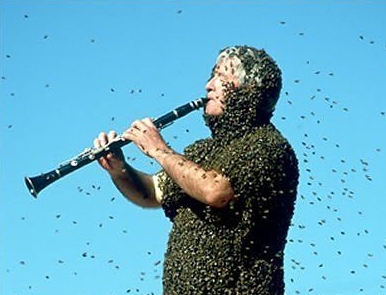 I sent the same question (“Do queens multiple mate each flight?”) to Dr Norman Gary and he answered that they usually do have multiple matings each flight. I specifically wanted to know about the proof. You know, in these days of ‘alternative facts’ and belief as a substitute for proof, I wanted to know the background. Have we actually seen the multiple matings or do we base the idea on conjecture – the number of minutes, the number of flights, the final spermatheca load. Maybe scientists are just guessing. Well, it’s not speculation. The multiple matings per flight are real. I like the context that Norman provided in his answer to me. Dr Gary was the first researcher to observe mating behavior of flying drones and queens under controlled conditions. Motion picture cameras were just becoming reliable and could capture in slow-motion. Gary and his associates observed and photographed the action. Here’s part of his letter to me, received yesterday afternoon:
I designed an aerial suspension apparatus to display flying virgin queens tethered by a thread around two feet long that was attached to the thorax. These queens were attached to horizontal line elevated 20-30 feet high, an altitude permitted normal mating flight behavior of drones. In one experiment I witnessed 11 drones that mated with a tethered flying queen. There were only a few seconds between each mating. I introduced that queen to a colony and she laid eggs normally. Drones cannot mate with the queen until she opens the sting chamber during flight. Each drone removes the “mating sign” (endophallus) left by the previous drone. There is good evidence that queens mate with a total of approximately 15 drones. But the typical queen usually takes one or two mating flights, not 15! So there is no question that the queen mates with multiple drones per mating flight. – Dr Norman Gary, 2017
Professor Gary wrote his first observations in a paper that appeared in Journal of Apicultural Research in 1963. The study, “Observations of mating behavior in the honeybee”, (Gary, N.E., J. Apic. Res. 2(1):3-13.) can be accessed by members of the International Bee Research Association. Norman Gary – inspirational teacher, mentor, bee wrangler for movies (he ended up living in California), and accomplished clarinetist – has written more than 100 research papers over his years at Cornell and UC Davis. His most recent book, Honey Bee Hobbyist: The Care and Keeping of Bees, has had excellent reviews. Published in 2010, it’s up-to-date and a good guide for aspiring beekeepers.
What do I know?
I wonder if either Lawrence Connor or Norman Gary were thinking that Ron Miksha (me) should surely know basic bee biology. The scientists were respectful and helpful with their responses. But, you know, the thing about science is that it changes. We think we know something, then someone comes along and proves it wrong. Or adds to the story. Or makes you question your ideas. Anyway, I knew that I could get the latest state of the knowledge from either (and both) of these guys.
I don’t have a copy of Dr Gary’s original flick of queen-drone intimacy. (I hope someone does!) But here is something that few people outside this blog have ever seen. I have pictures of the scientific experiment as it was being done at Cornell back in the early 1960s. My oldest brother, David, was a high school summer student technician at Cornell when the experiments were going on. In August 1961, David took the pictures below. These unusual historic photographs document the historic documentation of how a queen mates.
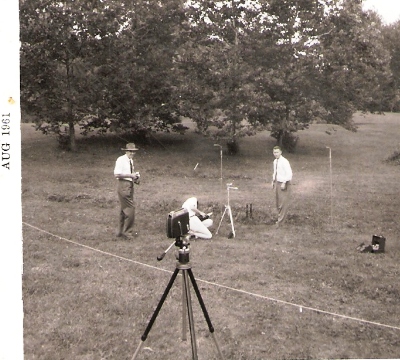
Cameras getting ready for the first queen mating pictures.
Dr Norman Gary is to the right. When he saw this picture,
Dr Gary said, “I would not have been wearing a tie during normal research operations! “
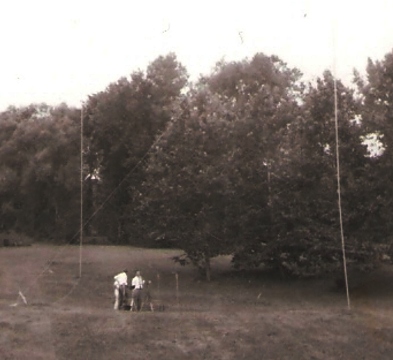
This tethering device secured multiple queens and led to Norman Gary’s discovery of the queen mating attraction pheromone. Gary was the first to witness multiple (11 times!) mating sequences.
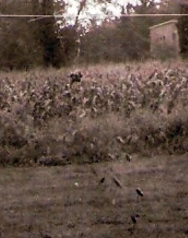
The queen being lowered down from the tower shown in the previous photo. From here, she was introduced into a hive and began laying eggs.



 Beekeepers are not sentimental. For most of us, Saint Valentine’s Day is a day of intense panic when male beekeepers rush out to buy something special for some darling or
  Saint Valentine’s Day, though, wasn’t meant to be a day of loathing and dread. It comes to us from a mythical character of long ago. The love-struck saint’s day is built upon
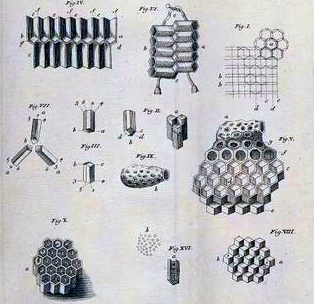
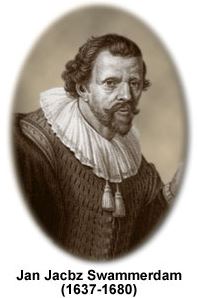
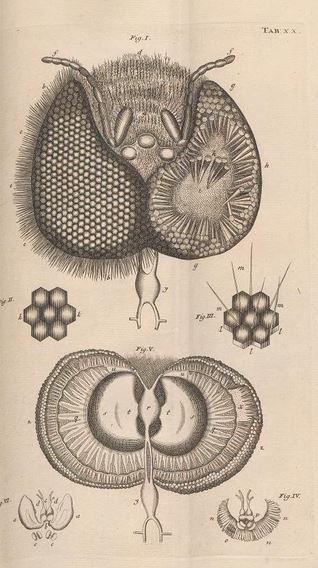
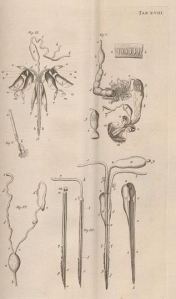 Young Swammerdam thin-sliced his subjects, teased apart their parts, and examined and sketched their innards. The anatomy drawings that populate today’s post are his: topmost is Swammerdam’s sketch of a bee’s home and stages of development; to the right is a honey bee stinger. Remember, these were drawn over 300 years ago and no one had ever seen such things before. He continued these self-directed studies, diagramming the optical nerves that hooked compound bee eyes to brains and comparing well-developed queen ovaries with less endowed ones. On the side, Swammerdam discovered human red blood cells and tossed a chunk of Aristotelian philosophy out the loft window by demonstrating insect metamorphism. Until Swammerdam, people accepted Aristotle’s idea that caterpillars and butterflies are unrelated species of worms and flies.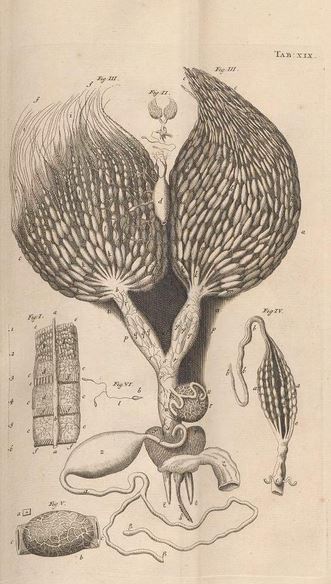


 Third, the fine is pretty steep. In cash it is over $3000 US, but in the past McGregor has been ordered to “remove the drugs” from his bees. Since chemicals can be identified at rates of parts per billion, his equipment may need to be burned to comply, if this is enforced. So, it could cost tens of thousands of dollars – not to mention goodwill, lost sales, and a sullied reputation. Mr McGregor – who owns the biggest honey farm in Scotland – will pay for years.


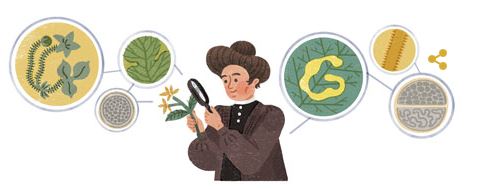
 Ms Derick was born January 14, 1862, in rural Quebec and studied at McGill and Bonn University. In her era, women had just been granted the right to a university education. She was 50 in 1912 when she finally was recognized as a professor at her university, though she’d been working as one for twenty years. By then, her research had earned her recognition as a scientist. She is known for her book
 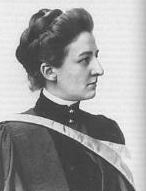 Carrie Derick was teaching school in her hometown at age 15. She moved to Montreal to continue teaching and (in 1887) to enter McGill University (three years after women were first allowed to enroll). She skipped first year, jumping directly into her second year of studies which she completed with a 94% average, the top mark at the university that year. She began teaching (demonstrating, they called it, as McGill’s first female botany instructor). It was 30 years before she became a professor.
