The Honey Threshers

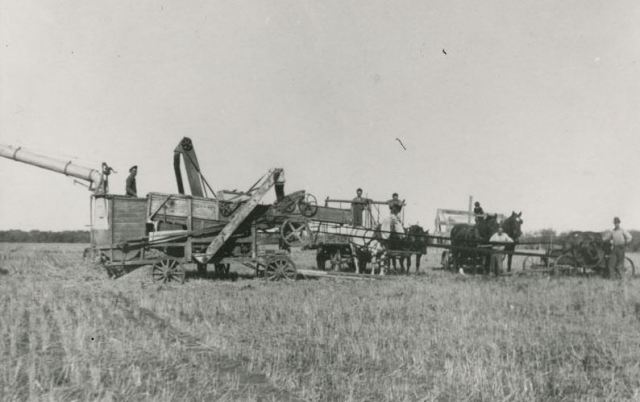
1930s Spirit River AB threshing crew

1930s Spirit River (Alberta, Canada) threshing crew.
Yup, we were still using draft horses here in the 1930s.

A century ago, threshing crews worked their away across the American and Canadian prairies, harvesting farmers’ grains. When I was rather young (not quite a century ago) one of my Saskatchewan buddies signed up for a threshing crew job. Maurice caught a bus to Texas where the wheat harvest began that year. He was one of fifteen young men who drove trucks and piloted swathers and combines for a custom harvesting company.

Like hungry locusts, the threshing crew would descend upon wheat fields and strip off thousands of acres of grain in a week. The farmers, of course, paid and fed the crew of custom combiners, but the farmer didn’t need to own big trucks or horrendously expensive harvesting equipment. Not every farmer used custom harvesting and today nearly all farmers own their own specialized machines. These are kept in sheds 46 weeks a year, then used by the farmer himself to gather the crop. I suppose – since the marketplace rules – it’s cheaper to own the equipment and do it one’s self than to hire custom harvesters. But in the days when bank credit was scarce and small farmers were struggling, hiring someone else to harvest was the only option for many.

There are a few reasons custom honey extracting was never a really big thing. Generally, the closest we’ve seen has been the sharing of an extractor, usually kept by one hobby beekeeper in his shed. Other hobby beekeepers would show up with a few supers and some pizza and extract at the friend’s shop. Typical pay for the guy who owned the extractor would be all the wax, maybe some honey, and all the pizza he could eat.

I used a similar system in Florida, forty years ago. It was on a larger scale, but the fellow doing the extracting was still paid in honey and pizza. Here was my situation: For about ten years, I produced a few thousand queen bees each winter. One year I unexpectedly also had a mess of honey. I took a couple truck loads of supers to a commercial beekeeper who extracted about 20 drums (12,000 pounds) for me. I drove almost two hours to get to his shop on Little Church Road and unloaded my boxes. He worked through the night processing my honey. I returned the next day to get my empty equipment, then a couple days later, I went back for my drums of honey, except for one that he kept as his fee. It was a lot of driving and it was modestly expensive. But I didn’t normally produce honey and didn’t own an extractor. The custom honey harvester had a neat, clean, and government-approved shop; I didn’t. And it had been an odd year with a nice surplus of orange blossom honey. Most years my mating nucs and cell builders were not so honey-bound. But that year, I had to handle some honey.

But, as I mentioned a moment ago, custom honey extracting never really caught on. There are reasons. First, the practice can spread American foulbrood. If infected equipment is extracted the day before processing your boxes, there is a chance of spreading disease to your equipment. The chance may be small, but foulbrood spores don’t always completely wash away with hot water. Even careful use of an extractor can spread disease.

The second reason custom extracting was never a big deals with timing. If my bees jam their supers, I need them off, extracted immediately, and returned to the hives as fast as possible. I’d be in trouble if the custom extracting shop is busy (because everyone else is also having a bumper crop and need boxes emptied quickly).

Cost, of course, is a consideration. Just as grain farmers have largely given up paying others to harvest for them, beekeepers would also be price wary. However, as honey house inspection requirements become more stringent and extracting equipment becomes more expensive, perhaps letting someone else handle extracting will become more cost effective. I was never happy looking at my expensive processing equipment in the off-season. From September to June, my uncapper, extractors, pump, and settling tanks just sat there, wondering if I had forgotten why I’d bought them.

A final reason that custom honey harvesting never really took off is because extractors aren’t mobile. They are not like the threshing crews of yore. You couldn’t expect a crew show up in your town with extractors in tow. Until now.

A Manitoba (Canada) beekeeper, working with an firm in Finland, has come up with a mobile honey extracting shop. Collin Stone’s company, International Honey Products Limited, could send a big van to your bee yard and extract your supers as fast as you pull them off the bees.
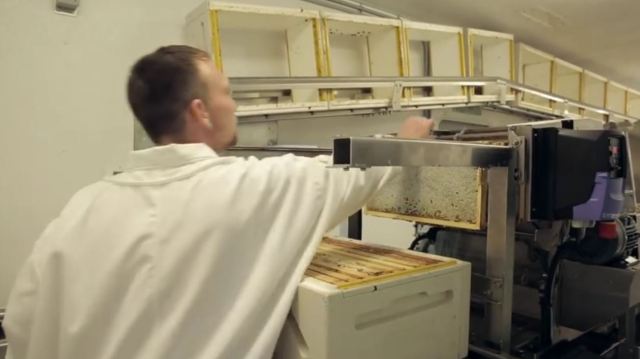
inside trailer Mobile extracting trailer

The system uses a crew of four who work inside the (CFIA/FDA) approved honey processing van. They handle 3200 pounds per hour. This is a hundred pounds from each of 32 hives in a typical yard. You remove the honey boxes, feed them into the magic van, then put the emptied boxes right back on the same hives. You can watch the video, below, to see how the thing works. The photo above is inside the mobile van in action. The picture to the left is the exterior of the extracting van.

A lot of beekeepers won’t recognize the advantage of extracting in the field. When I kept bees in Florida and Pennsylvania, a person never expected to pull honey and then rush empty boxes back for the bees to refill. The season wasn’t long enough and the flow wasn’t strong enough. You’d put a couple supers on the hive and consider yourself lucky if the boxes were filled once. But in some areas, the beekeeper is much more fortunate.
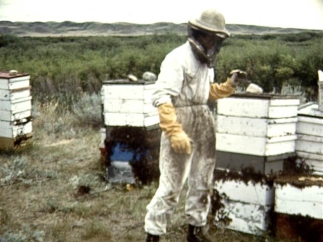
Four full supers off; four empties back on.

Four full supers off; four empties back on at one of my Saskatchewan yards in 1980.

In Saskatchewan, I usually pulled honey four times in the two-month summer. One year I had a 400-pound average. I gave the hives three or four boxes each. Every second week, I pulled off the full boxes and added three or four empties immediately. The empties were stacked towards the back of the truck. They came out of the extractor the night before. Fresh full supers were stacked towards the front of the flat bed while empties were set out. It was a lot to handle.

Advantages of in-field extracting include less wear on honey supers – boxes aren’t bounced down the dusty country roads where honey-laden frames sometimes break. The honey is cleaner (no road dust). There is less labour – you don’t load a truck in the field, unload at a shop, reload empties and then unload again at the bee yard. You can meet the honey wagon at your apiary – you arrive with just a passenger van and crew, not with a huge truck. The honey is extracted while it is fresh and warm, so you don’t need a hot room.  Honey in the barrels is from one known apiary, not blended from many, so product tracking is easier.  Fewer stray bees arrive to your house/farm – cutting down on the spread of varroa and family members’ stings at home. If you are just getting started in commercial honey farming, calling an inspector-approved mobile van reduces your initial investment. There are undoubtedly other advantages.

Will it catch on? Will there be a mobile extractor hot line that you can call? I don’t know. The issues I mentioned earlier – disease control, timing, and cost remain valid concerns. For disease issues, I would insist that the van operator inspect a few hives at each yard, check that the apiaries are certified inspected, and I would have the owner of the hives sign a waiver stating that he believes his bees are disease-free. This would help a lot.

The biggest hurdle with this system may be cost. The unit is priced at about $300,000. That may not be beyond the reach of large operators or companies that drive the honey wagon south to Texas or Florida for winter custom extracting, and then head to the plains and prairies for the summer crop. But for most of us, it just looks like a brilliant but perhaps unattainable solution to extracting.

mobile pulling honey

Mobile custom extracting system (International Honey Products) at harvest

The video below will answer some of your other questions. I particularly like the way they solved the potential problem of robbing in the field, one of the first issues that came to my mind when I saw the conveyor moving honey boxes through the open windows. Enjoy it!

Posted in Bee Yards, Beekeeping, Commercial Beekeeping, Honey, Strange, Odd Stuff | Tagged , , | 10 Comments

Winter Wonderland

Bragg Creek Mountains along road

Every month I try to meet friends in a village called Bragg Creek. It’s just a half hour drive from my home in Calgary. It gets me out of town and up close to the mountains. When I get there, three or four of us engage in mature, adult conversation. Bee talk.

The funny thing is that none of us actually live in Bragg Creek. We just meet there because it’s somewhat convenient for all of us (I’m the only one driving in from the big city.) And we like the Cinnamon Spoon (Alberta is known for its exotic spices and cutlery –  all of it imported, of course). The Spoon has decent coffee and good pastries and is cheap enough. In the winter, it’s not hard to get a table, though that changes dramatically in the summer when hordes of vacationers and noise-makers descend on the small alpine-ish village. Bragg Creek is not quite in the mountains, though they’re pines are close enough to smell.

My buddies are all serious bee folks. One friend at our sessions is a descendant of one of Alberta’s great beekeeping dynasties, a prairie bee business with thousands of hives. Her ancestors started keeping bees on their farm about 140 years ago when Alberta was part of the Northwest Territories. It wasn’t until 1905 that Alberta became a province of Canada. My friend’s family transcends all of that and it’s lovely that she has such a keen interest in bees.

I spotted these animals on my drive west, about 15 minutes from Calgary.

Also among our Bragg Creek Bee Club coffee drinkers and beekeepers is a skilled professional carpenter who has an uncanny breadth of knowledge about natural sciences in general and physics in particular. He occasionally brings physics experiments to the coffee shop, puzzlers that I can only pretend to understand. And I am nominally a geophysicist. Our table is further graced with the presence of another science/bee buff, a friend who is also a geophysicist. But the coffee talk is usually bee talk, not geophysics, and it’s great to have friends to bounce bee ideas off.

I hope you also have a group of like-minded characters who share an interest and meet in a similar self-help group occasionally. I won’t detail our club’s latest conversation, but it had something to do with honey bees. Meanwhile, I’m posting a few pictures from my drive from the southern edge of Calgary westward to Bragg Creek.  A wonderland of winter near the Rocky Mountains.

Bragg Creek farmhouse

Typical foothills farm near Bragg Creek, Alberta.

Posted in Beekeeping, Friends | Tagged , , | 2 Comments

Sherlock Holmes’ Birthday

Today, January 6,  is the fictional characters’ birthday. He would 162 years old, had he bothered to live so lived. In celebration of the great fictional detective’s fictional birthday, here’s a repeat of the piece I wrote to honour Sherlock Holmes. It’s a review of the recently-released movie, Mr Holmes.

Sherlock Holmes is more than an ordinary beekeeper – as you’ll find out in this summer’s new movie, Mr Holmes. I watched it at a Calgary theatre with my wife this evening. I’m glad we went. We don’t get out enough and generally find films too loud, too violent, too silly, or too sappy. Mr Holmes was none of these.

mr holmes78-year-old actor Ian McKellen (recently the wizard Gandalf in the Lord of the Rings trilogy) plays 93-year-old Sherlock Holmes, a long-retired detective. As many of you know, author Sir Arthur Conan Doyle forced Sherlock Holmes into a beekeeping retirement in the south of England. According to Doyle, Holmes toiled at bee farming and even wrote a popular beekeeping manual. The drama-mystery movie Mr Holmes (2015, BBC Films, et al.) stays quite true to beekeeping. The last film I’d seen that ties bees so nicely and accurately into the thread of a drama was Ulee’s Gold (1997, Orion Films). If you’re a beekeeper you will appreciate the finer details – the distinction between wasps and honey bees, the mystery of some disappearing bees, and the way Holmes lights his bee smoker with a roll cut from an old burlap sack. At one point in the movie, Sherlock Holmes took a book from his shelf and removed a significant photograph of a young woman. The book was Root’s 1945 ABC & XYZ of Beekeeping. I recognized it – I have the same edition in my own home library.

But don’t let me mislead you. This is not a beekeeping documentary. Or even a beekeeping movie. It is mostly a story of the redemption of an old man who regrets many of the things of his past and who is struggling to revive old memories. It’s a touching, well-acted drama. It’s not likely to stay in the theatres long, so get out and enjoy it with a friend or spouse before its run is over.

Posted in Culture, or lack thereof, Movies, People | Tagged , , , | Leave a comment

A Look Back at 2015

bennynewyearIt’s been quite a year. A lot happened to beekeeping in 2015. Early in the year, honey prices soared to unprecedented levels, making beekeepers exceedingly wealthy. (Or maybe not.) Since mid-summer, however, the wholesale price of honey has fallen dramatically, impoverishing those same beekeepers.
Meanwhile, in science, a new idea about royal jelly emerged, completely overturning what we thought we knew about the magical stuff. During the past year or two, genetics was big, too, with a German researcher splicing a gene into the bee genome that makes bees glow in the dark. Late in the year, bees were spotted with rare black pollen – it turned out to be coffee grounds.  And, as has been the trend for twenty years, Saving the Bees continues to be the rallying call against GMOs, neonics, and multinational drug/chemical/seed cartels. Expect more of the same in 2016.

I know a little about bees, but certainly not everything. If you are looking for “How To…” beekeep pages, there are better websites than mine. My friend Allen Dick of Swalwell, Alberta, has been running one of the best of that sort for 20 years. Another great site (I like it so much that I donate) is produced by Randy Oliver. It’s mostly about bee diseases and sciency stuff, and is perfect for the intermediate to advanced beekeeper. There are, of course, a thousand other worthy sites to investigate as well.

As I said, this blog isn’t the best for everyday beekeeping stuff. Although I have worked with bees for over 40 years (and was a commercial beekeeper for 20), I really am one of the best examples of this adage: “Beekeeping is one of those things where the newbie feels like he knows everything. But as the years go by, he realizes that he knows less and less until eventually the bees show that the beekeeper doesn’t know anything at all.” Most days, that’s where I am.

What’s in my blog? For one thing, I’m big on learning from mistakes, having made so many myself. So, you will find some candid material that might show you epic fails to avoid. If you’re not keeping bees, you may still enjoy this blog because of my cynical tone, the warty growth of six decades of sardonic observations and musings. I am skeptical of everything, having seen all manner of promotions for better queens, better hives, and better beekeeping. I come down hard on these, especially when I smell hidden agendas and profiteering.

Here were the most popular Bad Beekeeping posts in 2015…

The most popular post for 2015 was Russian Plane Attacked by Bees. It’s not my best piece, but it was picked up by a big international news aggregator. I guess it was interesting to travelers and Russophiles. Maybe you liked it, too.

Number two in popularity was Mr Holmes’ Bees, my review of a gentle beekeeping movie about the Sherlock Holmes character.

I published Smoky Bees back in August when the American northwest forests were ablaze and Calgary bees were detained in their hives because of thick nauseating smoke. My piece looks at the old question of why bees gorge themselves with honey when they smell smoke, yet stay in their hives and burn when their hive catches fire.

Bees, the World’s Pollinators, was one of several book reviews I wrote over the past year. The book is a lovely photo essay about the various types of bees found around the world. In a cameo appearance, honey bees are given a two-page spread.

My fifth-most-popular blog post for 2015 was a look at “the forgotten disease” American foulbrood. AFB is ravaging beekeeping in South Africa. In other parts of the world, it’s mutating and becoming resistant to antibiotics. I remind people of this in Foulbrood: Still Smelling Foul.

Thanks for reading my blogsite about our most precious resource, our honey bees. (Kids are a close second.) I hope you have a great new year. I’m sure that 2016 will have even more entertaining bee stories. I’ll do my best to make you aware of them.

Posted in Culture, or lack thereof, Outreach | Tagged | Leave a comment

Another Revolutionary Beehive

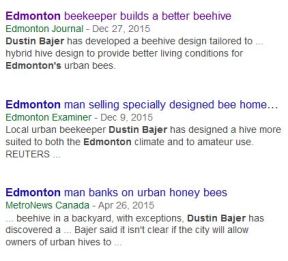
Edmonton Journal Headline google stories

Revolutionary Headlines

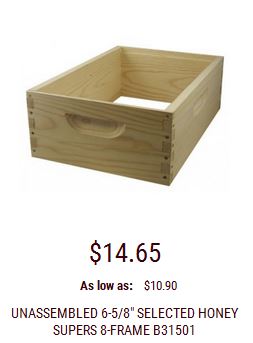
Ah, yet another revolutionary beehive. You know, it’s more suited to the needs of the bees, yet better for the beekeeper. In this case, an Edmonton (Alberta, Canada) designer has come up with a beehive that holds 8 frames instead of 10 and uses a 6-and-5/8-inch box instead of the deeper standard super. So, it’s narrower and shallower. It looks a lot like a hive that’s been around for over a century.

The 6-and-5/8-inch equipment has long been known as the Illinois-depth hive. It was invented by the Dadant company, in Illinois, about 100 years ago.  8-frame boxes have been around even longer. When I was a lad, I worked for a fellow who ran 1,200 colonies – all in 8-frame equipment with shallow Illinois-depth frames. That was over 30 years ago.

In 1894, the beekeeping journal Gleanings ran several issues describing the benefits of using 8-frame equipment – they listed 24 key advantages.  I suppose that the Edmonton designer of the revolutionary hive, Dustin Bajer, knows that 8-frame equipment has been around for a long time. Bajer is also aware of the Illinois-depth box and frames because he calls them by that name on his equipment information web page.

The 8-frame Illinois box can be purchased from nearly all the larger bee equipment makers. Bajer claims to have “tweaked” existing equipment to come up with a hive which he describes as “bee-centric”,  using shallower, narrower boxes that are more like the bees’ natural home, the tree trunk. This is exactly how the beekeeper I had helped 30 years ago described his system.

The Edmonton Journal says Bajer has a “novel hybrid hive design” which is better suited to our northern climate and better suited for urban beekeepers.  Bajer seems to have taken existing equipment (plus a Warre section and a sloped lid) and presented it as the next big idea for northern urban beekeepers. Maybe he’s right.  I certainly admire his salesmanship.

Narrow, shallow hive with sloped roof - at my cousin's home in Europe. In use for hundreds of years.

Narrow, shallow hive with sloped roof – at my cousin’s home in alpine Europe. In use for hundreds of years.

This leads to an interesting point.  Old ideas are recycled over and over again in beekeeping. The top-bar hive (TB) is a good example. Aristotle described top bar hives 2,000 years ago. They were in continuous use in Greece for millennia. Yet most people think TBs are a recent invention.

Combining 8-frame Illinois-depth boxes, sloped lids, some Warre hive bodies and a screened bottom board may be the third-best idea since sliced bread, but such equipment is not new. However, it may be a unique fusion, like adding fried eggs to sweet potatoes and seasoning it with curry.  The fused hive may be exactly what Edmonton’s beekeepers need.

Want to give the Edmonton equipment a try? Here is a link to Bajer’s site. He offers handmade equipment, which I assume means no power tools were used in their manufacture. The site lists 8-frame Illinois-depth boxes, “Integrated Pest Management” bottom boards (they include screen mesh), and sloped hive lids. Bajer seems to make and sell other bee supplies as well. I have not seen any of his output first-hand, but it all looks neat and sturdy.

The equipment to set up one hive is listed at $200 (plus tax and shipping) and does not include any bees, wax, or frames. For $200, you get the IPM bottom board, a Warre section, a Warre lid, and four 8-frame Illinois boxes (without frames). That seems pretty expensive, but maybe not – four 8-frame Illinois boxes from Dadant in Illinois cost $60 US, plus shipping. So perhaps Bajer’s handmade boxes, bottom, and lid are priced about right.

old bike

Dustin Bajer, the promoter of this equipment, seems like a nice guy. For example, he told the Edmonton Journal’s reporter, “My ideal day is sitting on the deck with a glass of wine, just watching the bees go back and forth.”

I get that. My ideal day has a lot more activity, but I realize not everyone is me. However, I am not comfortable with the promotion of a 100-year-old idea as an innovative tweak of existing bee equipment, newly designed for the northern urban (Nuppie?) beekeeper. Maybe someone will design a 2-wheel human-powered vehicle with pedals and chain and tweak it by making one wheel bigger than the other. You say it’s been done?  In my mind, rebranding 8-frame Illinois-depth boxes as a new design is not too much different. (Even if it includes a cute sloping roof.)

Posted in Culture, or lack thereof, Hives and Combs, Save the Bees, Tools and Gadgets | Tagged , , , | 2 Comments

L.L.L. – The Christmas Gift

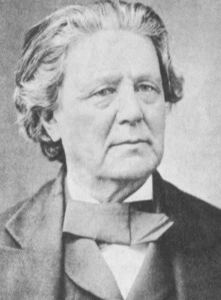
Langstroth

Langstroth, 1810-1895

He invented modern beekeeping, yet the early life of Lorenzo Lorraine Langstroth was challenging, his mid-life was depressingly difficult, and his end life had just a bit of redemption mixed into an anguished mental landscape. However, he changed beekeeping to its core and on his birthday anniversary (Christmas Day!) we give homage to the most important beekeeper America ever produced.

Langstroth was born December 25, 1810. That was some Christmas gift to the world, wasn’t it? His childhood seems to have been typical for a kid who spent a lot of time on his hands and knees on the streets of Philadelphia, trapping bugs and ants with table scraps. “I was once whipped because I had worn holes in my pants by too much kneeling on the gravel walkways in my eagerness to learn all that I could about ant life,” Langstroth wrote.

He built paper traps for beetles and flies, leading to a traumatic experience when his grammar school teacher – fed up with six-year-old Lorenzo’s wasted bug time – smashed his paper cages and freed his flies. Lorenzo was sent to cry himself to sleep  inside a dark cupboard at the school. The teacher’s reform strategy worked. Langstroth gave up his interest in insects and became a preacher instead.

Langstroth's Andover church

Langstroth’s Andover church

Langstroth studied theology at Yale. At 25, he was offered a job as pastor at the South Church in Andover, Massachusetts. Even in Langstroth’s day it was an old prestigious church. In 2011 it celebrated its 300th anniversary. The plum assignment was a recognition of the young man’s abilities.

While visiting a parish member, Langstroth noticed a bowl of comb honey. He said that it was the most beautiful food he had ever seen. He asked to visit his new friend’s bees. Langstroth was led to the fellow’s attic where the hives were arranged near an open window. “In a moment,” Langstroth remembered, “the enthusiasm of my boyish days seemed,  like a pent-up fire, to burst out in full flame. Before I went home I bought two stocks of bees in common box hives, and thus my apiarian career began.” Langstroth had been bitten by the bee bug.

Throughout his lifetime, Langstroth suffered badly from manic-depression. In the mid-nineteenth century there was little anyone could do to help a person afflicted with mental illness. The only solace was temporary and usually came to Langstroth when he was with his bees.

The young minister felt that he wasn’t an effective parson because of his recurring dark days, so he quit preaching and became principal of a women’s school instead. By all accounts, he was a empathetic minister and a dedicated teacher, but bouts of depression forced him to cancel sermons and classes. He needed a change. Bees were the only thing he knew that could give him peace, comfort, and meaningful work and also fit into a life disrupted by debilitating illness. But sometimes not even bees could stop what he called his “head trouble” when darkness crept upon him.

By 1853, he had moved back to Pennsylvania. He built an apiary and expanded it. He hoped to make his living from bees. But that summer, severe depression returned and lasted for weeks. He sold all his colonies in the fall. Then he started with the bees again. His life would turn over again and again with periods of unbridled manic enthusiasm and productivity which were always followed by gloomy months of despondency. During his depressed phases, Langstroth took shelter in a bed in a dark room. He would remain there, immobile, for days. “I asked that my books be hidden from my sight. Even the letter “B” would remind me of my bees and instill a deep sadness that wouldn’t leave.”

When he was able to return to his bees, Langstroth made great strives at increasing his efficiency in the apiary. He learned to innovate and to make his tasks more effective. He would never know when depression would return so he worked day and night during his highly productive manic periods.

The major inefficiency in the apiary was the design of the boxes which held his bees. The boxes were usually simple wooden crates with solid walls and small holes which the bees used as entrances. During harvest of a hive, the lid was lifted from the crate. Attached to the lid would be wax combs which the bees built in haphazard jumbles. The combs cracked and broke during the beekeeper’s excavation, causing a sticky mess and disturbing the excited bees. It was a messy, nasty way to inspect bees and harvest honey.

Langstroth noticed that bees often left a small space around the edge of their combs. Sometimes, upon lifting the lids, he would find wax attached to both the lid and the walls inside the hive, while at other times the hanging combs were not stuck to the hive box at all. Langstroth’s brilliant insight was to notice that the space was about 3/8 of an inch when the combs hung freely. If a comb were closer than that to a wall, the bees would seal it to the wall. But at 3/8 inch (actually, between 6.35 and 9.53 mm), the bees always left a space. He had discovered “bee space”.

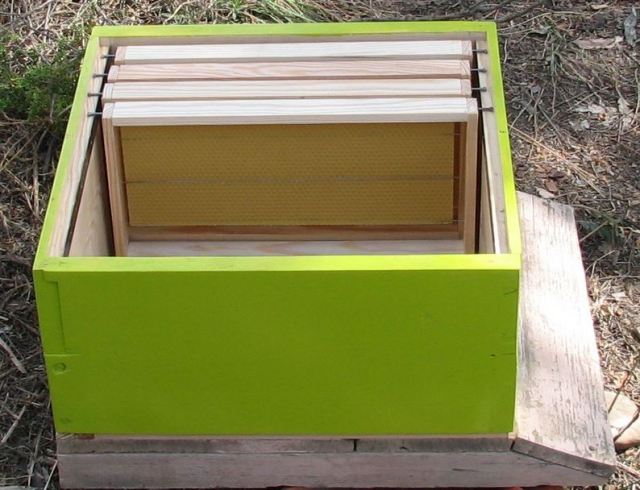
Langstroth’s brilliant application of his observation was to make wooden frames that held the wax combs. The frames dangled within the hive’s box so that their wooden edges were always 3/8 of an inch from anything that might touch the frame – the lid, the interior box walls, the box bottom, other frames. Positioned like this, the bees never waxed the frames together or to the sides or bottom of the hive. The result was a beehive with movable frames. Combs could be lifted, examined, and manipulated.

In 1851, Langstroth had his Eureka moment about bee space and frames. He might have run through the streets naked, shouting “bee space”, if it weren’t for the conservative New England dress code and the fact that his flash of insight had arrived in small measures, pointing him to a better hive and a better way to keep bees.

Langstroth frames, the heart of his invention

Langstroth frames, the heart of his invention (Source: R. Engelhard)

Langstroth’s simple idea made modern beekeeping possible. Colonies could be handled more gently. Frames could be inspected for disease, queen quality, and honey and pollen supplies. Movable frames meant queen bees could be produced and big strong hives could be split (by sharing frames between two or more hives), simultaneously increasing colony numbers and preventing swarming. It was a new era in beekeeping. The next few decades are still known as “The Golden Age of Beekeeping“.

L.L. Langstroth was not alone in figuring out bee space and inventing applications for it. About the same time, some European beekeepers (Huber, in Switzerland and Dzierzon in Poland/Germany, Prokopovich in the Ukraine, among others) had made similar discoveries. But Langstroth created a simpler and more easily used hive. His Langstroth beehive was a fine example of North American utilitarian craftsmanship. Efficient, simple, and cheap.

Langstroth’s invention was so simple and cheap that his patent was readily violated. Various sizes of frames and bee boxes were touted as novel improvements to Langstroth’s original design and therefore exempt from patent protection. Langstroth began a number of lawsuits against the more flagrant violators, but when the court cases began, so did his “head troubles”.

He dropped the litigation when he realized he could not win and when his illness prevented a spirited defense. Realistically, it was impossible to stop imitations and adaptations. Beekeepers – who were often handy farmers and carpenters – quickly built one or two hives with frames for themselves. Langstroth sought one dollar to license each box, which was a huge price in those days. But his real discovery was “bee space” which could not be patented. His position was like trying to patent sails for ships after discovering wind. Even Langstroth’s supporters wrote that Langstroth should have simply allowed the idea to flourish in the public domain. Trying to enforce the patent was expensive and ultimately left Langstroth nearly bankrupt.

Frames, dangling in a hive. (Source:

Frames, dangling in a hive. (Source: D. Feliciano)

With a plethora of modifications and with similar boxes being designed in Europe, Langstroth’s great contribution may have entered the world anyway and without much credit to him. But the retired minister had one other major contribution to society. It earned him much-deserved praise and even a bit of money. In one feverish manic spell that lasted six months, Langstroth wrote one of the greatest beekeeping books ever produced.

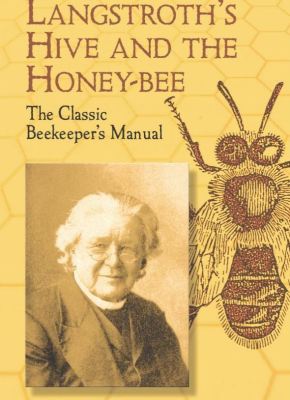
Langstroth's Hive and Honey-Bee, first published in 1853

Langstroth’s Hive and Honey-Bee,
first published in 1853

In 1852, working for six months without rest and very little sleep, Langstroth wrote The Hive and the Honey-Bee. This book, revised and expanded in more than 40 subsequent editions, is still one of the best sources of reliable beekeeping information. When Langstroth wrote it, there were other good bee primers on the market, but his book moved to the top spot. I’ve read the original 1853 book on-line and I have an 1859 copy of the book in its original smallish format with orange hardboard covers and 409 pages of fading text. Within the book are chapters on Loss of the Queen (and what to do about it), Swarming, Feeding, Wintering, and Enemies of the Bees. It’s a very practical guide to keeping bees and much of it is still relevant today.

Langstroth never had lasting peace from his cycles of manic depression, though in his 60s he traveled to Mexico and found that the stimulation and change of scenery gave him an unexpected respite from depression. The illness returned when he returned to his home, but he remembered the break from head troubles with great appreciation. He lived long enough (85 years!) to see his work appreciated and his book sell hundreds of thousands of copies. Despite his life-long disability, he had a long, full life, three children, and interesting work. And he made a phenomenal contribution to beekeeping.
Merry Christmas and Happy Birthday, Lorenzo Loraine Langstroth!

Posted in Books, Culture, or lack thereof, History, People | Tagged , , | 5 Comments

Black Pollen Day

honey bee collecting coffee grounds in pollen baskets

Arizona honey bee collecting coffee grounds in her pollen baskets.

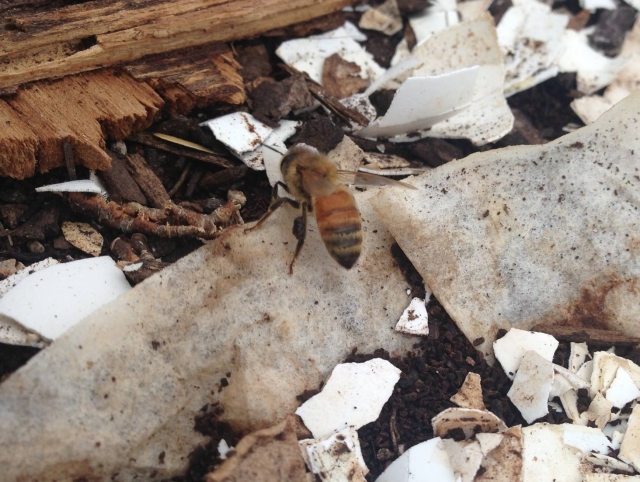
Some bees eat coffee when they get desperate. I suppose some people do, too. We usually think that bees are always gleefully buzzing flower to flower, happy as ducks in water. But when food is scarce, anything goes. When my niece, Monica King, sent a picture of one of her honey bees collecting coffee grounds in lieu of pollen, I was impressed. It’s a great photo. Let’s take a closer look.

https://www.pinterest.com/swexplorations/

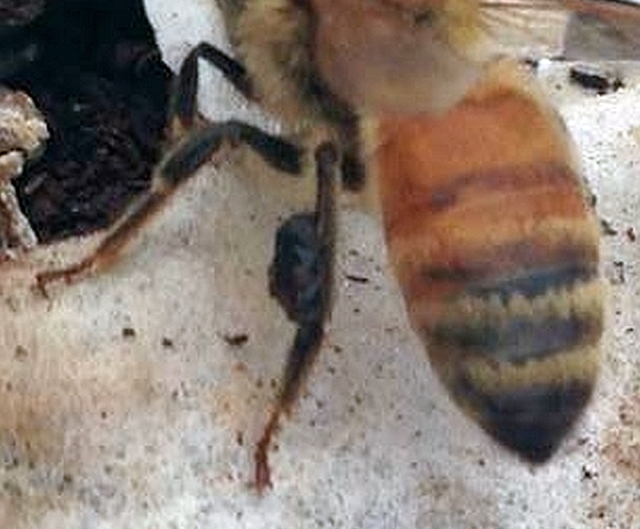
Close-up: Honey bee with coffee grounds on corbicula

Three things to notice. The tiny wad of pollen is tightly bound to the bee’s leg – it must have been stuck there intentionally by the bee; the bee has a bit of black dust on her abdomen; the pollen is black – that’s an unusual colour for a pollen pack. What’s going on here?

Last week, there was frost in southern Arizona where my niece lives. This wrecked most of the winter wildflowers, so yesterday this bee was one of many seen working the compost pile’s coffee grounds. Bees try to forage whenever the weather allows – even if flowers aren’t available. Monica found her bees gathering coffee granules. They were packing the bitter caffeine nuggets onto their legs. A couple months earlier, her sister in Florida had photographed two honey bees on a hive lid – one with orange, the other with black pollen. (Orange and black pollen in October – just in time for Halloween.) I tried to guess what Florida flower might yield black pollen, but couldn’t figure it out. Now we may have the answer. The bee with black pollen was likely carrying coffee, not real pollen.

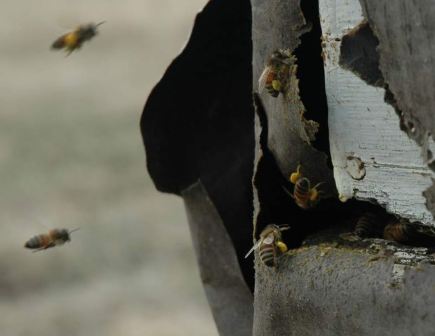
bees arriving with pollen in AlbertaPollen is typically yellow or orange. I don’t think that I’ve ever seen red pollen – but I’m colour-blind, so I might have seen it but mistook it for green. Fireweed (which grows here) yields a rare blue pollen. Light green, brown, and gray/white are also seen, but black pollen is as rare as hen’s teeth. (Click here for a guide to some common pollen colours.)  Yellow and orange are the proper colours of pollen on posters at Save the Bees rallies. You can see correctly-coloured pollen in the photo above. I always get optimistic when I see scenes like this in Calgary in April.  The colony was still wrapped for winter (the wind had begun ripping the winter protection), but the bees had found pollen and they were their usual happy selves.
When bees get desperate, they scavenge almost anything similar to pollen (for protein) or nectar (carbohydrates). I’ve seen bees collect all sorts of odd stuff. People  have noticed honey bees rolling around in seed dust at bird feeders. Years ago, we were puzzled by bees that visited sawmills. They spent a lot of time hovering around the wet, freshly cut timber. Occasionally the bees lit and then sucked at the wood or moist sawdust. Other times they dove into it and got dusty.

 Sawdust, birdseed, coffee – they’re not necessarily bad.  Bees sometimes need salts and minerals beyond what they find in flowers. Often they don’t bother to stuff the pollen substitutes into their corbiculae. If the stuff doesn’t stick to the bee’s hairy legs, she may dive into the powder so that enough dust sticks and is carried home. Back at the hive, other bees pull it off and put it to use.   Monica’s picture clearly shows that the bee in the photo has tucked coffee to her leg – just a bit of her back is also covered in black dust.

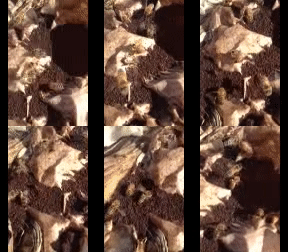
Monica also sent this video clip of how the bees fetch coffee grounds.

They look agitated. (Too much caffeine?) It looks as if they are ‘rolling around’ in the coffee grounds.  But if you focus on one bee at a time and watch her, you may see that she is packing coffee into her corbicula as well.

 I wonder how the brood reacts when caffeinated low-protein grounds are mixed with honey and fed to the larvae as bee bread. Scientists recently showed that bees prefer nectar that has low levels of caffeine over nectar that has no caffeine in it. (Citrus nectar, among others, contains naturally occurring caffeine.)  Tests indicated that a bit of caffeine is attractive – probably as a stimulant – when mixed with test sugar syrup. But mixing in too much repelled the bees -they don’t like strong bitter flavours. The same experiment (reported in Cell journal) claimed that when honey bees received caffeine-laced food, they danced more rapidly and communicated with more colleagues than average bees. If coffee grounds collected by desperate bees visiting compost ends up in the mouths of bee-babes, the house bees may have a daunting task controlling their super-charged little angels when they emerge from their cells as young, highly-caffeinated adults.

Posted in Bee Biology, Strange, Odd Stuff | Tagged , , , | 4 Comments

How the Honey Bee Got its Stinger

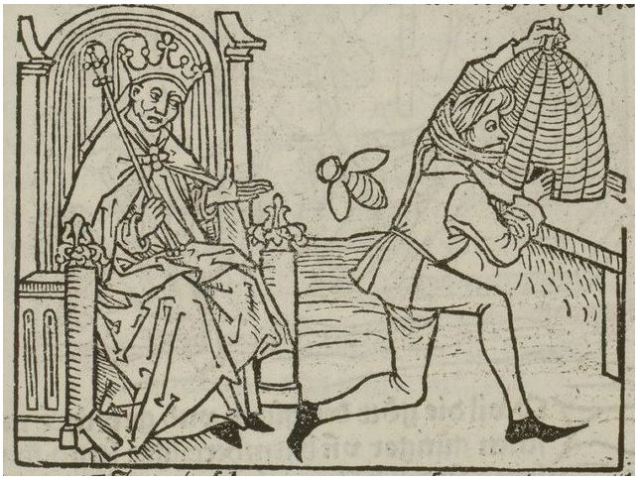
This will sound like a Rudyard Kipling  Just So Tale. But it goes back a lot further than the early 1900s. The Bee and Jupiter is credited to Aesop, of Aesop’s Fables Plus Punchline fame – and he lived 2,400 years ago.

Here’s the story:

cartoon bee with honeyA king bee visited Jupiter on Mount Olympus and gave him some delicious fresh honey. Jupiter was greatly pleased so he promised to give the king of bees anything he wanted.

“Give bees a stinger that kills so we can defend our honey from the race of man,” said the bee.

ZeusJupiter loved the race of man and didn’t want humans killed by bees’ stingers, but he had to keep his promise. Even today, bees have stingers that kill.  But clever Jupiter set things up so that the bee would be the one that the stinger kills.  Jupiter was true to his word, the bee got a sting that kills, and Aesop’s punchline, or moral, to his story is:

“Evil wishes, like chickens, come home to roost.”

Of course you know that this is just a tale and part of the story is wrong: Aesop was Greek, so the god would have been Zeus, not Jupiter. And bees have queens, not kings. Other than that, I suppose the story is pretty accurate, except from an evolutionary biologist’s point of view (but they like to use science to spoil everything).

You may have noticed that Aesop adds roosting chickens to the story, even though it’s a tale about bees and gods. I don’t know why he did that, or if it’s an apocryphal add-on, but now we know the reason that bees have stingers and chickens come home to roost. Sort of like killing two birds (or one bird and a bee) with one stinger. And maybe that’s where that old adage originated.

Jupiter and the Bee, from a 1479 woodcut in Aesop Fables

Jupiter and the Bee, from a 1479 woodcut in Aesop Fables

Posted in Culture, or lack thereof, History, Humour, Killer Bees, Stings | Tagged | 5 Comments

Beekeeping Promo Flashback

This video goes back about 15 years, but a friend asked me about the 6 minutes of local fame I experienced on the Dave Kelly morning show, so I looked up the film. The quality of the tape (and my acting) aren’t all that great, but it made me think about honey promotion and how we sometimes have to stick our necks out a wee bit to draw attention to something good. It was worth the effort to do the show!

I’m not sure how I got on The Big Breakfast, it wasn’t my choice. But I was head of the Calgary bee club at the time, so it must have been a favour to someone somewhere. Anyway, hope you have a smile from this. Don’t miss the expression on Dave Kelly’s face at about 3:00 into the video. He was quite a sport and a great host for the show.  By the way, the girl in the video is my older daughter, Erika. She’s still working in bees and honey.

Posted in Beekeeping, Comb Honey, Culture, or lack thereof, Honey, Movies, Outreach | Tagged , , | 1 Comment

Honey with Vibes

amazon rainforest

True story. In a small town along Brazil’s Amazon, there is a warehouse with barrels of honey stacked on pallets. It’s organic honey, certified chemical-free, and it was produced by Africanized bees – the so-called killers of the bee world. All of that is somewhat ordinary. The odd thing about this honey, packed in stainless steel drums destined for Japan, is that musical vibes have been imbibed into its sweet molecules. You see, the buyer has insisted that beautiful new age music must be played day and night in the warehouse – to, um, energize it.

Amazon cotton field.

Amazon cotton field   (Source)

I heard about this honey from a Brazilian beekeeper who was given a special MP3 file to broadcast to his own honey barrels, but, alas, my friend failed to get his crop certified as organic. Some of his bee yards were too close to commercial cotton fields, down along the southern edge of the Amazon rainforest. He envied the other beekeeper who was receiving a huge premium for his special musically-enhance honey.

I understand how organic honey may be desirable. And Amazon jungle honey must be the coolest thing since New Zealand’s manuka. But honey that has spent a few weeks listening to meditative tunes? It makes my inner geophysicist wants to scream.

The idea that liquids may remember music in their molecular souls is akin to the memories that homeopathic preparations are said to retain. Even diluted a billion to one, some homeopathic water is believed to remember the chemicals that once floated in it, thus imparting effects far greater than cold water. I’m a skeptic, but there are plenty of believers out there – homeopathy is a billion dollar business. I’m glad it’s not true, else the folks down river from us would be drinking some really memorable water.

Some New Age vendors have taken to exploiting the sound vibration memory idea. The Holistic Works website would like to sell you personal sprays that have been subjected to musical vibrations. The call the stuff Flutterbye (Did you catch the stupid play on the word butterfly? Their entire web page is just as clever, making me think it’s all a joke. But it’s not.)

blue butterflyHere’s their advertising lead-in:  The flutterbye effect: healing resonance from butterflies, bees and dragonflies. These folks are selling “Sound Healing”. In a nutshell (and I really mean nutshell) the stuff you will spray in the air has been impregnated with the vibes of butterflies, dragonflies, and bees. They apparently record the 200-beats per minute buzz of a bee, then play that sound towards a jar of BioResonance Sound Spray so you can “build something very special into your energetic healing – the beating of the wings.” Two things you may need to know about these sound sprays: “Bioresonance Sound Sprays are great for spraying around your aura, as a personal spray”; and, “no tiny creatures were harmed in any way in making these resonant sprays.” Well, that’s certainly reassuring.

The butterfly spray’s vibrations will help you overcome your difficult past and bring peace and openness;  the bumblebee spray will help you overcome inertia and apathy and (as a bonus) you will be more able to relax into your etheric field. The cost for the spray, “made from new sound technology which encapsulates the vibrational sound of wings beating” is just $18.95 for 50 ml (about 4 tablespoons).   Sweet. Wish I had thought of it myself.

Posted in Apitherapy, Culture, or lack thereof, Hive Products | Tagged , , | 3 Comments