Continuing with the winter theme, another recent read was Ron Miksha’s book Bad Beekeeping. Miksha maintains a blog of a similar name for sharing his thoughts on the world of bees and beekeeping. He mentioned the book in a post so I thought I would pick up a copy in support of his ongoing efforts. Here is a short review.
It seems that youngsters who are not particularly gifted in science and math are more likely to want a science job later in life. Kids who excel in science are less likely to want to be scientists. At least, that’s the odd result from testing and polling 540,000 15-year-olds in 70 countries.
The Programme for International Student Assessment (PISA) is an evaluation of the competency of a half million 15-year-old students, randomly chosen from the world’s 35 OECD (Organisation for Economic Co-operation and Development) countries and over 30 non-OECD countries (places like Croatia, Uruguay, China, Singapore, Russia). Here’s a link to PISA. You can get the raw data there and inspect their methods and summary reports.
Every three years, the newest crop of 15-year-olds take the PISA Reading, Science, and Math exams. The OECD does this so various education techniques can be compared with the kids’ results. For example, what leads to higher scores: More homework? More money dumped into the education system? A smaller teacher/student ratio? (No, Sometimes, Yes.) If you are interested in this sort of thing, the reports and the PISA data are publicly available.
2015 Science Rank
PISA is also a ranking system enjoyed by gloaters in select countries. In reading, Canada tied with Hong Kong for second place in the world. (Singapore was number 1, USA #24, Russia #26). Singapore was number one in math, science, and reading. Canada was in the top ten in everything. Other high-scoring countries are Finland, Japan, Estonia, and China. The analysis indicates that a lot of factors make the difference. National wealth, priorities (sports/fitness, nutrition, health care), and culture interact to define the success of students. The Economist has a nice analysis of the results.
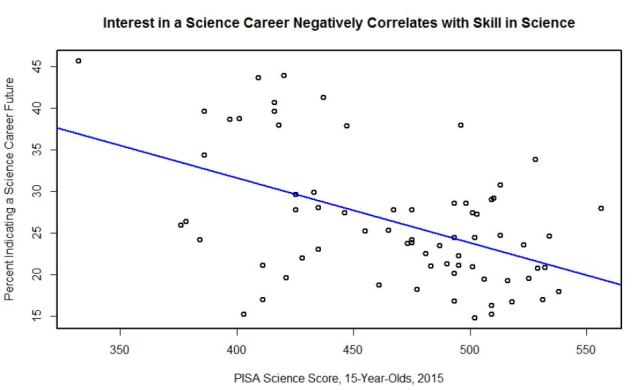
While I was reading the tables of numbers, I happened upon some curious data. In the most recent assessment (2015), PISA asked participants: “Do you think that you will pursue a career in science?” From the answers, the OECD guesstimates how many future scientists may be entering university. On average, the number was encouraging – 26% of 15-year-olds worldwide think that their future career (as physicians, engineers, science-teachers, chemists, computer scientists, researchers, etc.) will involve science. But here’s the odd thing: youngsters who did poorly on the science exams were actually more likely to think that they will become scientists.
The most blatant example of the gap between career aspirations and expertise is found in the country of Dominican Republic. Students there did more poorly than any of the other tested countries. The average science score places 15-year-old D.R. students 7 academic years behind 15-year-olds in Singapore. In D.R., performance is at a Grade 5 level while in Singapore, the scores indicate a Grade 12 achievement. By the way, American students performed roughly 3 years behind the Singapore kids but just one year behind the world average.
So, the Dominican Republic came in last in science skill. But that country was first in science career aspiration. 45% of Dominican Republic’s 15-year-olds hope to take a career in science, according to the PISA study. That’s higher than any other country. Some other countries showed a similar dichotomy, but not as severe. I did a simple Pearson’s correlation (Science aptitude and Science career aspiration). For the 70 countries, there is a negative 0.49 correlation, which is reasonably strong. The Dominican Republic is a bit of an outlier, so I masked it and the correlation went down just a little, to -0.45. My plot, below, is a bit scary – it is unfortunately obvious that decreasing skill is accompanied by increasing confidence.
Plot of science career aspiration as a function of science skill. Each dot is a country. Dominican Republic, upper left, shows high confidence but low science score. Dot furthest right is Singapore with highest science skill and slightly above average confidence. The sloping blue line is a linear least squares fit, showing negative correlation of skill and confidence. (Data from PISA)
The USA is below the world average in science (and math and reading) but with 38% expecting a career in science, many of its children are nevertheless thinking that they’ll have a science career.
I realize that there can be a lot of reasons for boys and girls to claim that they will pursue science – motivators could be cultural and financial. However, I wonder if hubris also plays a role. Even doing poorly in science, some 15-year-olds nevertheless think that they will work as scientists. It may be a case of not knowing the unknown. I’ve fallen into this same trap myself. After flipping through an easy-to-read science book (How to Remove Your Own Appendix, or Quantum Explanations of Everyday Accidents), I’m sure I can remove my own appendix or teach nuclear physics because it just sounds so easy. I’m not an expert, but heck, I can do it.
Beekeeping, the usual theme of this blog, also offers opportunities to see over-confidence in action. The newest beekeepers often have it all figured out, until they realize much later that they knew very little. I suspect that’s the main reason foundering science students think science should be their career.
Today – December 18 – is National “I Love Honey Day”. I’m not sure whose idea this one is, but it’s a good one. America should have a national honey day – it’s the world’s largest honey customer. Maybe it should be extended to a full month. Iceland, of course, has a National Honey Week, as you can see in this video.
I used to sport a T-shirt that invited people to “Eat Your Honey Everyday” but then I realized that folks who saw me wearing it didn’t always get the beekeeping connection. Anyway, please celebrate National I Love Honey Day by devouring some floral honey today. You probably won’t regret it.
It’s Sunday morning, just a week before Christmas. I’m hoping that your bee work is done and you have some time to listen to a few tunes from honey-throated singers and sticky-fingered musicians.
Our first gift to you is Flight of the Bumblebee as you’ve never heard it before. Nicholai Rimsky-Korsakov wrote this for his opera The Tale of Tsar Saltan in 1899 as a gift to the Russian people on the centenary of Alexander Pushkin’s birth. The opera is based on Pushkin’s own Tale of Tsar Saltan which is the story of a prince who was turned into a bumble bee so he could sting his treacherous grandmother on her nose. Here the Flight of the Bumblebee was famously rearranged and transcribed for piano by Russian composer Sergei Rachmaninoff. I heard that Rachmaninoff arranged this piece as a finger exercise for first-year piano students, but I might be mistaken. As you can see in the video, you don’t even need a performer if Rachmaninoff’s ghost is near. Here’s our salute to the bumble bee prince:
Less than ten years after Flight of the Bumblebee, folks would sometimes tickle the ivories in their parlor rooms with a bit of ragtime. (Or they’d go downtown and hear it played right.) This is called The Stinging Bee, a real rag two-step, written by Mike Bernard around 1908.
We have to have something for the kids. And it turns out to be the only song on this page that’s actually about honey. It’s Disney’s Winnie the Pooh and Everything is Honey. This is a new release, from a new movie. But doesn’t the music sound like it belongs to the 1940s?
From his 1951 recording of Sail On, Honey Bee, Muddy Waters sails on his guitar like few ever have. Here’s blues at its bluest. This live recording is probably from the mid-70s as Muddy Waters is showing age. Listen close to the guitar about three minutes in and you’ll hear a lot of buzzin’ that sounds like a little honey bee, maybe caught in a mason jar.
In the late 40s and early 50s, Rhythm and Blues was becoming popular. But the jazzy boogie sound would soon get drowned out by it’s own child, Rock n’ Roll. Before it left, there were a few authentic performers who had a lot of fun on stage – like Martha Davis, for example. She knows the piano. Now you get to know her from Goodbye, Honey Goodbye. No bees and not much honey here, except as a lovey-dovey endearment. Which makes me wonder – when did people make a habit of asking, “What’s for supper, honey?” When did “Hi, honey!” become acceptable? Anyway, here’s an old film of Honey Goodbye from a live 1954 performance of The Rhythm & Blues Revue, a time when the word honey could be used sarcastically.
By 1957, Rock n’ Roll was taking over, but some country hybrid was also kicking up saw dust. It’s a little before my time, but it still moves me. Here’s a Rockabilly classic, Honeycomb by Jimmie Rodgers. It’s a hopping, dancing, clapping tune about a “walkin’ talkin’ honeycomb.” Note the bees on Jimmie’s backdrop cloth.
The Bee Movie borrowed a bubblegum pop tune from The Archies that dates back to around 1967. The song is as awful as the next one in this queue, but the video does have scenes from the more recent Seinfeld production about bees going on strike because of no pay and polluted working conditions. So, because of that small redemption, here’s The Archies with “Sugar, Sugar (Honey, Honey)”:
The late 1960s had some pretty syrupy songs, none better than Bobby Goldsboro’s Honey. “She was always young at heart, kinda dumb and kinda smart…” and it goes on to “…she wrecked the car and she was sad, and so afraid that I’d be mad, but what the heck.” But then the angels came and got her. Released in 1968, Honey sold millions and you’d hear it everywhere, especially blaring from transistor radios at the beach where teenagers mopped their wet eyeballs. If you missed that era, here’s your chance to catch up on the culture, if you really want to. The Cincinnati Enquirer reported that Goldsboro’s song “usually appears on worst songs of all-time” lists. But it was covered by Percy Faith, Dean Martin, Lawrence Welk, Aaron Neville and dozens of others, so maybe the Enquirer is wrong. You decide. Go ahead, hum along. I know you want to.
Twenty years ago, when the Peter Fonda movie about a tupelo honey beekeeper named Ulee Jackson came out, the country-genre song Tupelo Honey, by Van Morrison, became my favourite. It’s still near the top for me. You might think that Van Morrison had written Tupelo Honey for Ulee’s Gold as it fit the film so well. But Victor Nuñez produced his award-winning movie in 1997 while Van Morrison released his award-winning album way back in 1971. Perhaps Nuñez scripted his movie because of Van Morrison’s music. They are both fantastic works of art, and both feature Florida’s sweet, sweet tupelo honey. Here’s a live video of the song, recorded in 1979.
My list of bee-related music has to include this 2002 ditty by a Norwegian band that claims they titled their group (Miksha) after me. They said that they were looking for a name and they heard about my Vietnam war experiences as a bad beekeeper who developed secret toxic weapons from bee venom. Well, I told them that I was too young for the war and if I had worked on secret toxins, that would forever remain secret. Undeterred, they picked Miksha, my last name, as their group name. The genre – extreme machine metal rock – is something I can completely relate to, because I once took a welding class. Here’s Miksha’s least offensive song, Half the Battle. It’s not about bees, but it deserves a mention because it sounds like an unbalanced extractor.
I know that there are more of these out there, but I’ll end with my current favourite, Honeybee, from 2012. It’s by the steampunk group Steam Powered Giraffe. Steam punk is an alternative-history-embracing counterculture that envisages a modern world without electricity, where steam powers everything. To appreciate the video, it helps to know that the group started as street mimes in San Diego, studied theatre, and the lead singers were once twin boys but now they are brother and sister. I really love the sound, the clarity, the harmony, the spare acoustics, and the folksie melody. Hope you like this one, too!
There you go, more than a hundred years of bees and honey sounds – from classical through rag-time, blues, R&B, rockabilly, pop, country, metal, and steampunk. I hope at least one of these will give you an earworm that lasts all day.
Yesterday, I vented about honey bees and honeybees – the former being correct, the latter wrong. Today’s a new day, so here’s a new vocab issue. In today’s interesting world of blended boundaries, I thought I’d write a few words about gender and caste among honey bees. I’m not going to dig deeply into the science, just skimming the surface here.
You will frequently read or hear that bees have three castes. They don’t. I’m sure that I’ve made the same error – describing worker, queen, and drone as the three honey bee castes. Entomologists smarter than I have also made that mistake in their books and articles. So, here’s the scoop.
Half the chrome
Honey bees are not gender-fluid. A drone is stuck in his manliness because he is born with just half the number of chromosomes (16) compared to what’s awarded to female honey bees. If the queen lays an unfertilized egg, it has only her own chromosomes, just a half set, resulting in a haploid creature which we call a drone. A drone bee has no father. Just a Mum. If the queen fertilizes her egg while depositing it, then the fertile egg has a full chromosome set and it becomes a female. Honey bees can’t cross the gender boundary. Drones are clearly different from the other bees, but they are not a caste. They’re a gender.
On the other hand, (female) honey bees are caste-fluid, at least while they are still formless little sacks of larval pulp. If it’s fed a royal diet instead of the worker-caste gruel of a commoner, the worm becomes a queen instead of a worker. They’re both still females. But they are different castes of female with differently developed bodies. They have different futures, different jobs.
So, honey bees have two castes – worker and queen, and they have two genders – male and female. If you catch me messing this up, send me a note or sign into the comments sections on my blogs and set me straight. Together, we can end the three-caste system and build a better world for honey bees everywhere. (My thanks to Erik for inspiring this little blog-post. He wrote about this subject in detail over at his blog, Bees with eeb, a couple of days ago.)
Don’t be a Dummy about this!
Believing that honey bees have three castes is for Dummies. But you know better.
I’m not a grammarian, I don’t have the most hugest vocabulary, and I have been known to produce some pretty bad spells of whetther – but even I appreciate the right word, used and spelt correctly. Without rules, confusion reigns (and rains and rains). I’m glad when someone points out errors I’ve made – it gives me a chance to learn.
I’m coming back to something I’ve written about before and then I’m moving on to something I’ve never written about. Honey bee – it really should be two words, not one. I think the single word honeybee is just plain wrong. But I notice that some dictionaries disagree with me. Webster’s, for example. Webster’s has also allowed yellow jacket instead of yellowjacket, which is just plain ridiculous. But then, Wikipedia also has an entry for ‘yellow jacket’ instead of yellowjacket, so maybe the whole world is coming to a spectacular illiterate end.
Snodgrass’s bee’s tracheal system, 1910. Snodgrass is our final authority.
If you can’t trust Wikipedia or the dictionary, who can you trust? How about the ESA – the Entomological Society of America? They are the keepers of the bugs’ names and should be our final authority on this. They have adopted the ideas of Robert Evans Snodgrass (a bee anatomist!) for their rules on the common names for all insects.
In the etymology of entomology, R.E. Snodgrass makes sense. If it’s a bee that carries carpentry tools, it’s a carpenter bee. A wasp may wear a yellow jacket, but such a creature is called a yellowjacket (one word) according to the ESA. Finally, since our honey bee is a bee that makes honey, let’s give her that bit of credit and acknowledge her efforts: honey bee. Two words.
“We have such names as house fly, blow fly and robber fly contrasted with dragonfly, caddicefly and butterfly, because the latter are not flies, just as an aphislion is not a lion and a silverfish is not a fish. The honey bee is an insect and is preeminently a bee; ‘honeybee’ is equivalent to ‘Johnsmith.’”
So, don’t Johnsmith me. Go with the American bee expert and the Entomological Society of America instead of Webster (who also misspells colour, plough, and centre). Snodgrass and the ESA use honey bee (the type of bee slathered in honey) and not Honeybee (the name of Steam Powered Giraffe’s honeyed melody).
The Entomological Society of America calls honey bee and silverfish “common names”. There are a million bugs, but in English, only a couple thousand have common names. To name all the ones lacking common names, we use uncommon names – official latinesque scientific nomenclatures.
For the honey bee, the scientific name is Apis mellifera. Note the italics – that’s expected, but often ignored. Apis is Latin for bee while mellifera is a Greek-Latin hybrid of honey (meli) and carry (fero), hence, the honey-carrying bee. We also have a few dozen subspecies of honey bees (Italian bees, Apis mellifera ligustica; German black bees, Apis mellifera mellifera; Africanized honey bees, Apis mellifera scutellata). Only seven species of Apis are recognized. These include our mellifera plus the Eastern honey bee (cerana), the big south Asian dorsata, and florea, the dwarf red bee.
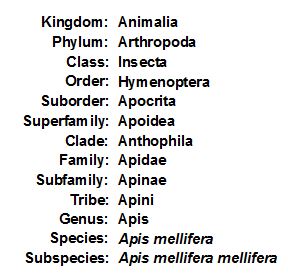
Working up the ranks, from subspecies (mellifera) to species (mellifera) to genus (Apis), we reach the family (Apidae) which again means bee. So, in the case of Europe’s original ‘black bee’, we have the scientific name Apidae Apis mellifera mellifera, which means ‘bee bee honeycarrier honeycarrier’. It’s probably best not to give taxonomists a lot of credit for imagination. Apidae, by the way, lumps honey bees together with bumble bees, stingless bees, carpenter bees, orchid bees and a few others.
Overseeing the family of Apidae, there are the clade and superfamily of bees which account for all of the known 20,000 or more bee species in the world. Above this is the suborder Apocrita containing bees, wasps, and ants which in turn are all part of the Hymenoptera (‘membrane-winged’) order. Hymenoptera are among the million plus Insectas which are spineless Anthropoda. They are members of the kingdom Animalia, which means that they are animals and not rocks, paper, or scissors.
So we have it, the old world black honey bee that you may still find skepped in isolated parts of northern Europe is properly identified as Animalia Anthropoda Insecta Hymenoptera Apocrita Apidae Apis mellifera mellifera. If you say “honey bee” I’ll know what you mean. But if you write “honeybee” I’ll know that you haven’t been properly schooled about our favourite animal.
Winter is a quiet season for beekeepers, so what better time to make yourself a steaming mug of cocoa and settle down to two great podcasts about bees!
The first podcast is a public discussion held at LSE by the Forum for European Philosophy, titled Hive Minds: Collective Intelligence in Humans and Other Animals. The panelists are Christian List (philosopher, LSE), Elli Leadbeater (social insect biologist, Royal Holloway), and Larissa Conradt (evolutionary theorist, Max Planck Institute for Human Development).
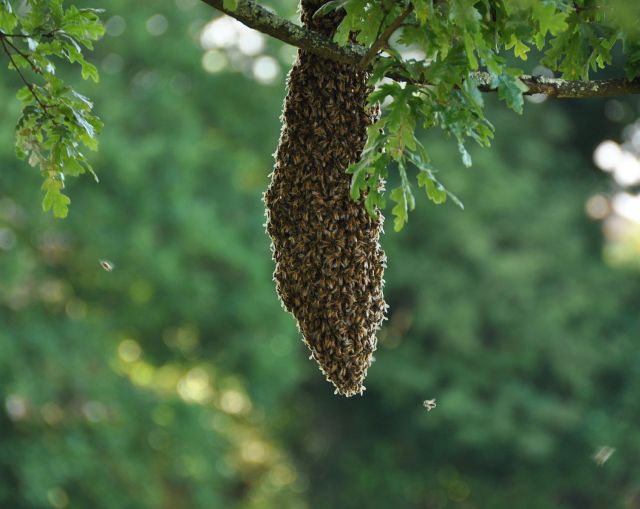
Leadbeater opens the discussion brilliantly, asking us to picture a swarm of honey bees who have just left a hive. So now they are clustering on a tree branch, with about three days to find a new home before they run out of food. Scout bees fly off in all directions looking for nesting sites with certain desirable features – large…
Yesterday, Stats Canada released honey bee numbers for 2016. Canada now has more colonies ever. That’s right – more hives of honey bees than ever, in all of our recorded history. Our numbers are now over 750,000 colonies.
The last time Canada had a big colony count ramp-up was in the mid-1980s. We reached 707,000 colonies in 1986. Then, over the next three years, our colony count collapsed to below 500,000 hives in 1991. It wasn’t bee disease or CCD that caused Canada’s colony collapse. It was a new law that stopped honey bee imports from the USA. Canadian bees that died during our long brutally cold winters couldn’t be cheaply replaced so about one-third of Canada’s beekeepers left the bee business. The mistake cost Canadian beekeepers millions of dollars and shows what happens when people who don’t know much about beekeeping make the rules.
Canada has finally had a few good years, but I predict that colony counts will be down a little next year, this time because the wholesale price of honey has fallen quite a lot. Some beekeepers will probably not replace all of their winter dead-outs. As a result, I think Canada’s colonies will number fewer than 700,000 in 2017.
Canada’s 2016 honey production is estimated as 92.2 million pounds. That’s a 123 pound per hive average. Respectable, but not Canada’s best – that was 1998 when the national average was 180 pounds per colony. Few other places on Earth are as prolific, nor do they make the delicious snow-white honey that’s found in Canada.
Ambrosia. n. nectar; food or drink of the Greek gods which confers longevity
Break out the mead – it’s St. Ambrose Day! Ambrose is the patron saint of beekeepers, a task he’s had since the day in 340 when he was born. A swarm settled on his face as he slept in his cradle. The bees moved on to a better nesting site, but left a drop of honey on his lips. Saint Ambrose Senior took the event as a sign that his son would become a honey-tongued orator.
Saint Ambrose, aka Aurelius Ambrosius, was a politician before he entered the clergy and became the bishop of Milan. Ambrose was a staunch opponent of Arianism (the heretical belief that Jesus is God’s son) and he led persecutions of Arians, Jews, and pagans, thus consolidating the power of the ascending Church. One thousand years after he died, the Church elevated him to “Doctor” of the Church, a promotion (not a posthumous medical degree) that recognized his role in doctoring the Church’s early theology.
His sainthood recognizes his exemplary and celibate lifestyle and such intriguing observations as “giving to the poor was not to be considered an act of generosity towards the fringes of society but as a repayment of resources that God had originally bestowed on everyone equally and that the rich had usurped.” To modern ears, it sounds like Saint Ambrose’s was a communist.
In addition to being a theologian, politician, and equalizer of wealth, Ambrose is sometimes credited with teaching the world to read silently, instead of aloud. (Keeping his honeyed tongue to himself.) He described a key event in his religious conversion as a moment of silent reading with a friend. In Saint Augustine’s Confessions, you’ll find this:
“When [Ambrose] read, his eyes scanned the page and his heart sought out the meaning, but his voice was silent and his tongue was still. Anyone could approach him freely and guests were not commonly announced, so that often, when we came to visit him, we found him reading like this in silence, for he never read aloud.”
Ambrose had other talents, too. He was the composer of Veni redemptor gentium, an Advent hymn written by him using iambic dimeter. He also promoted a choir style called “antiphonal chant”, which you may hear here.
But getting back to the bees. A swarm landed on Ambrose when he was a young. We’re not told how long they stayed but we learned that the bees left him honey-lipped. That’s pretty much it for Saint Ambrose and the bees.
Nevertheless, Ambrose is patron saint of bees, beekeepers, and candle makers. In Ambrose’s writings, bees are mentioned only a couple of times. Because of his musings about ownership of property, I thought he’d relate how all the bees in a hive share their food equally and if starvation strikes, every bee continues to share until they all die en masse, at the same sad time. But instead, Saint Ambrose was more preoccupied with celibacy. In his few lines about bees, he connects them to celibacy. The Catholic Encyclopedia says Ambrose had an “enthusiastic love of virginity which became his distinguishing trait.” Here’s how Saint Ambrose ties bees and virginity together.
Ambrose didn’t know that worker bees are female virgins – that idea wasn’t figured out for another 1,500 years. He thought the queen was a king. And Ambrose believed that bees spontaneously generate (without sex) from dew on flowers where older bees gather them up and carry them back to the hive. As Ambrose observed “virginity is fit to be compared to bees… The bee feeds on dew, it knows no marriage bed, it makes honey… How I wish [women] to be an imitator of bees whose food is flowers, whose offspring is collected and brought together by the mouth….” The idea that baby bees were collected by mouth from flowers was the state of the science in fourth-century Europe.
That’s about all I could find relating the patron saint of beekeeping to bees. I guess we make more of it than Ambrose himself did.
Today, the Ambrosian bee link is mostly forgotten, except among some St Ambrose University sports teams where Fighting Bees is a warrior symbol. But we might still light a candle for the old saint.
It’s holiday season. And if you’re normal, you’re thinking about beekeeping books for everyone you know. Even the non-beekeeps. I spent a few minutes today scanning the Amazon.com site to see what was bee hot. Not that the best sellers are always the best books. (My own book fell from the best seller ranks back in 2008, but I think Bad Beekeeping is still an OK gift for your friends.) But there are some good ideas to get you started.
As of December 6, 2016, here are the top 10 Amazon.com bee books:
7 – The Bee Book by DK, Emma Tennant, & Fergus Chadwick – published March 1, 2016
8 – The Sting of the Wild (The Story of the Man Who Got Stung for Science) by Justin O. Schmidt – published in 2016
9 – Storey’s Guide to Keeping Honey Bees: Honey Production, Pollination, Bee Health by Malcolm T. Sanford & Richard E. Bonney – published September 18, 2010
This list includes one Bible and two books for dummies and idiots. It also includes two (!) books by Kim Flottum, long-time editor of Bee Culture and a gifted writer. I own several of his books and can recommend them – they are well-written, printed with quality, and reasonably priced. The seventh book on the list above (“The Bee Book“) is aimed at smart young readers and features bumbles, masons, and honey bees.
If you are buying for someone who is contemplative and beyond basic bee books, I strongly recommend Tom Seeley’s Honeybee Democracy. Another Seeley book, Following the Wild Bees: The Craft and Science of Bee Hunting, released this spring, is also great. If you have not read Mark Winston’s recent Bee Time: Lessons from the Hive, it is now released in trade paperback and is considerably cheaper than the hardcover. Winston is always a good read, and this book is a blend of environment, ecology, and bees.
If you do your own Amazon search for “beekeeping books” you’ll notice the next three volumes. They are not precisely bee books, but I can see why they’d appear in the Amazon beekeeping book list. First, here’s is a hugely well-selling book released in 2010 and written by Brett L. Markham: Mini Farming: Self-Sufficiency on 1/4 Acre. It should appeal to the Doomsdayers on your Christmas list – if you can find their bomb shelter to deliver the book.
I can’t imagine that there are people who won’t read a technical beekeeping book, but maybe you know some. For those friends of yours who are non-keepers, I can suggest a couple fictions that might swing them your direction. First, a recent release in the “Whatever happened to Sherlock Holmes after he retired?” genre: The Beekeeper’s Apprentice: or, On the Segregation of the Queen by Laurie R. King In this adventure, Holmes is retired from detective work and quietly keeping and writing about bees. Along comes a teenage-girl and a new mystery. There’s also The Secret Life of Bees by Sue Monk Kidd. It came out in 2003, and is still popular. It might be interesting to some readers on your shopping list.
Going back much further in time is The Keeper of the Bees by Gene Stratton-Porter (1863 – 1924). She was an American author, naturalist, nature photographer, and one of the first women to form a movie studio, Gene Stratton-Porter Productions, Inc. She also wrote several best-selling novels, including her last one, the Keeper of the Bees. It’s set in California in the 1920s, where we meet a master beekeeper, his bees, and a wounded World War I veteran. If this sort of historical work appeals to you you may also like The Beekeeper’s Pupil by Sara George. I read it a few years ago and really liked the story – it’s a fiction, but closely follows the facts around Francois Huber’s discovery of the way queens and drones mate. The intrigue is that Huber was blind since he was a teenager and is assisted in his work by his wife and a hired servant. He sets up the experiments which they perform. It’s not quite a drama, not quite a romance, not quite an historical fiction, yet (for me at least) it works.
Another historical book (definitely not a fiction) is Tania Munz’s The Dancing Bees: Karl von Frisch and the Discovery of the Honeybee Language. Munz is a researcher, librarian, and educator. Her story tells how von Frisch – though partly Jewish – manages to not only survive Nazi Germany but to run a research lab and discover how honey bees communicate. I read this shortly after it was published this spring and I learned a lot. Munz has a difficult job reconciling Karl von Frisch’s social status amidst the Nazis, but she does nice work helping us understand the circumstances inside WWII Germany and the Nobel Prize-winning bee science behind von Frisch’s discoveries.
Finally, I’d be untrue to myself if I don’t include my own book from ten years ago – Bad Beekeeping. It’s also at Amazon. Bad Beekeeping is a memoir – it’s not a beekeeping manual. But bees are on almost every page and the tale takes me from a western Pennsylvania bee farm, through queen rearing and orange honey in Florida, Appalachian apple pollination, beekeeping amid Wisconsin’s clover fields and then to some huge honey crops in Saskatchewan. If you buy just one book this Christmas, make it mine. Or some other beekeeping book.


 Continuing with the winter theme, another recent read was Ron Miksha’s book Bad Beekeeping. Miksha maintains a blog of a similar name for sharing his thoughts on the world of bees and beekeeping. He mentioned the book in a post so I thought I would pick up a copy in support of his ongoing efforts. Here is a short review.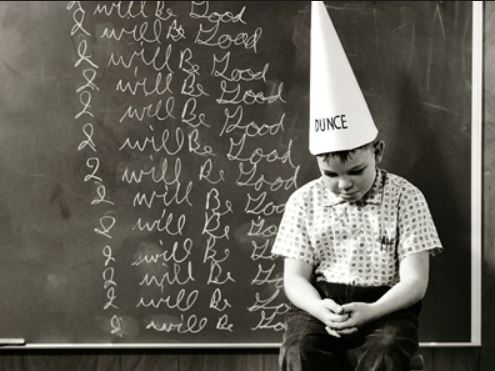



 Working up the ranks, from subspecies (mellifera) to species (mellifera) to genus (Apis), we reach the family (Apidae) which again means bee. So, in the case of Europe’s original ‘black bee’, we have the scientific name Apidae Apis mellifera mellifera, which means ‘bee bee honeycarrier honeycarrier’. It’s probably best not to give taxonomists a lot of credit for imagination. Apidae, by the way, lumps honey bees together with bumble bees, stingless bees, carpenter bees, orchid bees and a few others.
 A swarm of bees (Image credit: Nilfanion,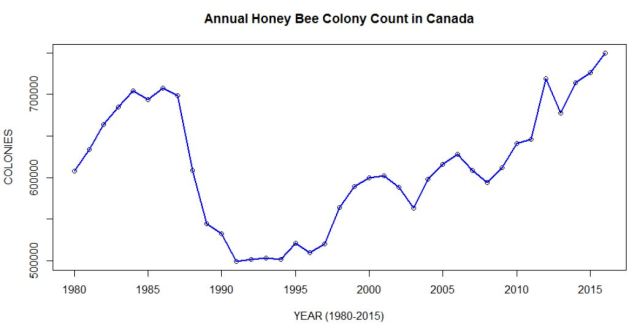




 It’s holiday season. And if you’re normal, you’re thinking about beekeeping books for everyone you know. Even the non-beekeeps. I spent a few minutes today scanning the Amazon.com site to see what was bee hot. Not that the best sellers are always the best books. (
 This list includes one Bible and two books for dummies and idiots. It also includes two (!) books by Kim Flottum, long-time editor of Bee Culture and a gifted writer. I own several of his books and can recommend them – they are well-written, printed with quality, and reasonably priced. The seventh book on the list above (“
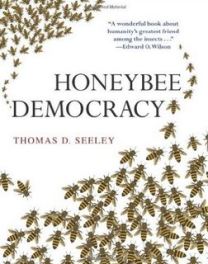 If you are buying for someone who is contemplative and beyond basic bee books, I strongly recommend Tom Seeley’s
 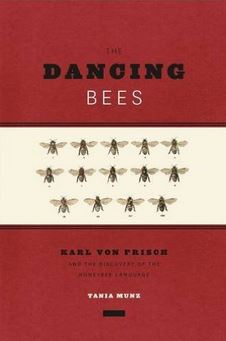 Another historical book (definitely not a fiction) is Tania Munz’s
  Finally, I’d be untrue to myself if I don’t include my own book from ten years ago –
  Bad Beekeeping Blog
