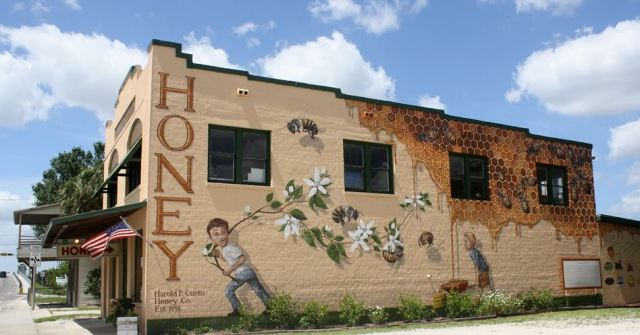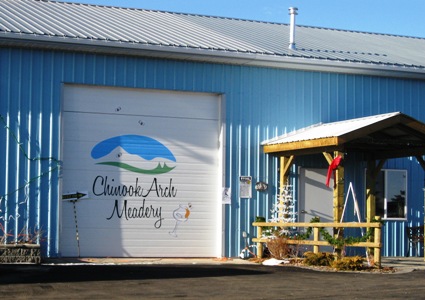
Chinook Honey – 20 minutes south of Calgary, near Okotoks, Alberta.
Last weekend, the Calgary bee club’s introductory beekeeping course wrapped up with our field school section. After 2 full days (15 hours!) of instruction, participants had a chance to observe, study, touch, and ask questions about the innards of live hives. We were lucky to have great weather and a great venue this year.

Instructor Neil, unveiled. Did I mention the mountains?
We (over fifty of us) met at Chinook Honey Company, an outstanding bee farm owned/operated by remarkable folks who have been into bees for about 20 years. You might remember an earlier piece I’d written about Art and Cherie Andrews. With their honey shop, store, meadery, and some healthy hives nearby, it was the perfect place to give newbies some bee exposure.

Overwintered single-story (yes, even on our cold windy Canadian prairies!), an unwrapped hive obviously enjoying a pollen flow. Note the entrance reducer. A syrup feeder, in black, sits under the hive cover. (Photo credit: Laurie McClure)
A (potentially) grave aspect to leading novice beekeepers to isolated apiaries are the risks of allergic reactions and panic attacks. Holding our field discussions at an apiary in the backyard of an established bee outfit (Chinook Honey) with good cell phone reception and just five minutes from a hospital helped relieve my anxiety. You never expect problems (and there weren’t any!) but the good beekeeper is always prepared. Before starting, we checked that participants were properly white-suited and veiled. We asked if everyone was comfortable and invited the students to be aware of their fears and to alert us of any stings. We allowed cool puffs to drift from a properly lit smoker before any hivess were opened and we worked calm, relatively weak colonies. Keep these things in mind if you take friends into the depths of your own hives.

Students, left, examining a hive while Calgary bee club president Thomas gears up.
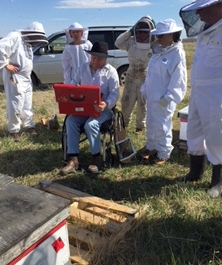
Photo Credit: Joycelyn Odney
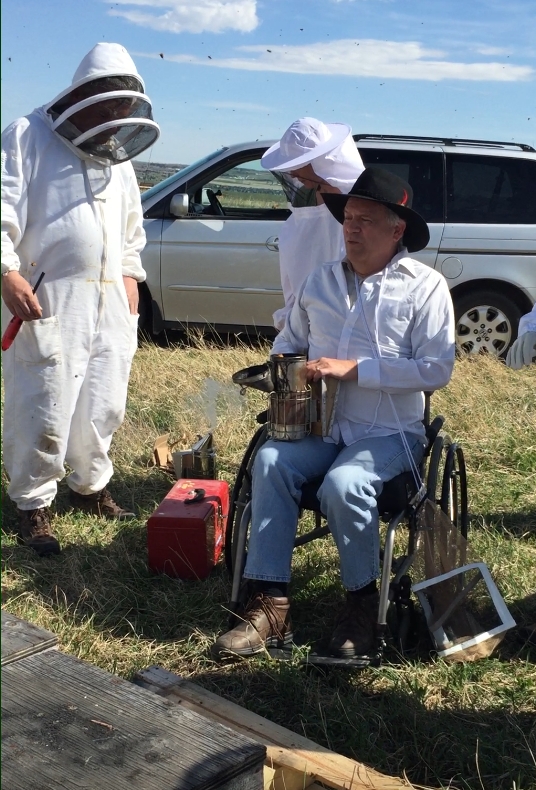
‘Tis I, to your right, in the wheelchair. I’m holding a red metal box which I picked up at Canadian Tire (a hardware/car parts chain). The box was part of our safety demonstration – 2017 is Prevent a Fire in Your Bee Yard Year. Smoker safety is incredibly important. I haul my smoker inside the metal box where flames gasp for air and sparks fall on steel walls. Consider such a box in your future.
After smoker-talk, we found queens. Since it’s still ‘early’ spring up here near Canada’s Rocky Mountains, the overwintered hives are just building up and queens were easy to spot. This is a thrill for new beekeepers – actually catching sight of her majesty, the mother of all bees. We discussed queen quality and techniques for releasing queens into packages and for introducing queens in splits. Part of the talk centered around helping the bees and queen accept each other. Young foreign queen bees are vulnerable to palace coups. This is a common issue this time of year. In a day or two, I’ll cover some of what we mentioned to the class about introducing queens. For today, I mostly want to post photos of our day at Chinook Honey. Enjoy!

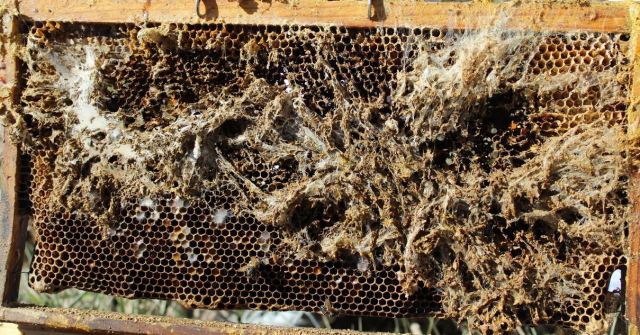
 Wax moths come in two flavours – lesser and greater. They are both of the same tribe, Galleriini. (Tribe is the scientific classification between Family and Genus.) The Lesser Wax Moth is the lesser of your worries. It’s smaller and less destructive. Its bigger cousin, the
 Professional Canadian beekeepers know the names of honey packers Jack Grossman and Paul Doyon. Jack started
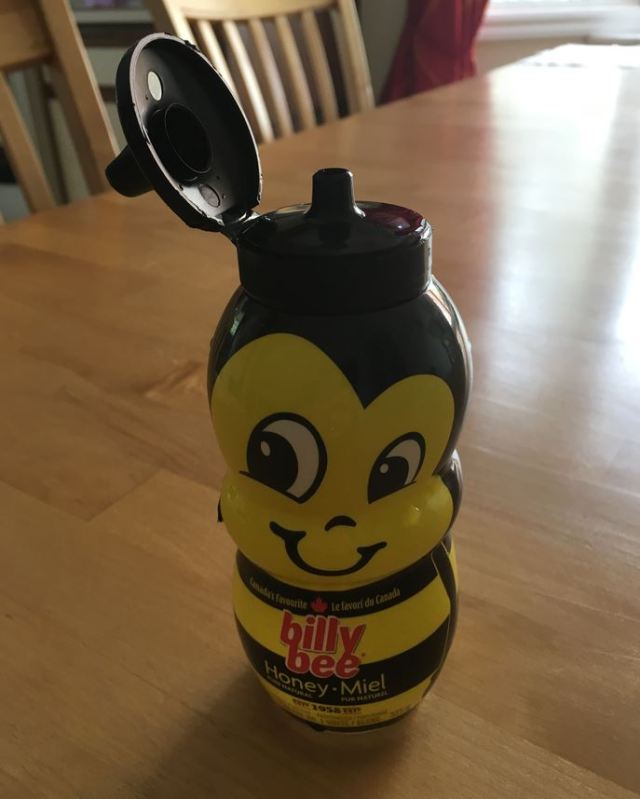
 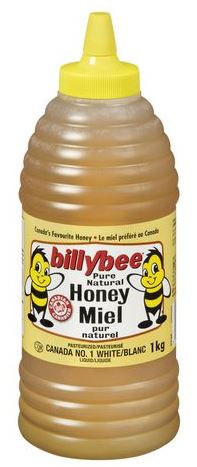 The Billy Bee man, Jack Grossman, was from Toronto. After serving in World War II, he kept a few hives behind his house. He packed honey in his garage and got into some stores. To meet demand in Ontario, he bought honey from other beekeepers. Business grew. His reputation for fairness and timely payment made him popular with beekeepers. His consistent, high-quality honey made his Billy Bee brand a big seller across Canada. Paul and George Doyon started their packing operation in 1927. I suspect that their story is similar because that’s the way you build a business. Honesty, consistency, fairness.
 As beekeepers, we depended on the Doyon and Billy Bee sales. They bought Canadian honey; sold Canadian honey. In recent years, stories of McCormick importing some foreign honey for jars of Billy Bee were disappointing, but not unexpected. Honey is cheaper when it comes from countries with lower wages and possibly lax sanitary requirements. Imported honey can be good quality (though there are some horror stories), but supporting Canadian beekeepers is the right thing to do. Besides, our beekeepers use some of their honey money to buy McCormick’s paprika, cinnamon, and ground black pepper. Keeping the money at home allows Canadian beekeepers to buy McCormick products and to keep other Canadians working – building their shops, repairing their vehicles, making their skidoos. But, most important, honey produced in Canada can be readily inspected, traced back to source, and must reach high quality standards to satisfy customers.